Handmade Pasta: 14 Old-World Dishes Italy’s Pasta Grannies Still Make in Their 90s and Beyond
Handmade pasta is still made the slow way in Italian villages, and a YouTube channel called Pasta Grannies has turned those quiet kitchens into some of the most watched cooking videos online. Founded by food writer Vicky Bennison, the channel now has more than one million subscribers and over a thousand videos of real Italian grandmothers rolling, pinching and twisting dough at their own tables. Some of the cooks are in their 90s, and a few are past 100. There are no fancy machines, just flour, eggs or water, a wooden board, a long rolling pin and decades of muscle memory. Here are 14 old-world dishes the nonne keep alive, each with a short list of what you will need and simple steps, so you can bring a little of their kitchen into yours..
Handmade Pasta the Pasta Grannies Way
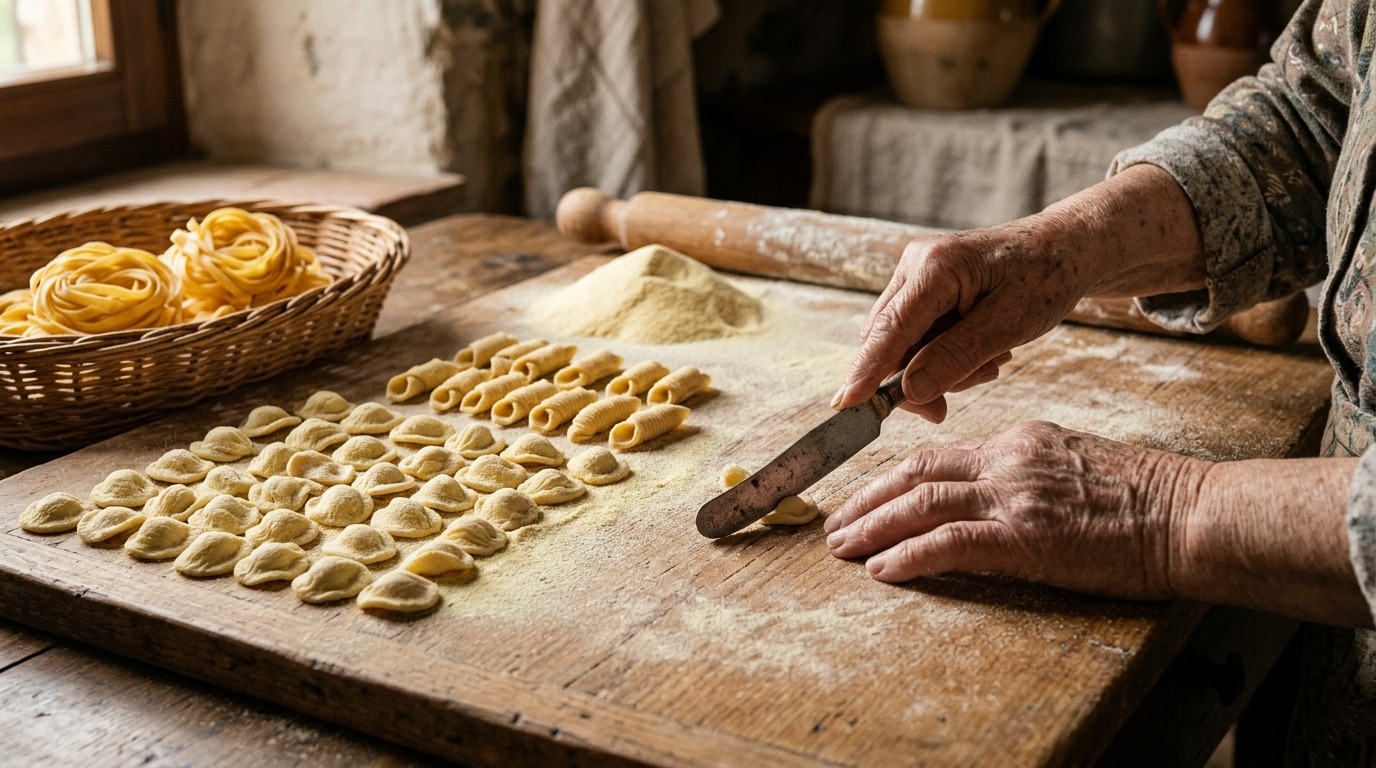
The idea behind Pasta Grannies is simple: find the women who still make handmade pasta every Sunday and film them before the knowledge disappears. Viewers watch a 101 year old named Concettina in Morano Calabro, in Calabria, work dough with steady hands, or a 93 year old in Sardinia braid tiny rings of semolina. The videos are short and calm, with no music blasting and no shortcuts. What makes them special is the advice tucked in between: how wet the dough should feel, when to stop kneading, and why you never rush the resting time..
You will need: 2 cups semolina flour or Italian 00 flour, about 3/4 cup lukewarm water or 3 large eggs, a pinch of salt, a large wooden board, a butter knife, a clean kitchen towel and extra semolina for dusting.
How to make it: 1. Pile the flour on the board, make a wide well in the middle and add the water or eggs a little at a time. 2. Stir with a fork, pulling flour in from the sides until a shaggy dough forms, then knead by hand for about 10 minutes until smooth. 3. Wrap the dough and rest it for 30 minutes so it relaxes and becomes easy to shape. 4. Cut off a small piece at a time, keeping the rest covered so it does not dry out. 5. Shape, dust with semolina and spread the pieces on a towel until you are ready to cook them in well salted boiling water.
Maria’s Lasagna With Paper-Thin Sheets
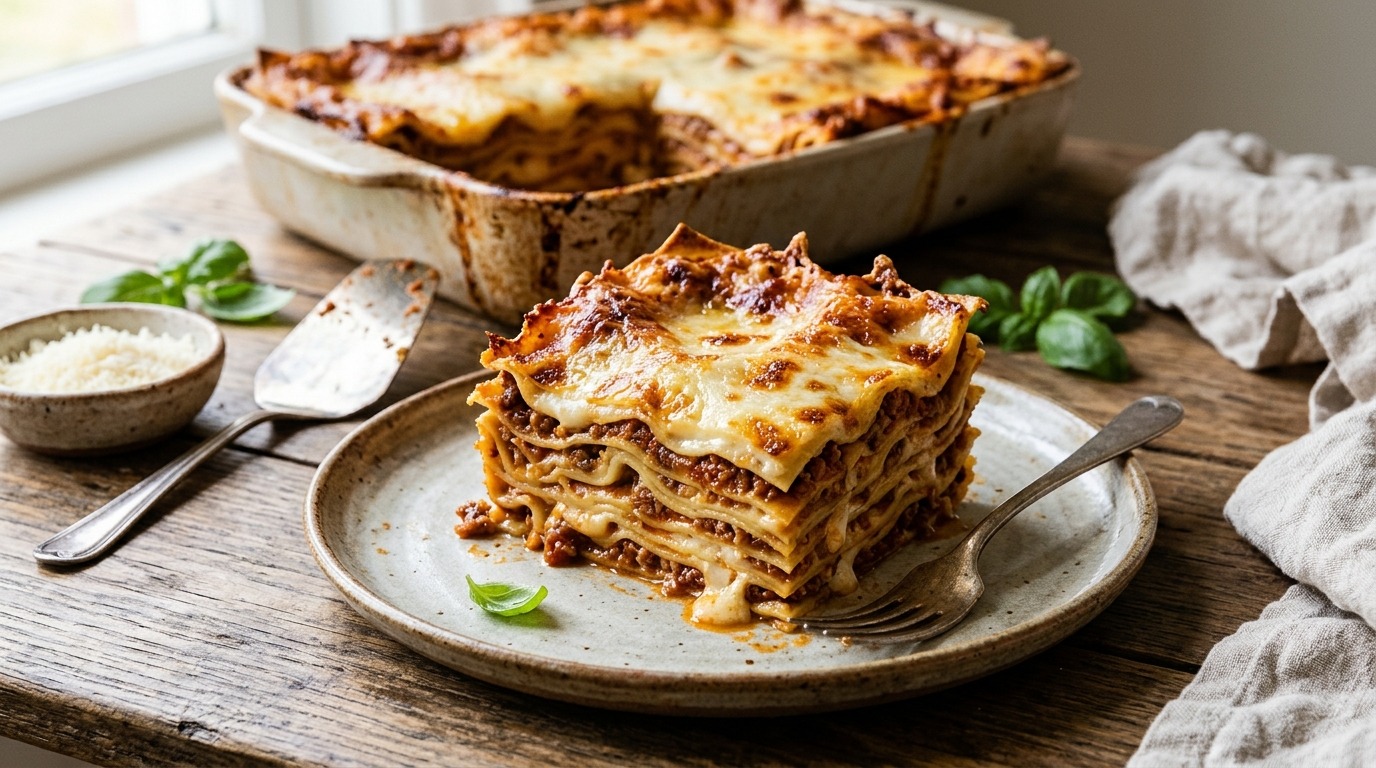
The most watched Pasta Grannies video belongs to 91 year old Maria and her lasagna, with more than 9 million views. Viewers are hooked by how thin she rolls each egg sheet, almost see-through, before layering it with slow-cooked ragu, bechamel and Parmigiano. Many layers of delicate handmade pasta make a lasagna that is tender instead of heavy. If you love bubbling trays of baked pasta, our collection of Italian oven-baked Sunday classics is full of Sunday favorites, but Maria’s version shows why the homemade sheets are worth the extra hour.
You will need: For the sheets: 3 cups 00 flour and 4 large eggs. For the filling: 4 cups meat ragu, 3 cups bechamel sauce, 1 1/2 cups grated Parmigiano, butter for the dish.
How to make it: 1. Make an egg dough with the flour and eggs, knead 10 minutes and rest it 30 minutes. 2. Roll small pieces very thin with a long rolling pin and cut them into rectangles. 3. Blanch the sheets for 20 seconds in salted boiling water and lay them on a towel. 4. Butter a baking dish and layer ragu, pasta, bechamel and cheese, repeating until the dish is full. 5. Finish with bechamel and cheese, bake at 375 F for 35 to 40 minutes, and rest 15 minutes before slicing.
Orecchiette With Broccoli Rabe From Puglia
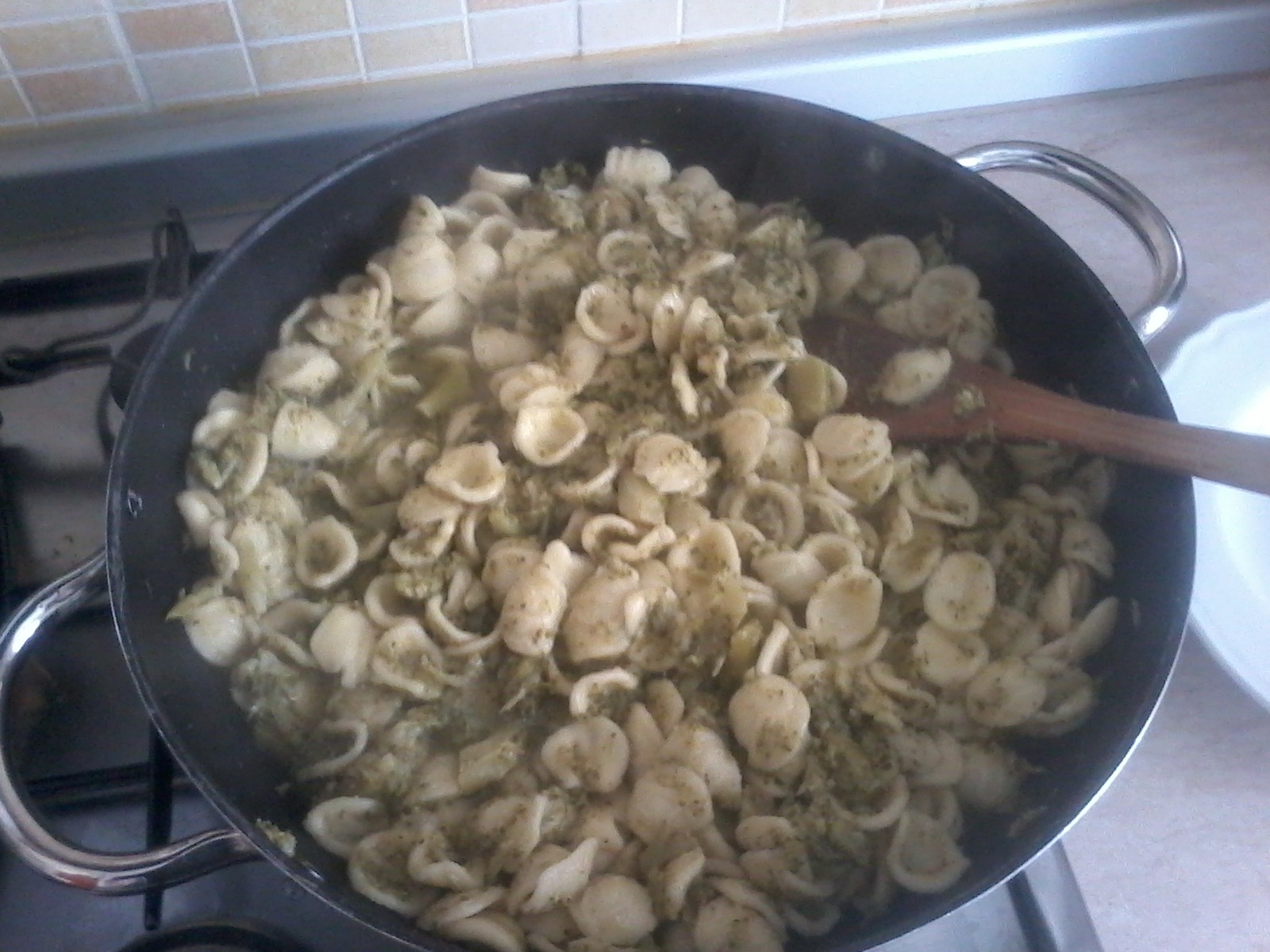
In Bari’s old town, women still sit outside their doors shaping orecchiette, the little ears of Puglia. Each piece of semolina dough is dragged across the board with a knife, then flipped over the thumb to make a rough cup that holds sauce. The classic way to serve them is with cime di rapa, or broccoli rabe, cooked in the same pot as the pasta and tossed with garlic, olive oil and anchovy. The shape has a long history in the region, and you can read more about the origins of orecchiette before you start.
You will need: 2 cups semolina flour, about 3/4 cup warm water, 1 large bunch broccoli rabe (chopped), 4 tablespoons olive oil, 3 garlic cloves (sliced), 4 anchovy fillets, a pinch of chili flakes, salt.
How to make it: 1. Make a firm semolina and water dough, knead until smooth and rest 30 minutes. 2. Roll pieces into ropes as thick as a finger and cut into small nuggets. 3. Drag each nugget toward you with a table knife, then turn it inside out over your thumb. 4. Cook the broccoli rabe in salted boiling water for 3 minutes, add the orecchiette and cook until tender. 5. Warm the oil with garlic, anchovies and chili, then toss in the drained pasta and greens.
Garganelli, the Ridged Hand-Rolled Penne
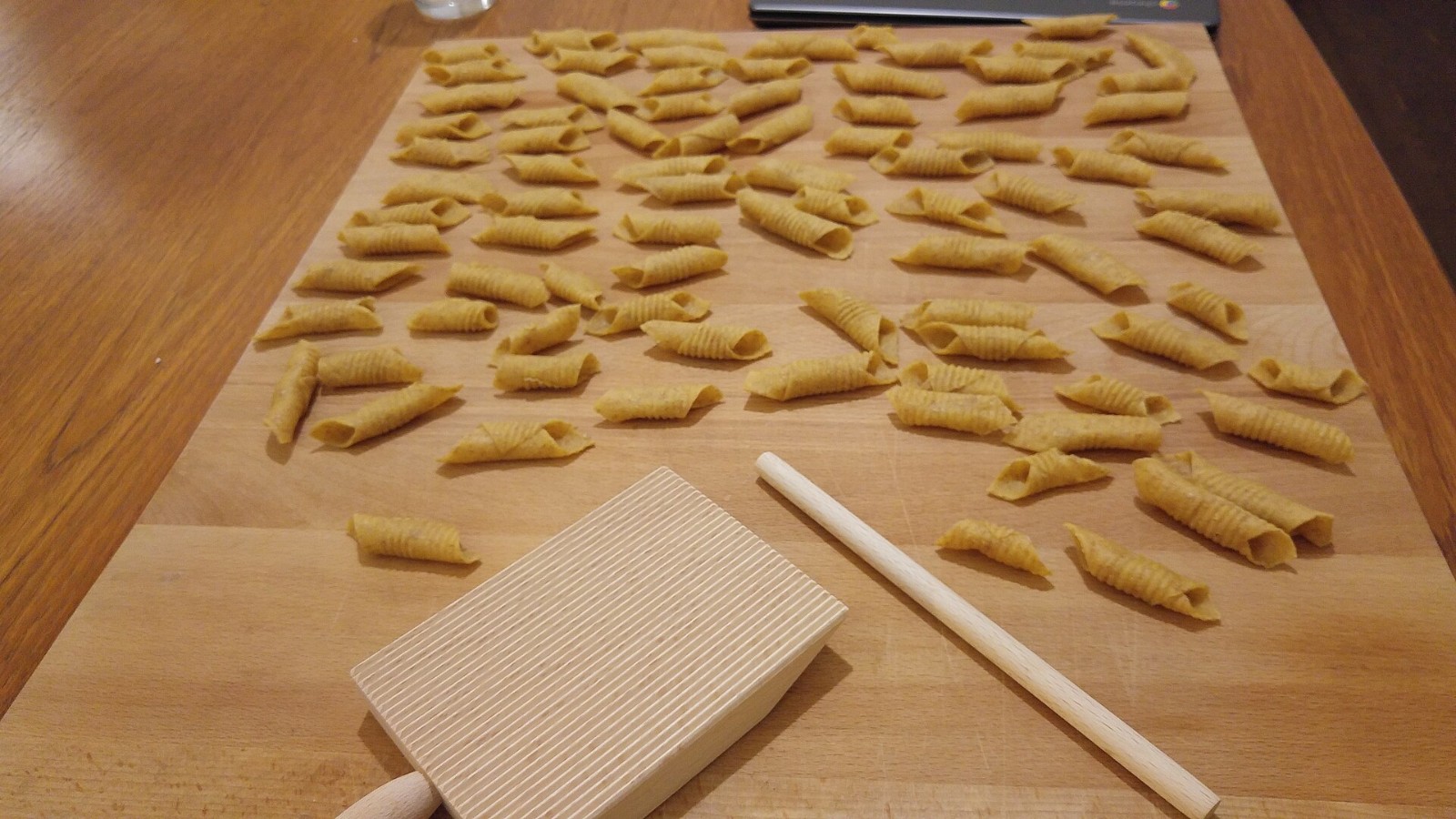
Garganelli come from Romagna, and they look like penne with tiny ridges. The Pasta Grannies video of nonne rolling them has been watched hundreds of thousands of times, partly because the trick is so satisfying. Small squares of egg dough are rolled corner first around a thin stick across a ridged wooden comb called a pettine. Every tube gets lines that grip sauce beautifully. They are lovely with a creamy sauce of peas and prosciutto, or a light ragu, and like most handmade pasta they freeze well once dried on a towel.
You will need: 2 cups 00 flour, 3 large eggs, a garganelli board or clean fork, a thin wooden dowel or pencil-size stick, 1 cup peas, 4 ounces diced prosciutto, 3/4 cup cream, grated Parmigiano.
How to make it: 1. Make an egg dough, knead 10 minutes and rest 30 minutes. 2. Roll it thin and cut into 1 1/2 inch squares. 3. Place a square on the ridged board with one corner facing you, set the stick on that corner and roll forward to form a ridged tube. 4. Slide the tube off and repeat, spreading them on a floured towel. 5. Cook 3 minutes, then toss with prosciutto warmed in butter, peas, cream and cheese.
Lorighittas, Sardinia’s Braided Pasta Rings
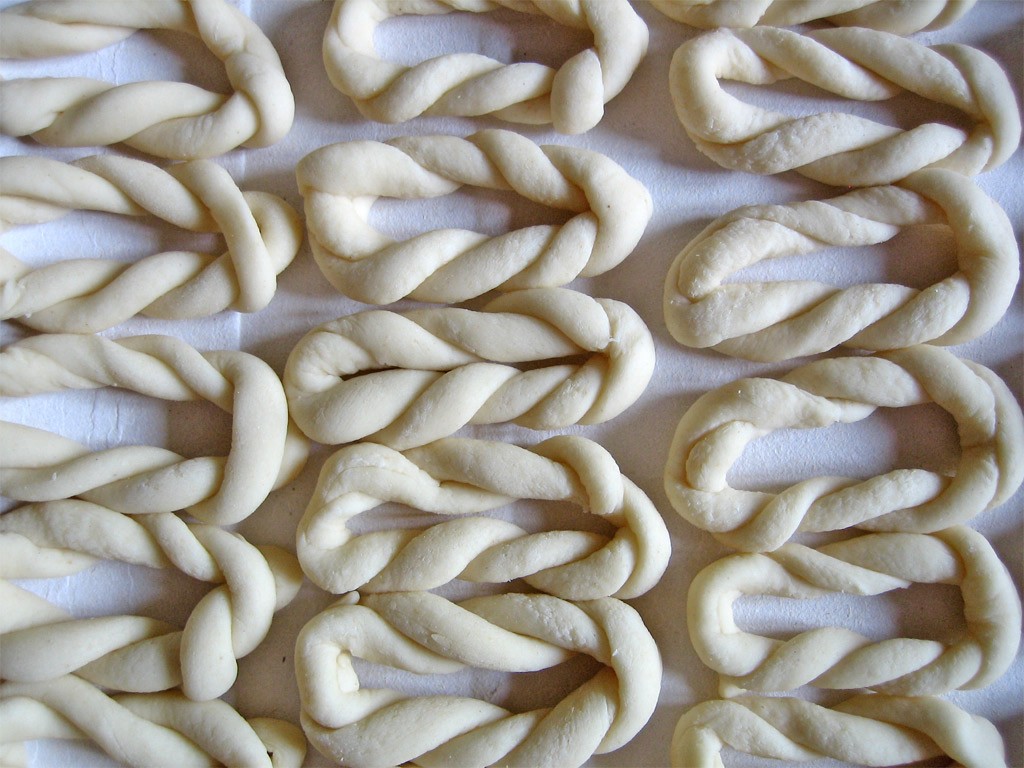
Lorighittas may be the most patient handmade pasta shape in Italy. They come from the village of Morgongiori in Sardinia, and 93 year old Cesaria’s video showing how they are made has passed a million views. A thin strand of semolina dough is looped twice around the fingers, then the two strands are twisted together into a little braided ring. Families once made them for the feast of All Saints, and they are traditionally served with a tomato sauce and chicken or simply with cheese. Making a tray takes a whole afternoon, so friends usually shape them together.
You will need: 2 cups fine semolina flour, about 3/4 cup warm water, a pinch of salt, 2 cups simple tomato sauce, grated pecorino for serving.
How to make it: 1. Knead a smooth semolina dough and rest it for 30 minutes under a bowl. 2. Roll a small piece into a strand as thin as a spaghetti noodle. 3. Wrap the strand twice around three fingers, pinch to close, and slide off to get a double ring. 4. Twist the two strands around each other all the way around to form a braid, then dry on a tray. 5. Cook 6 to 8 minutes in salted water and serve with warm tomato sauce and pecorino.
Handmade Pasta Classic: Tagliatelle al Ragu
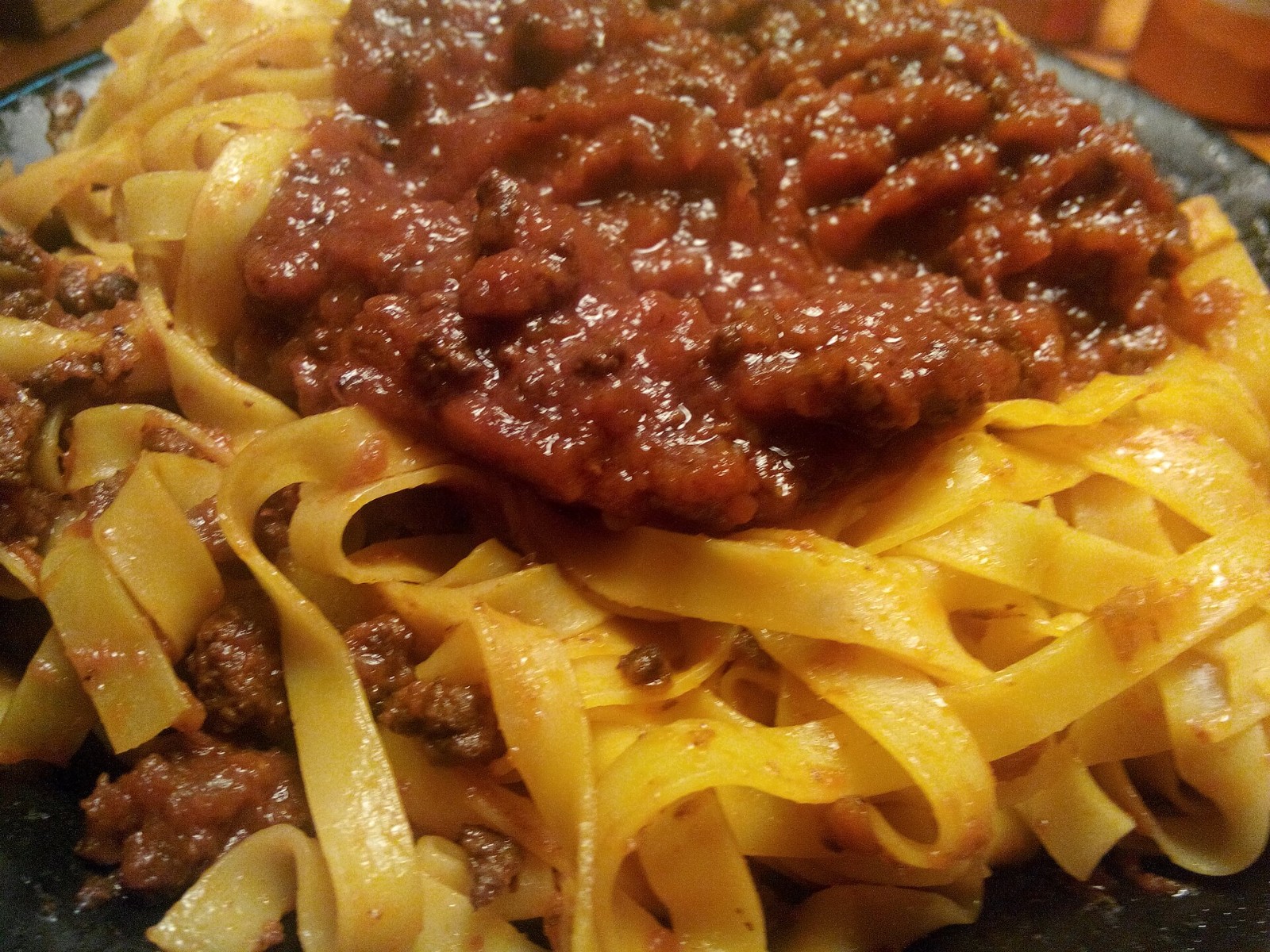
Bologna’s favorite handmade pasta is tagliatelle, wide golden ribbons cut from an egg sheet rolled with a long wooden pin called a mattarello. One Pasta Grannies video shows 103 year old Irma making them, and her rolling is smooth and quick. In Bologna, tagliatelle go with ragu, the slow meat sauce many people outside Italy call bolognese, never with spaghetti. The ribbons should be rough enough to hold the sauce, so they are rolled by hand rather than pressed through a machine. A small scattering of Parmigiano is all they need on top.
You will need: 3 cups 00 flour, 4 large eggs, 1 pound ground beef and pork mix, 1 carrot, 1 celery stalk and 1 onion (finely diced), 1/2 cup dry white wine or broth, 1 cup tomato passata, 1/2 cup milk, olive oil, salt, Parmigiano.
How to make it: 1. Soften the vegetables in oil, add the meat and brown it well. 2. Pour in the wine or broth, then the passata and milk, and simmer gently for 2 hours. 3. Make an egg dough, rest it 30 minutes, then roll it very thin on a floured board. 4. Dust the sheet with flour, fold it loosely and cut into ribbons about 1/3 inch wide, then shake them out into nests. 5. Cook 2 to 3 minutes and toss with the ragu and a little cooking water.
Trofie With Fresh Basil Pesto From Liguria
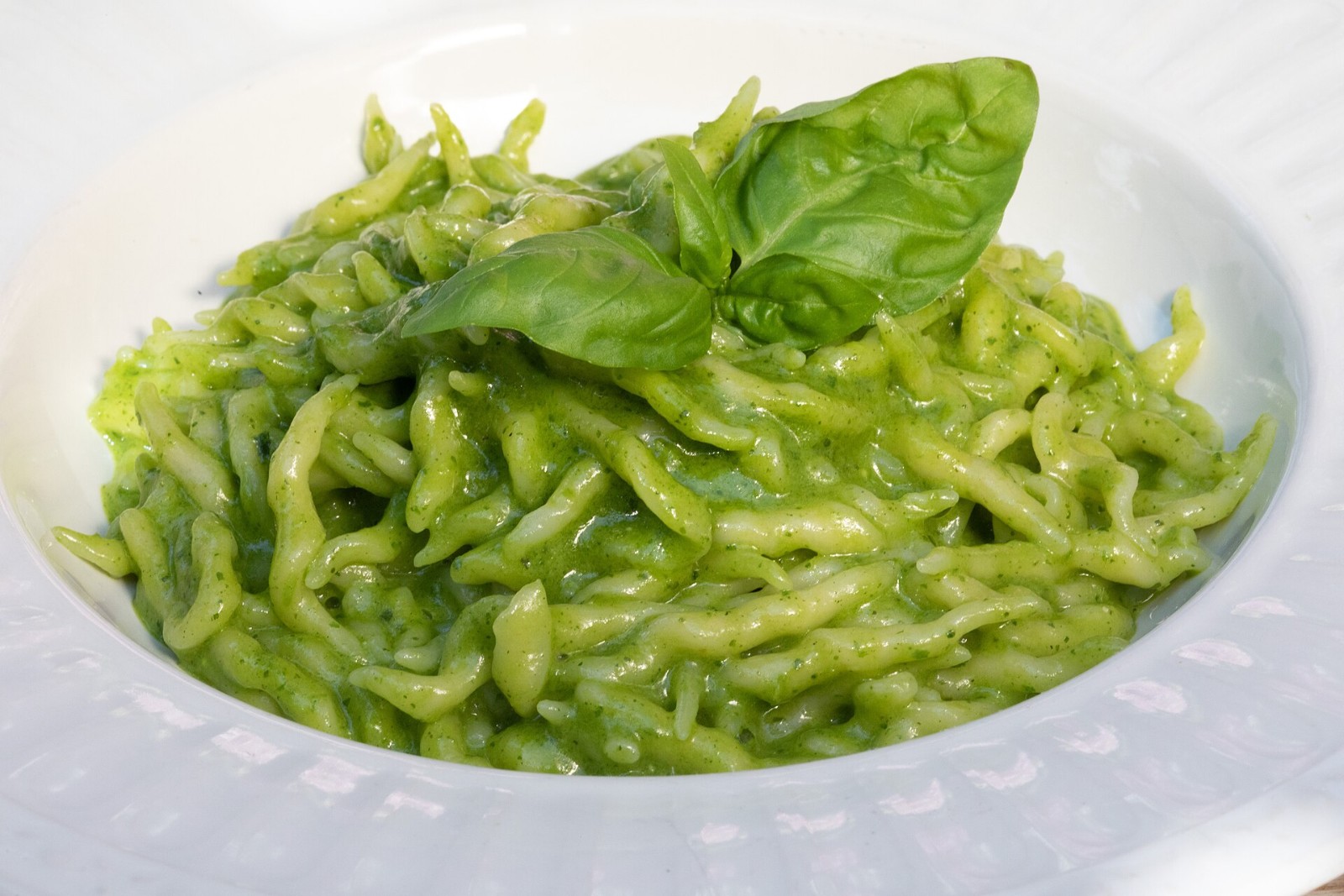
On the Ligurian coast, trofie are a handmade pasta rubbed into short twists on the board with the palm of the hand, a quick motion that grandmothers do without looking. The little spirals are made from flour and water, and they are the classic partner for pesto alla genovese. Locals often cook them with sliced potatoes and green beans in the same pot, which makes the sauce extra creamy. The pesto is pounded with a mortar and pestle in many homes, but a quick blend works too as long as the basil stays bright green.
You will need: 2 cups 00 flour, about 3/4 cup water, 2 cups fresh basil leaves, 1/3 cup pine nuts, 1 garlic clove, 1/2 cup grated Parmigiano, 2 tablespoons grated pecorino, 1/2 cup olive oil, 1 small potato and a handful of green beans.
How to make it: 1. Knead a flour and water dough until smooth and rest it 30 minutes. 2. Pinch off pea-size pieces and roll each under your palm diagonally across the board to form a twist. 3. Pound or blend the basil, garlic, pine nuts and cheeses, then stir in the oil. 4. Boil the diced potato and green beans for 5 minutes, add the trofie and cook until tender. 5. Drain, keeping a splash of water, and toss everything with the pesto off the heat.
Potato Gnocchi in Simple Tomato Sauce
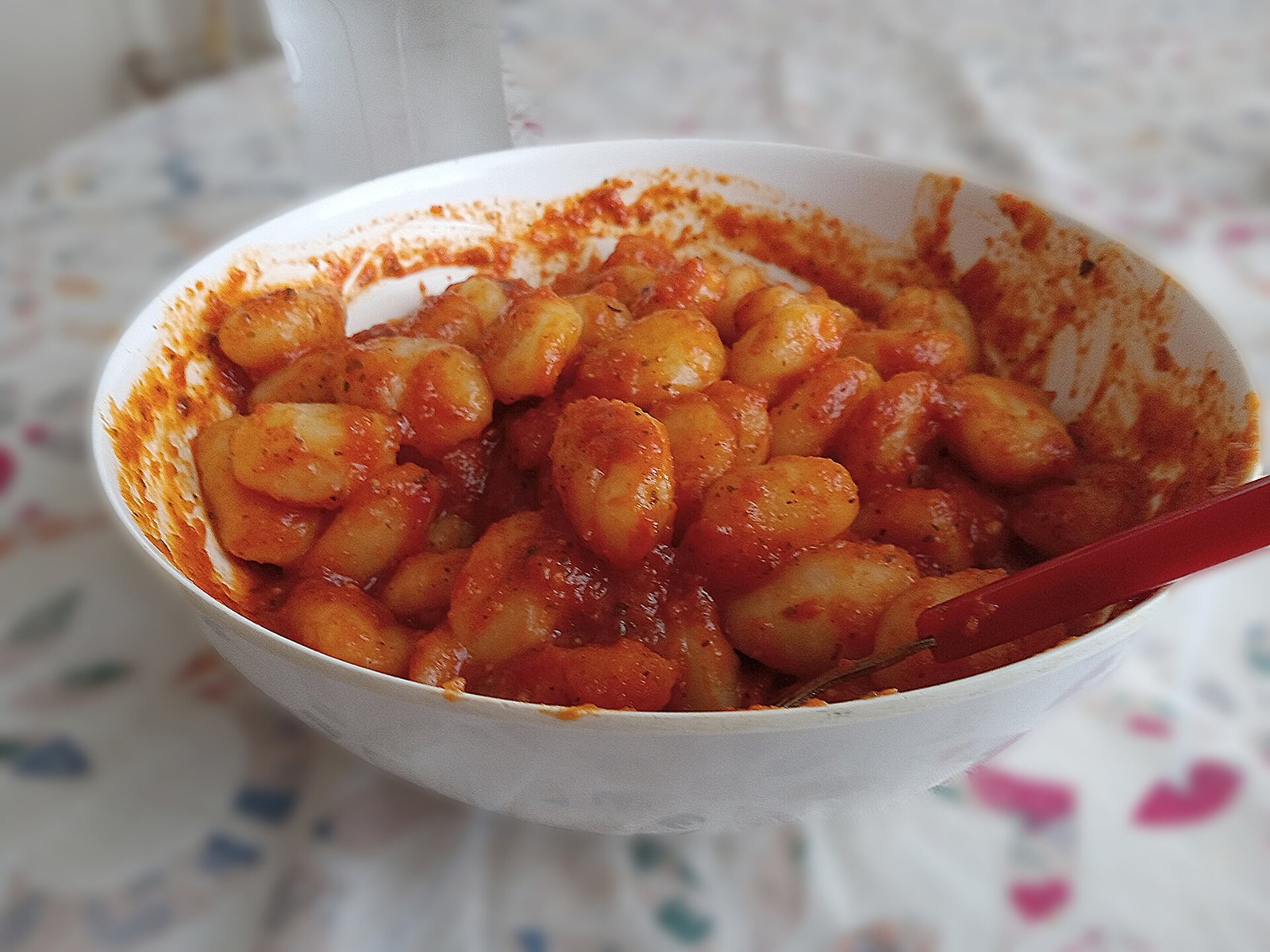
Potato gnocchi are the handmade pasta most families learn first, and they show up again and again in the Pasta Grannies kitchens. The nonne bake or boil floury potatoes, rice them while hot and add only enough flour to hold the dough together, which keeps the dumplings light. Each piece is rolled off a fork or a ridged board so the sauce has something to cling to. In many homes, Sunday gnocchi are served in the tomato sauce that simmered all morning with meatballs, and the meatballs come to the table as a second course.
You will need: 2 pounds floury potatoes, about 1 1/2 cups all-purpose flour, 1 egg (optional), 1 teaspoon salt, 3 cups tomato sauce, fresh basil, grated Parmigiano.
How to make it: 1. Boil the potatoes whole in their skins until tender, peel while hot and pass through a ricer. 2. Spread to cool slightly, then add salt, egg and most of the flour and knead briefly into a soft dough. 3. Roll into ropes, cut into 1 inch pieces and roll each over a fork for ridges. 4. Cook in batches in salted boiling water and lift out as soon as they float. 5. Toss gently with hot tomato sauce and top with basil and cheese.
Ravioli Capresi With Cheese and Marjoram
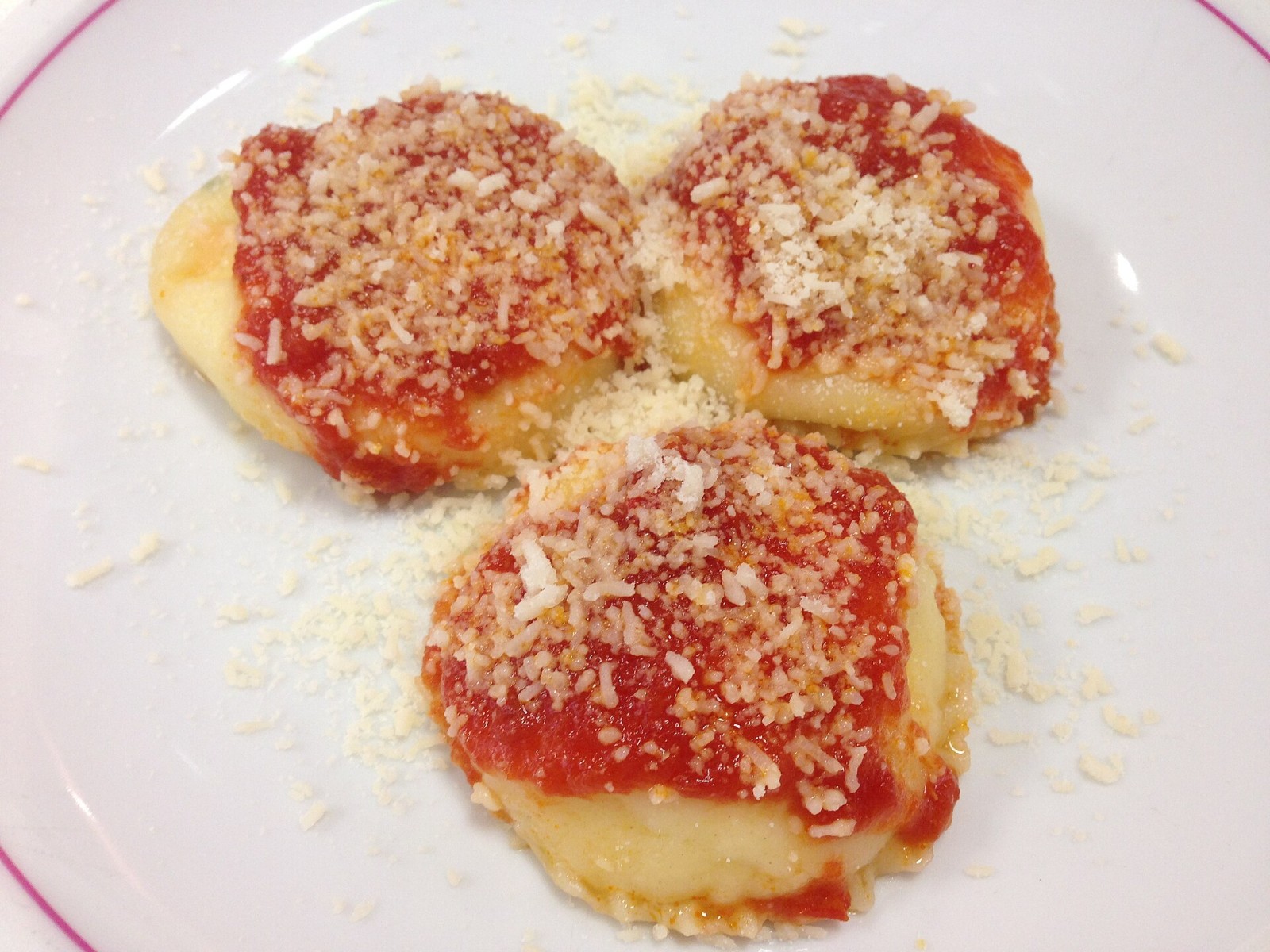
On the island of Capri, ravioli are made with a soft dough of flour, water and a little olive oil, then filled with fresh cheese, Parmigiano and fragrant marjoram. They are sealed into round half moons or circles and served with a quick sauce of fresh tomatoes and basil. Filled handmade pasta like ravioli is a favorite subject for the Pasta Grannies, because every family has its own filling and its own way of pressing out the air before sealing. A crimped edge pressed with a fork keeps them from opening in the pot.
You will need: 2 cups 00 flour, about 2/3 cup warm water, 1 tablespoon olive oil, 1 1/2 cups ricotta or fresh caciotta (crumbled), 1/2 cup grated Parmigiano, 1 egg, 1 tablespoon fresh marjoram, 2 cups tomato sauce.
How to make it: 1. Make a soft dough with flour, water and oil, knead and rest 30 minutes. 2. Mix the cheeses, egg and marjoram into a thick filling. 3. Roll the dough thin, place spoonfuls of filling 2 inches apart and cover with a second sheet. 4. Press out the air around each mound, cut into rounds and crimp the edges with a fork. 5. Cook 3 to 4 minutes and serve with tomato sauce and a little more cheese.
Cannelloni Rolled From Fresh Pasta Sheets
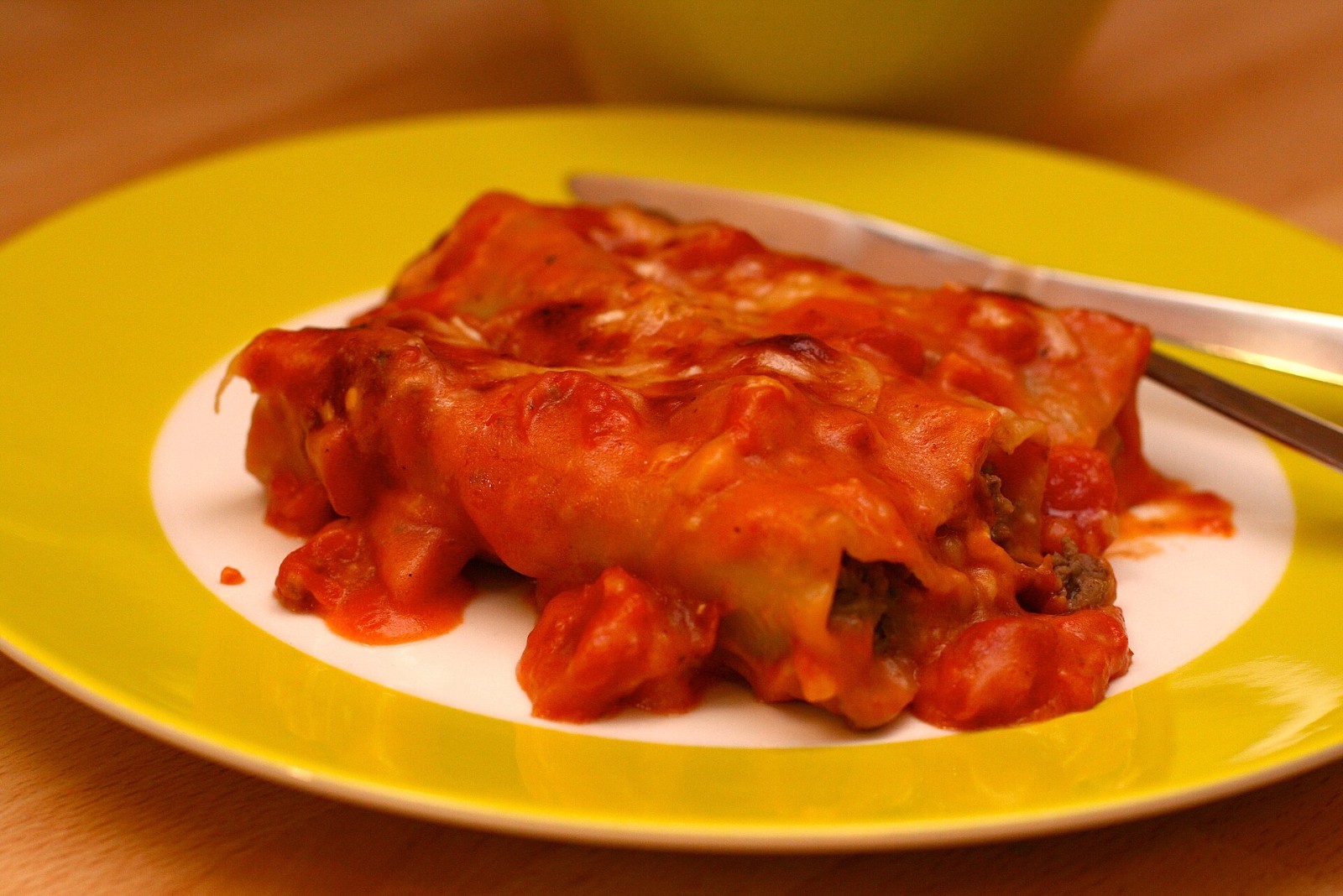
Before dried tubes filled supermarket shelves, cannelloni were made by rolling fresh pasta squares around a filling. Grandmothers would cut sheets from the same egg dough used for lasagna, blanch them briefly, spread on a filling of seasoned meat or ricotta and spinach, and roll them up like little logs. Lined up in a buttered dish under tomato sauce and cheese, they bake into a soft, comforting dinner that easily feeds a crowd. Handmade pasta sheets are so thin that the filling stays the star, and leftovers reheat well the next day.
You will need: Fresh egg pasta made from 2 cups 00 flour and 3 eggs, 1 pound ground beef or a mix of 2 cups ricotta and 2 cups cooked spinach, 1 egg, 1/2 cup Parmigiano, 3 cups tomato sauce, 1 cup bechamel, salt and nutmeg.
How to make it: 1. Roll the egg dough thin and cut into 4 by 5 inch rectangles. 2. Blanch the rectangles for 30 seconds and lay them on a towel. 3. Brown the beef, or mix the ricotta and spinach, then stir in the egg, cheese, salt and nutmeg. 4. Spoon filling along one edge of each sheet and roll it into a tube. 5. Arrange seam side down over tomato sauce, top with bechamel and more sauce, and bake at 375 F for 25 minutes.
Handmade Pasta From Tuscany: Pici
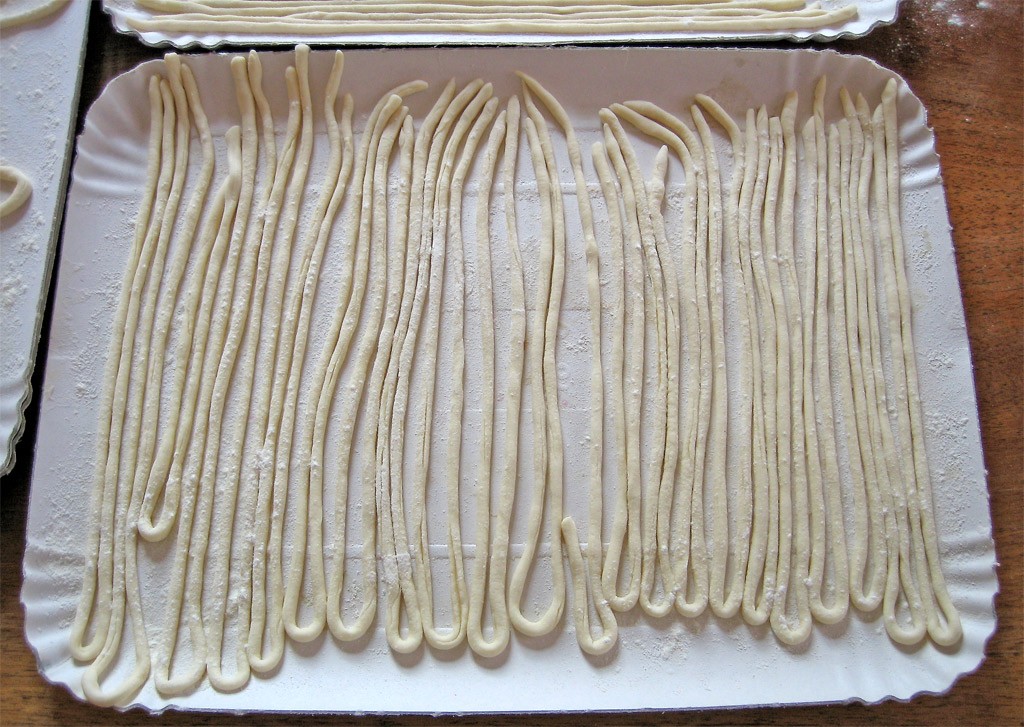
Pici are the chunky handmade pasta of southern Tuscany, especially around Siena and Montepulciano. They are made with just flour and water, and every strand is rolled out under the palms like a thick spaghetti, so no two are exactly the same. That rustic texture is the whole point. The best-known pairing is aglione, a slow tomato sauce cooked with a lot of mild garlic, while another favorite is briciole, toasted breadcrumbs in olive oil. Pici are a perfect first shape for beginners because there is no machine and no rolling pin needed.
You will need: 3 cups all-purpose flour, about 1 cup warm water, 1 tablespoon olive oil, semolina for dusting, 6 garlic cloves (sliced), 1 can (28 ounces) crushed tomatoes, chili flakes, salt.
How to make it: 1. Knead the flour, water and oil into a smooth dough and rest 30 minutes. 2. Roll the dough about 1/3 inch thick and cut into thin strips. 3. Roll each strip under your palms from the center outward into a long, even rope, and lay it on semolina. 4. Cook the garlic gently in oil, add the tomatoes and chili and simmer for 25 minutes. 5. Boil the pici for 5 to 7 minutes until tender and toss with the sauce.
Busiate, Sicily’s Twisted Handmade Pasta With Almond Pesto
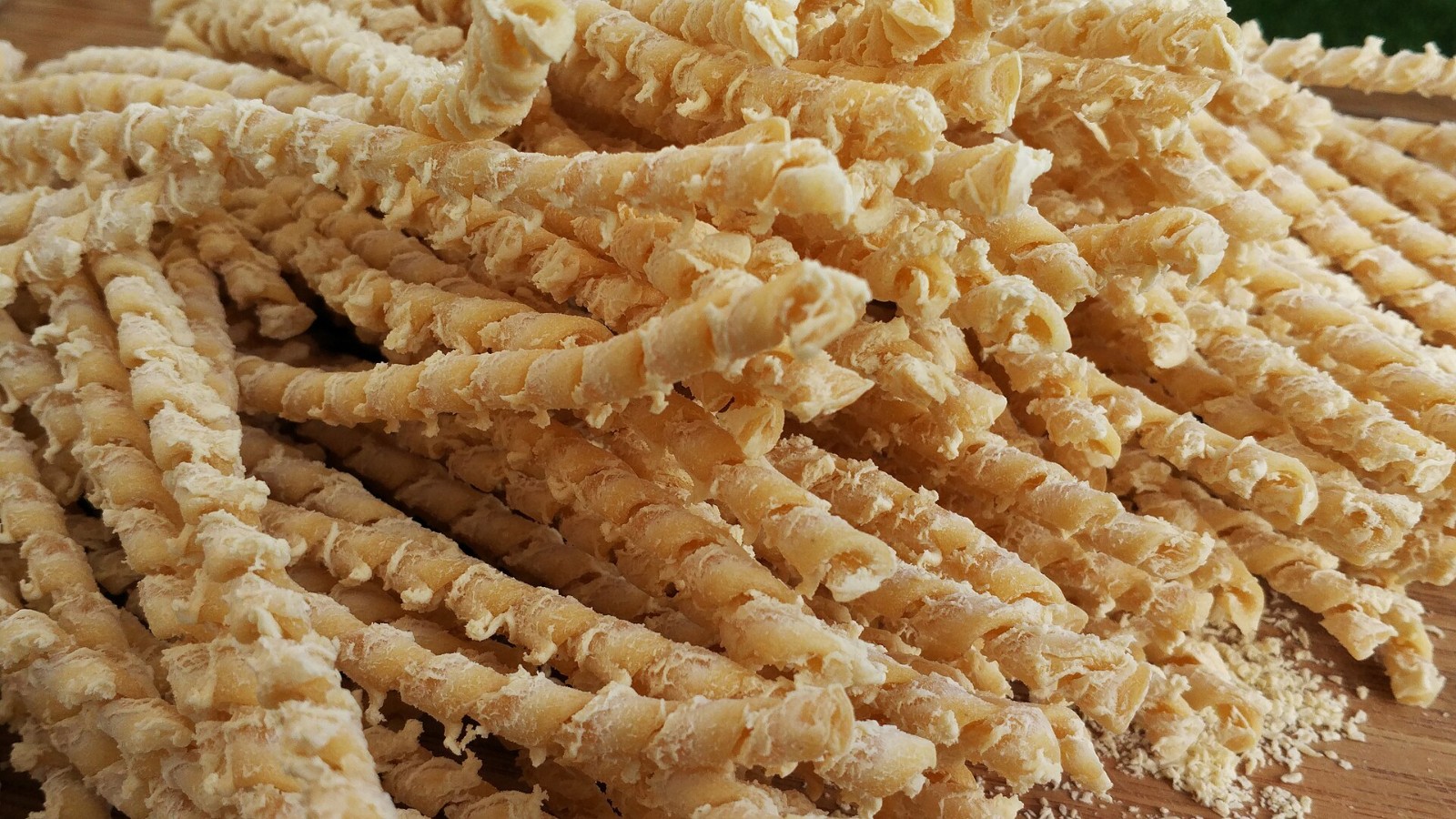
Busiate are long handmade pasta twists from the Trapani area of western Sicily. A thin rope of semolina dough is wrapped diagonally around a knitting needle or a thin rod, then rolled once under the palm and slid off as a springy spiral. They are traditionally served with pesto alla trapanese, a raw sauce of ripe tomatoes, almonds, basil, garlic and olive oil that is perfect in late summer. The spirals catch every bit of the chunky sauce, and the dish is ready in the time it takes to boil the pasta.
You will need: 2 cups fine semolina flour, about 3/4 cup warm water, a thin wooden skewer or knitting needle, 1 pound ripe cherry tomatoes, 1/2 cup blanched almonds, 1 cup basil leaves, 1 garlic clove, 1/3 cup olive oil, salt.
How to make it: 1. Make a firm semolina dough, knead and rest 30 minutes. 2. Roll pieces into thin ropes about 6 inches long. 3. Lay the skewer diagonally on one end of a rope, roll it under your palm to wrap the dough around, then slide it off. 4. Blend the tomatoes, almonds, basil, garlic, oil and salt into a coarse sauce. 5. Cook the busiate for 6 to 8 minutes and toss with the raw pesto.
Cavatelli Are the Easiest Handmade Pasta to Start With
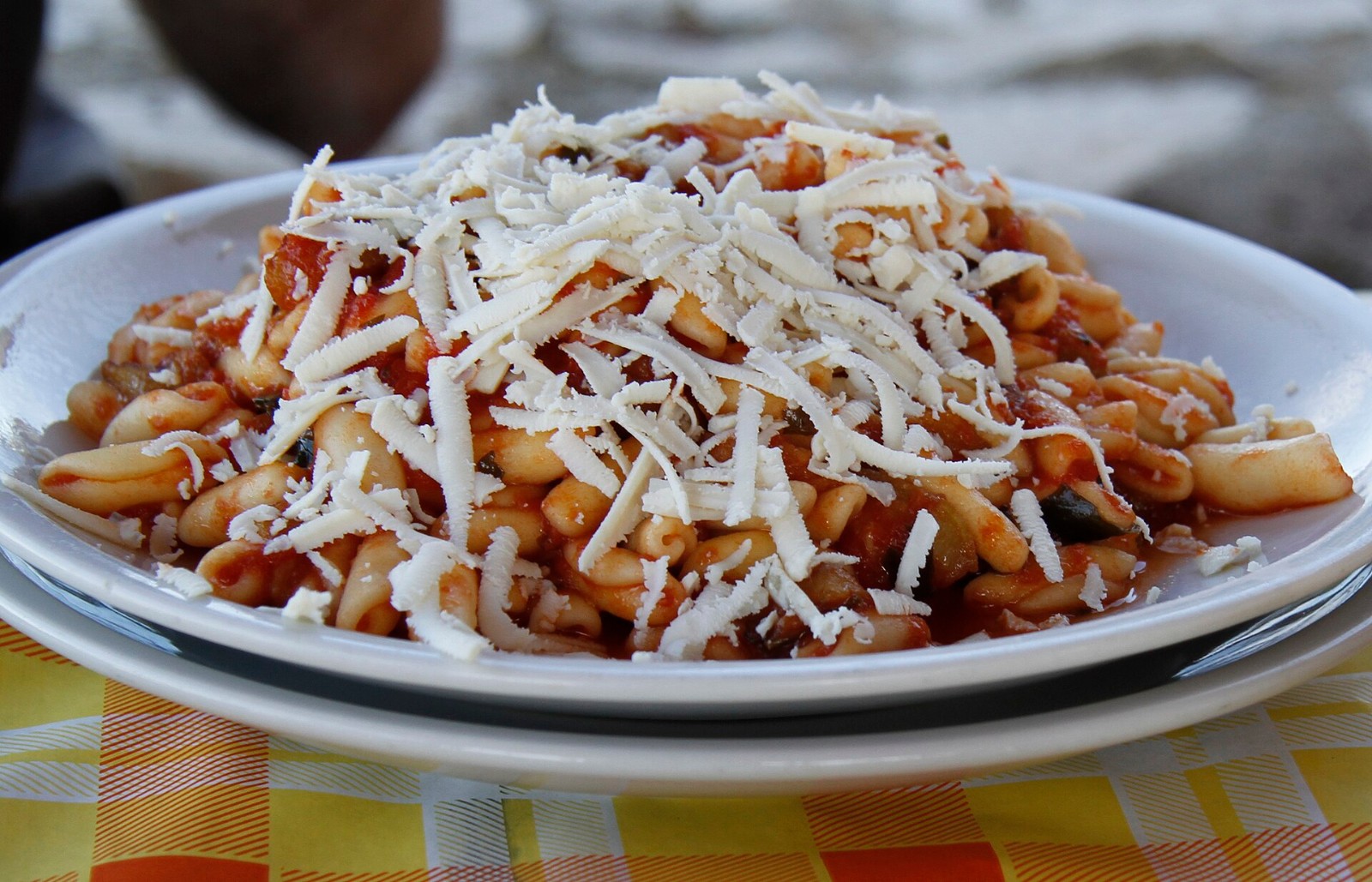
Cavatelli are made all over southern Italy, from Molise to Sicily, and they are often the shape a child learns first at Nonna’s elbow. A small piece of semolina dough is pressed and dragged with two fingers so it curls into a little hollow shell. In Sicily they are tossed with tomato sauce and topped with a snowfall of grated ricotta salata, a firm salty cheese. They need no tools at all, and a family working together can fill a tray in about twenty minutes while the sauce simmers on the stove.
You will need: 2 cups semolina flour, about 3/4 cup warm water, 2 1/2 cups tomato sauce, 1 cup grated ricotta salata or pecorino, a few basil leaves, salt.
How to make it: 1. Knead a smooth semolina dough and rest it 30 minutes. 2. Roll into ropes about 1/2 inch thick and cut into 3/4 inch pieces. 3. Press two fingers into each piece and drag toward you so it curls into a shell. 4. Cook in salted boiling water for 4 to 6 minutes until tender but chewy. 5. Toss with hot tomato sauce and finish with plenty of grated ricotta salata and basil.
Handmade Pasta Tip: Start With the Flour Well
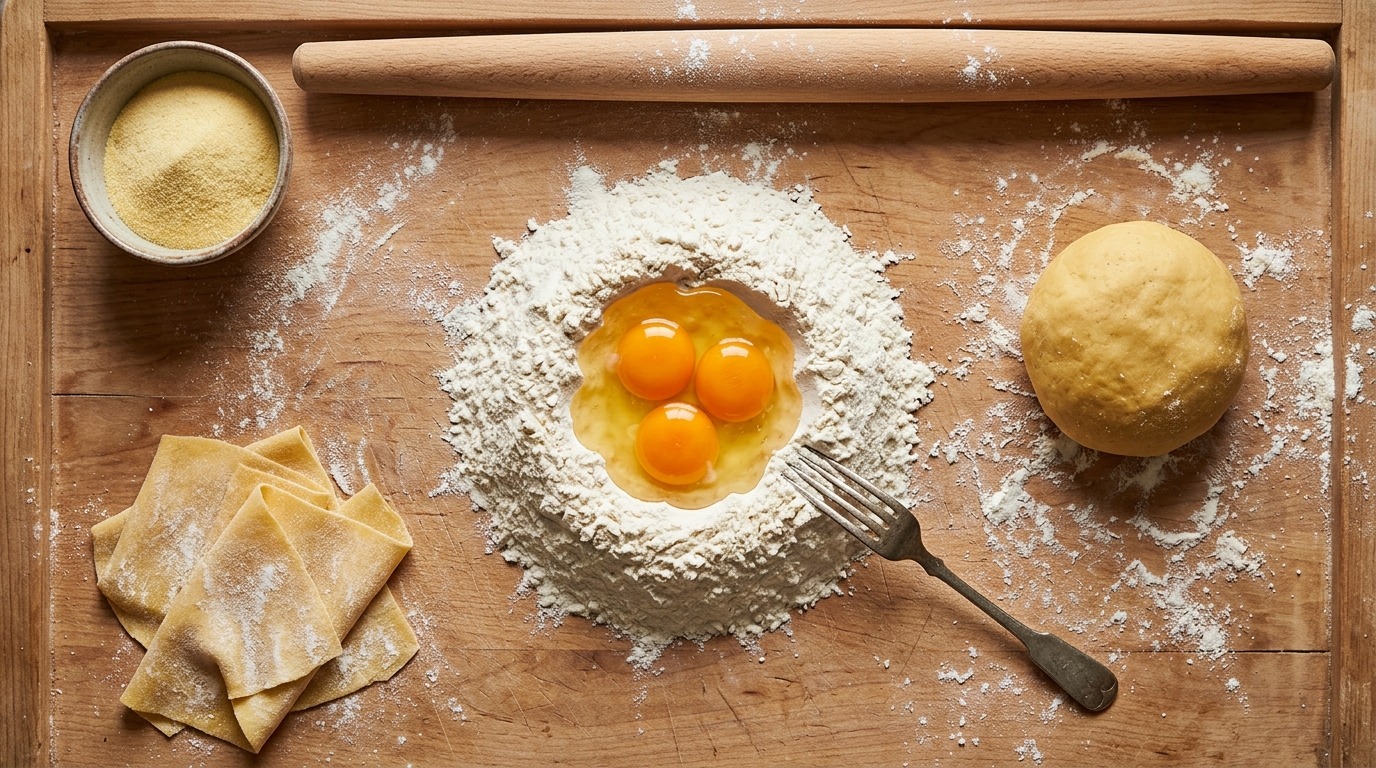
Nearly every batch of handmade pasta in the Pasta Grannies videos starts the same way, with a mound of flour on a wooden board and a well in the middle. Eggs go in for northern egg pasta, while water and semolina are used for the southern shapes. The nonne mix with a fork, then their fingers, and knead for about ten minutes until the dough feels as smooth as an earlobe. Then it rests, wrapped, for at least half an hour. That pause relaxes the gluten so the dough rolls thin without fighting back, and it is the one step beginners skip most often.
You will need: 2 cups 00 flour (or 1 cup 00 flour plus 1 cup semolina), 3 large eggs, a pinch of salt, a fork, a large wooden board or clean counter, plastic wrap or a bowl to cover the dough.
How to make it: 1. Heap the flour on the board and make a wide, deep well in the center. 2. Crack the eggs into the well, add the salt and beat with a fork, slowly drawing in flour from the inner wall. 3. When it gets too thick for the fork, bring the dough together with your hands and scrape the board. 4. Knead for about 10 minutes, pushing with the heel of your hand and folding, until smooth and springy. 5. Wrap and rest for 30 minutes at room temperature before rolling and shaping.