Victorian Christmas Recipes From A Christmas Carol: 15 Dishes Charles Dickens Made Famous, Figgy Pudding to Sugar Plums
Victorian Christmas recipes still shape the way millions of families eat on December 25, and much of the credit goes to one small book. When Charles Dickens published A Christmas Carol in December 1843, he filled it with food: a sizzling goose, a pudding like a speckled cannonball, hot chestnuts, oranges and a steaming bowl of Smoking Bishop. Readers fell in love with the Cratchit table, and the cozy Christmas dinner we know today grew from it. Below are 15 dishes from the story and from the Victorian kitchens around it, each with a short history, a shopping list and easy modern steps. Where the old recipes called for wine or brandy, you will find a family-friendly version that skips the alcohol. Pick a few, set the table and bring a little Dickens into your kitchen this year..
Roast Goose, the Star of Victorian Christmas Recipes
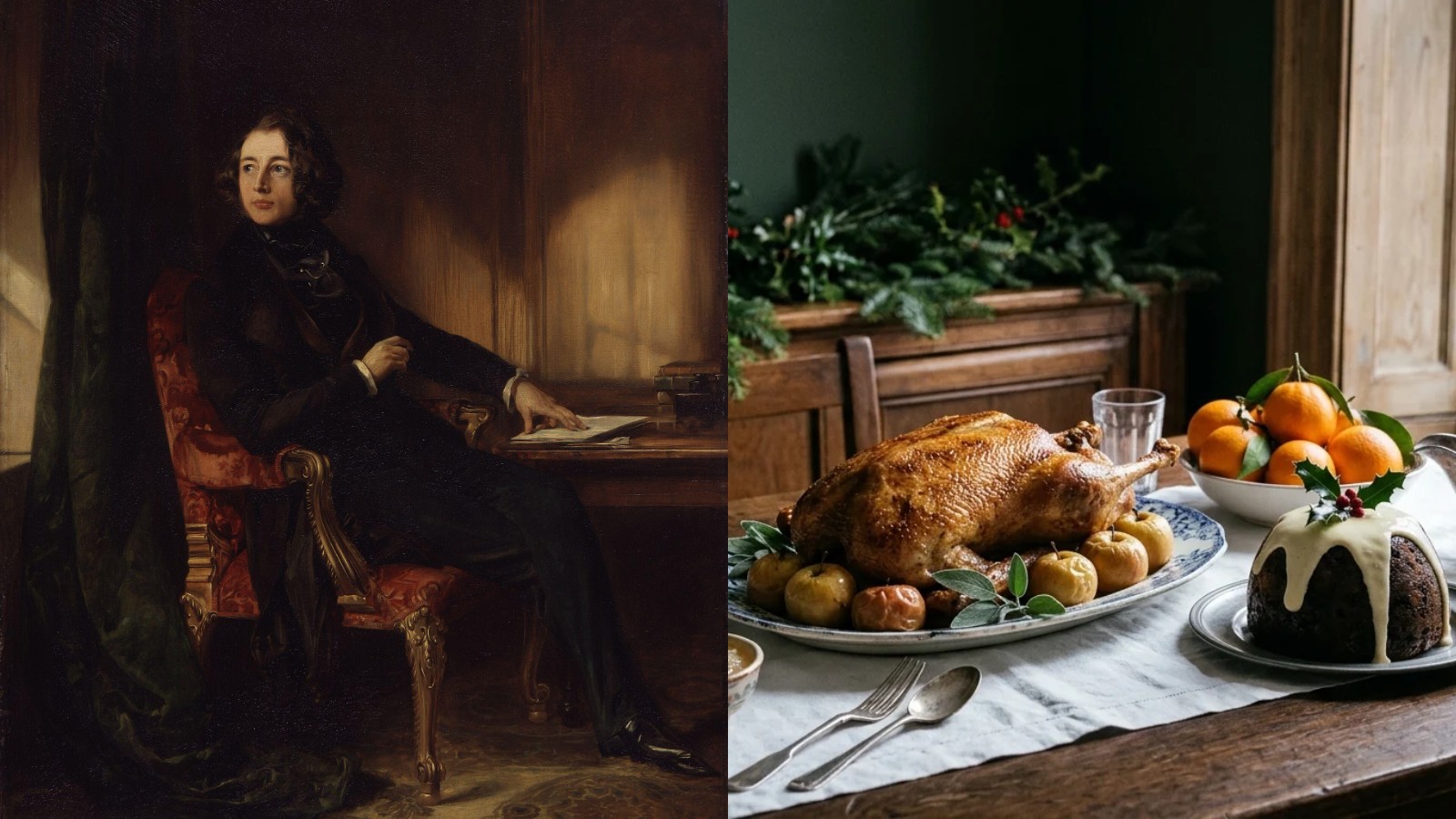
In A Christmas Carol, the Cratchit family cannot stop talking about their goose. Dickens wrote that there never was such a goose, praising its tenderness, flavor, size and cheapness, and that, with apple sauce and mashed potatoes, it was a sufficient dinner for the whole family. For a poor clerk’s household, a goose was a true luxury, often paid for through a weekly goose club and roasted in the baker’s oven down the street. Of all the Victorian Christmas recipes, a goose is still the most festive bird you can put on the table, with crackling skin and rich, dark meat..
You will need: 1 whole goose (about 10 to 12 pounds), salt and pepper, 1 orange cut in quarters, 1 onion cut in quarters, a small bunch of fresh sage and thyme, 4 apples for roasting alongside.
How to make it: 1. Heat the oven to 425F and pat the goose dry. 2. Prick the skin all over without piercing the meat and rub with salt and pepper. 3. Fill the cavity with orange, onion and herbs. 4. Roast on a rack for 30 minutes, then lower to 350F. 5. Roast about 2 hours more, pouring off the fat every 30 minutes, adding the apples for the last hour. 6. Rest 20 minutes before carving.
Sage and Onion Stuffing, the Smell the Cratchit Children Loved
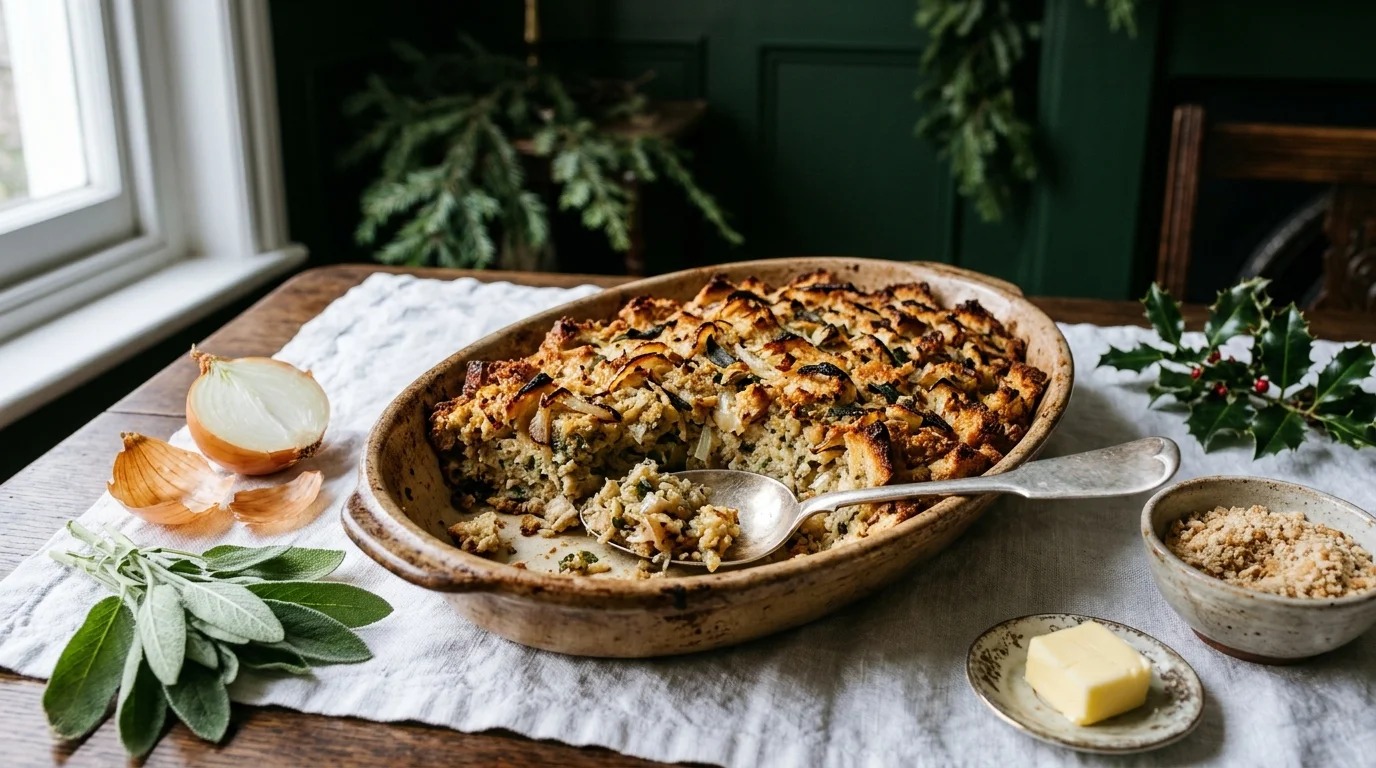
In the story, two of the younger Cratchits come tearing into the house, sure they have smelled their own goose cooking at the baker’s, and basking in luxurious thoughts of sage and onion. Among Victorian Christmas recipes, sage and onion stuffing was the classic partner for goose, because the sharp herb cuts through the rich meat. Many cooks today bake it in a separate dish instead of inside the bird, which gives you a soft middle and a crisp, golden top. Save a spoonful of goose fat to brush over it.
You will need: 2 large onions finely chopped, 4 tablespoons butter, 4 cups fresh white breadcrumbs, 2 tablespoons chopped fresh sage (or 2 teaspoons dried), 1 egg beaten, 1/2 cup chicken or vegetable stock, salt and pepper.
How to make it: 1. Heat the oven to 375F and butter a baking dish. 2. Cook the onions gently in the butter for 10 minutes until soft. 3. Mix with the breadcrumbs and sage. 4. Stir in the egg and enough stock to make it moist but not wet. 5. Season well and spread in the dish. 6. Bake 30 to 35 minutes until the top is golden and crisp.
Apple Sauce for Roast Goose
Dickens makes a point of mentioning that Mrs. Cratchit’s goose was eked out by apple sauce, and Belinda Cratchit sweetened the sauce herself. In Victorian Christmas recipes, tart apple sauce was the standard match for goose and pork, because the fruit balances the fatty meat. Cooking apples such as Bramleys collapse into a fluffy puree in minutes, but any tart apple works. Keep it a little sharp rather than sweet, and make a big batch, since leftovers are lovely on oatmeal or with cold meat on Boxing Day.
You will need: 4 large tart apples (Bramley or Granny Smith), peeled and chopped, 3 tablespoons water, 2 to 3 tablespoons sugar, 1 tablespoon butter, a squeeze of lemon juice, a pinch of cinnamon (optional).
How to make it: 1. Put the apples and water in a saucepan. 2. Cover and cook over low heat for 10 to 15 minutes, stirring now and then. 3. When the apples collapse, beat with a wooden spoon until smooth or leave a little chunky. 4. Stir in the sugar, butter and lemon. 5. Taste and adjust. 6. Serve warm or at room temperature with the goose.
Christmas Plum Pudding, the Speckled Cannonball of Victorian Christmas Recipes
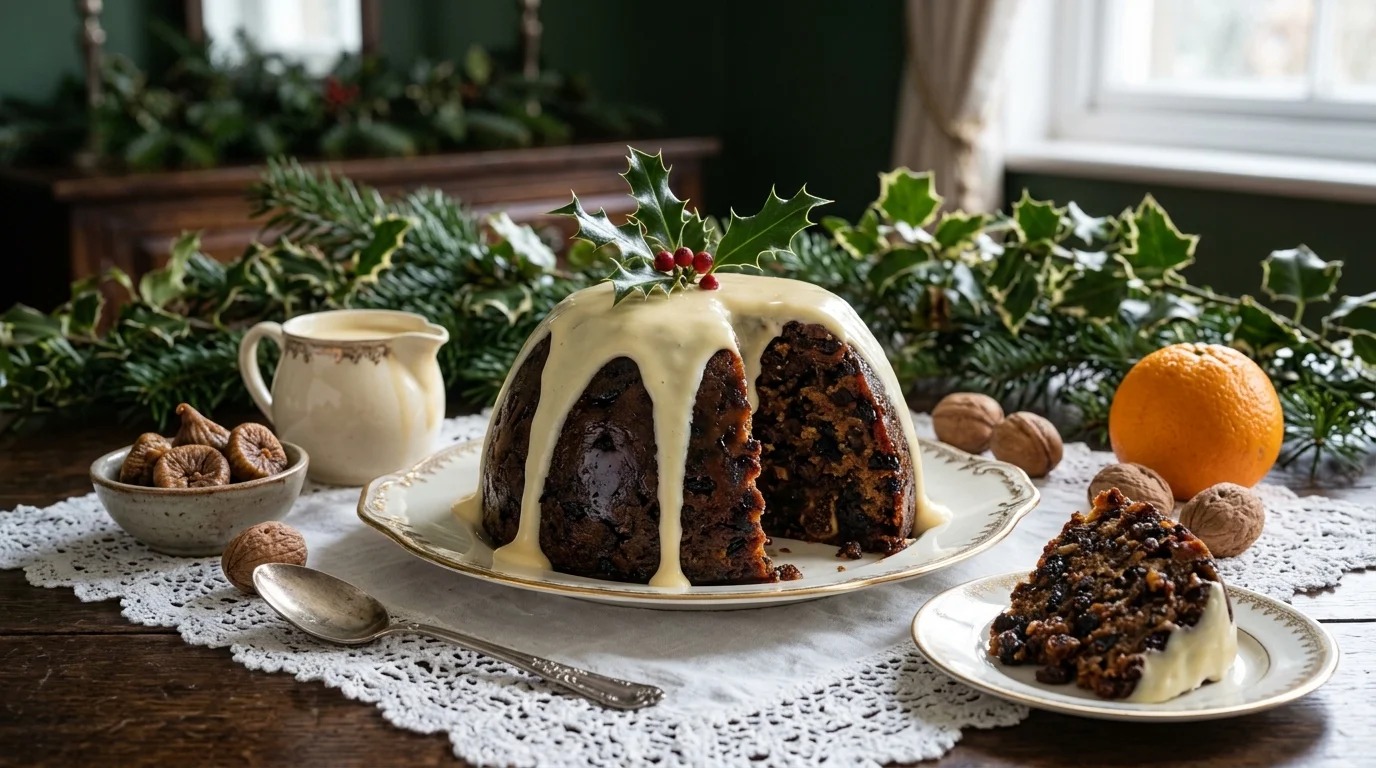
The most famous dessert scene in A Christmas Carol is Mrs. Cratchit carrying in the pudding, which Dickens compared to a speckled cannonball, hard and firm, with Christmas holly stuck into the top. These steamed puddings, also called figgy pudding, were made weeks ahead and packed with dried fruit, spice and suet. The version below skips the alcohol and uses orange juice, and you can steam it on the stove or in a slow cooker. Serve it with warm custard, and let everyone make a wish while stirring the batter.
You will need: 1 cup raisins, 1 cup currants, 1/2 cup chopped dried figs, 1/2 cup orange juice, 1/2 cup flour, 1 cup fresh breadcrumbs, 1/2 cup dark brown sugar, 1/2 cup cold grated butter or vegetable suet, 2 eggs, 1 teaspoon mixed spice, zest of 1 orange, custard to serve.
How to make it: 1. Soak the fruit in the orange juice overnight. 2. Mix in all the other ingredients. 3. Pack into a buttered 1 quart pudding basin and cover tightly with parchment and foil. 4. Steam in a covered pot of simmering water for 4 hours, topping up the water. 5. Cool and store, then steam 1 to 2 hours more on Christmas Day. 6. Turn out, add holly and serve with custard.
Smoking Bishop, Scrooge’s Christmas Bowl (Alcohol-Free Version)
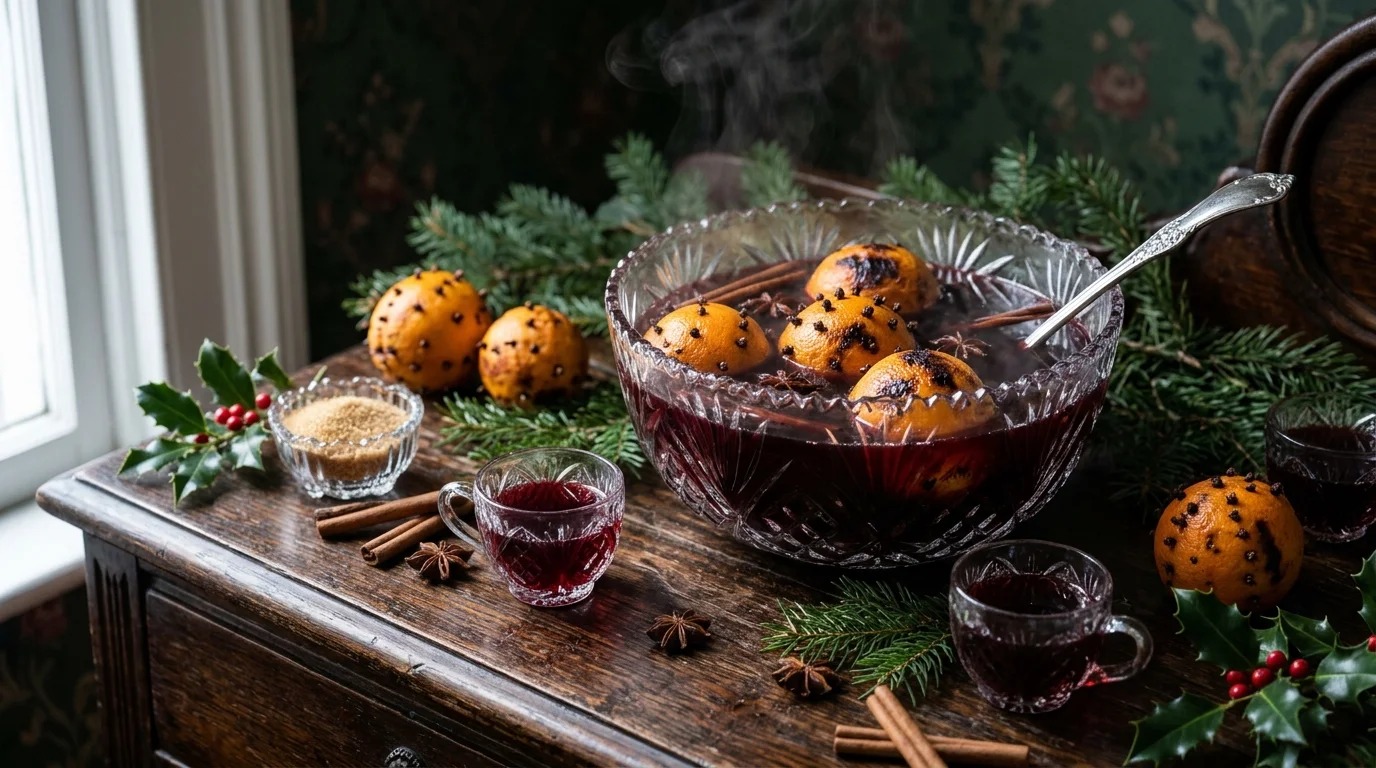
At the end of the book, a changed Scrooge tells Bob Cratchit they will discuss his affairs that very afternoon over a Christmas bowl of Smoking Bishop. The Victorian original was a hot punch of port and red wine with roasted oranges studded with cloves, named for the bishop-purple color and the steam rising from the bowl. This family-friendly take on one of the boldest Victorian Christmas recipes keeps the roasted Seville-style oranges and spice but uses grape juice and orange juice, so everyone at the table can raise a cup with Tiny Tim. Roasting the oranges first gives it a deep, caramel flavor.
You will need: 5 oranges, 1 lemon, about 30 whole cloves, 4 cups red grape juice, 2 cups orange juice, 1 cup water, 1/3 cup brown sugar, 2 cinnamon sticks, 2 star anise, 6 allspice berries, 1 inch piece of fresh ginger sliced.
How to make it: 1. Heat the oven to 400F. 2. Stud 4 oranges and the lemon with cloves and roast for 1 hour until browned. 3. Put the grape juice, water, sugar and spices in a large pot. 4. Add the roasted fruit, cut in halves, and simmer gently for 20 minutes. 5. Stir in the juice of the last orange and the orange juice. 6. Warm through without boiling and ladle into cups.
Wassail, the Hot Apple Punch of Victorian Christmas Recipes
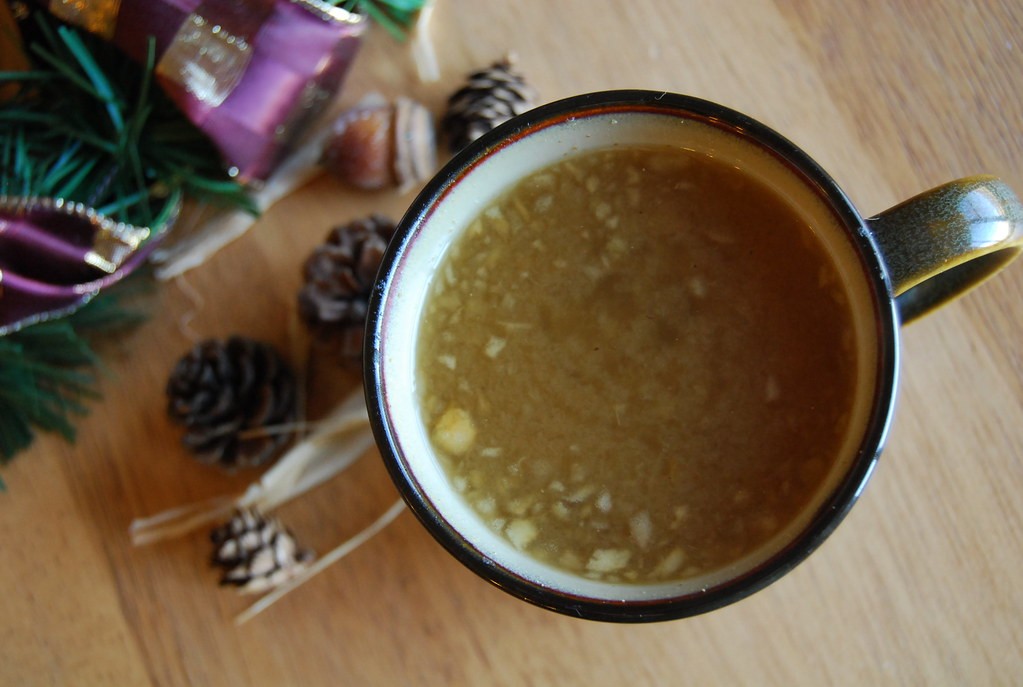
Wassail comes from an old English greeting meaning be well, and by Victorian times groups of carolers went from door to door with a wassail bowl, singing for a warm cup in return. The bowl was usually filled with hot spiced ale or cider and roasted apples, but today most families make it with apple cider and fruit juice. It is the easiest drink on this list and fills the whole house with the smell of Christmas. Keep it warm in a slow cooker so guests can help themselves all evening.
You will need: 8 cups apple cider (non-alcoholic), 2 cups orange juice, 1 cup cranberry juice, 1/4 cup brown sugar, 3 cinnamon sticks, 1 teaspoon whole cloves, 1 teaspoon allspice berries, 1 orange sliced, 2 small apples roasted (optional).
How to make it: 1. Pour the cider and juices into a large pot or slow cooker. 2. Stir in the sugar. 3. Add the spices, tied in a piece of cheesecloth if you like. 4. Add the orange slices. 5. Simmer gently for 30 minutes on the stove or 2 hours on low in a slow cooker. 6. Float the roasted apples on top and ladle into mugs.
Mince Pies, the Little Christmas Pies of Victorian Christmas Recipes
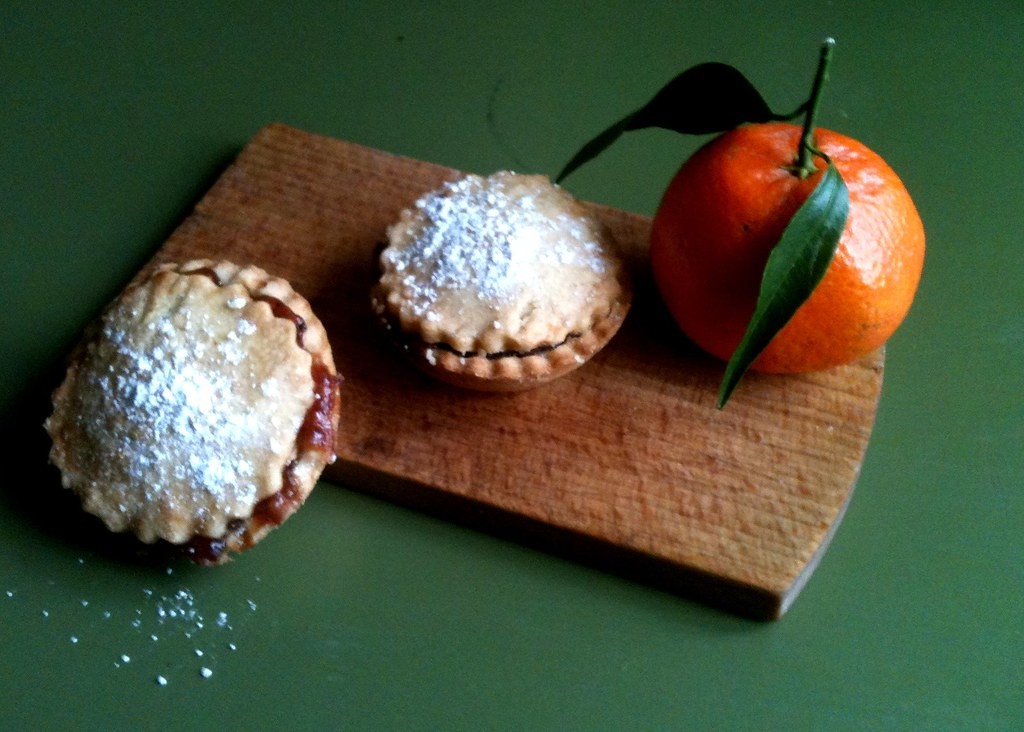
Mince pies appear in the great pile of food around the Ghost of Christmas Present, and Victorian families baked them by the dozen through the holidays. Centuries earlier the filling held real minced meat, but by Dickens’ time it was mostly dried fruit, apples, spice and suet, the sweet mincemeat we use today. An old tradition says that eating one mince pie on each of the twelve days of Christmas brings twelve happy months. Homemade mincemeat takes ten minutes and tastes far brighter than the jar.
You will need: For the mincemeat: 1 apple grated, 1 cup raisins, 1/2 cup currants, 1/4 cup candied peel, 1/3 cup brown sugar, 3 tablespoons melted butter, zest and juice of 1 orange, 1 teaspoon mixed spice. 1 pound shortcrust pastry, 1 egg beaten, powdered sugar.
How to make it: 1. Mix all the mincemeat ingredients and let them stand at least 1 hour. 2. Heat the oven to 400F. 3. Cut 12 pastry rounds to line a muffin tin and 12 smaller rounds or stars for the tops. 4. Fill each case with a heaped tablespoon of mincemeat. 5. Add the tops, brush with egg and bake 18 to 20 minutes until golden. 6. Cool and dust with powdered sugar.
Roasted Chestnuts, Made in the Oven
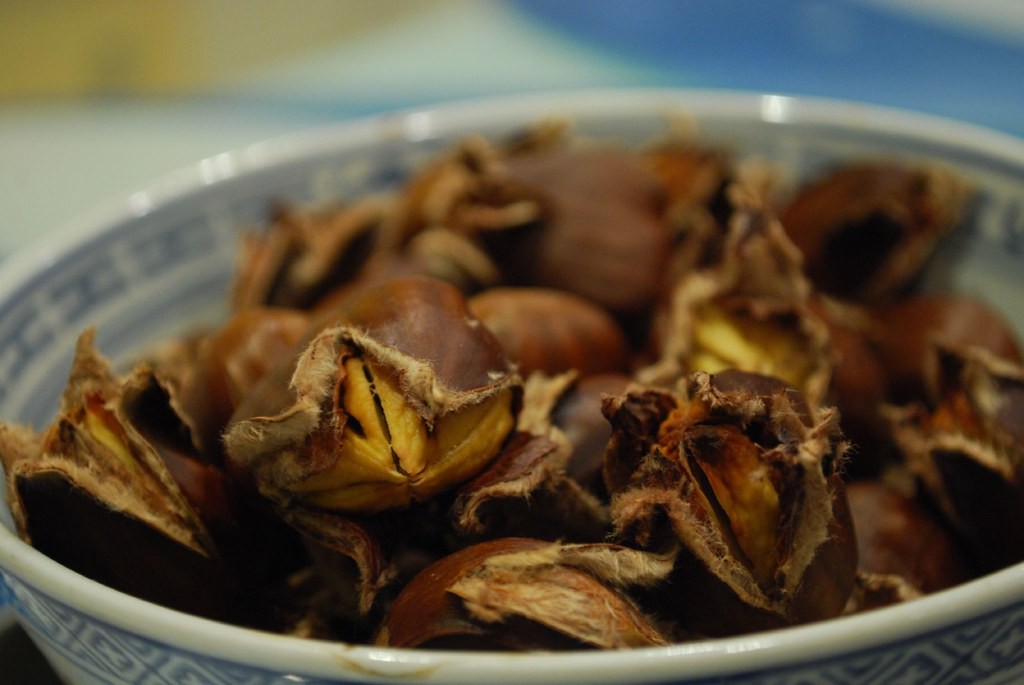
After the Cratchits finish their pudding, Dickens describes apples and oranges put on the table and a shovel full of chestnuts set to roast. Street sellers in Victorian London sold hot chestnuts in paper twists, and the smell meant winter had arrived. Like many Victorian Christmas recipes, they need no special equipment at home: a hot oven gives the same sweet, soft, buttery nuts. The key is to cut a cross in each shell so the steam can escape, then wrap them in a towel for a few minutes so the skins peel off easily.
You will need: 1 pound fresh chestnuts, a small sharp knife, a little melted butter and a pinch of flaky salt (optional), a clean kitchen towel.
How to make it: 1. Heat the oven to 425F. 2. Cut a deep cross through the shell on the rounded side of each chestnut. 3. Soak in hot water for 10 minutes, then drain. 4. Spread cut side up on a baking tray. 5. Roast 15 to 20 minutes until the shells curl open. 6. Wrap in a towel for 5 minutes, then peel while warm and toss with butter and salt.
Victorian Sugar Plums, Not Plums at All
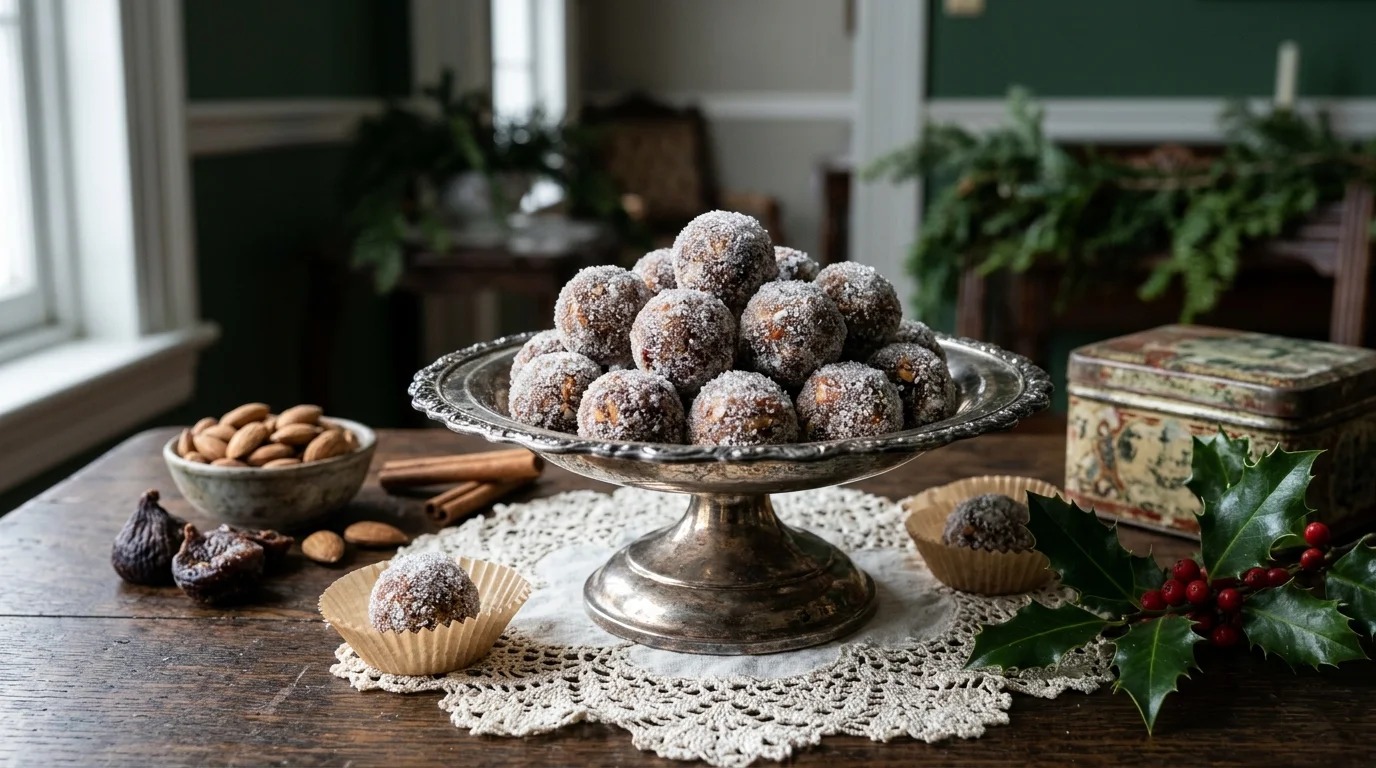
Victorian children dreamed of sugar plums, and the grocers’ windows Dickens describes in the story were full of candied fruits and boxes of French plums. Old sugar plums were hard sugar sweets made by coating seeds or nuts in layer after layer of syrup, a job that took days. The easy homemade version below is closer to a soft fruit and nut truffle: chopped dried fruit, almonds, honey and warm spice, rolled into balls and coated in sparkling sugar. They are the easiest Victorian Christmas recipes to give as an edible gift in a little tin.
You will need: 1 cup whole almonds toasted, 1/2 cup pitted prunes, 1/2 cup dried figs, 1/2 cup dates, 2 tablespoons honey, zest of 1 orange, 1/2 teaspoon cinnamon, 1/4 teaspoon ground cardamom, a pinch of cloves, 1/2 cup coarse sugar for rolling.
How to make it: 1. Pulse the almonds in a food processor until finely chopped. 2. Add the prunes, figs and dates and pulse until sticky. 3. Add the honey, zest and spices and pulse to combine. 4. Roll into walnut-size balls. 5. Roll each ball in the coarse sugar. 6. Set on parchment to firm for 1 hour, then store in a tin.
Victorian Christmas Cake With Marzipan
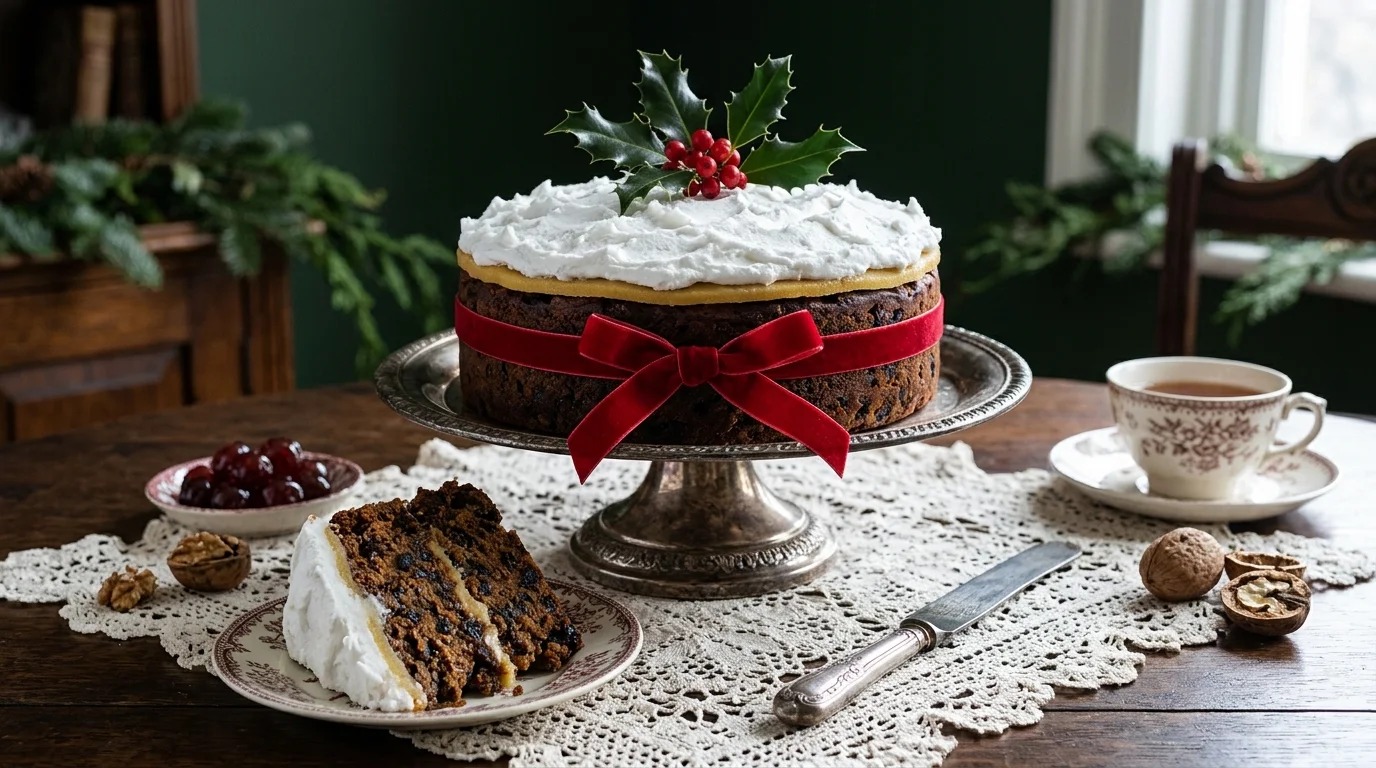
In the early Victorian era, the big iced fruit cake belonged to Twelfth Night, but as those parties faded later in the century, the cake moved to Christmas Day. A proper Victorian Christmas cake is dark and moist with fruit, wrapped in a layer of almond marzipan and finished with snowy white icing. Bakers usually make it four to six weeks ahead and feed it a spoonful of liquid each week, and this version uses orange juice instead of brandy. It is one of the Victorian Christmas recipes worth starting in November, and a sprig of holly on top is the classic decoration.
You will need: 3 cups mixed dried fruit, 1/2 cup candied cherries, 1/2 cup orange juice plus extra for feeding, 1 cup soft butter, 1 cup dark brown sugar, 4 eggs, 2 cups flour, 2 teaspoons mixed spice, 1/2 cup ground almonds, 1 pound marzipan, 2 tablespoons apricot jam, white fondant or royal icing.
How to make it: 1. Soak the fruit in orange juice overnight. 2. Heat the oven to 300F and line an 8 inch round pan. 3. Cream the butter and sugar, beat in the eggs, then fold in the flour, spice, almonds and fruit. 4. Bake about 3 hours until a skewer comes out clean. 5. Cool, wrap and feed with a spoonful of juice every week. 6. Brush with warm jam, cover with marzipan and then icing.
Bread Sauce, the Quiet Classic of Victorian Christmas Recipes
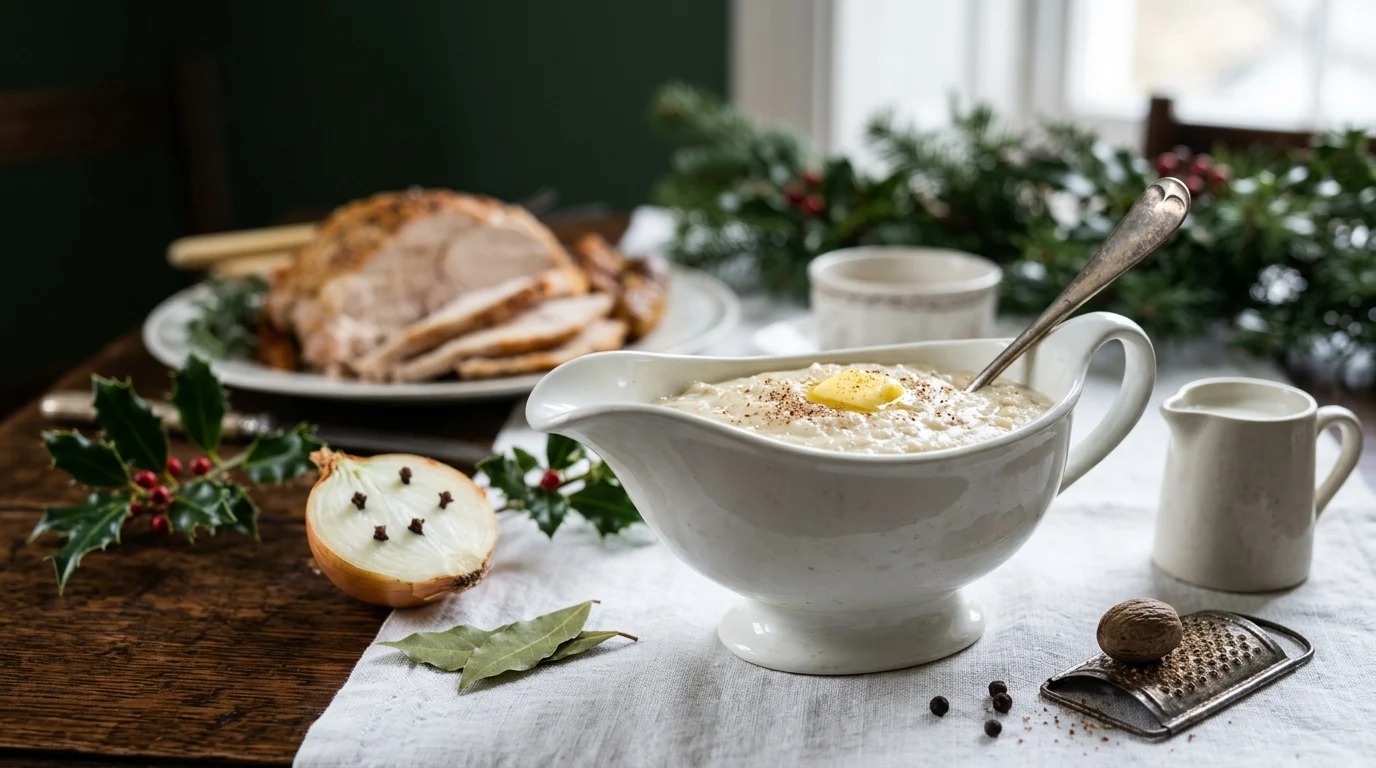
Bread sauce sounds strange to many people outside Britain, but it has been served with roast birds since medieval times and was on almost every Victorian Christmas table. Milk is gently infused with an onion studded with cloves, a bay leaf and peppercorns, then thickened with fresh breadcrumbs into a creamy, mild sauce. It is soft and comforting, and it goes beautifully with goose, turkey or roast chicken. The milk can be infused the night before, so on the day it takes only five minutes.
You will need: 2 cups whole milk, 1 small onion peeled, 6 whole cloves, 1 bay leaf, 6 black peppercorns, 1 1/2 cups fresh white breadcrumbs, 2 tablespoons butter, 2 tablespoons cream, freshly grated nutmeg, salt.
How to make it: 1. Stud the onion with the cloves. 2. Put it in a pan with the milk, bay leaf and peppercorns. 3. Bring almost to a boil, then turn off the heat and let it infuse for 1 hour. 4. Strain the milk back into the pan. 5. Stir in the breadcrumbs and simmer gently for 5 minutes until thick. 6. Beat in the butter and cream and season with nutmeg and salt.
Twelfth Night Cake With a Hidden Bean
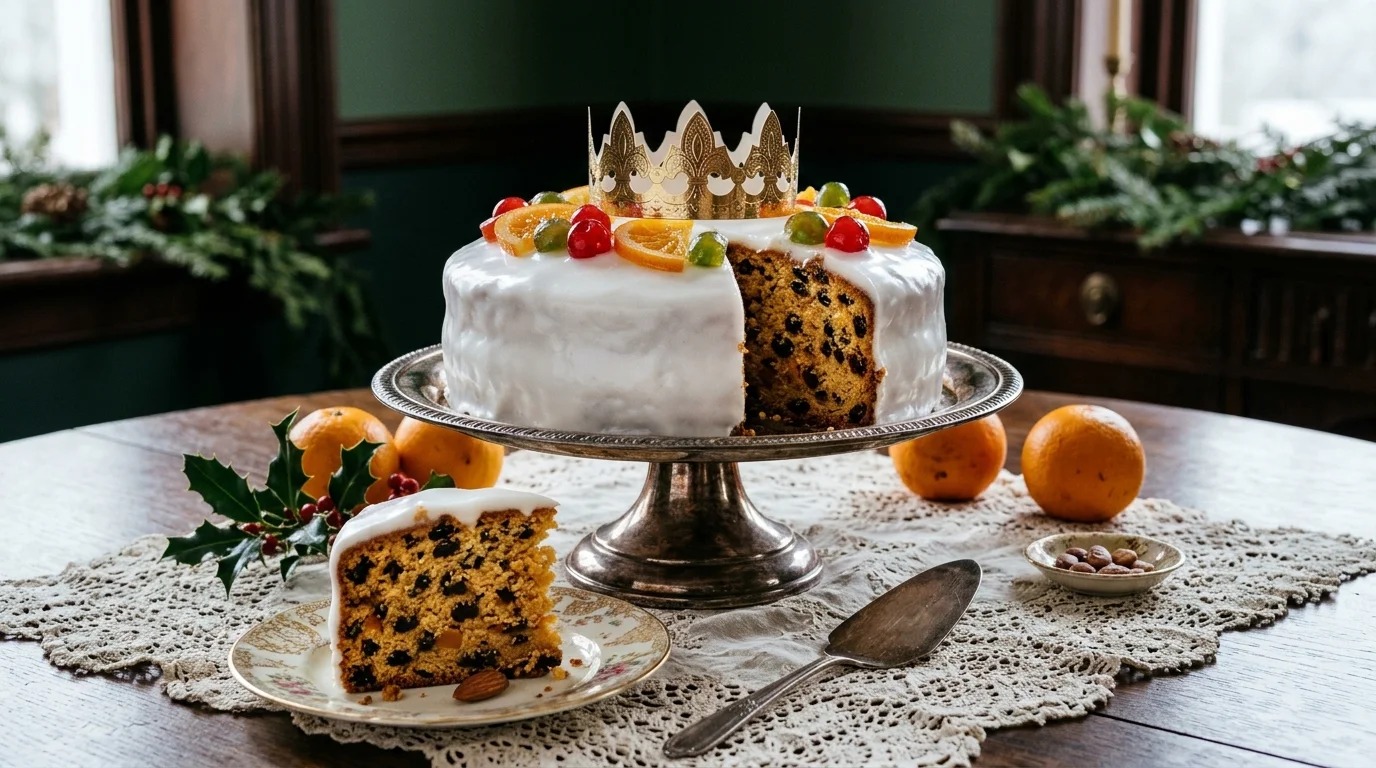
When the Ghost of Christmas Present appears, Dickens surrounds him with a feast that includes immense twelfth cakes. These grand cakes were the highlight of Twelfth Night parties on January 5, often decorated with sugar figures and crowns. A dried bean and a pea were baked inside, and whoever found the bean became king of the party and the pea finder became queen. This lighter spiced fruit cake is quick to make, and you can hide a whole almond instead of a bean so nobody bites a hard surprise.
You will need: 1 cup soft butter, 1 cup sugar, 4 eggs, 2 cups flour, 2 teaspoons baking powder, 1 teaspoon mixed spice, 1/2 cup milk, 1 1/2 cups mixed dried fruit, zest of 1 orange, 1 whole almond or dried bean. Glaze: 1 cup powdered sugar, 2 tablespoons orange juice, candied fruit to decorate.
How to make it: 1. Heat the oven to 350F and line a 9 inch round pan. 2. Cream the butter and sugar and beat in the eggs. 3. Fold in the flour, baking powder and spice, then the milk, fruit and zest. 4. Spoon into the pan and push in the almond or bean. 5. Bake 50 to 60 minutes until a skewer comes out clean. 6. Cool, glaze and top with candied fruit.
Baked Apples With Brown Sugar
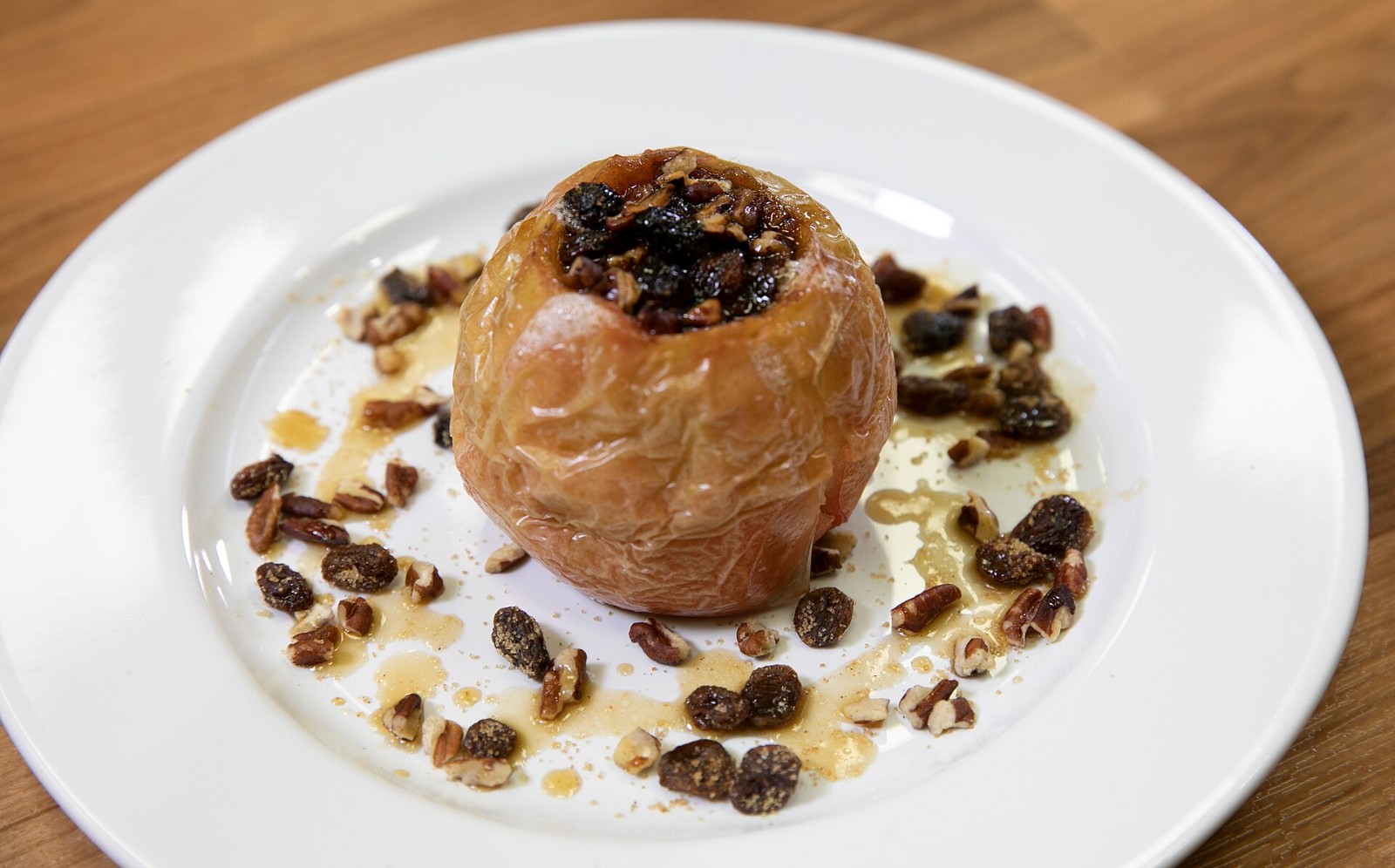
Dickens fills the fruit shops of his Christmas London with ruddy, brown-faced onions, pears and cherry-cheeked apples, and baked apples were one of the cheapest and coziest Victorian winter desserts. They went into the oven beside the roast, filled with sugar, butter and dried fruit, and came out soft and syrupy. Like the best Victorian Christmas recipes, they are simple, use pantry ingredients and are lovely for anyone who wants a lighter end to a big dinner. Serve them warm with a spoonful of custard, cream or yogurt.
You will need: 4 large firm apples (such as Bramley, Honeycrisp or Rome), 1/4 cup brown sugar, 1/4 cup raisins or chopped dates, 1/4 cup chopped walnuts, 1 teaspoon cinnamon, a pinch of nutmeg, 2 tablespoons butter, 1/2 cup apple juice or water.
How to make it: 1. Heat the oven to 375F. 2. Core the apples, leaving the bottoms whole, and score a line around the middle of each skin. 3. Mix the sugar, raisins, walnuts and spices. 4. Pack the filling into the apples and top each with butter. 5. Stand them in a baking dish and pour the juice around. 6. Bake 40 to 50 minutes, basting twice, until tender.
Victorian Gingerbread, the Treat of Christmas Fairs
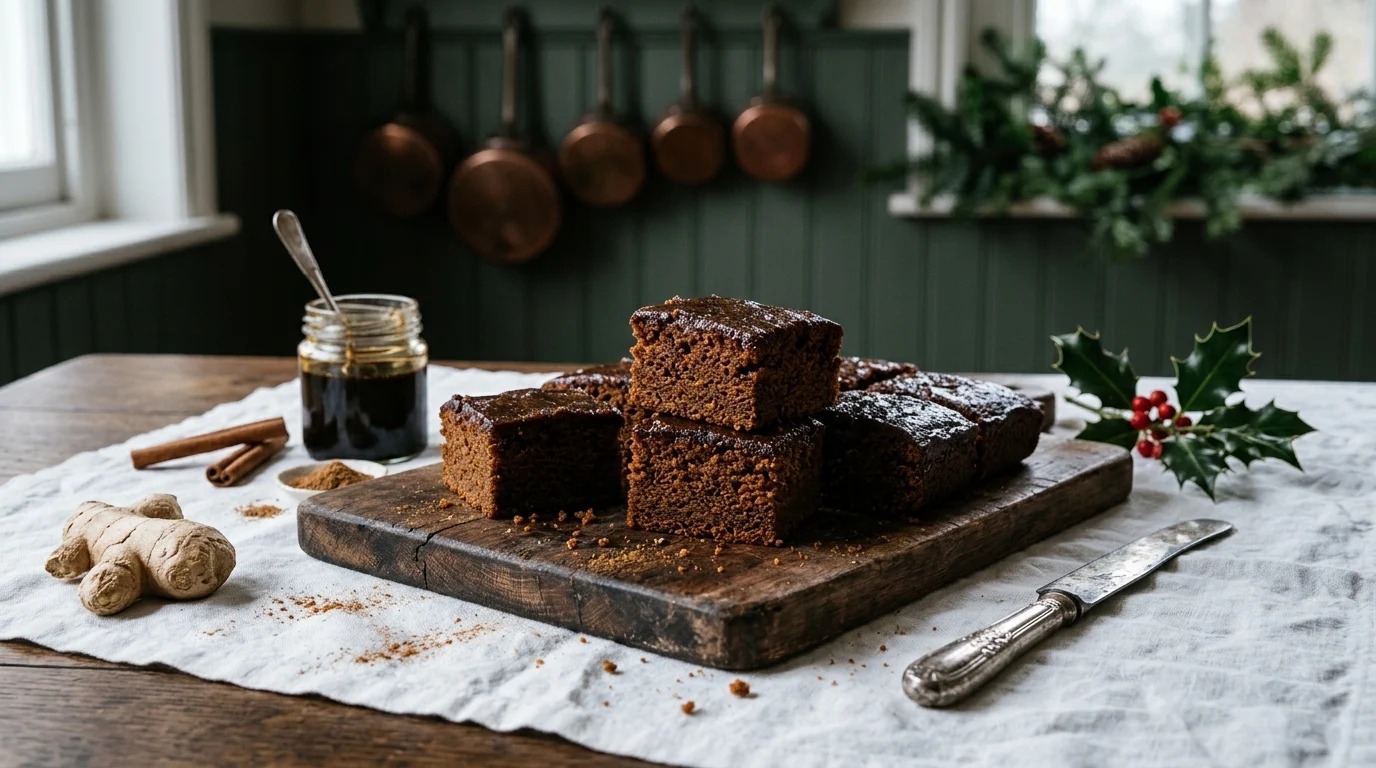
Gingerbread was one of the great treats of Victorian England, sold at winter fairs and markets in every shape from soft squares to gilded figures. Home cooks baked a dark, sticky version sweetened with black treacle, which we call molasses, and filled with ginger and warm spice. It keeps for a week and actually gets stickier and better after a day or two wrapped in paper. If you enjoy old recipes like this one, our Christmas Eve dinner traditions from around the world are full of other dishes with a long history.
You will need: 1/2 cup butter, 1/2 cup dark brown sugar, 1/2 cup molasses, 1/2 cup golden syrup or honey, 2 cups flour, 1 tablespoon ground ginger, 1 teaspoon cinnamon, 1/2 teaspoon allspice, 1 teaspoon baking soda, 1 cup milk, 2 eggs.
How to make it: 1. Heat the oven to 325F and line an 8 by 8 inch pan. 2. Melt the butter, sugar, molasses and syrup together and cool slightly. 3. Mix the flour and spices in a bowl. 4. Warm the milk, dissolve the baking soda in it, then beat in the eggs. 5. Stir the wet ingredients into the dry until smooth. 6. Bake 45 to 50 minutes, cool in the pan and cut into squares.
Roast Turkey, Scrooge’s Prize Christmas Bird
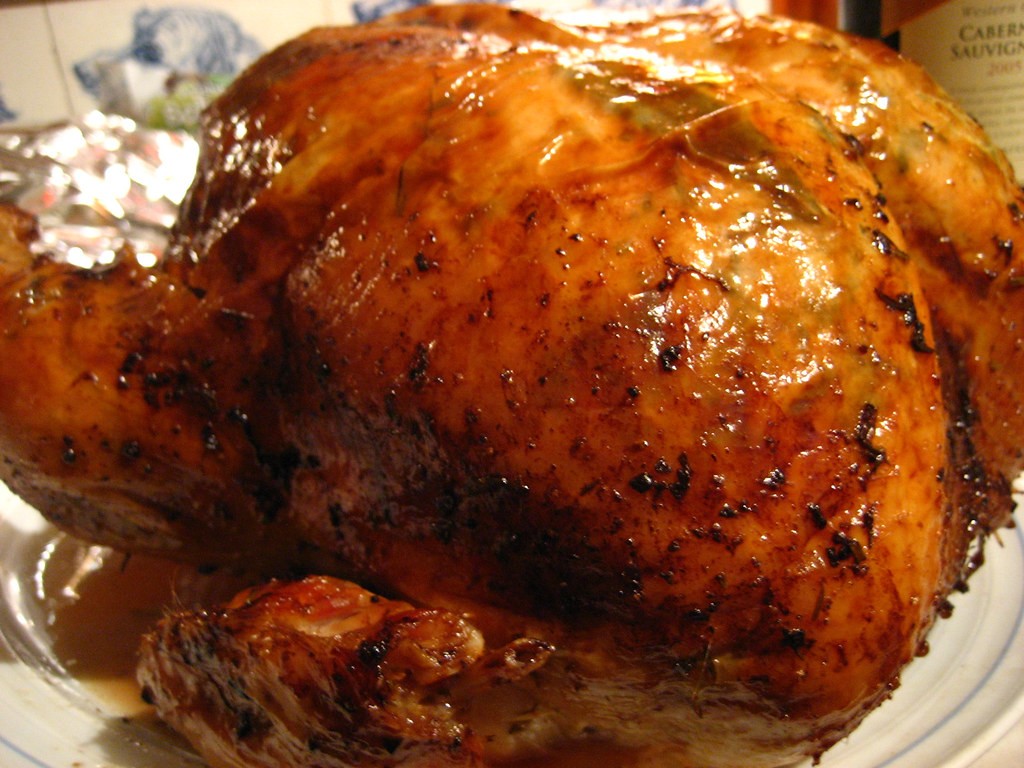
On Christmas morning a joyful Scrooge sends a boy to buy the prize turkey hanging in the poulterer’s window, a bird so big it had to go to the Cratchits’ house in a cab. That moment helped turn turkey, once a rich family’s bird, into the star of Christmas dinner across Britain and America. Victorian Christmas recipes roasted the bird plainly, and dry brining the night before is the easiest way to get juicy meat and crisp skin. Serve it with the stuffing, apple sauce and bread sauce from this list for a true Dickens feast.
You will need: 1 turkey (12 to 14 pounds), 3 tablespoons kosher salt, 1 tablespoon brown sugar, 1 teaspoon black pepper, 1/2 cup soft butter, 1 onion, 1 lemon, fresh thyme and sage, 2 cups stock.
How to make it: 1. The night before, rub the salt, sugar and pepper all over the turkey and chill uncovered. 2. Heat the oven to 425F. 3. Fill the cavity with onion, lemon and herbs and rub butter over the skin. 4. Roast 30 minutes, then lower to 325F, add the stock to the pan and cover the breast with foil. 5. Roast about 2 1/2 hours more until the thigh reads 165F. 6. Rest 30 minutes before carving.