Polish Christmas Cookies: 15 Old-Country Treats Babcia Baked for Christmas Eve
Polish Christmas cookies were never about fancy decorating; they were about Babcia’s kitchen smelling of honey, butter and poppy seed for a whole week before Christmas Eve. In Poland that evening is called Wigilia, and the meatless supper only begins when the first star appears in the sky. After the pierogi and the fish, the sweets come out: flaky jam pastries, sugar-dusted angel wings, spiced honey hearts and poppy seed slices piled on Grandma’s best plates. Many of these treats came to America with immigrant families and still fill holiday tins in Chicago, Buffalo and Pittsburgh. Here are 15 old-country recipes worth baking this December, each with a short list of what you will need and simple steps, so your own tray tastes like a visit to Babcia’s table..
Polish Christmas Cookies Start With Kolaczki
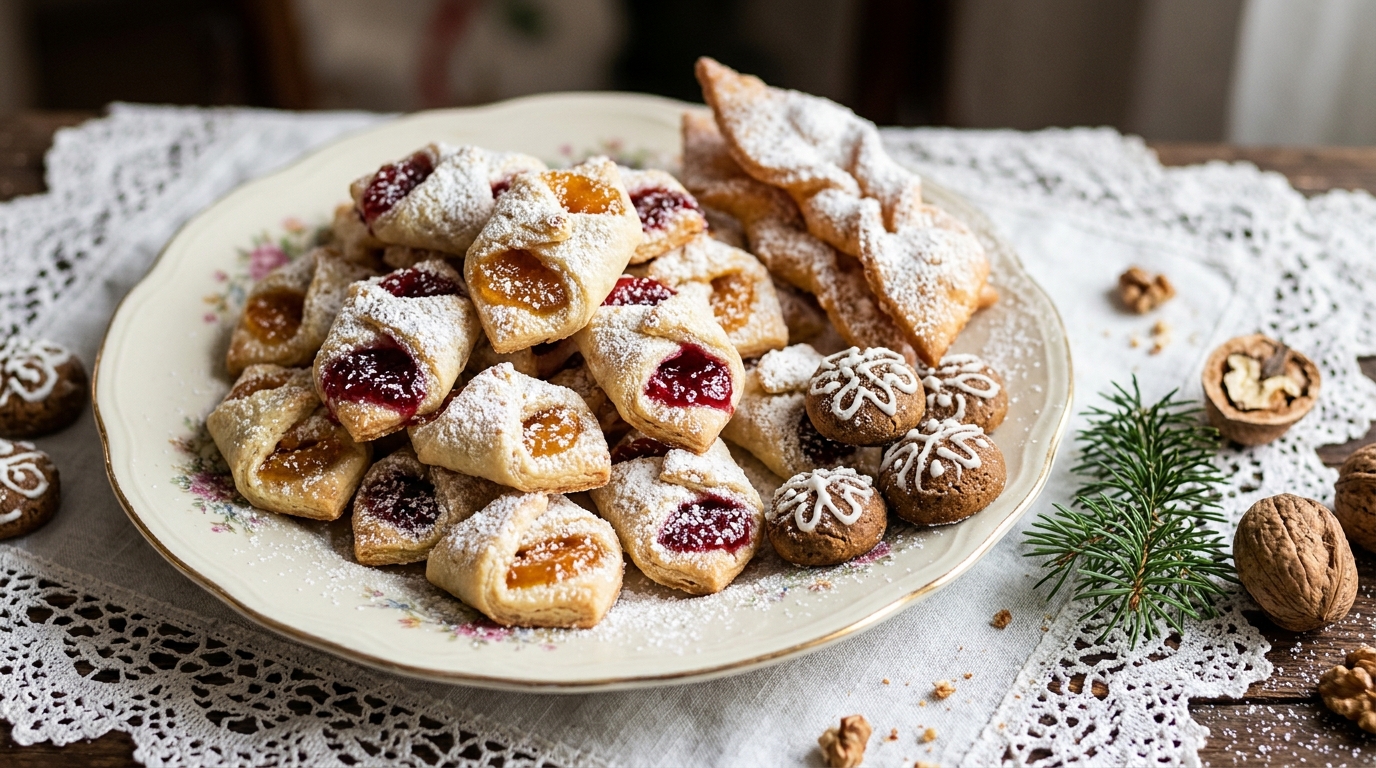
Ask any Polish American family which of their Polish Christmas cookies disappears first and the answer is almost always kolaczki. The dough is just butter, cream cheese and flour, so it bakes up tender and flaky, almost like a tiny pastry. Each square gets a spoonful of apricot, raspberry or prune filling, then two corners are pinched together over the top. A snowfall of powdered sugar finishes them. Babcia often made a double batch, one to eat and one to give away, because neighbors would knock on the door hoping for a box..
You will need: 1 cup butter (softened), 8 ounces cream cheese (softened), 2 cups all-purpose flour, 1/4 teaspoon salt, 3/4 cup thick apricot or raspberry jam, powdered sugar for dusting, extra flour for rolling.
How to make it: 1. Beat the butter and cream cheese until smooth, then mix in the flour and salt until a soft dough forms. 2. Divide the dough in half, flatten into disks, wrap and chill for at least 2 hours. 3. Roll each disk 1/8 inch thick on a floured surface and cut into 2 1/2 inch squares. 4. Place 1/2 teaspoon jam in the center, fold two opposite corners over and press to seal. 5. Bake at 350 F for 12 to 15 minutes until the bottoms are light gold, cool and dust generously with powdered sugar.
Chrusciki, the Angel Wings Babcia Fried by the Dozen
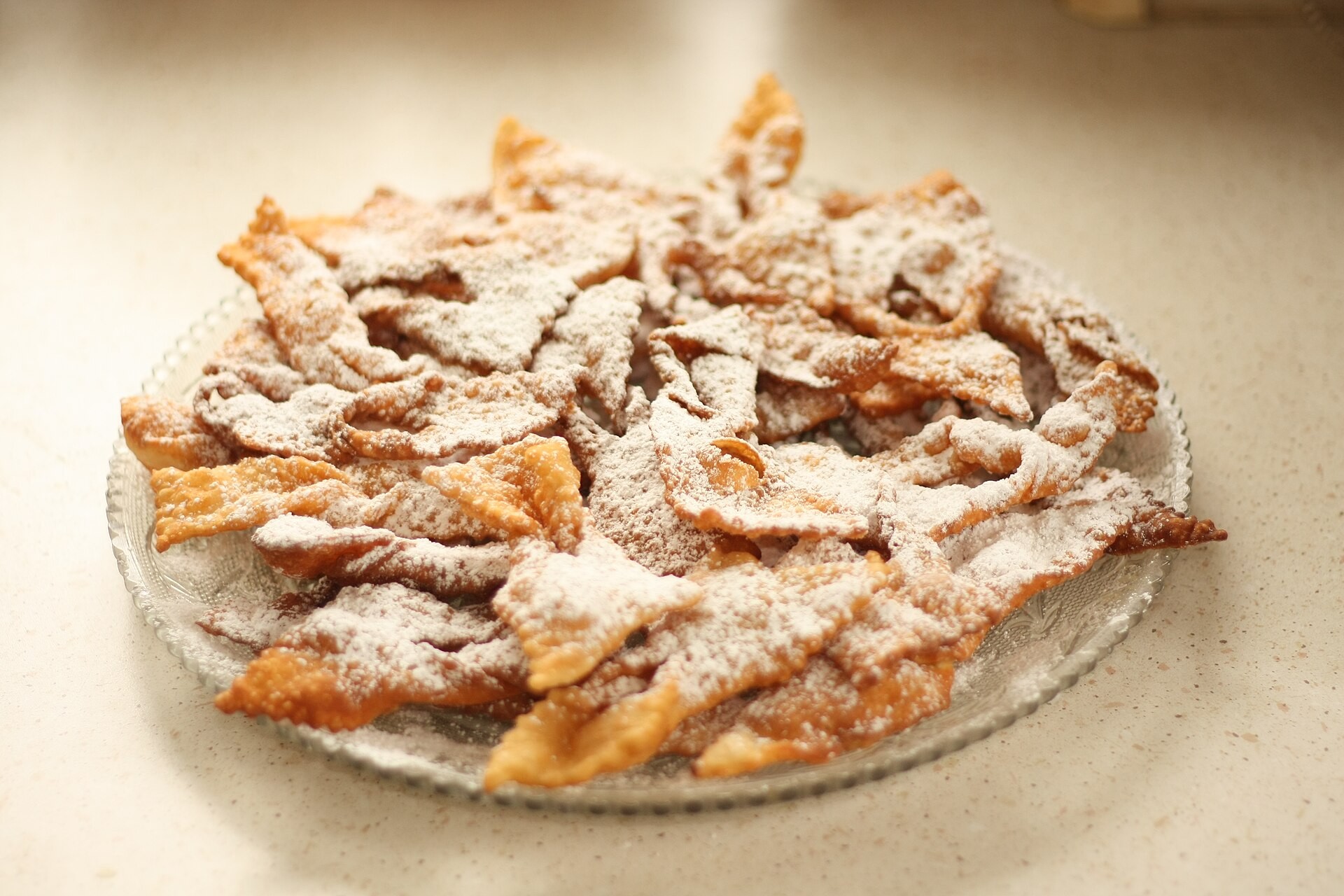
Chrusciki, also called faworki, are thin ribbons of egg yolk dough, slit in the middle and pulled through to make a twist, then fried for seconds until they blister and turn pale gold. In Poland they are famous before Lent, but in many Polish American homes they are counted among the Polish Christmas cookies and come out again for weddings. The secret is rolling the dough so thin you can almost read through it, and a splash of vodka or vinegar in the dough keeps them light and crisp. They shatter at first bite and leave powdered sugar everywhere.
You will need: 6 egg yolks, 1 whole egg, 3 tablespoons sugar, 1/4 teaspoon salt, 3 tablespoons sour cream, 1 tablespoon vodka or white vinegar, 2 cups all-purpose flour, oil for frying, powdered sugar.
How to make it: 1. Whisk the yolks, egg, sugar and salt until thick, then stir in the sour cream and vodka. 2. Mix in the flour and knead for 5 minutes until smooth and elastic, then rest it covered for 20 minutes. 3. Roll small portions paper thin and cut into 1 1/2 by 4 inch strips with a slit in the center. 4. Pull one end through the slit to make a twist. 5. Fry in 350 F oil for 30 to 60 seconds per side until pale gold, drain and dust heavily with powdered sugar.
Pierniczki, the Honey Spice Polish Christmas Cookies

Pierniczki are small gingerbread cookies made with warm honey and a spice blend Polish cooks simply call piernik spice: cinnamon, ginger, cloves, nutmeg, allspice and a little pepper. The dough tastes even better after a day of rest, and the baked cookies start out crisp and soften in a tin over the next week, which is why many grandmothers bake them in early December. Cut them into stars and hearts, pipe on thin white icing lines, and you have the cookie that makes the whole house smell like the holidays.
You will need: 1/2 cup honey, 1/3 cup sugar, 4 tablespoons butter, 2 1/2 cups all-purpose flour, 1 egg, 1 teaspoon baking soda, 2 teaspoons ground cinnamon, 1 teaspoon ground ginger, 1/2 teaspoon each ground cloves and nutmeg, pinch of black pepper, 1 cup powdered sugar and 1 egg white for icing.
How to make it: 1. Warm the honey, sugar and butter until melted, then cool to lukewarm. 2. Mix the flour, baking soda and spices, add the honey mixture and the egg, and knead into a smooth dough. 3. Wrap and rest the dough for at least 2 hours or overnight. 4. Roll 1/4 inch thick, cut into shapes and bake at 350 F for 8 to 10 minutes. 5. Whisk the powdered sugar and egg white into a stiff icing, pipe thin lines on the cooled cookies and store in a tin.
Torun Gingerbread Hearts With Chocolate Glaze
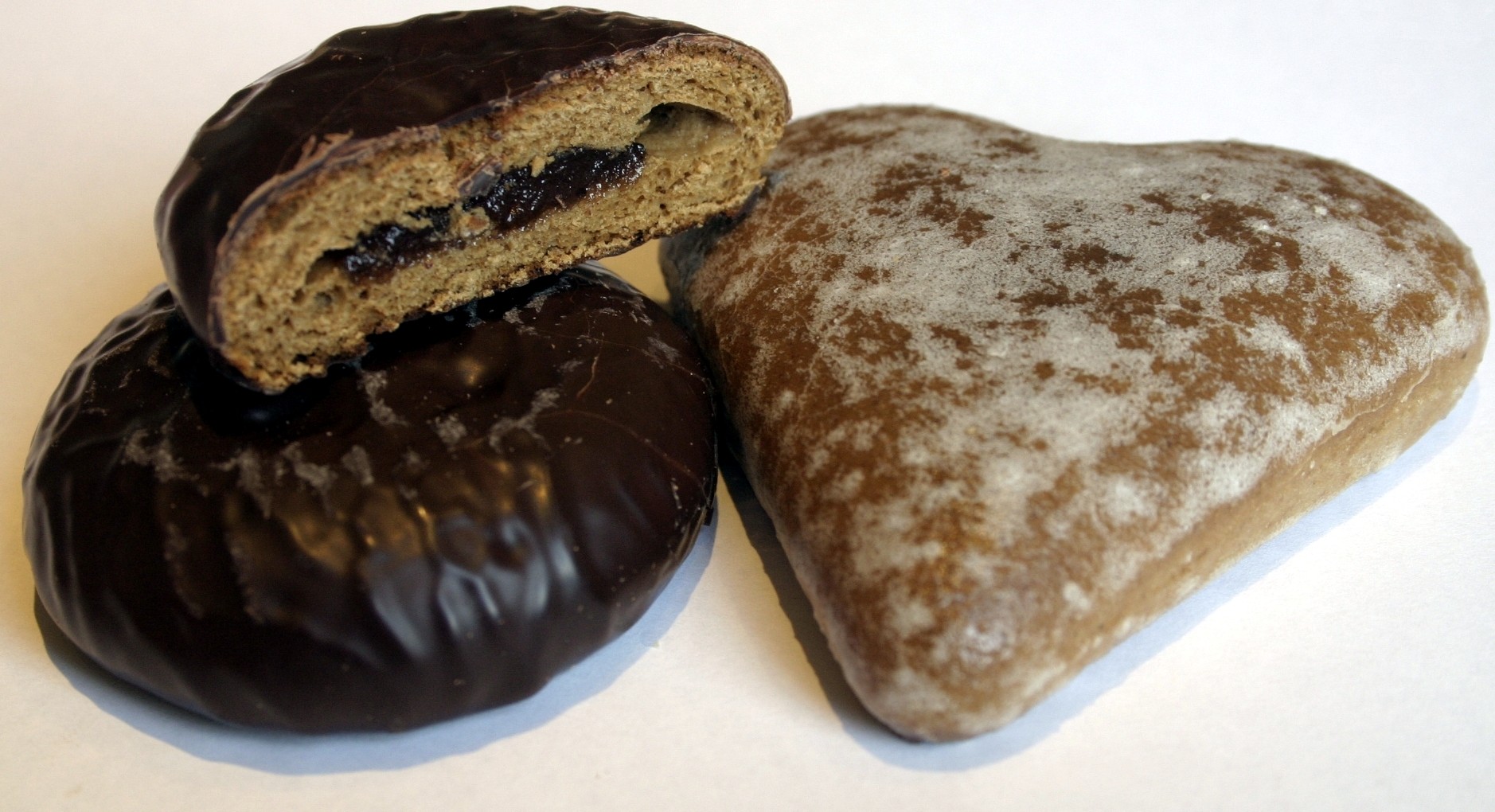
The city of Torun has been baking gingerbread since the Middle Ages, and its spiced hearts are still the souvenir every visitor carries home. The bakery style version is soft and cakey, often sandwiched with plum jam and dipped in dark chocolate. You can make a homemade version with the same honey dough, baked a little thicker so the centers stay tender. Brush half the hearts with plum butter, top with a second heart, then coat them in melted chocolate. Wrapped in wax paper, these sturdy Polish Christmas cookies keep beautifully for two weeks.
You will need: 1 batch honey gingerbread dough (from the pierniczki recipe), 1/2 cup plum butter or thick plum jam, 8 ounces dark chocolate, 1 tablespoon coconut oil, a heart cookie cutter.
How to make it: 1. Roll the dough 3/8 inch thick and cut out large hearts. 2. Bake at 350 F for 12 to 14 minutes until just firm, then cool completely. 3. Spread plum butter on half the hearts and press a second heart on top. 4. Melt the chocolate with the coconut oil until smooth. 5. Dip or brush the hearts with chocolate, set on parchment and let them firm before stacking.
Rogaliki Jam Crescents for the Polish Christmas Cookies Tin
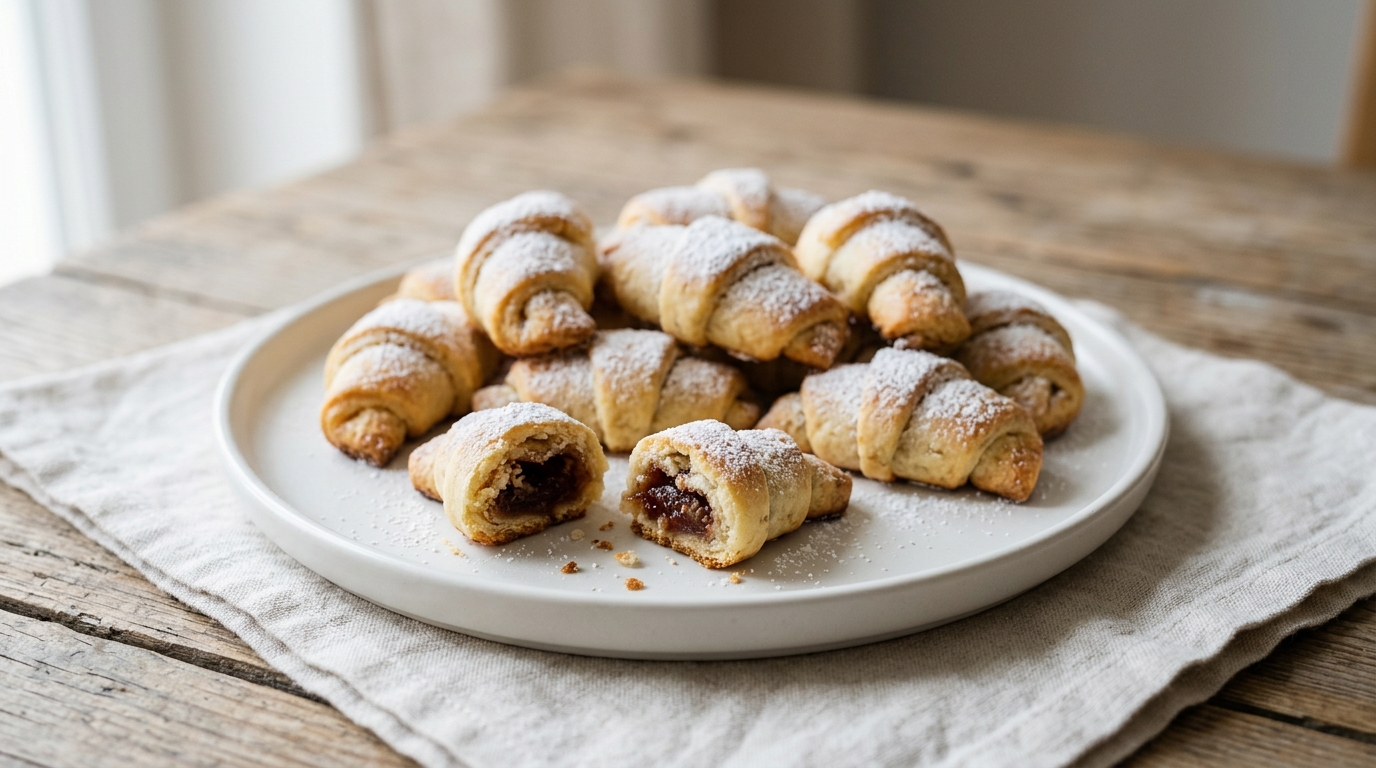
Rogaliki are little crescents that taste like a cross between a croissant and a cookie. The rich dough is made with butter and sour cream or cream cheese, rolled into circles, cut into wedges and rolled up around a dab of rose jam, plum butter or ground walnuts. In Polish homes the rose petal jam version is a special treat, but any thick jam works. They puff and turn golden in the oven, and a dusting of powdered sugar makes them look like they came straight from a village bakery.
You will need: 2 cups all-purpose flour, 1 cup cold butter (cubed), 1/2 cup sour cream, 1 egg yolk, pinch of salt, 1/2 cup thick jam or ground walnuts mixed with honey, powdered sugar.
How to make it: 1. Cut the butter into the flour and salt until crumbly, then mix in the sour cream and yolk. 2. Divide into 4 balls, wrap and chill for 1 hour. 3. Roll each ball into a 9 inch circle and cut into 12 wedges. 4. Place a little jam or walnut filling on the wide end and roll toward the point, curving into a crescent. 5. Bake at 375 F for 15 to 18 minutes until golden, cool and dust with powdered sugar.
Vanilla Walnut Crescents, Grandma’s Nut Horns
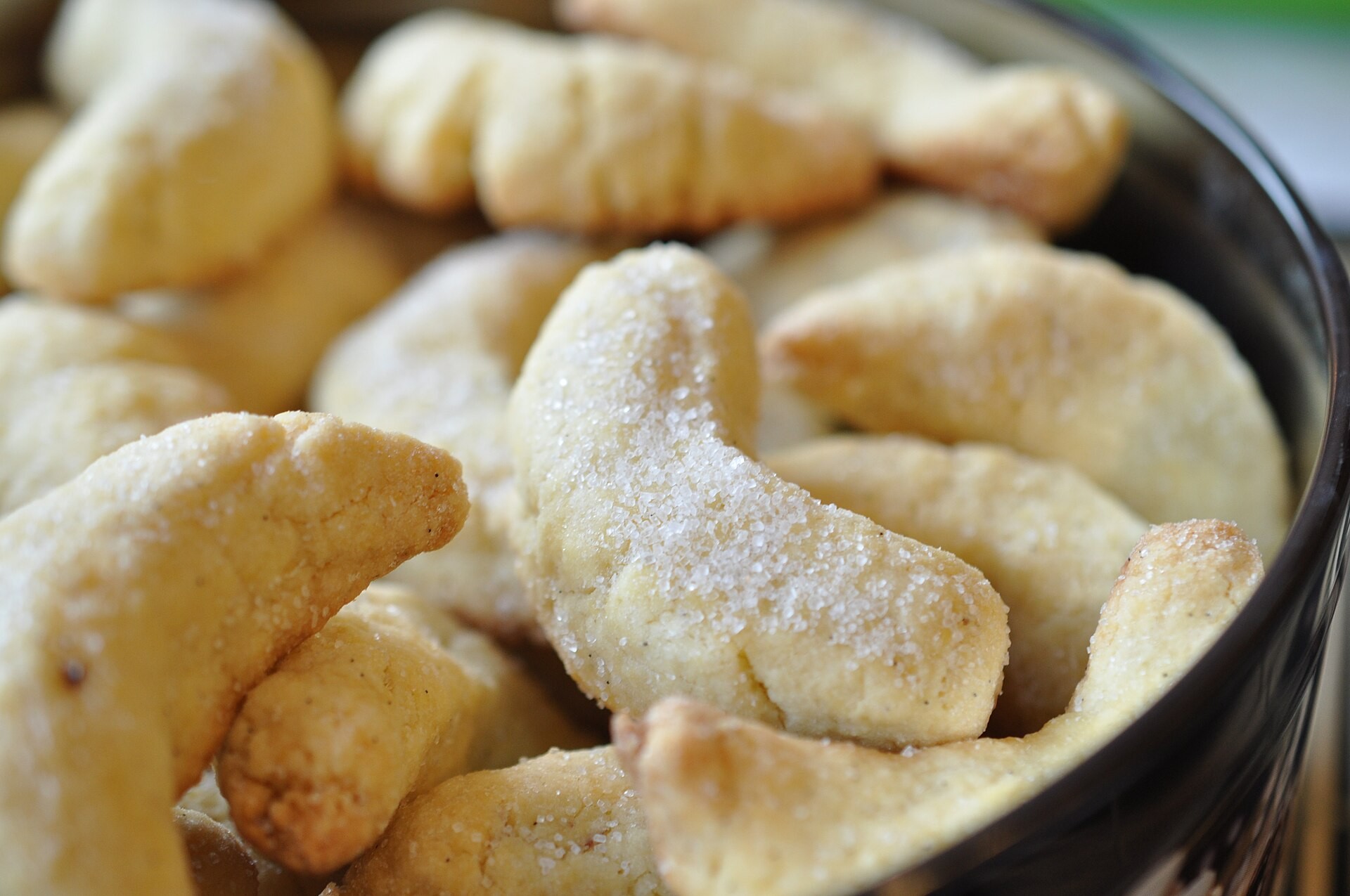
Every Central European grandmother has a version of these melt in your mouth crescents, and in Poland they often show up as vanilla rogaliki made with ground walnuts or almonds. Polish American bakers call them nut horns, and they are among the most requested Polish Christmas cookies at church bake sales. The dough has no eggs, just butter, sugar, flour and nuts, which gives them a sandy, tender bite. The trick is rolling them while the dough is cold and coating them in vanilla sugar while they are still warm, so the sugar clings like fresh snow. Store them in a tin and they keep for weeks.
You will need: 1 cup butter (softened), 1/3 cup sugar, 1 cup finely ground walnuts or almonds, 2 cups all-purpose flour, 1 teaspoon vanilla extract, pinch of salt, 1 cup powdered sugar mixed with 1 teaspoon vanilla sugar.
How to make it: 1. Beat the butter and sugar until creamy, then add the vanilla and salt. 2. Mix in the ground nuts and flour to a soft dough, wrap and chill for 1 hour. 3. Roll tablespoon pieces into 3 inch ropes with tapered ends and bend into crescents. 4. Bake at 350 F for 12 to 14 minutes until the edges are just golden. 5. Cool 5 minutes, then gently roll in the vanilla powdered sugar.
Kokosanki: Coconut Polish Christmas Cookies From Leftover Egg Whites
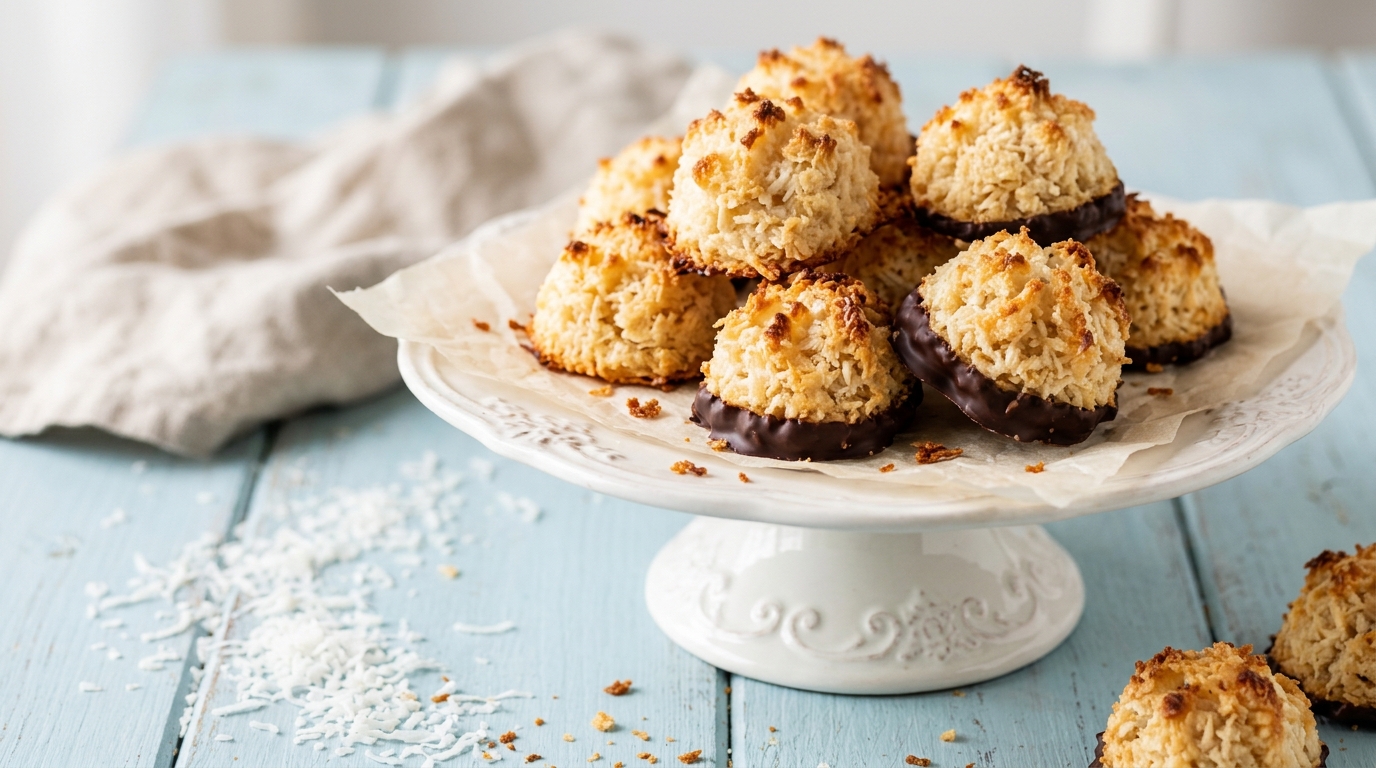
After all the yolks go into chrusciki and pastry dough, a careful Polish cook always has egg whites left over, and that is where kokosanki come in. These chewy coconut mounds need only whites, sugar and shredded coconut, cooked briefly on the stove so they hold their shape. They bake with crisp golden peaks and soft middles, and a quick dip in dark chocolate makes them look fancy on a holiday plate. They are also a smart way to use up what is left in the pantry before the big Christmas Eve supper.
You will need: 4 egg whites, 1 cup sugar, 3 cups unsweetened shredded coconut, 1 tablespoon butter, 1 teaspoon vanilla extract, pinch of salt, 4 ounces dark chocolate for dipping (optional).
How to make it: 1. Whisk the egg whites, sugar and salt in a saucepan over low heat until the sugar dissolves. 2. Stir in the coconut and butter and cook for 3 to 4 minutes until the mixture thickens, then add the vanilla. 3. Cool slightly and scoop heaping tablespoons onto a parchment lined sheet, pinching the tops into peaks. 4. Bake at 325 F for 18 to 20 minutes until the peaks are golden. 5. Cool completely, then dip the bottoms in melted chocolate and let them set on parchment.
Jam-Filled Rugelach From the Old Neighborhood Bakery
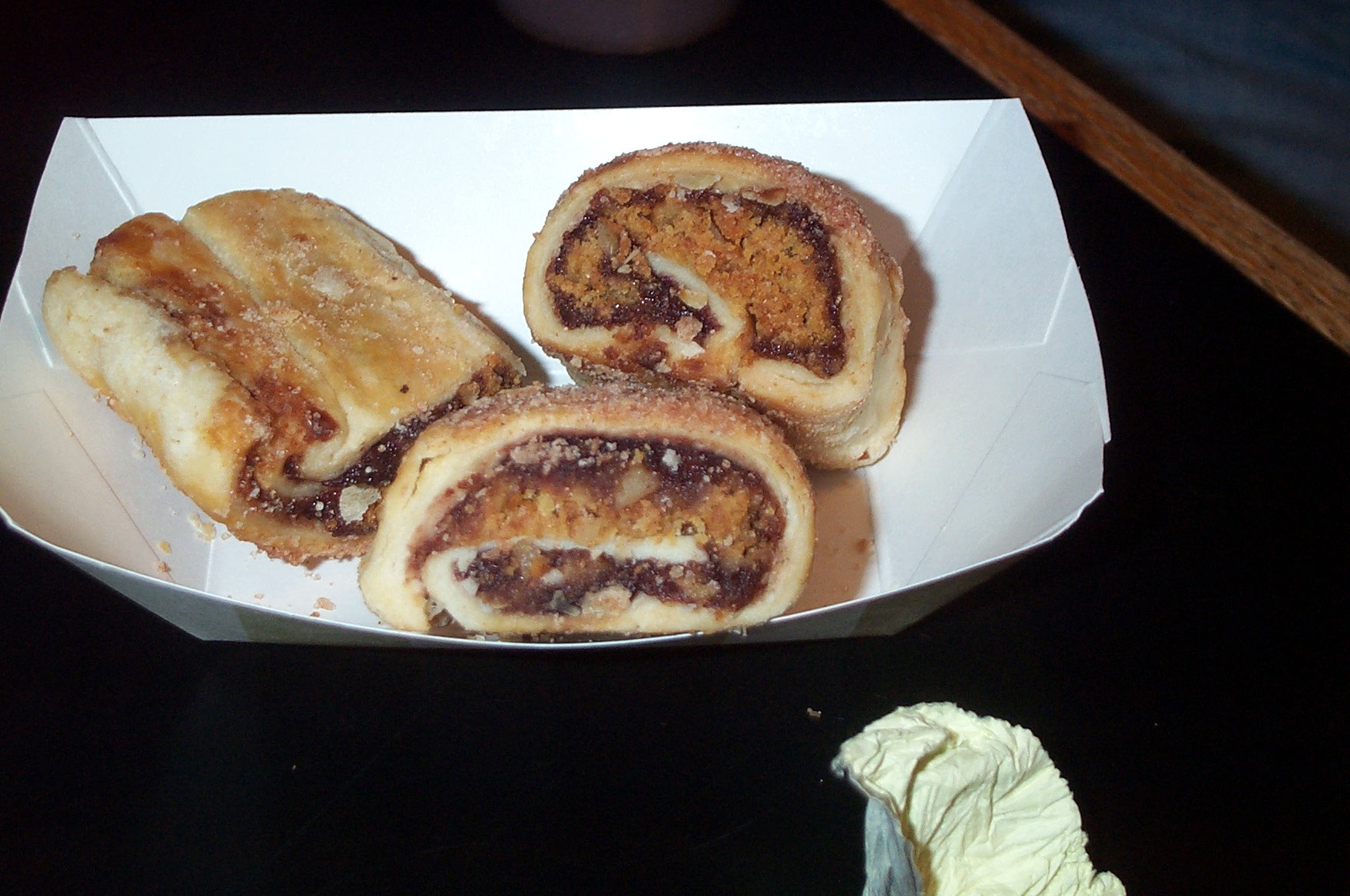
Rugelach grew up in the Jewish bakeries of Poland and the surrounding region, and they traveled with immigrant families to the same city neighborhoods where Polish Christmas trays were filled. The cream cheese dough is close to the one used for kolaczki, so it makes sense that many Polish American bakers keep both on rotation with their other Polish Christmas cookies. Spread the dough with jam, cinnamon sugar and chopped nuts, roll it up into little crescents and bake until the filling bubbles. Blackberry, cranberry and apricot all work beautifully.
You will need: 1 cup butter (softened), 8 ounces cream cheese (softened), 2 cups all-purpose flour, 1/4 teaspoon salt, 2/3 cup blackberry or apricot jam, 1/2 cup sugar mixed with 1 teaspoon cinnamon, 3/4 cup finely chopped walnuts, 1 egg for brushing.
How to make it: 1. Beat the butter and cream cheese until smooth, mix in the flour and salt, divide into 4 disks and chill for 2 hours. 2. Roll each disk into a 9 inch circle and spread with a thin layer of jam. 3. Sprinkle with cinnamon sugar and walnuts, then cut into 12 wedges. 4. Roll each wedge from the wide end to the point and set on a lined baking sheet. 5. Brush with beaten egg and bake at 350 F for 20 to 22 minutes until golden.
Makowiec, the Poppy Seed Roll Sliced Like Cookies
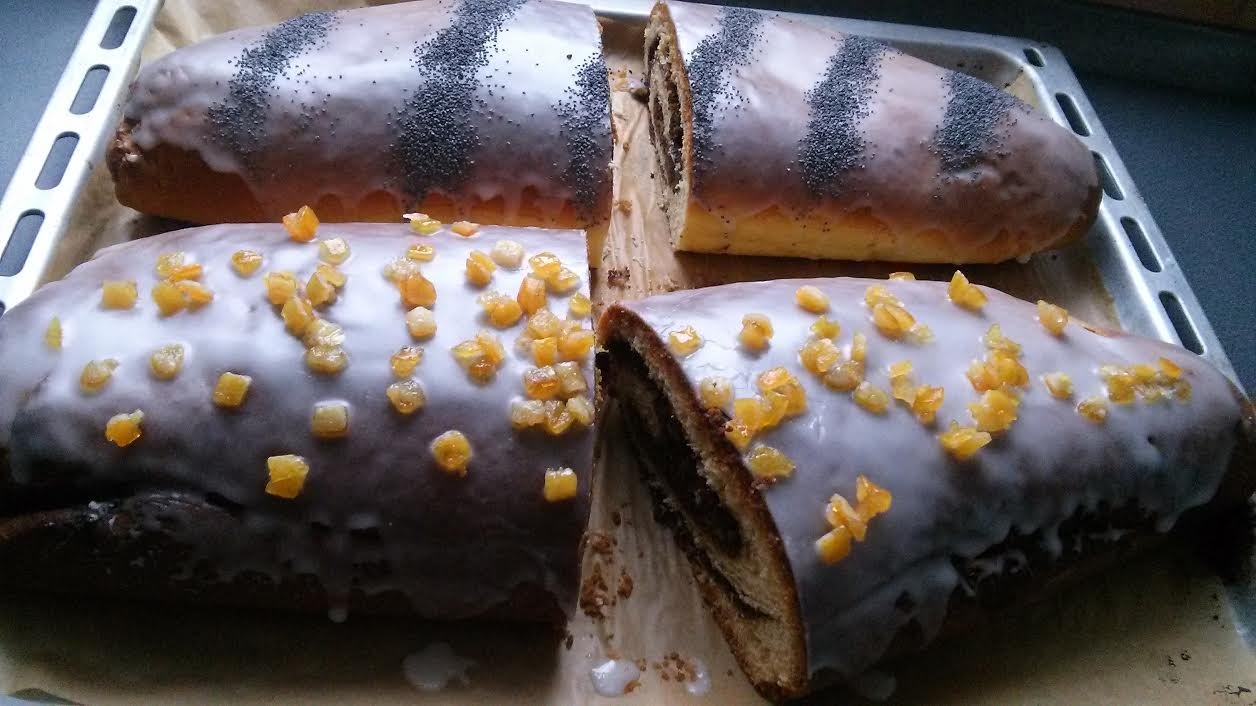
No Wigilia table in Poland feels complete without makowiec, a sweet yeast roll wrapped around a thick spiral of poppy seed filling. Poppy seeds were long seen as a symbol of plenty for the year ahead, which is why they appear in so many Christmas Eve desserts. The filling mixes ground poppy seeds with honey, butter, raisins, orange peel and a little almond extract. Bakers glaze the loaf and sprinkle it with candied peel, then cut it into thin slices that sit right next to the Polish Christmas cookies on the dessert plate.
You will need: 3 1/2 cups all-purpose flour, 1 packet instant yeast, 1/2 cup sugar, 3/4 cup warm milk, 2 eggs, 1/2 cup melted butter, 2 cups ground poppy seeds, 1/2 cup honey, 1/3 cup raisins, 1 tablespoon orange zest, 1 egg white, 1 cup powdered sugar and 2 tablespoons lemon juice for glaze.
How to make it: 1. Mix the flour, yeast and 1/4 cup sugar, add the milk, eggs and butter, and knead to a soft dough; let it rise 1 hour. 2. Simmer the poppy seeds with honey, remaining sugar, raisins and zest for 5 minutes, cool, then fold in the whipped egg white. 3. Roll the dough into a 12 by 16 inch rectangle, spread with the filling and roll up tightly. 4. Let rise 30 minutes, then bake at 350 F for 40 to 45 minutes. 5. Cool, drizzle with the lemon glaze and slice thin.
Polish Christmas Cookies in Bar Form: Poppy Seed Crumb Squares
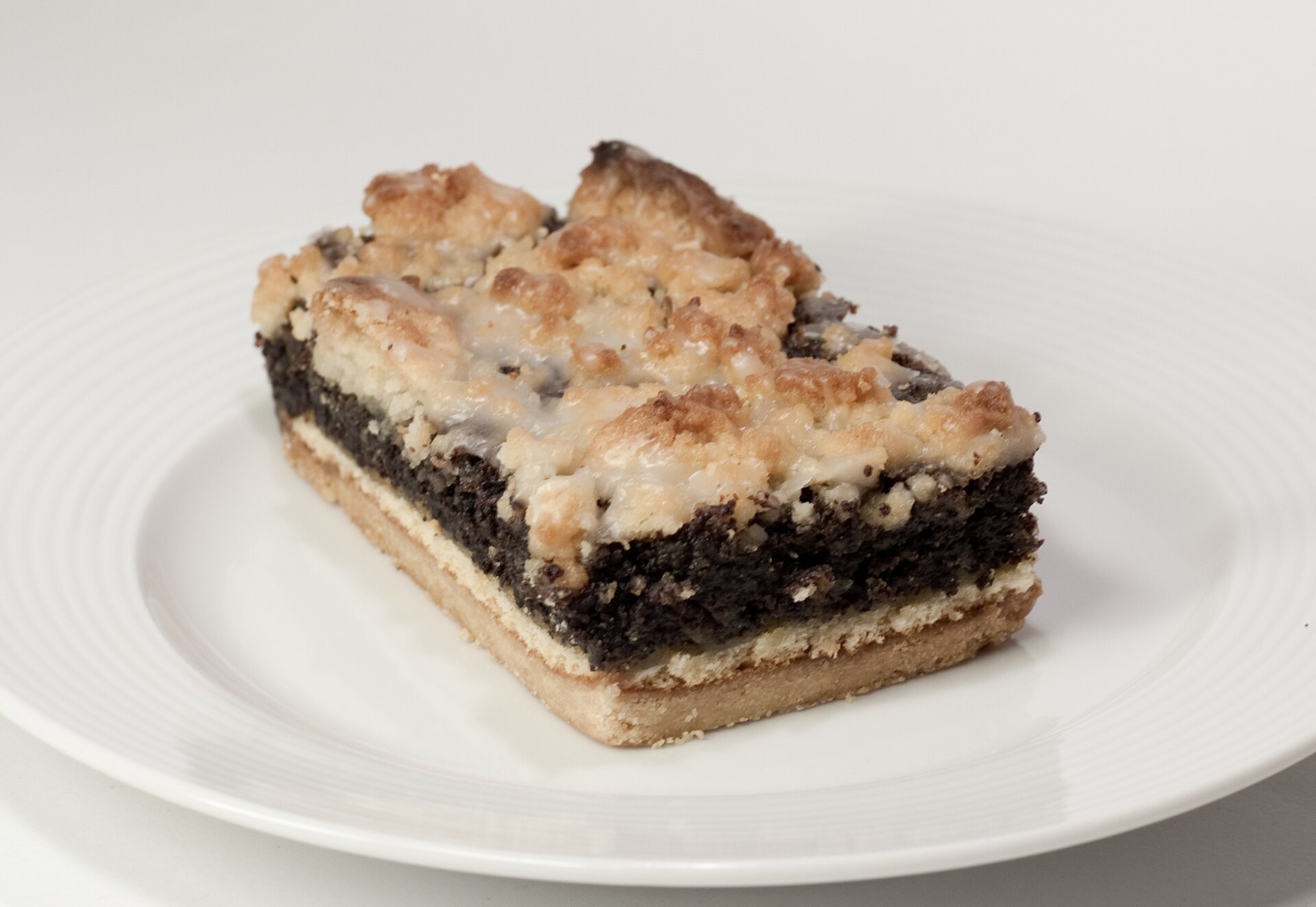
When there is no time to roll a yeast loaf, poppy seed bars give the same flavor in half the effort. A buttery shortbread base is topped with a thick layer of sweet poppy seed filling, then covered with crumbly streusel and baked in one pan. Cut into small squares, they stack neatly beside other Polish Christmas cookies on a holiday tray and travel well to church potlucks and cookie exchanges. Families in Silesia and across the border in Germany make very similar slices, and every version tastes like a cozy December afternoon.
You will need: For the base and crumb: 2 1/2 cups all-purpose flour, 1 cup cold butter, 2/3 cup sugar, 1 egg, 1 teaspoon baking powder. For the filling: 2 cups ground poppy seeds, 1 cup milk, 1/2 cup sugar, 3 tablespoons butter, 2 eggs, 1/2 cup raisins, 1 teaspoon vanilla.
How to make it: 1. Rub the flour, butter, sugar and baking powder into crumbs, then mix in the egg; press two thirds into a lined 9 by 13 inch pan. 2. Simmer the poppy seeds, milk, sugar and butter for 10 minutes until thick, then cool. 3. Stir the eggs, raisins and vanilla into the poppy seed mixture and spread it over the base. 4. Scatter the remaining crumbs on top. 5. Bake at 350 F for 40 to 45 minutes, cool completely and cut into small squares.
Mazurek With a Jam Lattice
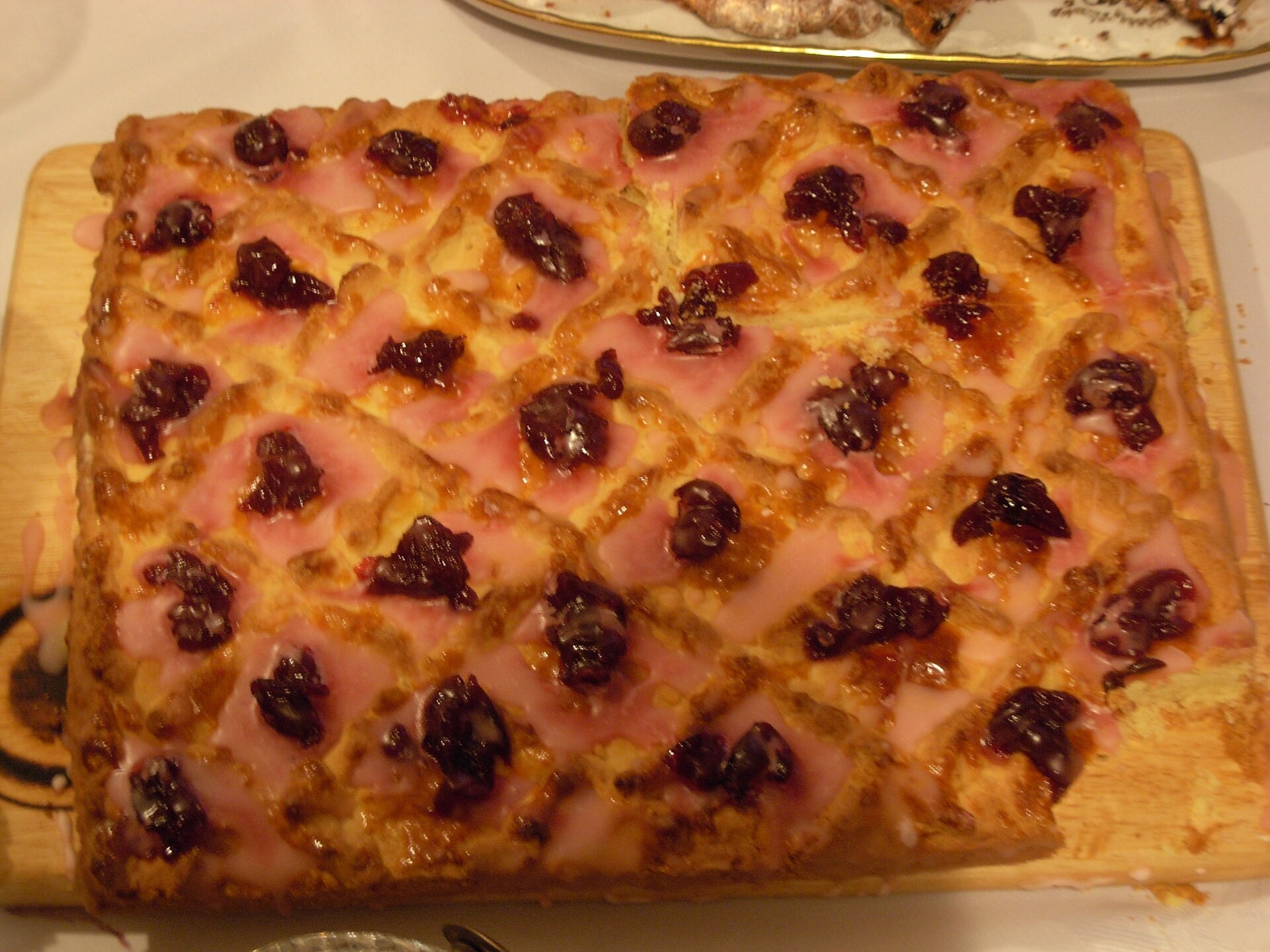
Mazurek is best known as an Easter showpiece in Poland, but its jam lattice version is so festive that many families bake it for Christmas too. It is essentially a giant flat cookie: a crumbly shortcrust base spread with tart jam and finished with a crisscross of dough strips. Once it cools, you cut it into neat little diamonds or squares that sit happily with the other Polish Christmas cookies. Plum, black currant and cherry jam all keep their color in the oven and give a lovely sweet tart contrast to the buttery crust.
You will need: 2 1/2 cups all-purpose flour, 1 cup cold butter, 2/3 cup powdered sugar, 3 egg yolks, 1 teaspoon baking powder, 1 teaspoon lemon zest, 1 1/2 cups thick plum, cherry or currant jam, 1 egg for brushing.
How to make it: 1. Quickly knead the flour, butter, powdered sugar, yolks, baking powder and zest into a smooth dough, then chill 30 minutes. 2. Press two thirds of the dough into a lined 10 by 14 inch pan and prick with a fork. 3. Bake at 375 F for 12 minutes, then spread the jam over the warm base. 4. Roll the remaining dough into thin strips and lay them in a lattice on top; brush with beaten egg. 5. Bake another 20 to 25 minutes until golden, cool and cut into small pieces.
Walnut Mazurek With Raisins and Prunes
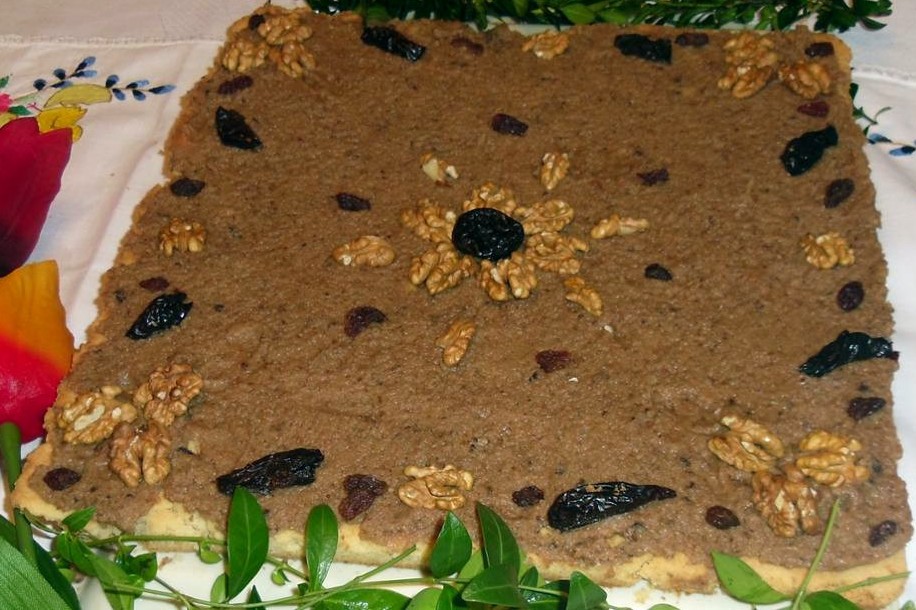
This version swaps the jam for a fudgy walnut layer, a style that turns up at holiday markets and village bakeries across Poland. The nuts are ground and cooked with sugar, butter and a little cream until thick, then spread over a crisp base and decorated with walnut halves, raisins and prunes in a simple pattern. It is rich, so small squares go a long way on a plate of Polish Christmas cookies. Pair it with the jam filled cookies from our Italian Christmas cookie tray and you have a holiday plate with something for everyone.
You will need: 1 baked shortcrust base (from the mazurek recipe, without the lattice), 2 cups walnuts (finely ground), 3/4 cup sugar, 1/2 cup heavy cream, 4 tablespoons butter, 1 teaspoon vanilla, walnut halves, raisins and pitted prunes for decorating.
How to make it: 1. Bake the shortcrust base at 375 F for 18 to 20 minutes until golden, then cool. 2. Cook the ground walnuts, sugar, cream and butter over low heat, stirring, for 10 minutes until thick. 3. Stir in the vanilla and spread the warm walnut layer over the base. 4. Press walnut halves, raisins and prunes on top in a pattern. 5. Chill for 2 hours until set, then cut into small squares.
Kruche Ciasteczka, the Butter Cut-Out Polish Christmas Cookies
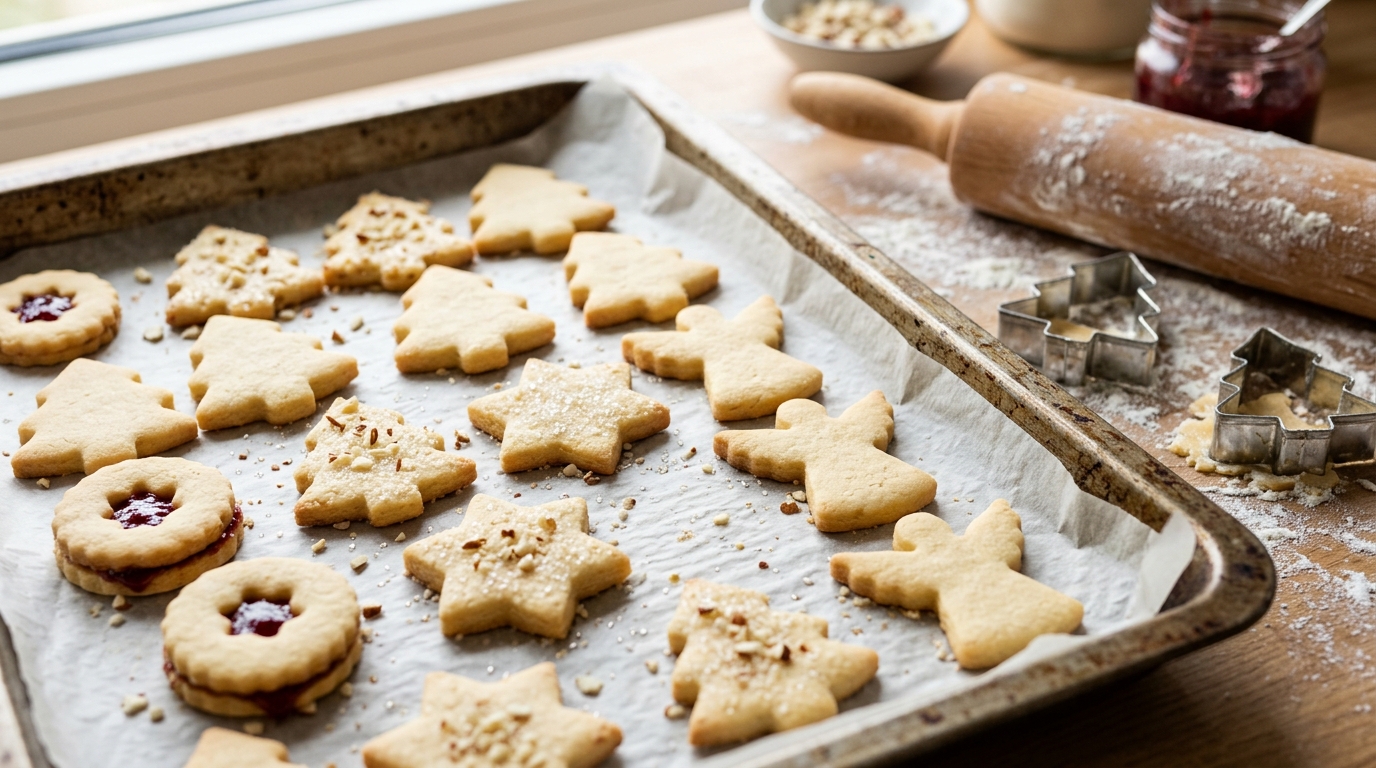
Kruche ciasteczka simply means crumbly little cookies, and they are the Polish Christmas cookies that children help cut out. The dough is a classic shortcrust made with butter and egg yolks, sometimes with a little sour cream, so it stays tender instead of hard. Stars, trees and angels get a sprinkle of coarse sugar and chopped almonds, and some are sandwiched with red jam through a small window cut in the top. They are the easiest cookie on this list and the one kids remember making with Babcia at the kitchen table.
You will need: 2 3/4 cups all-purpose flour, 1 cup cold butter, 3/4 cup powdered sugar, 3 egg yolks, 2 tablespoons sour cream, 1 teaspoon vanilla, pinch of salt, coarse sugar, chopped almonds, red jam for sandwiching.
How to make it: 1. Pulse the flour, butter, powdered sugar and salt into crumbs, add the yolks, sour cream and vanilla, and knead briefly. 2. Wrap and chill the dough for 1 hour. 3. Roll 1/8 inch thick and cut into stars, trees and angels; cut small windows in half of them for sandwich cookies. 4. Sprinkle some with coarse sugar and almonds and bake at 350 F for 8 to 10 minutes until the edges turn pale gold. 5. Cool, spread jam on the solid cookies and top with the window cookies.
St. Martin’s Crescent, the Giant Rogal From Poznan
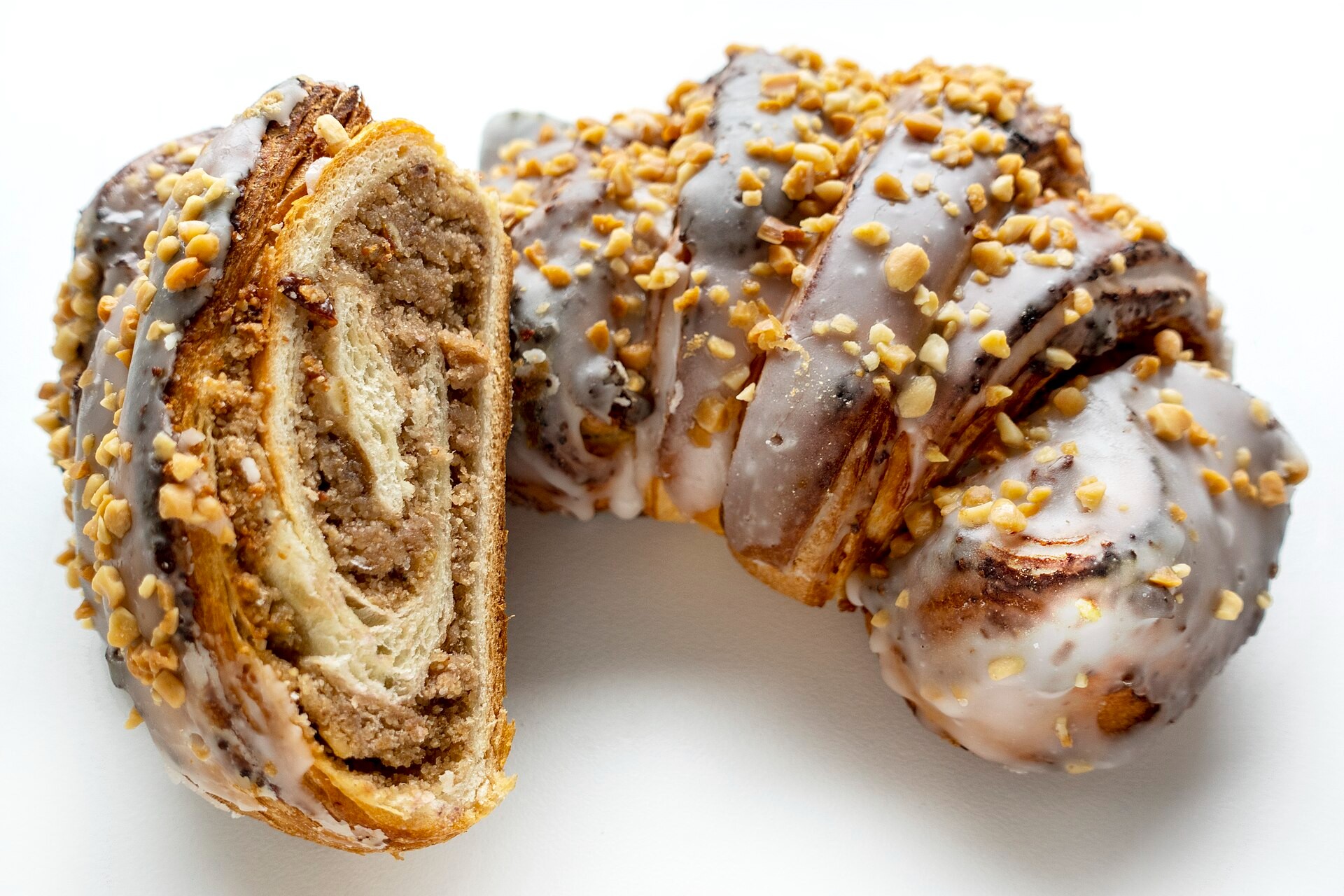
In the city of Poznan, the holiday baking season really starts on November 11, St. Martin’s Day, when bakeries sell enormous crescents filled with white poppy seeds, almonds, dried fruit and nuts. The pastry is laminated with butter like a croissant, then glazed with icing and showered with chopped nuts. Real rogal świętomarciński is protected by name, so only certified bakers in the region can sell it under that title, but a homemade version made with store bought puff pastry gives you a delicious taste of the tradition to serve with your Polish Christmas cookies.
You will need: 1 pound puff pastry (thawed), 1 cup ground white or blue poppy seeds, 1/2 cup chopped almonds, 1/3 cup sugar, 1/4 cup chopped candied orange peel, 1/4 cup raisins, 2 tablespoons butter (melted), 1 egg, 1 cup powdered sugar, 2 tablespoons milk, chopped toasted walnuts.
How to make it: 1. Mix the poppy seeds, almonds, sugar, orange peel, raisins and melted butter into a thick filling. 2. Roll the pastry thin and cut into large triangles with a 5 inch base. 3. Spread filling on each triangle, roll up from the base and bend into a crescent. 4. Brush with beaten egg and bake at 400 F for 18 to 22 minutes until puffed and golden. 5. Whisk the powdered sugar and milk, glaze the warm crescents and scatter with walnuts.
Kutia and the Polish Christmas Cookies Tray on Wigilia Night
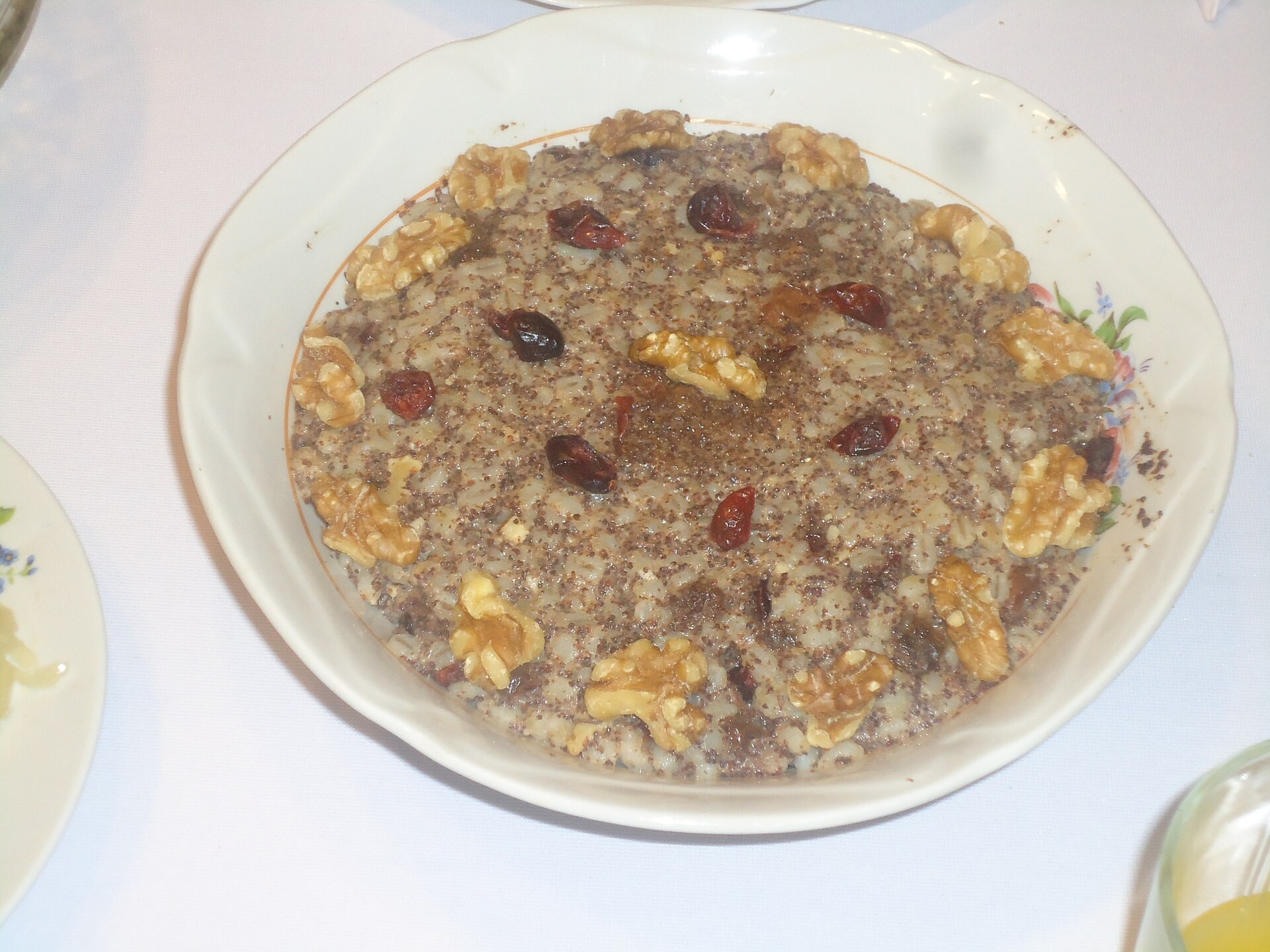
In eastern Poland, the first sweet on the Wigilia supper table is often kutia, a bowl of cooked wheat berries with poppy seeds, honey, walnuts and raisins. Tradition says the meal has 12 dishes, an extra place is set for an unexpected guest, and everyone shares a thin wafer before eating. Only after kutia and compote come the cookies, set out on one big tray: kolaczki in the middle, angel wings stacked high, spice hearts around the edge. Bake a few of these Polish Christmas cookies this year and start your own family tradition.
You will need: 1 cup wheat berries, 1 cup poppy seeds, 1/2 cup honey, 1/2 cup chopped walnuts, 1/3 cup golden raisins, 1/4 cup chopped dried apricots, 1 tablespoon orange zest, pinch of salt.
How to make it: 1. Soak the wheat berries overnight, then simmer in salted water for 1 to 1 1/2 hours until tender, and drain. 2. Pour boiling water over the poppy seeds, soak 1 hour, drain and grind or blend until creamy. 3. Warm the honey slightly so it pours easily. 4. Mix the wheat, poppy seeds, honey, walnuts, raisins, apricots and zest. 5. Chill for a few hours so the flavors blend, then serve in small bowls before passing the cookie tray.