Abraham Lincoln Thanksgiving: 14 Old Fashioned Table Ideas Inspired by the 1863 Holiday He Made National
Abraham Lincoln Thanksgiving history is the reason so many of us sit down to a big family meal on the fourth Thursday of November. On October 3, 1863, President Abraham Lincoln signed a proclamation asking the whole country to set apart the last Thursday of November as a day of Thanksgiving. The first national celebration fell on November 26, 1863, and this year Thanksgiving lands on November 26 again. Tables back then were simple and warm: linen, pewter, wheat, apples and handmade touches. Below are 14 old fashioned table ideas inspired by that first national holiday and by Lincoln himself, from a cinnamon stick log cabin to a penny covered pumpkin. Each one is easy, budget friendly and made with things you may already have at home..
Abraham Lincoln Thanksgiving: The 1863 Harvest Table
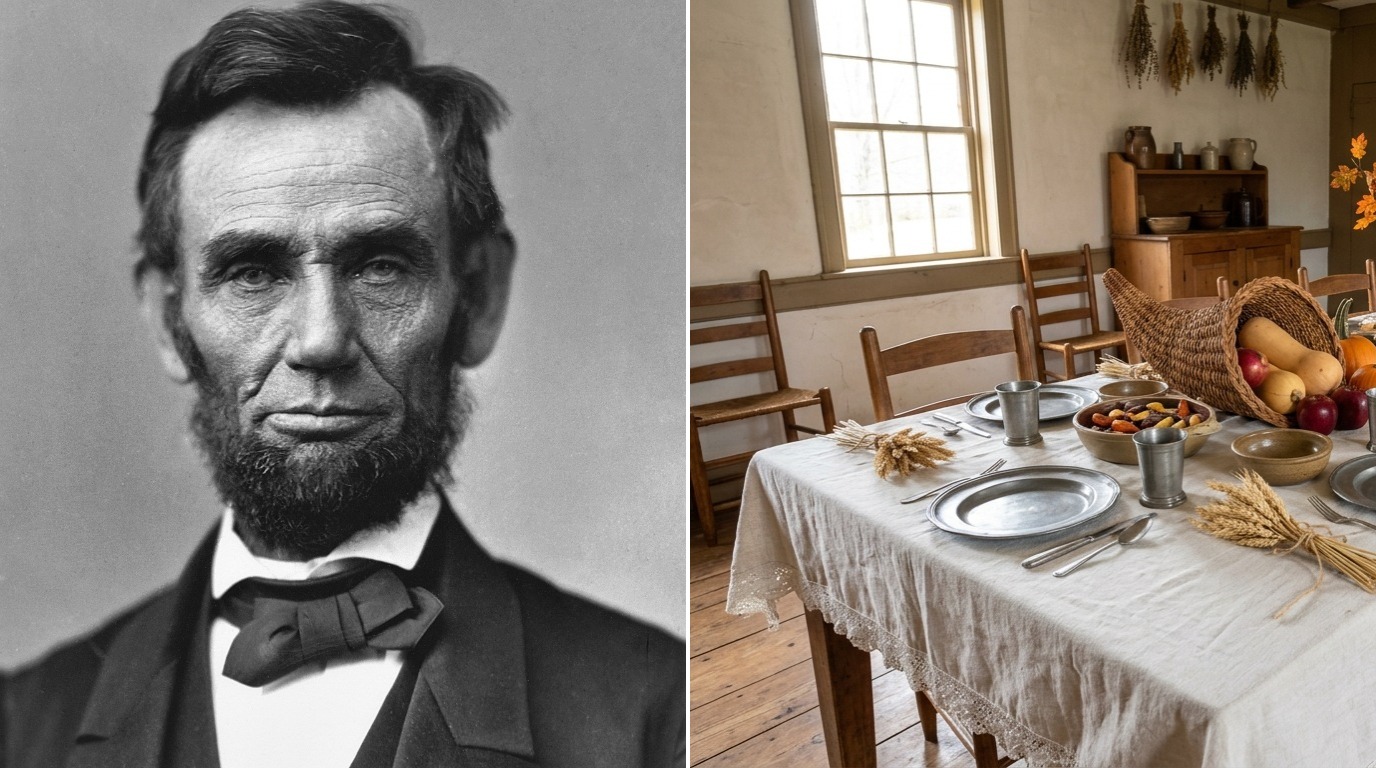
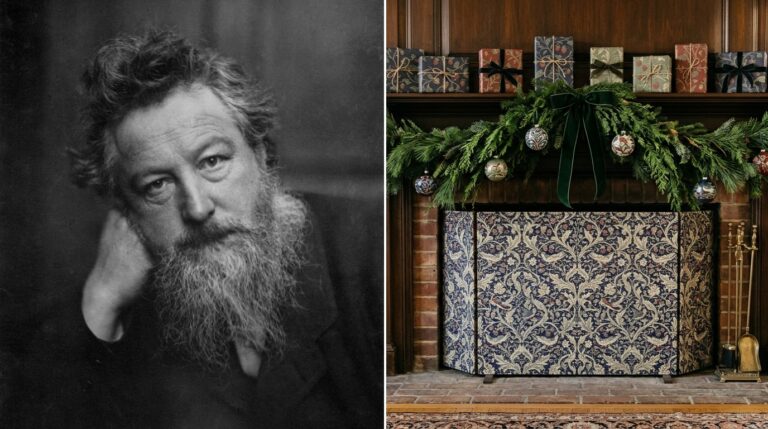
The photo on the left was taken by Alexander Gardner on November 8, 1863, just weeks before that first national Thanksgiving. You can read the full history of Thanksgiving in the United States if you love a good story. For a home version, picture a long table with a white linen cloth, pewter plates, wheat bundles and a basket spilling squash and apples. An Abraham Lincoln Thanksgiving look is plain, honest and warm, with nothing that needs to be perfect. Which old fashioned piece do you already own?..
You will need: A white or cream tablecloth, pewter or gray plates, a woven basket, squash, small pumpkins, red apples, dried wheat and twine.
How to make it: 1. Lay the cloth and set the plates first. 2. Tip the basket on its side in the center and fill it with squash and apples. 3. Tie wheat into small bundles and lay one beside every few plates.
Linen and Lace Tablecloth Layers
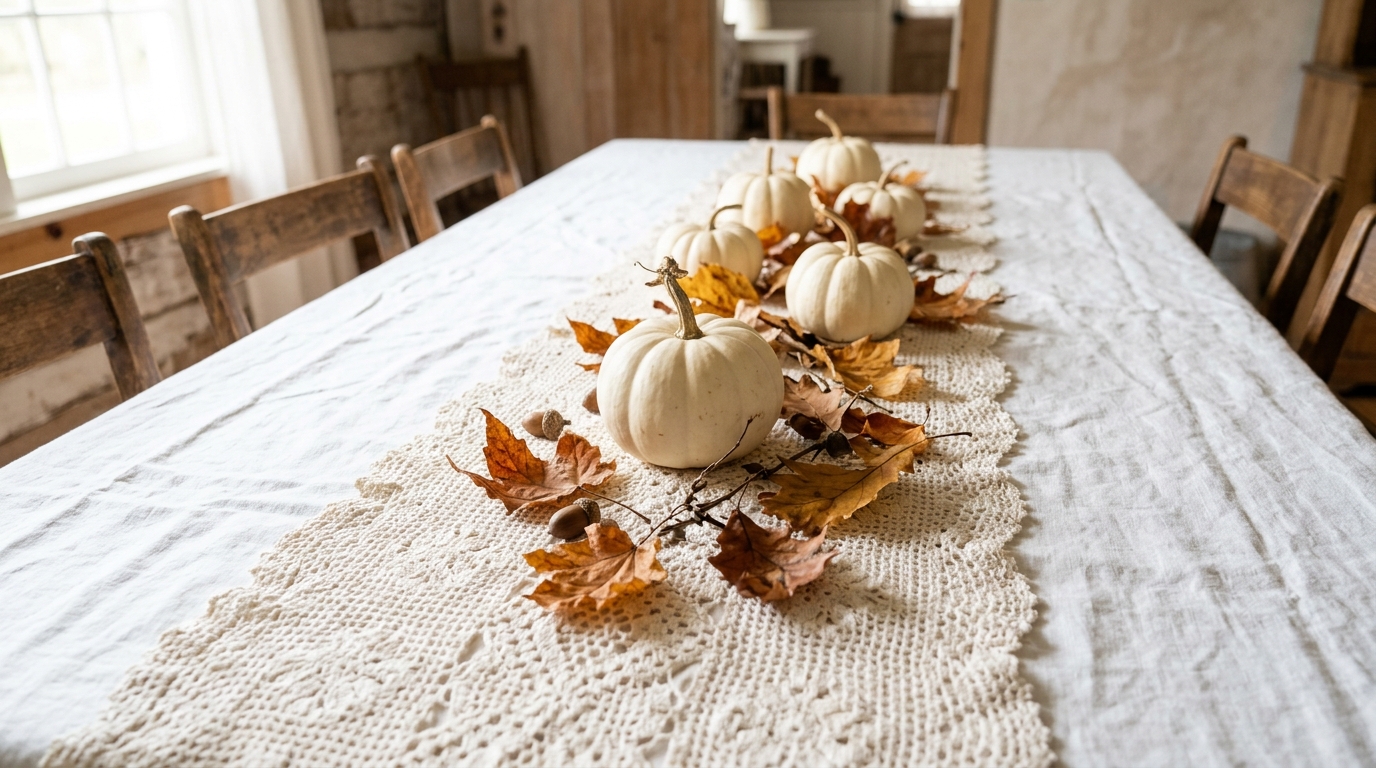
Families in the 1860s saved their best linen for holidays, and a lace edge made any table feel special. You can get the same look by laying a wide cotton lace runner over a plain white linen cloth. It is the easiest Abraham Lincoln Thanksgiving base you can lay down. Thrift stores often sell lace runners and old doilies for a few dollars, and a quick wash and iron makes them look crisp again. White pumpkins and a few autumn leaves down the middle finish it in minutes. Do you have a lace piece tucked away in a drawer?
You will need: A plain white linen or cotton tablecloth, a thrifted lace runner or a row of doilies, small white pumpkins and dried leaves.
How to make it: 1. Wash and iron the cloth and the lace. 2. Center the runner along the table so it hangs evenly at both ends. 3. Line up the pumpkins and tuck leaves between them.
Pewter and Stoneware Place Settings
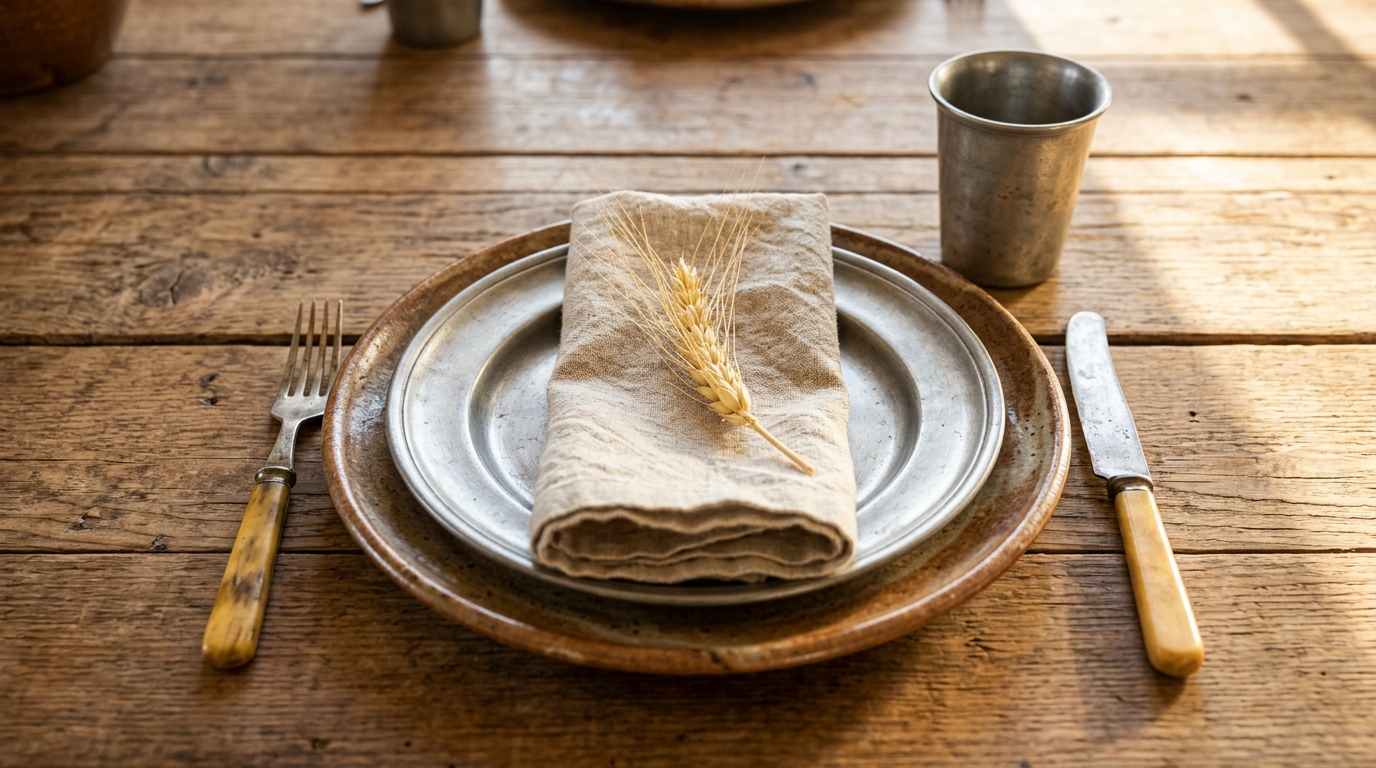
Pewter plates and cups were common on country tables in Lincoln’s time, and their soft gray shine still looks lovely next to brown stoneware. Mix one pewter plate on a stoneware charger at each seat, add a pewter cup and roll a linen napkin with a single sprig of wheat. Look for pewter at estate sales or use gray metal chargers from a dollar store. Old bone or wood handled cutlery makes this Abraham Lincoln Thanksgiving setting feel even more like 1863. Would you mix metals and clay on your table?
You will need: Pewter or gray metal plates, brown stoneware or wood chargers, small metal cups, linen napkins and dried wheat stems.
How to make it: 1. Place a stoneware charger at each seat. 2. Set the pewter plate on top and the cup above the knife. 3. Fold the napkin, lay it on the plate and add a wheat sprig.
Abraham Lincoln Thanksgiving Log Cabin Centerpiece
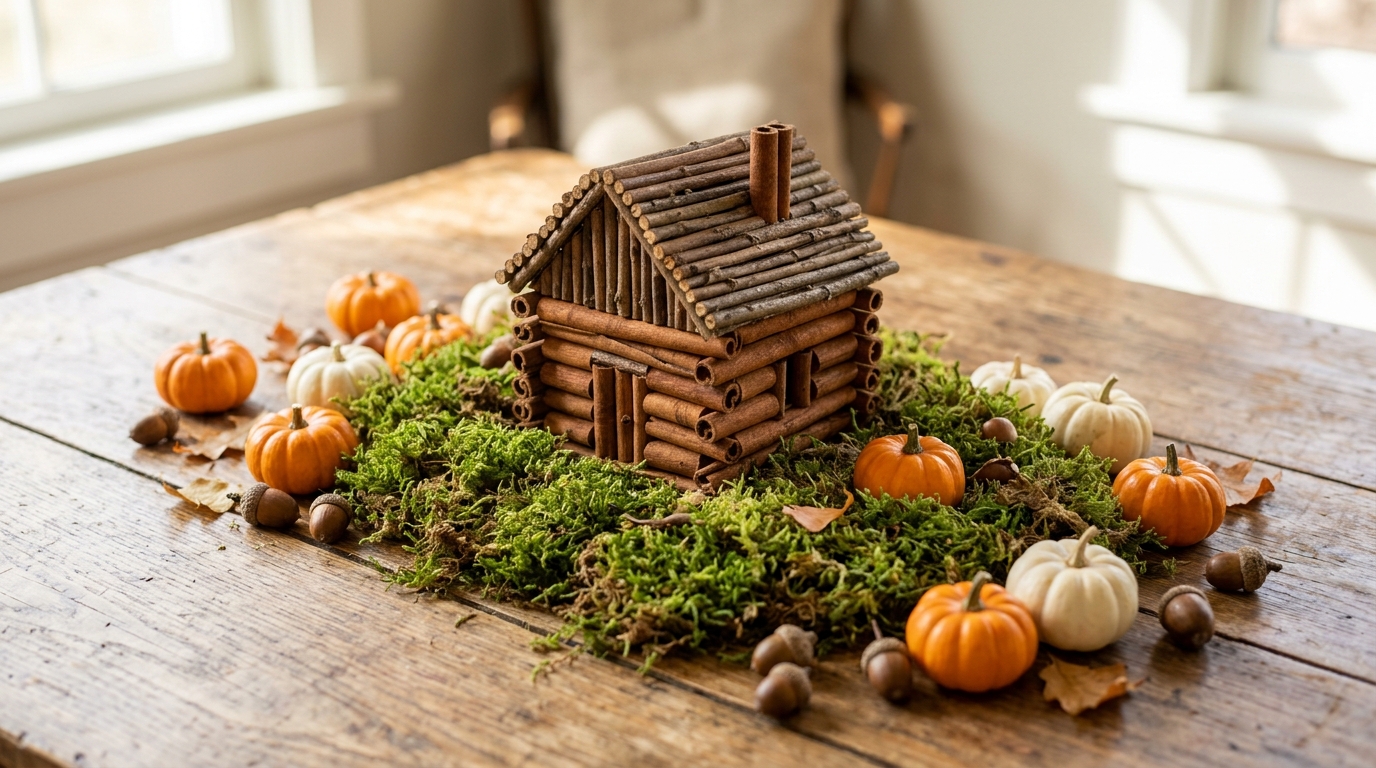
Abraham Lincoln was born in a one room log cabin in Kentucky in 1809, and a tiny cabin makes a sweet and clever centerpiece. This one is built from cinnamon sticks and thin twigs, so it smells wonderful too. Set it on a bed of moss with tiny pumpkins and acorns around it, and guests will spot the Abraham Lincoln Thanksgiving story right away. Kids love helping stack the logs like a puzzle. Ask an adult to handle the hot glue. Who in your family would build the roof?
You will need: Long cinnamon sticks, thin straight twigs, a cardboard base, hot glue (adult help), preserved moss, mini pumpkins and acorns.
How to make it: 1. Cut a small cardboard square and glue the first four sticks around the edge. 2. Stack sticks in crossing layers to build the walls, leaving a gap for a door. 3. Glue twigs at an angle for the roof, then set the cabin on moss with pumpkins around it.
A Twig Split Rail Fence Runner
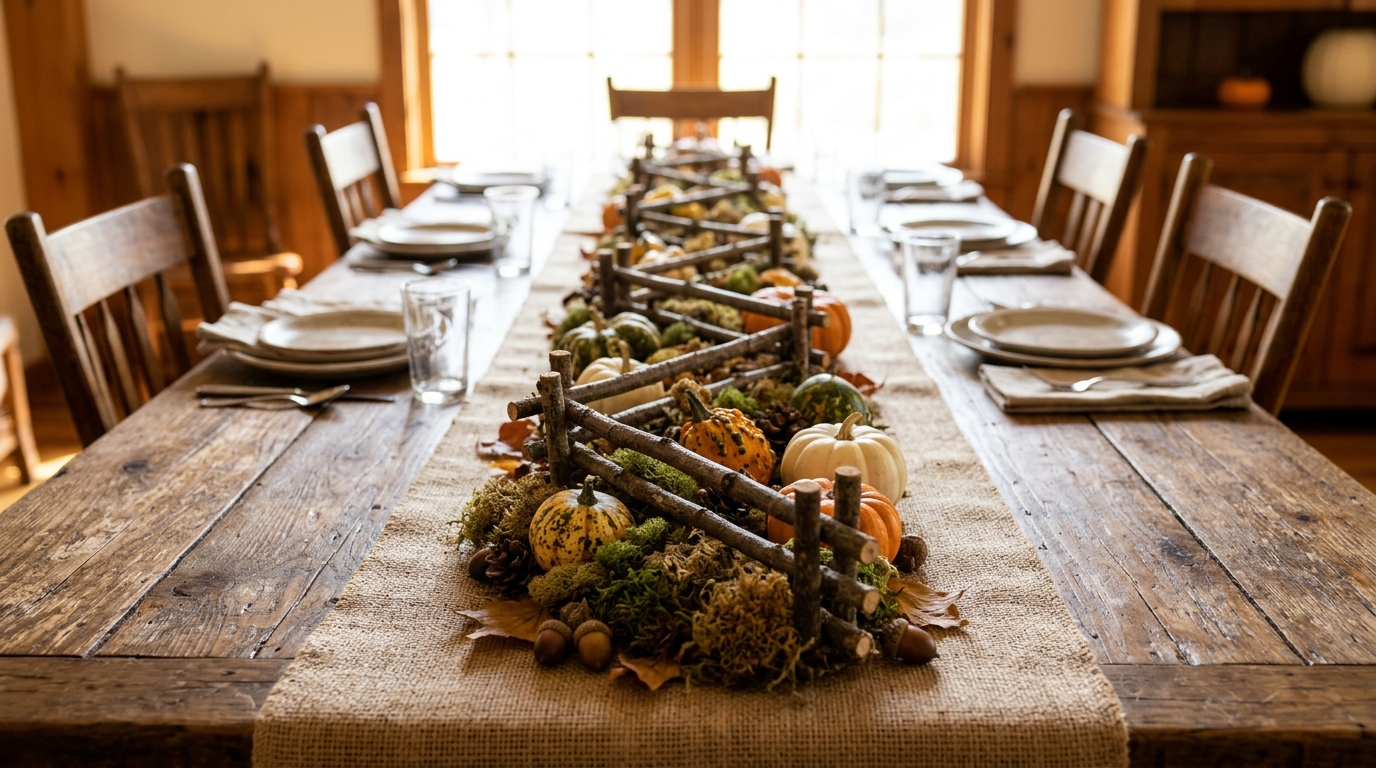
In the 1860 election, Lincoln was nicknamed the Rail Splitter because he split wood for fence rails as a young man. A little zigzag split rail fence down the middle of your table is a fun Abraham Lincoln Thanksgiving nod to that story. Build it from short twigs glued in an easy zigzag, then tuck moss, gourds and acorns along the rails. It reads as rustic farmhouse decor even to guests who do not know the history. Will you make yours long enough to run the whole table?
You will need: Straight twigs about 6 inches long, hot glue (adult help), a burlap runner, moss, tiny gourds, acorns and small pumpkins.
How to make it: 1. Glue pairs of twigs into small X shaped posts. 2. Lay two long twigs across each pair to form rails, angling every section to make the zigzag. 3. Set the fence on the burlap runner and fill in with moss and gourds.
Abraham Lincoln Thanksgiving Penny Pumpkin
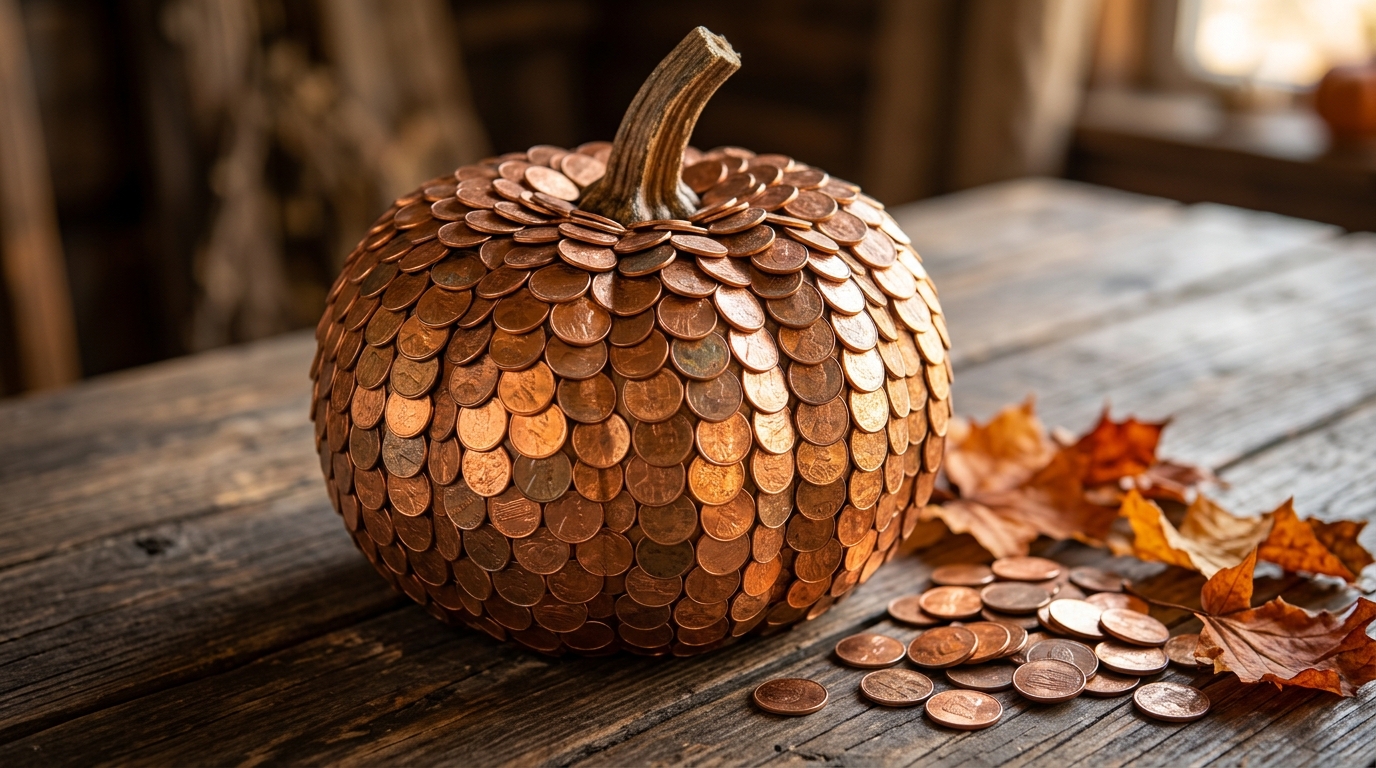
Lincoln’s face has been on the penny since 1909, so a pumpkin covered in shiny pennies is a perfect Abraham Lincoln Thanksgiving craft. Start with a cheap faux pumpkin and glue the coins on in overlapping rows like fish scales. The copper glows warmly next to fall leaves and looks surprisingly fancy for pocket change. Ask the whole family to empty their coin jars and you may not spend a thing. How many pennies do you think one pumpkin needs?
You will need: A faux pumpkin, a few hundred pennies, strong craft glue or hot glue (adult help), a soft cloth and some dried leaves.
How to make it: 1. Wipe the pennies clean with a soft cloth. 2. Start at the bottom and glue a ring of pennies, then overlap each new row slightly. 3. Work up to the stem, let it dry and set it on a bed of leaves.
Mini Stovepipe Hat Favors
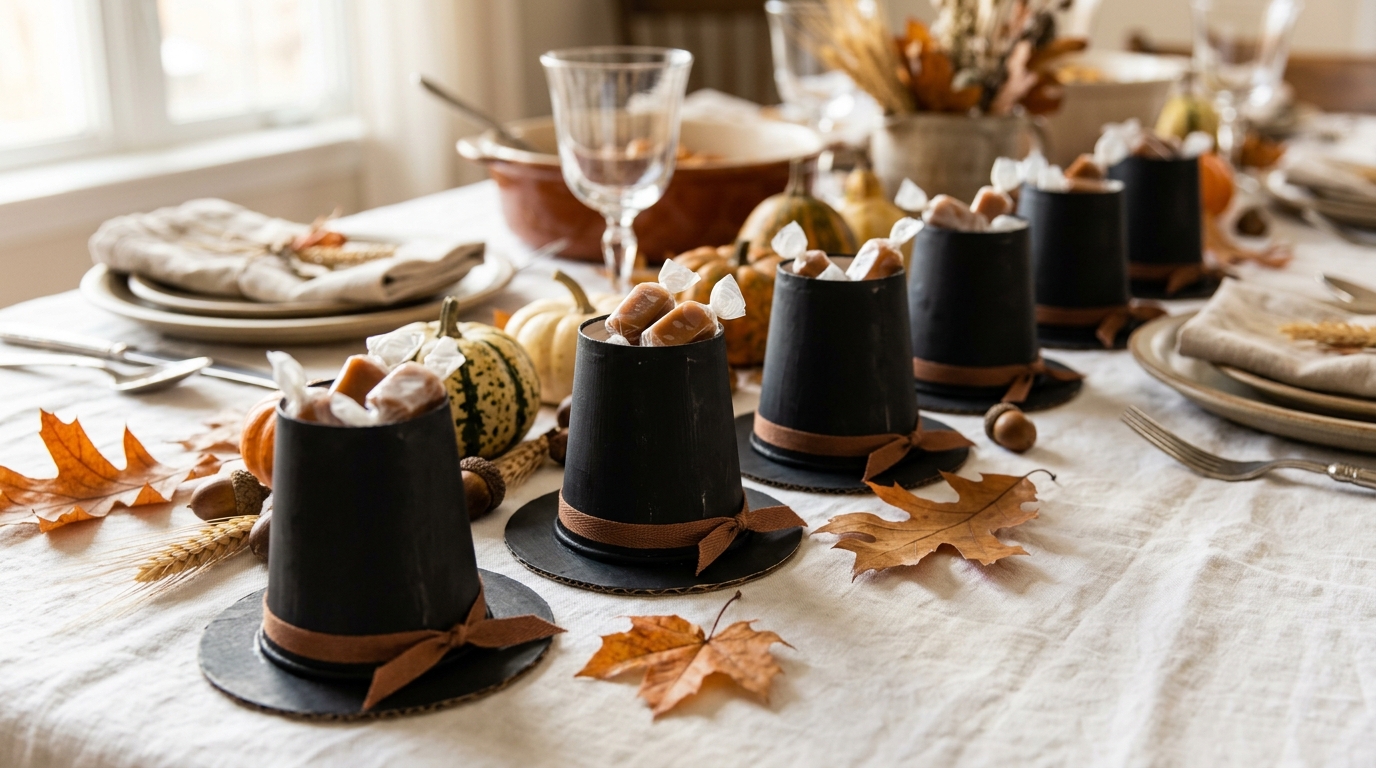
Nothing says Lincoln like his tall black stovepipe hat, and these little favors are made from paper cups. Paint each cup matte black, glue it upside down onto a cardboard circle for the brim and wrap a thin brown ribbon around the base. Flip it back over and fill it with caramels or nuts so every guest gets a treat. They take about ten minutes each and look adorable lined up on a white tablecloth. Would your kids like to paint these?
You will need: Paper cups, black craft paint, a sponge brush, card stock circles, thin brown ribbon, glue and wrapped candies.
How to make it: 1. Paint the cups black and let them dry. 2. Glue each cup onto a card stock circle a little wider than its rim, then add the ribbon band. 3. Fill with candies and set one at every place.
Parchment Scroll Menus Tied With Ribbon
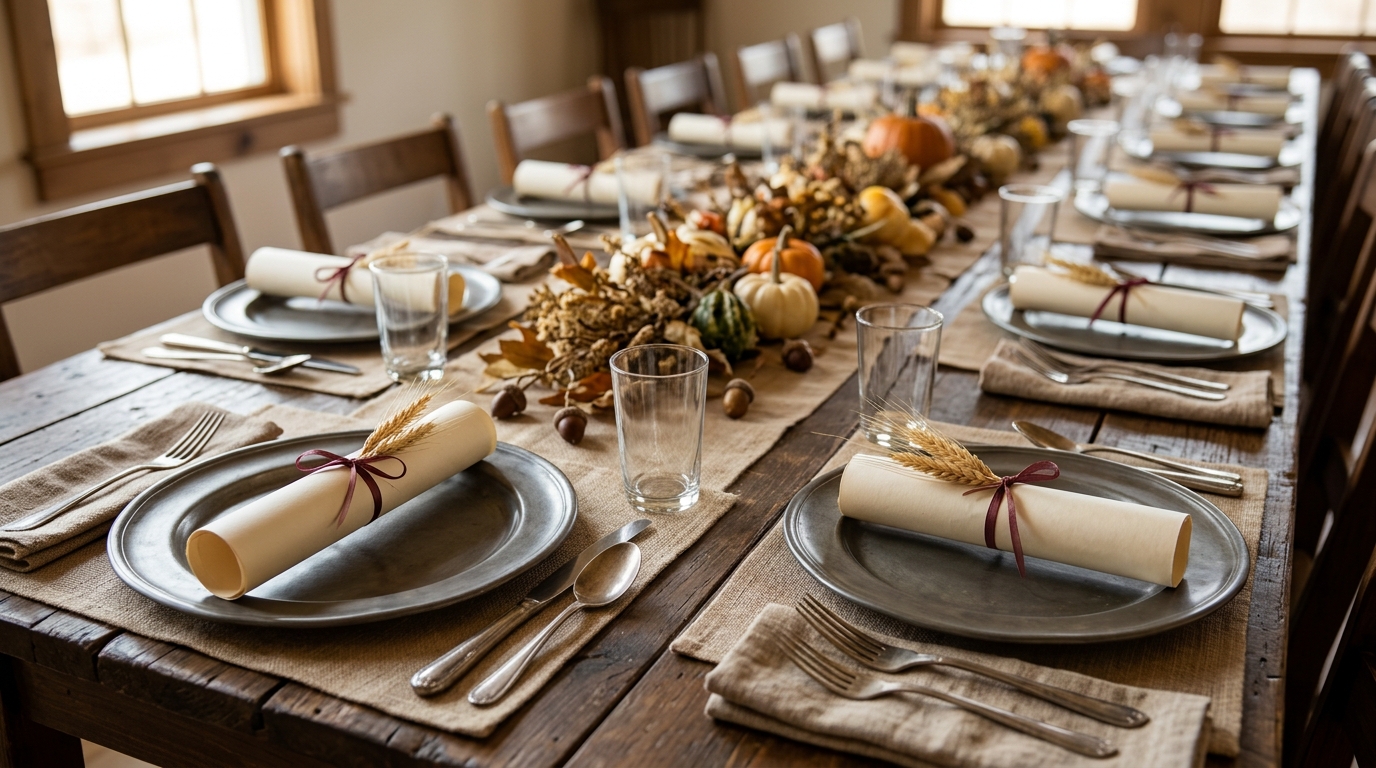
Lincoln’s Thanksgiving proclamation was written by hand, and rolled scroll menus bring that feeling to your table. Write the meal or a short thank you note on cream paper, roll it up and tie it with a thin burgundy ribbon and a sprig of wheat. Lay one on each Abraham Lincoln Thanksgiving plate so guests can unroll it before dinner. You can age the paper with a quick wipe of cold tea and let it dry flat. What would you write on yours?
You will need: Cream card stock or parchment paper, a pen, thin burgundy ribbon, dried wheat stems and cold brewed tea (optional).
How to make it: 1. Wipe the paper with cold tea and let it dry if you want an aged look. 2. Write your menu or note and roll the paper tightly. 3. Tie with ribbon, tuck in a wheat sprig and place it on the plate.
Abraham Lincoln Thanksgiving Book Stack Centerpiece
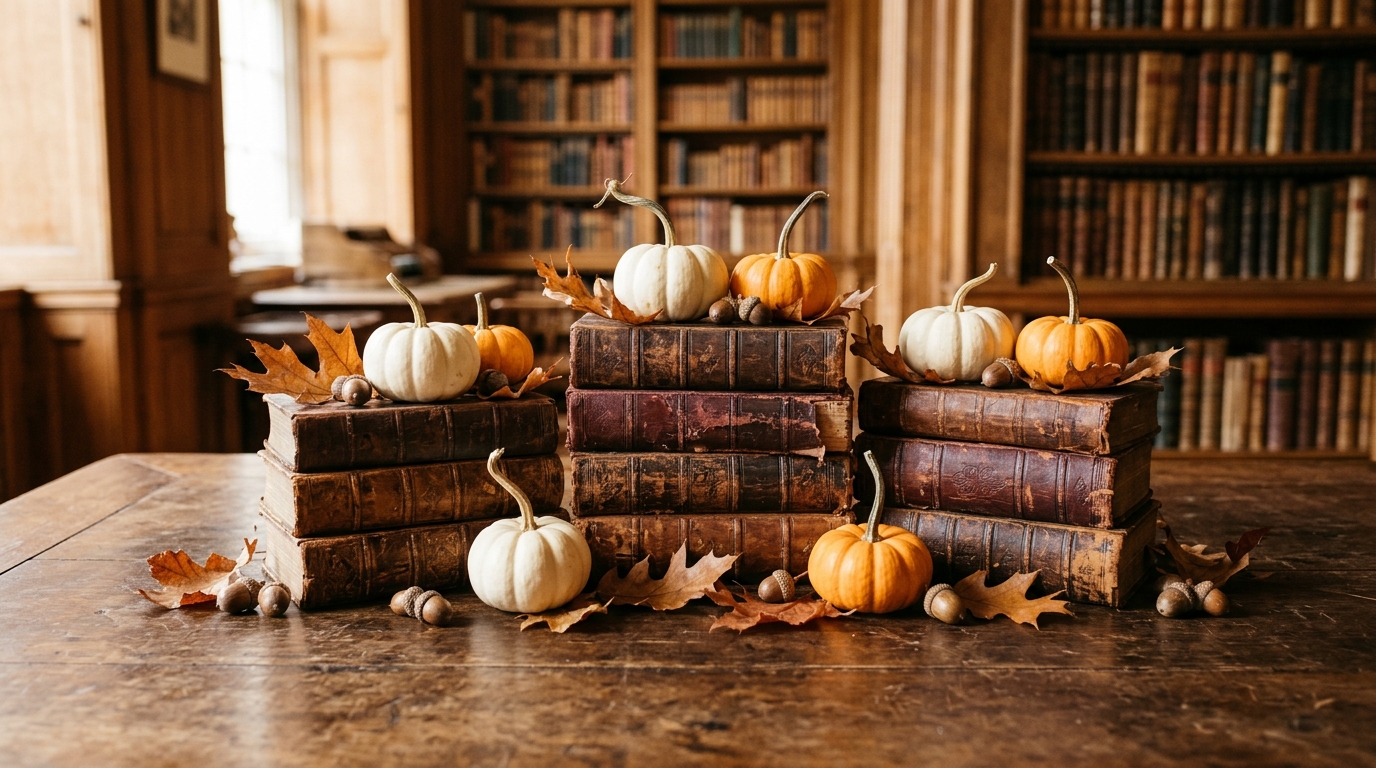
Young Lincoln was famous for borrowing books and reading every one he could find. A centerpiece of old stacked books topped with heirloom pumpkins honors that love of reading and looks beautiful. Thrift stores sell old hardcovers for very little, and you can peel off bright dust jackets to show the plain covers underneath. Add acorns and dried leaves around the stacks and your Abraham Lincoln Thanksgiving table has a cozy library feel. Which book would you put on top?
You will need: Old hardcover books in brown and red tones, small white and orange pumpkins, acorns and dried leaves.
How to make it: 1. Remove any shiny dust jackets. 2. Make two or three stacks of different heights. 3. Set a small pumpkin on each stack and scatter acorns and leaves around the base.
Abraham Lincoln Thanksgiving Calico Fabric Pumpkins
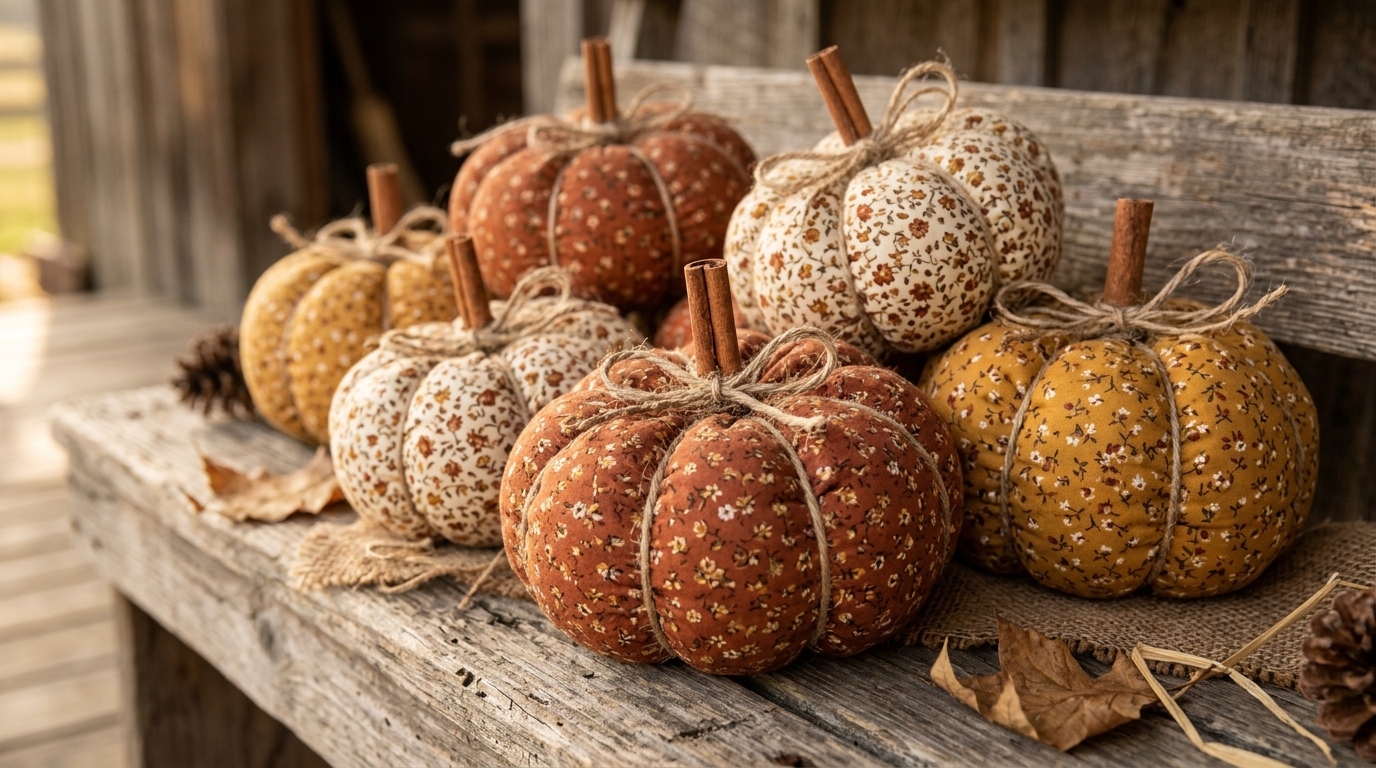
Small floral calico prints were everywhere in the 1860s, from dresses to quilts, and they make the sweetest fabric pumpkins. Each one is just a circle of fabric gathered around stuffing with a cinnamon stick for a stem. Rust, mustard and cream prints look especially warm on a wooden bench or along a sideboard. They suit an Abraham Lincoln Thanksgiving table perfectly and last for years, so you will pull them out every November. Which colors would you pick for your pumpkin patch?
You will need: Calico fabric scraps, a needle and strong thread, polyester stuffing, cinnamon sticks, twine and a little glue.
How to make it: 1. Cut a circle of fabric about twice as wide as the pumpkin you want. 2. Sew a running stitch around the edge, add stuffing and pull tight. 3. Wrap twine around the sides for ridges and glue a cinnamon stick on top.
Simple Corn Husk Dolls
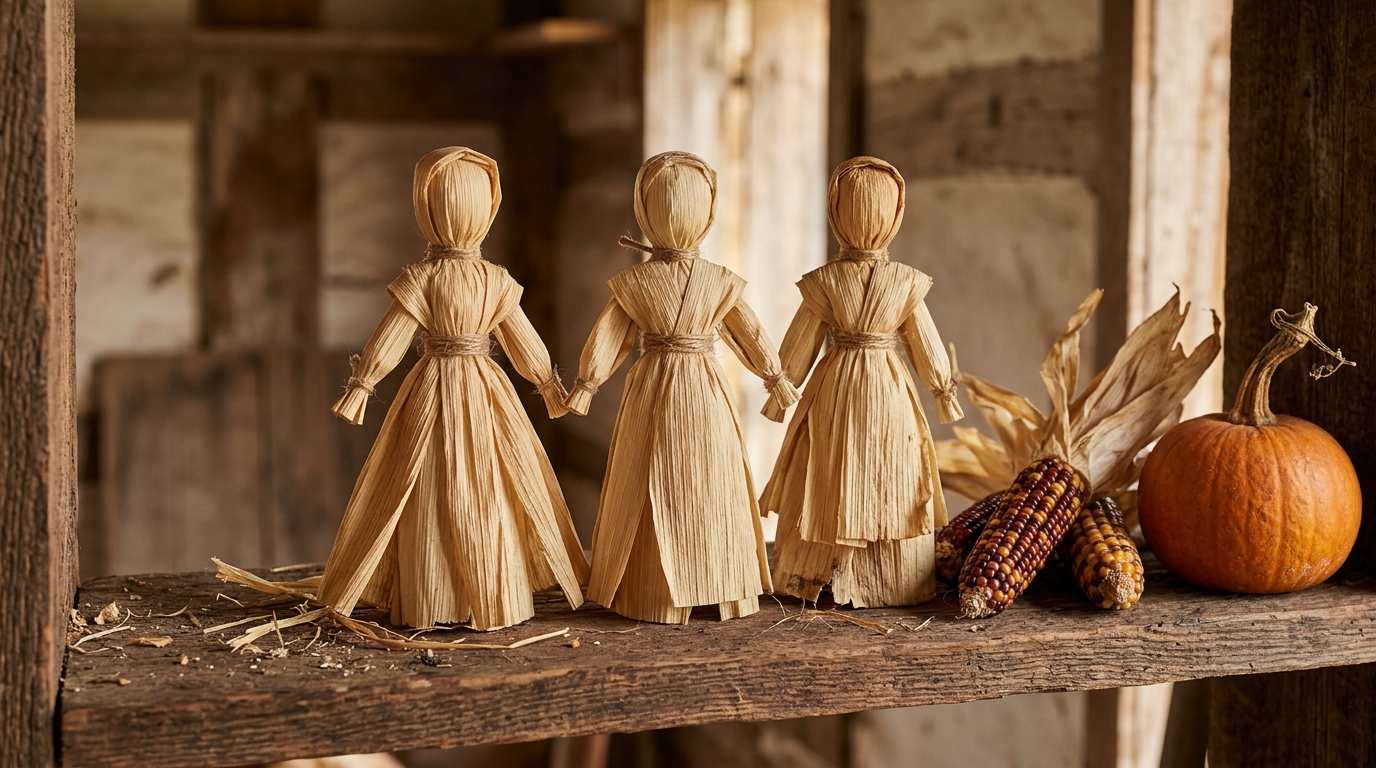
Corn husk dolls are one of the oldest American harvest crafts, and children in the 1800s made them every fall. You only need dried husks soaked in warm water and a bit of twine. Fold, tie and shape a head, arms and a long skirt, and leave the face plain the traditional way. A row of three on a shelf beside dried corn looks charming and costs almost nothing. Would you make one for every child at the table?
You will need: Dried corn husks, a bowl of warm water, twine, scissors and a few dried corn cobs for display.
How to make it: 1. Soak the husks for ten minutes until soft. 2. Fold a bundle in half, tie below the fold for the head and slide a rolled husk through for arms. 3. Tie at the waist, trim the skirt and let the doll dry standing up.
Punched Tin Lantern With an LED Light
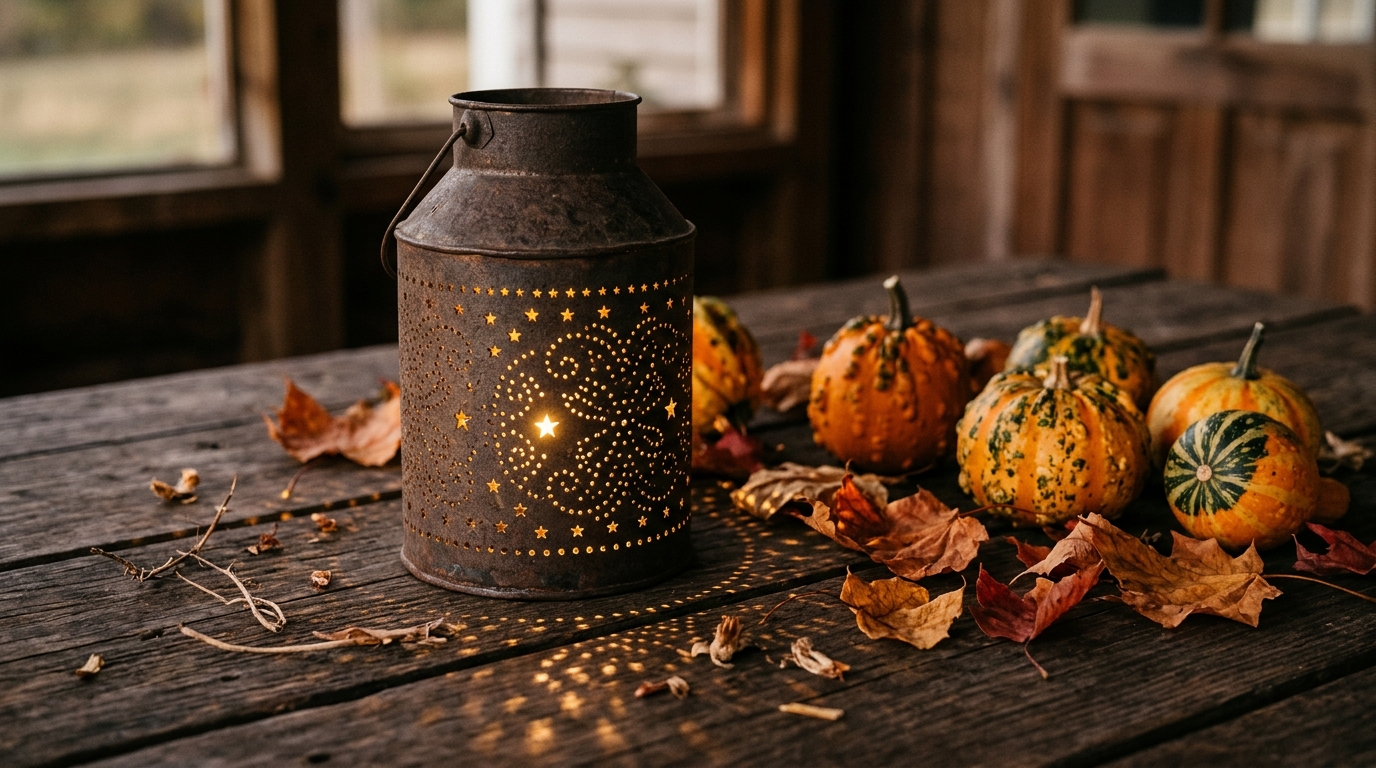
Punched tin lanterns lit many homes in the 1800s, and the tiny star patterns they throw on a table are magical. Make a safe modern version from a clean tin can and a small battery LED light. Draw a pattern on paper, tape it around the can and tap holes with a nail. Ask an adult to do the tapping and to file any sharp edges. Once it glows, the whole table feels old fashioned and cozy. Where would you set yours?
You will need: A clean metal can, a paper pattern, tape, a nail and hammer (adult help), a towel, rust colored paint and a battery LED light.
How to make it: 1. Fill the can with water and freeze it so it holds its shape. 2. Tape the pattern on, lay the can on a towel and tap holes along the lines. 3. Thaw, dry, paint and set a battery LED light inside.
Tin Cup Herb Bouquets at Each Seat
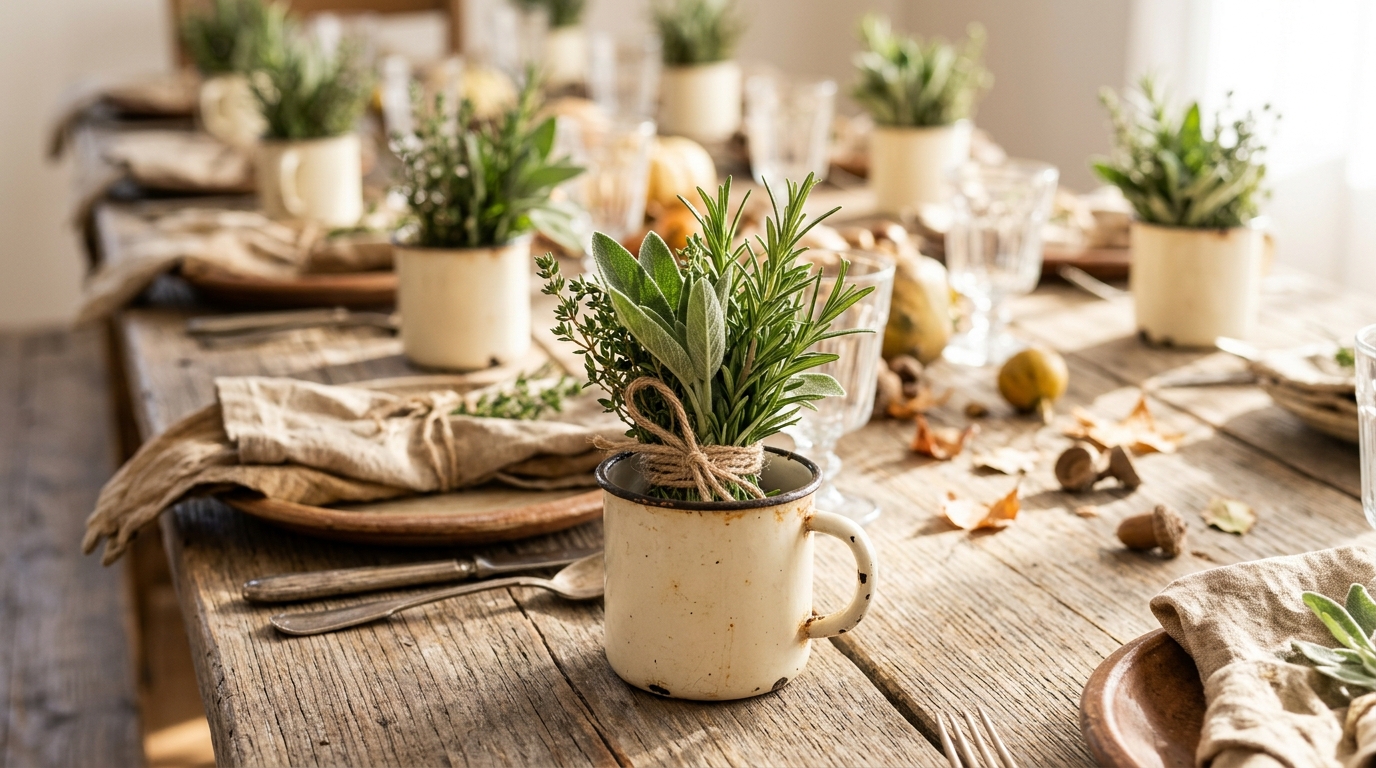
Fresh herbs were part of every 1860s kitchen garden, and a tiny bouquet at each seat smells wonderful when guests sit down. Old enamel tin cups are perfect holders and many thrift stores sell them cheaply. Tie rosemary, sage and thyme with twine and pop them into the cups with a splash of water. It is a fresh Abraham Lincoln Thanksgiving touch, and guests can even take their little bouquet home to cook with. It is a sweet and useful favor in one. Which herbs grow in your garden?
You will need: Small enamel or tin cups, fresh rosemary, sage and thyme, twine and a little water.
How to make it: 1. Trim the herbs to about the same length. 2. Tie a small bunch of each herb together with twine. 3. Add a little water to each cup and set one bouquet at every place.
Abraham Lincoln Thanksgiving Ironstone Pitcher With Fall Branches
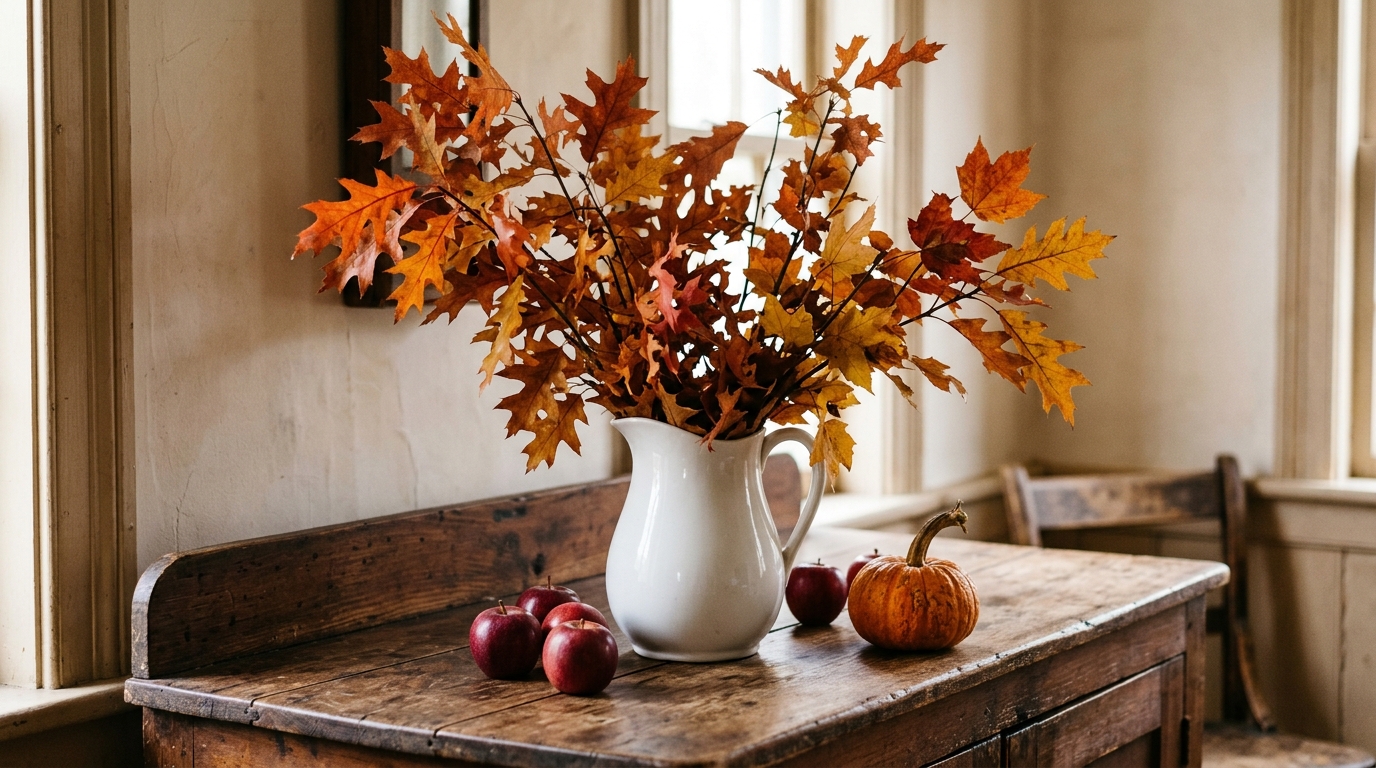
Plain white ironstone pitchers were in nearly every farmhouse in Lincoln’s day, and they still make the best vases for an Abraham Lincoln Thanksgiving sideboard. Fill one with tall oak and maple branches straight from the yard and the color does all the work. Set it on a sideboard with a few red apples and a small pumpkin for an easy finishing touch. For more ideas from this same era, see our old fashioned Thanksgiving decor gallery. Will you start collecting white pitchers after this?
You will need: A white ironstone or plain white pitcher, fresh oak and maple branches, pruning shears, red apples and a small pumpkin.
How to make it: 1. Cut branches at an angle and strip leaves from the lower stems. 2. Fill the pitcher with water and arrange the tallest branches in the back. 3. Set apples and a pumpkin beside the pitcher.