Benjamin Franklin Winter Hacks: 16 Frugal Ways to Keep Your Home Warm He Would Approve Of
Benjamin Franklin winter hacks might sound like a history lesson, but they are really about something every family cares about in January: staying warm without a scary heating bill. Franklin was an inventor who hated wasted heat. In 1742 he designed the Franklin stove, a metal lined fireplace meant to warm a room better while burning less wood, and his Poor Richard’s Almanack was packed with advice about thrift. We are not touching stoves or fireplaces here. Instead, this list follows his spirit with simple, safe DIY fixes: stop drafts, trap warm air, use free sunshine and sew cozy things from what you already own. Most cost a few dollars, and several cost nothing at all. Grab a mug of tea and let’s make your home snug..
Benjamin Franklin Winter Hacks Start at the Window Nook
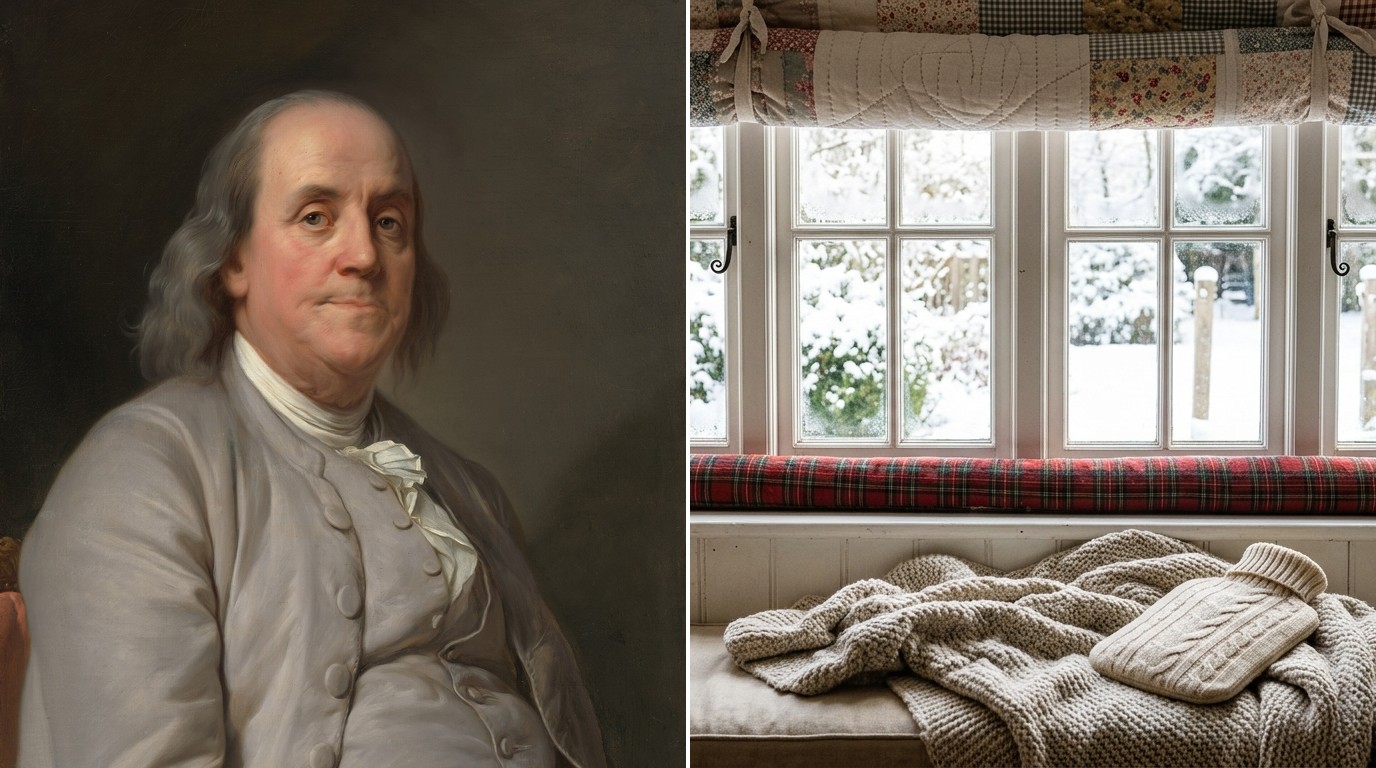
The best Benjamin Franklin winter hacks start where most warm air escapes: the windows, so the window nook is the perfect place to start. A fabric draft snake on the sill, a quilted cover that rolls down at night and a thick throw on the seat turn a chilly corner into the warmest spot in the house. Franklin, who invented the Franklin stove to waste less heat, would surely approve of a fix that costs almost nothing. Which window in your home feels coldest..
You will need: a fabric scrap about 8 by 36 inches, dry rice or sand in zip bags for filling, an old quilt or blanket, ribbon ties, a thick throw.
How to make it: 1. Sew the fabric into a tube and fill it with bagged rice or sand. 2. Lay it tight along the sill. 3. Hang a quilt above the window with ribbon ties so it rolls up by day. 4. Let it down at sunset.
Rolled Towel Door Draft Snake
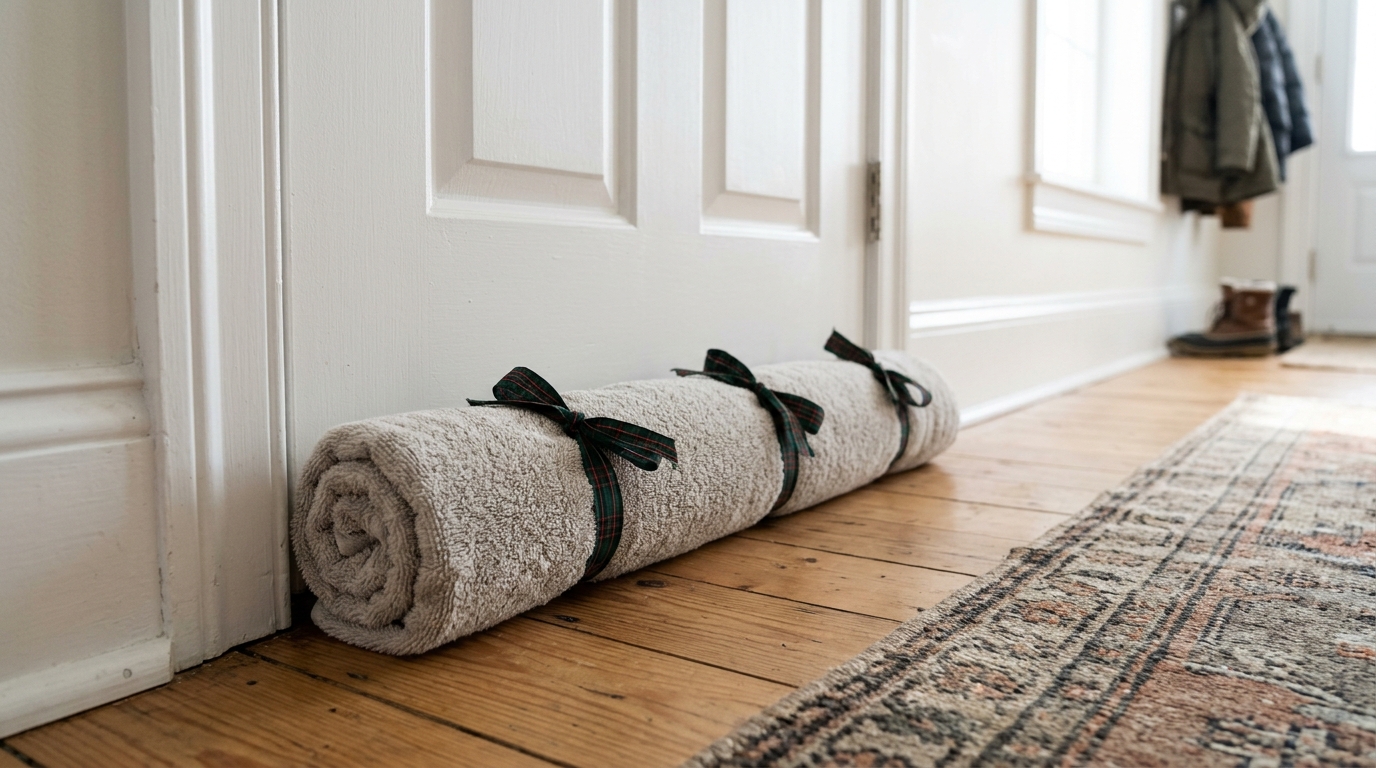
Of all the Benjamin Franklin winter hacks here, this is the quickest. The fastest draft stopper in the world is already in your linen closet. Roll a thick bath towel tightly, tie it in three places with ribbon, and lay it along the bottom of any door that lets in cold air. It takes one minute and you can feel the difference right away. Use an old towel and it is free. Which door in your home whistles the most?
You will need: 1 thick bath towel, 3 pieces of ribbon or fabric strips, scissors.
How to make it: 1. Fold the towel in half the long way. 2. Roll it up tightly. 3. Tie it in three places. 4. Push it snug against the bottom of the door.
Heavy Curtains on a Tension Rod
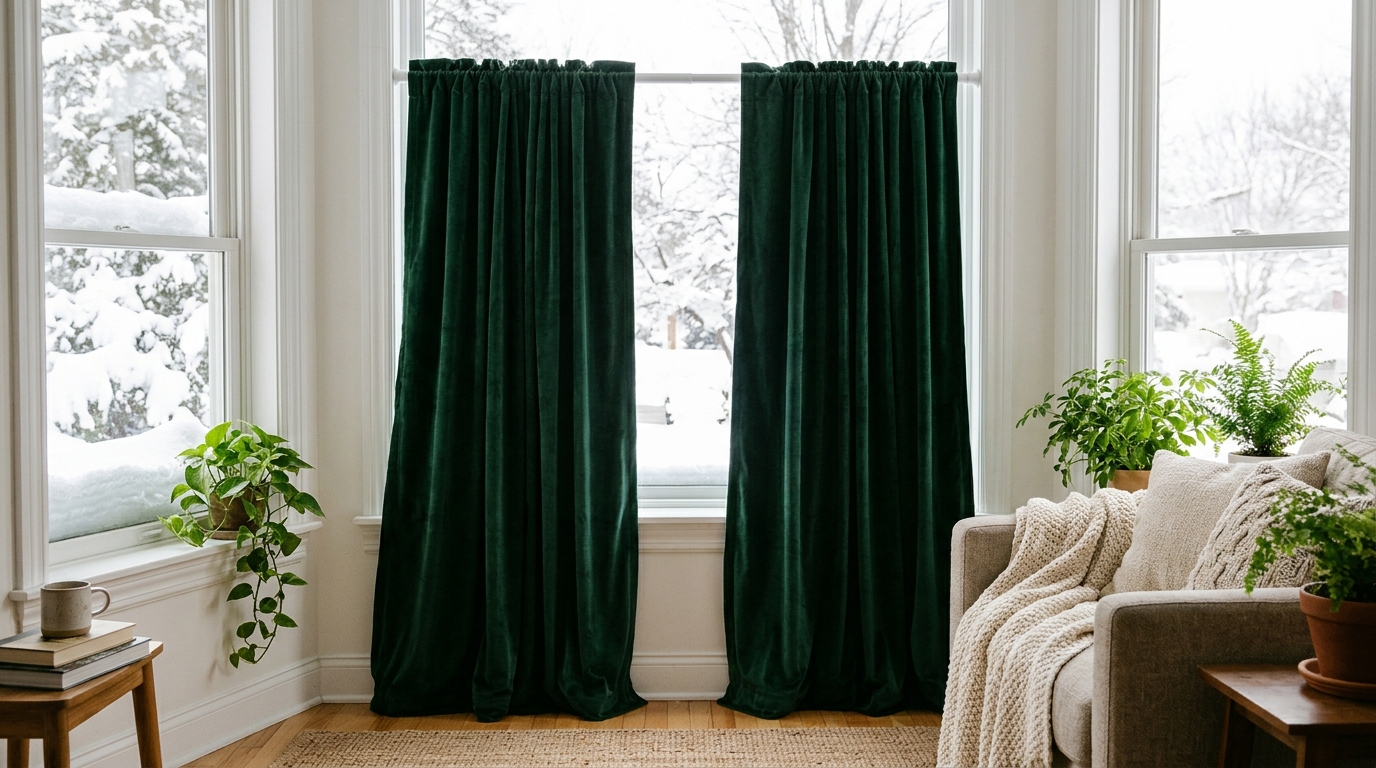
Thick curtains act like a sweater for your windows. Hang velvet or thermal panels on a tension rod inside the frame so they sit close to the glass and trap a pocket of air. No drilling is needed, which is great for renters. Close them at night and open them on sunny days. Thrift stores often sell heavy curtains for a few dollars. Would you go for a rich green, red or cream?
You will need: a tension rod sized to your window frame, heavy velvet, thermal or lined curtain panels, curtain clips if the panels have no rod pocket.
How to make it: 1. Measure inside the window frame. 2. Twist the tension rod until it fits snugly. 3. Thread or clip on the curtains. 4. Close them every evening.
Bubble Wrap Window Insulation: Benjamin Franklin Winter Hacks on a Budget
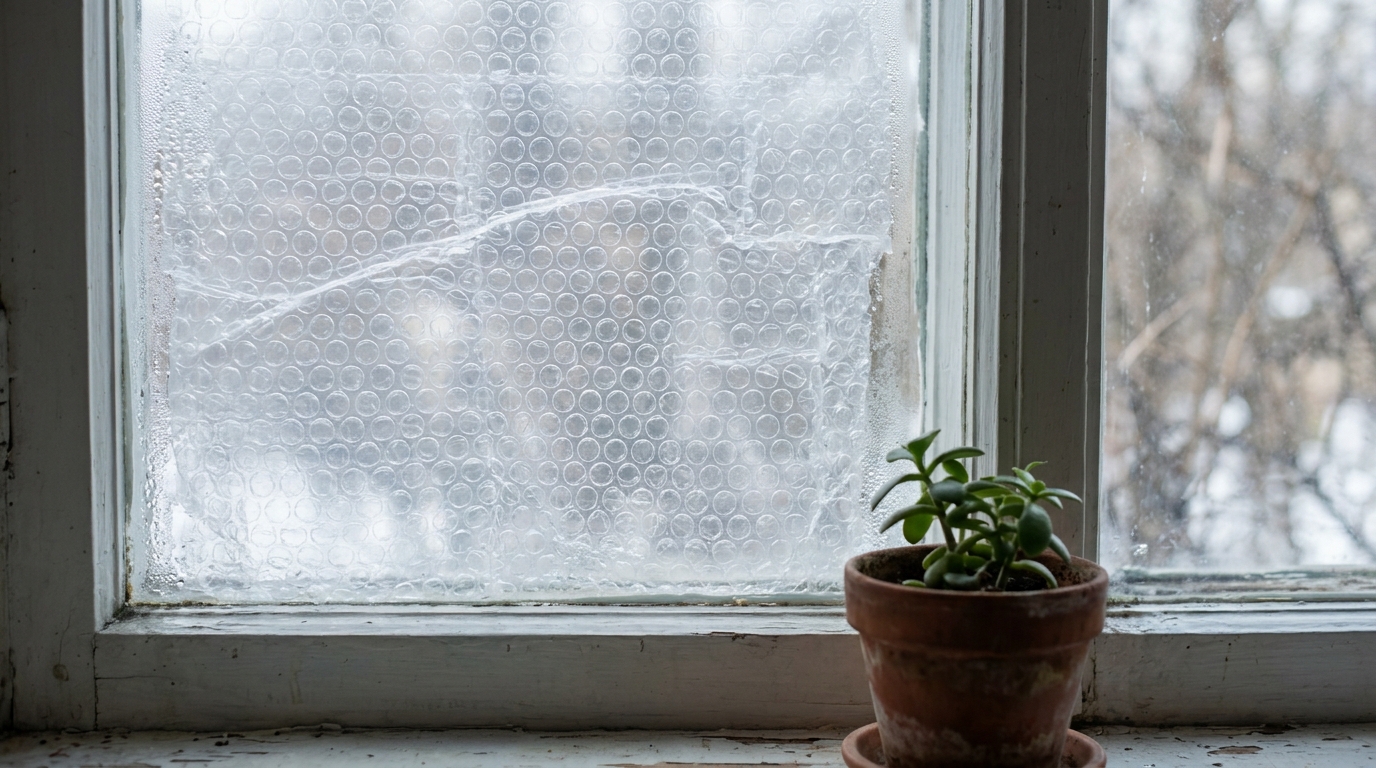
Some Benjamin Franklin winter hacks sound silly but really work. Here is a trick that sounds silly but really works: bubble wrap on a window. Spray a light mist of water on the glass, press the bubble side against it, and it sticks with no tape. The air bubbles add a layer of insulation while still letting light in. Use it on windows in spare rooms or bathrooms where you do not need a clear view. It peels off cleanly in spring. Will you try it on a back window?
You will need: large bubble wrap, a spray bottle of water, scissors, a ruler.
How to make it: 1. Cut the bubble wrap to fit the glass. 2. Mist the window with water. 3. Press the bubble side onto the wet glass. 4. Smooth from the center out.
Rugs on Bare Floors

Simple Benjamin Franklin winter hacks often start at your feet. Bare wood and tile floors pull warmth right out of a room, and your feet feel it first. A thick rug or two creates a warm layer between you and the cold floor. Thrifted wool rugs are the best value, and a rug pad underneath adds even more warmth. Put them where you sit and stand the most: by the sofa, the bed and the kitchen sink. Where are your feet coldest in winter?
You will need: 1 or 2 thick wool or cotton rugs, non slip rug pads, a measuring tape.
How to make it: 1. Measure your sitting or walking areas. 2. Lay the rug pad first so the rug does not slide. 3. Place the rug on top. 4. Vacuum thrifted rugs well before use.
Magnetic Covers for Vents in Unused Rooms
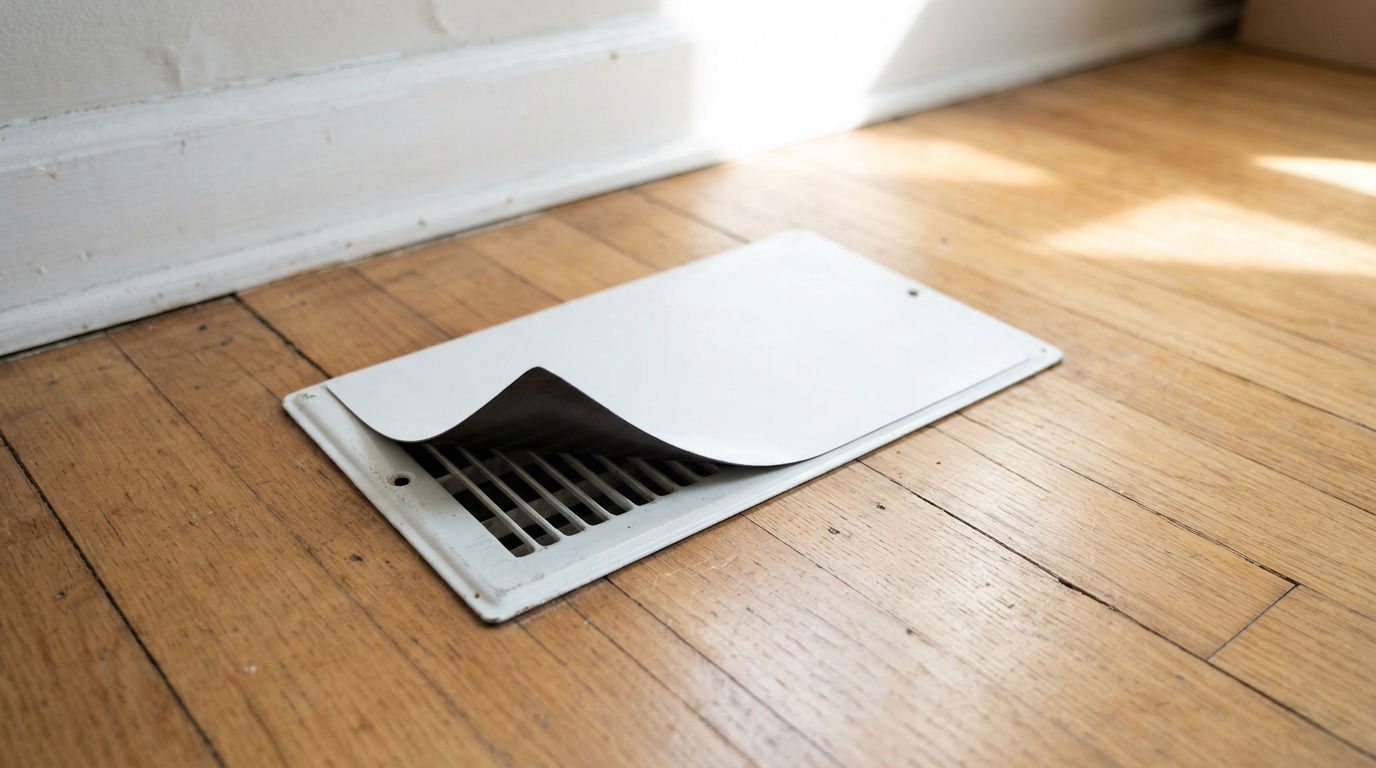
Why heat a guest room nobody is using? A simple magnetic vent cover sends warm air to the rooms where your family actually spends time. Cut a sheet of magnetic material to size and lay it over metal floor or wall vents, then close the door. Do not cover more than one or two vents, so your system still breathes. Which room in your house sits empty most of the winter?
You will need: a sheet of flexible magnetic material, scissors, a ruler, a marker.
How to make it: 1. Measure the vent and add half an inch on each side. 2. Cut the magnetic sheet to size. 3. Lay it over the vent. 4. Close that room’s door to keep warm air elsewhere.
Benjamin Franklin Winter Hacks for Radiators: A Reflective Panel
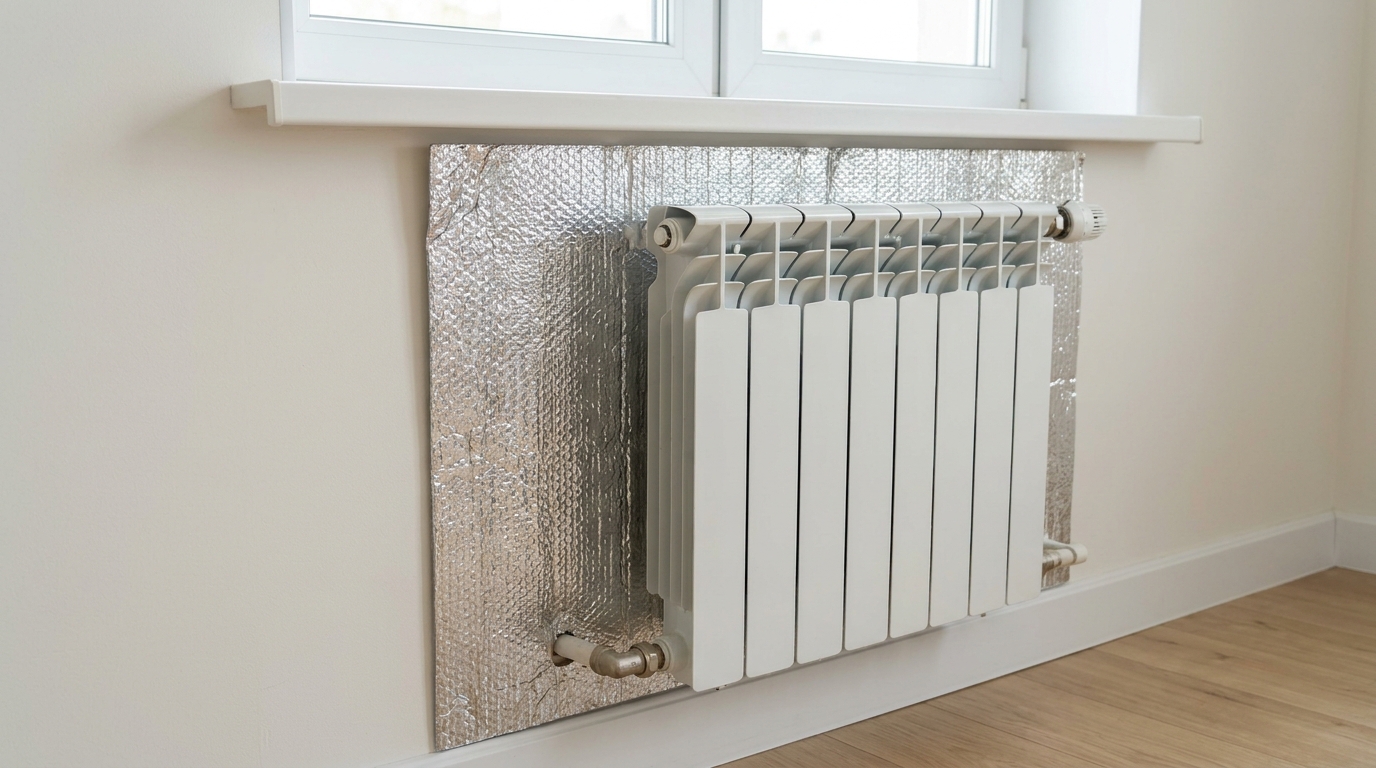
Radiators on outside walls send a lot of their heat straight into the wall. A reflective panel behind the radiator bounces that warmth back into the room. You can buy radiator foil or make your own by gluing kitchen foil onto thin cardboard. Slide it behind the radiator with the shiny side facing the room. It is the kind of clever, low cost idea an inventor would love. Do your radiators sit on outside walls?
You will need: radiator reflector foil or kitchen foil, thin cardboard, glue stick, scissors, double sided tape.
How to make it: 1. Measure the radiator’s height and width. 2. Cut cardboard a little smaller and cover it with foil, shiny side out. 3. Turn the radiator off and let it cool. 4. Slide the panel behind it and tape it to the wall.
Bookshelf on an Outside Wall

Franklin loved books so much that he helped found one of America’s first lending libraries, and books can help keep you warm too. A full bookcase on a cold outside wall works like an extra layer of insulation. Move your biggest shelf to the coldest wall in the room and fill it up. It looks cozy, stores your favorite reads and costs nothing if you already own the shelf. Which wall in your living room feels cold to the touch?
You will need: a tall bookcase, books, wall anchors and straps for safety.
How to make it: 1. Touch your walls to find the coldest one. 2. Move the bookcase against it. 3. Anchor it to the wall with a safety strap. 4. Fill the shelves top to bottom.
Benjamin Franklin Winter Hacks You Can Sew: A Quilted Window Cover
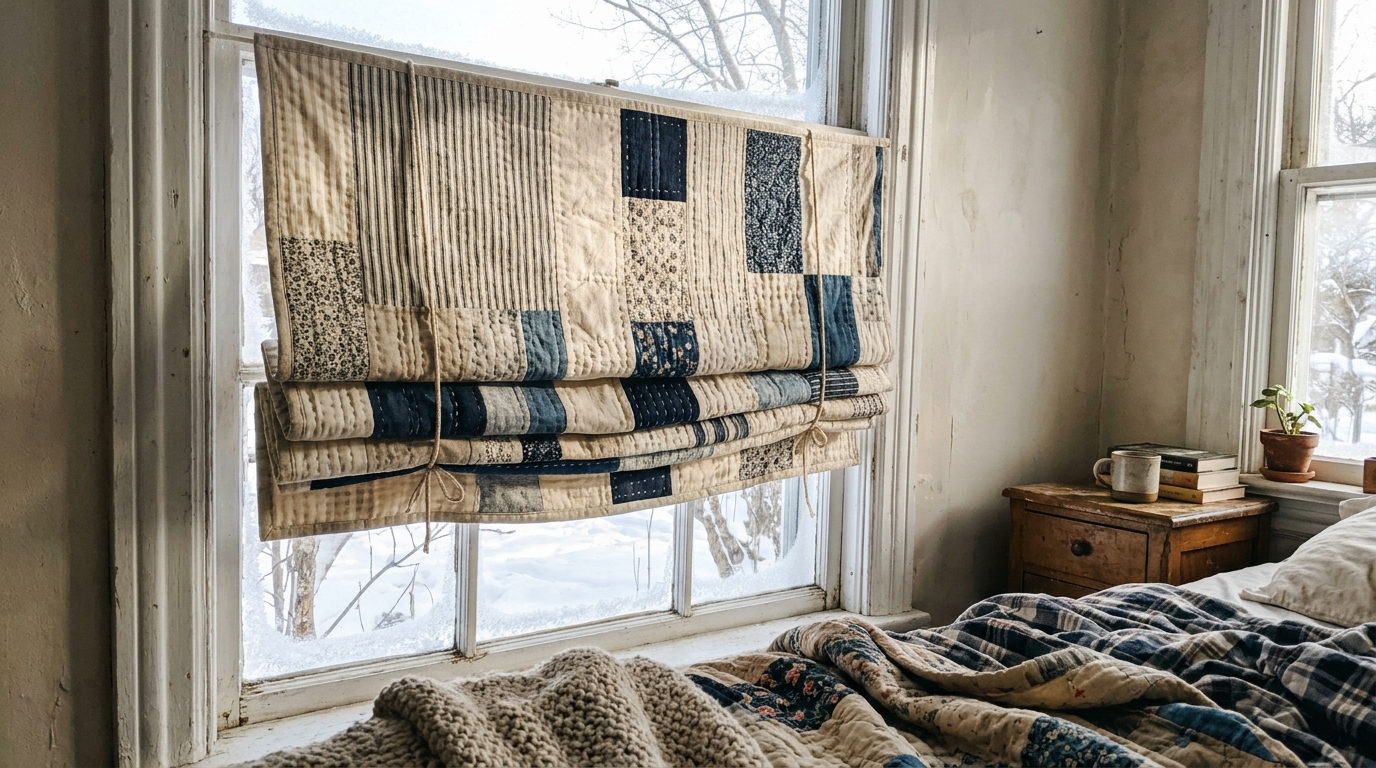
A window quilt is an old fashioned idea that is coming back. Use an old quilt or sew two layers of fabric with a cotton batting middle, then hang it inside the frame like a roman shade. Lower it at night and it stops the cold glass from chilling the whole room. Patchwork from scraps makes it pretty enough to leave up all season. Do you have an old quilt waiting for a new job?
You will need: an old quilt or 2 pieces of fabric plus cotton batting, a sewing machine or needle and thread, a tension rod, cord and small rings for the roman shade.
How to make it: 1. Cut the quilt to fit inside the window frame. 2. Hem the edges and sew a rod pocket at the top. 3. Stitch small rings in two columns on the back and thread cord through. 4. Hang it and pull the cords to raise it by day.
Weatherstrip a Drafty Door
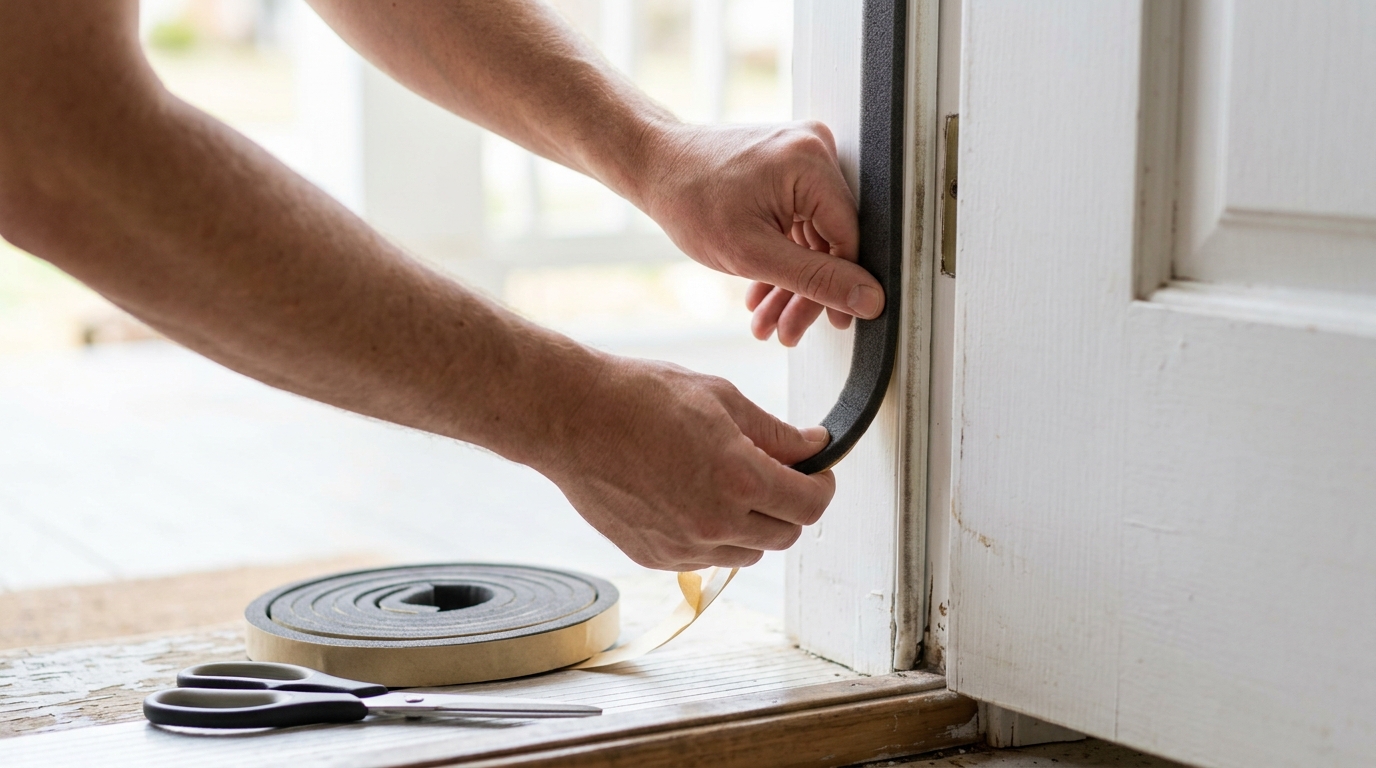
Benjamin Franklin winter hacks are not only about windows. If you can see daylight around a closed door, warm air is leaking out. Self adhesive foam weatherstrip is cheap and takes about fifteen minutes to install. Clean the frame, peel the backing and press the foam where the door closes against it. The door should shut firmly but not be hard to close. For more window fixes, see our drafty windows gallery. Which door will you seal first?
You will need: a roll of self adhesive foam weatherstrip, rubbing alcohol, a cloth, scissors.
How to make it: 1. Clean the door frame with alcohol and let it dry. 2. Measure each side of the frame. 3. Peel and press the foam along the stop. 4. Close the door to test the seal.
Install a Door Sweep
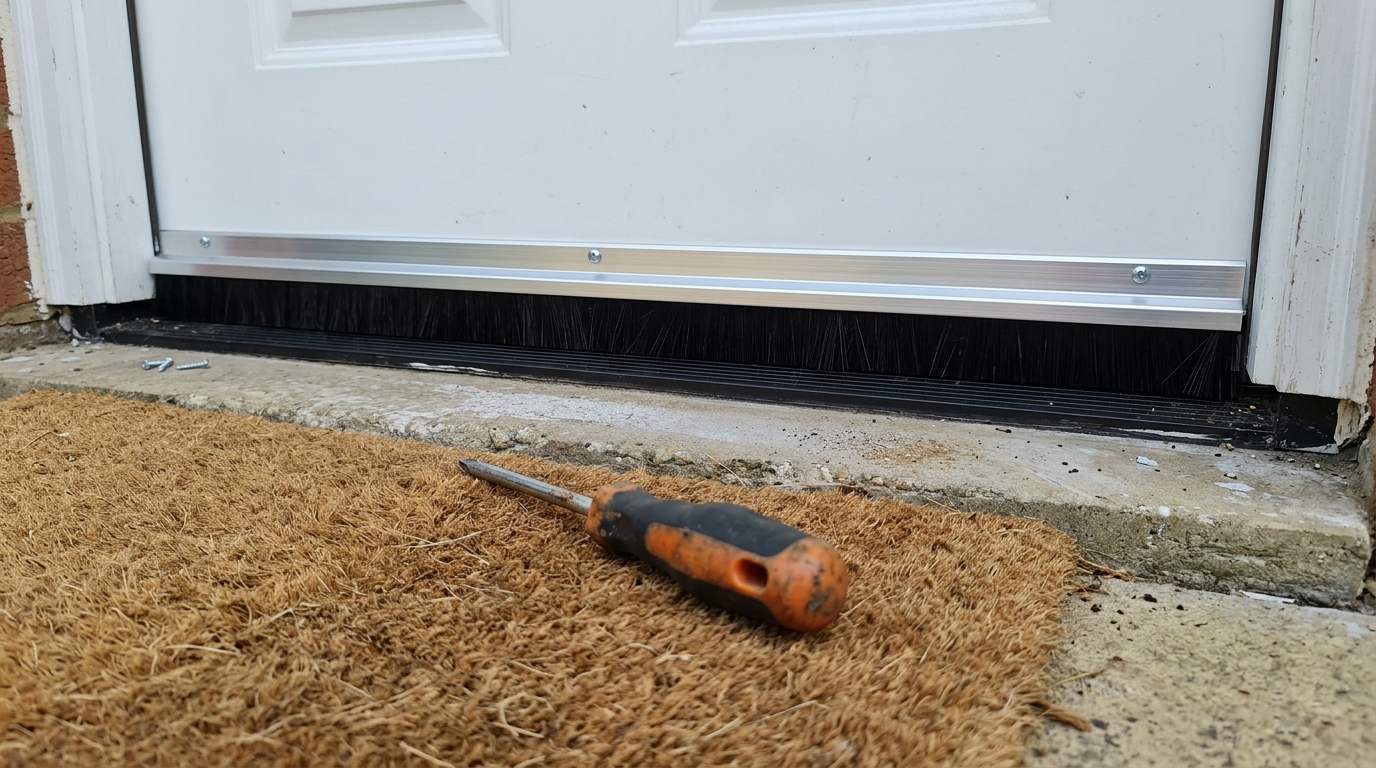
The gap under an outside door is a highway for cold air. A brush or rubber door sweep closes it for good. Most screw on with four screws in under twenty minutes, and you only need a screwdriver. Pick one in the same color as your door and nobody will even notice it. It also helps keep out dust and bugs. Is there a gap under your front door?
You will need: a door sweep the width of your door, a screwdriver, a pencil, a hacksaw if it needs trimming (adult use).
How to make it: 1. Close the door and hold the sweep so the brush just touches the floor. 2. Mark the screw holes. 3. Screw it in place. 4. Open and close the door to check it moves freely.
Sweater Covers: Cozy Benjamin Franklin Winter Hacks for Bed
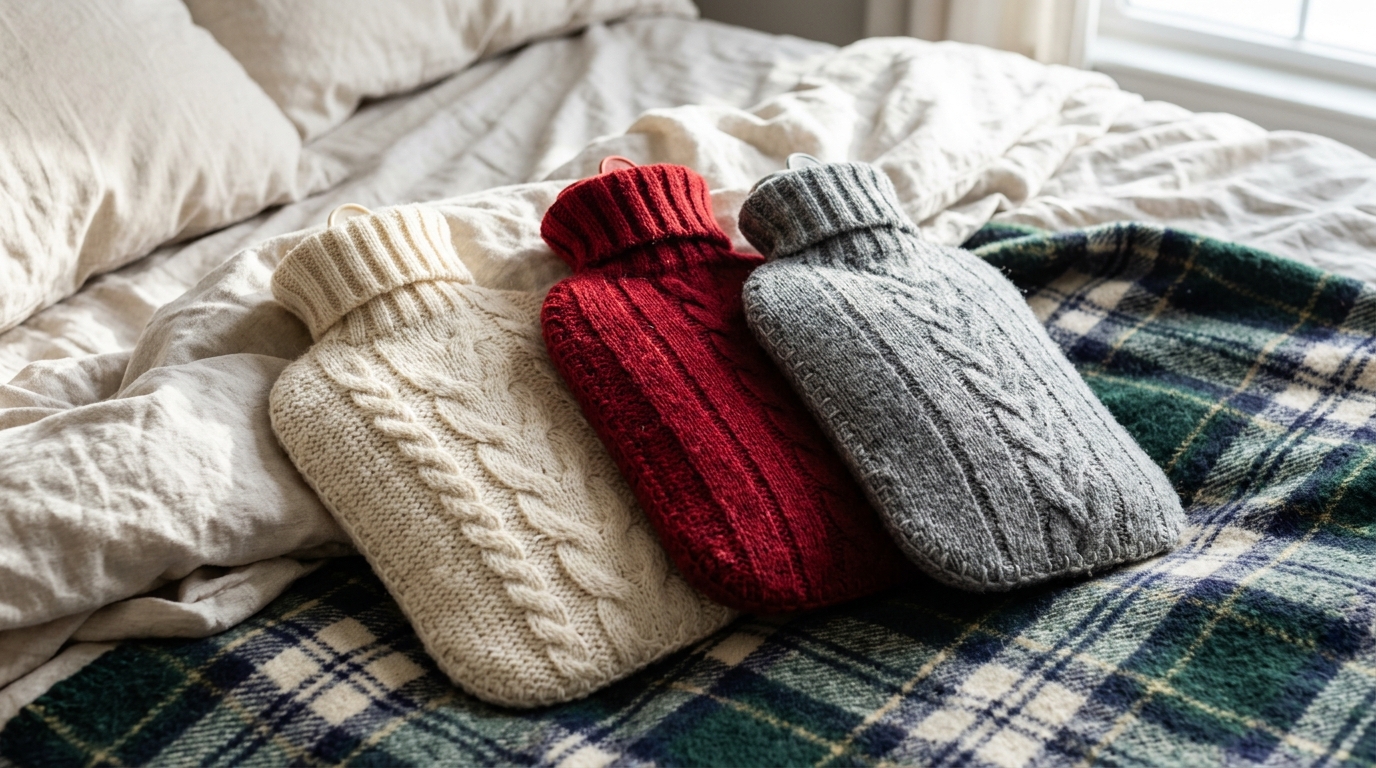
Before electric blankets, people warmed their beds with hot water bottles, and they are still one of the cheapest ways to sleep cozy. Give yours a soft cover cut from an old cable knit sweater sleeve or body. The knit holds the warmth longer and keeps hot rubber off your skin. Fill bottles with hot tap water rather than boiling water, and never sit on them. Whose old sweater will become your cover?
You will need: an old sweater, a hot water bottle, scissors, a needle and thread or sewing machine, a ribbon.
How to make it: 1. Lay the bottle on the sweater and cut around it with a 1 inch margin. 2. Sew the sides and bottom closed. 3. Slide the bottle in through the neck end. 4. Tie a ribbon around the neck to close it.
Wool Socks and Warm Layers in Bed

Some Benjamin Franklin winter hacks are as simple as getting dressed. Warm feet make your whole body feel warmer, so a pair of thick wool socks is a small luxury that lets you turn the thermostat down a little at night. Add flannel sheets and an extra blanket at the foot of the bed. You can knit your own socks or upcycle the cuffs of a felted sweater into bed socks. It is the coziest money saver on this list. Do you sleep better with warm feet?
You will need: thick wool socks, flannel sheets, a spare blanket or quilt.
How to make it: 1. Swap cotton sheets for flannel in late fall. 2. Fold an extra blanket at the foot of the bed. 3. Put on wool socks at bedtime. 4. Lower the heat a degree or two and see how you sleep.
Open South Curtains by Day, Close Them at Night
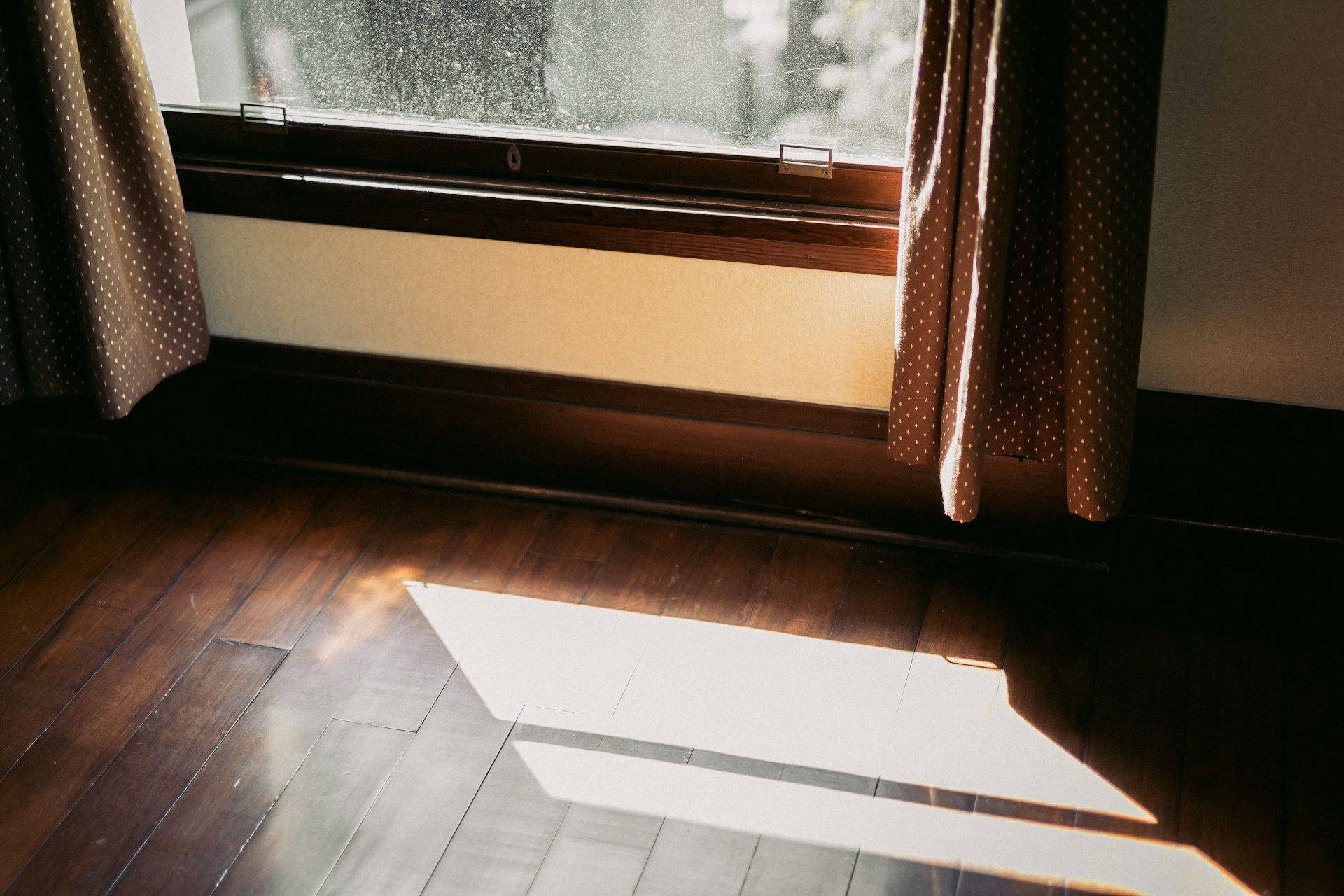
The cheapest of all Benjamin Franklin winter hacks? Sunshine is free heat. On sunny winter days, open the curtains on south facing windows and let the light warm your floors and furniture. As soon as the sun goes down, close them to hold that warmth inside. It is a simple daily habit that a thrifty inventor would have loved. A dark rug in the sunny spot soaks up even more warmth. Which of your windows gets the most sun?
You will need: curtains or blinds that open fully, a dark rug or throw for the sunny spot.
How to make it: 1. Notice which windows get sun in the morning and afternoon. 2. Open those curtains wide on sunny days. 3. Close them at dusk. 4. Keep north windows covered most of the day.
Fabric Covered Outlet Plates
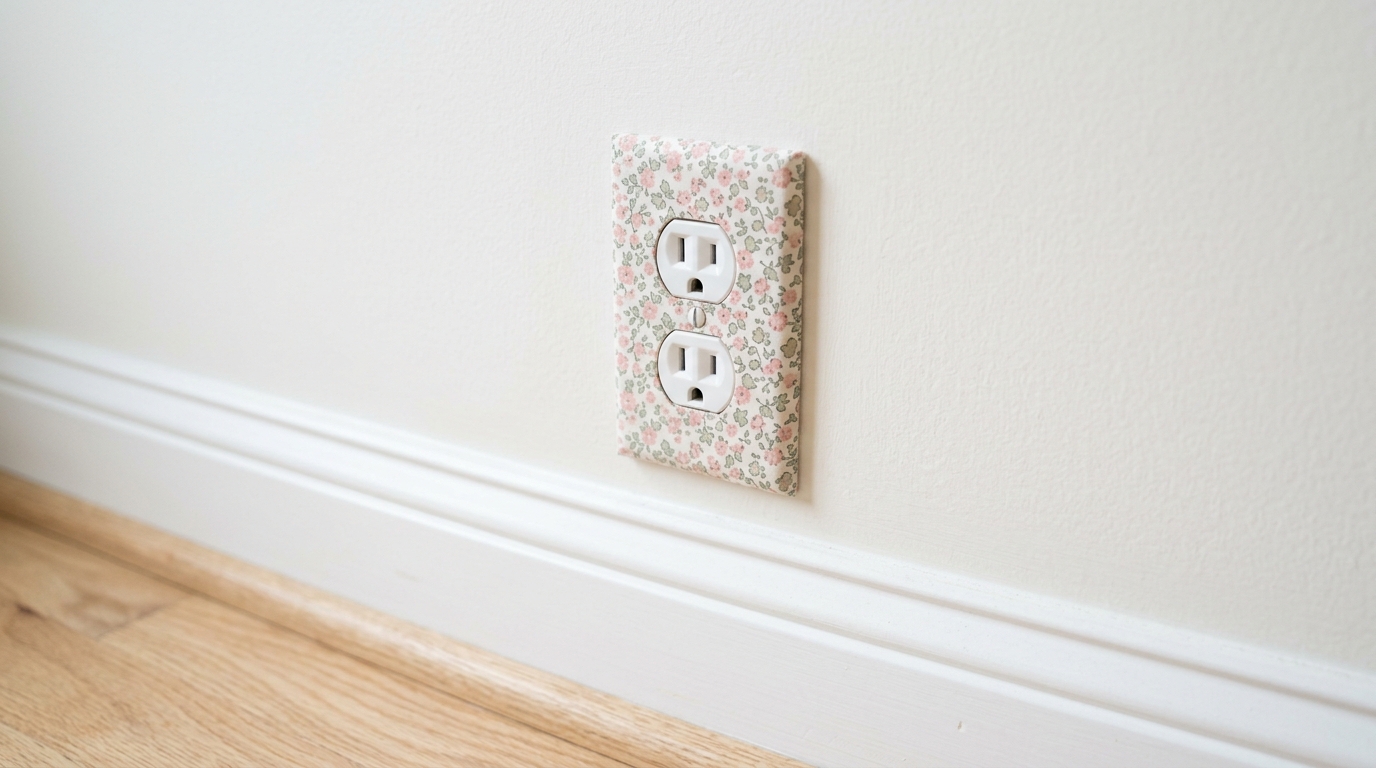
Outlets and switches on outside walls can let in a surprising amount of cold air. Foam gaskets that fit behind the cover plate are cheap and easy, and while you have the plate off you can cover it in pretty fabric with decoupage glue. Always switch off the power at the breaker before removing a plate, and keep fabric away from the openings. It is a tiny project with a cozy, cottage look. Which outlet would you dress up first?
You will need: foam outlet and switch gaskets, a screwdriver, a plastic outlet plate, cotton fabric, decoupage glue, a craft knife (adult use).
How to make it: 1. Turn off power at the breaker and remove the plate. 2. Press a foam gasket in place. 3. Glue fabric to the plate, wrap the edges and trim the openings. 4. Let it dry, screw it back on and restore power.
Felt Keyhole Cover

Old doors with big keyholes can let in a thin stream of cold air, and our great grandparents had a sweet fix: a little fabric keyhole cover. Stitch two felt hearts together, add a loop, and hang it over the keyhole on a small nail or the key itself. It blocks the draft and looks charming. Make extras as small gifts for friends with old houses. Would you choose a heart, a star or a little house shape?
You will need: felt in two colors, embroidery floss, a needle, a small amount of stuffing, twine.
How to make it: 1. Cut two large hearts and one smaller heart. 2. Stitch the small heart on the front. 3. Blanket stitch the two large hearts together with a little stuffing. 4. Add a twine loop and hang it over the keyhole.