Old House Features: 16 Clever Details Old Homes Had That We Forgot
Old house features are having a big moment online. Two of the top posts on the Hometalk trending page this week are about strange details in old homes that once had a real purpose, and videos on the same idea are pulling hundreds of thousands of views, like one tour of an old bedroom that hit 481,000 views in ten days. We get it. There is something so charming about a little door for the milkman or a phone nook built right into the hallway wall. Many of these ideas were simply smart, and some are worth copying today. Here are 16 clever details from older homes, what they were for, and an easy way to bring each one into your own house..
Old House Features That Still Make Sense
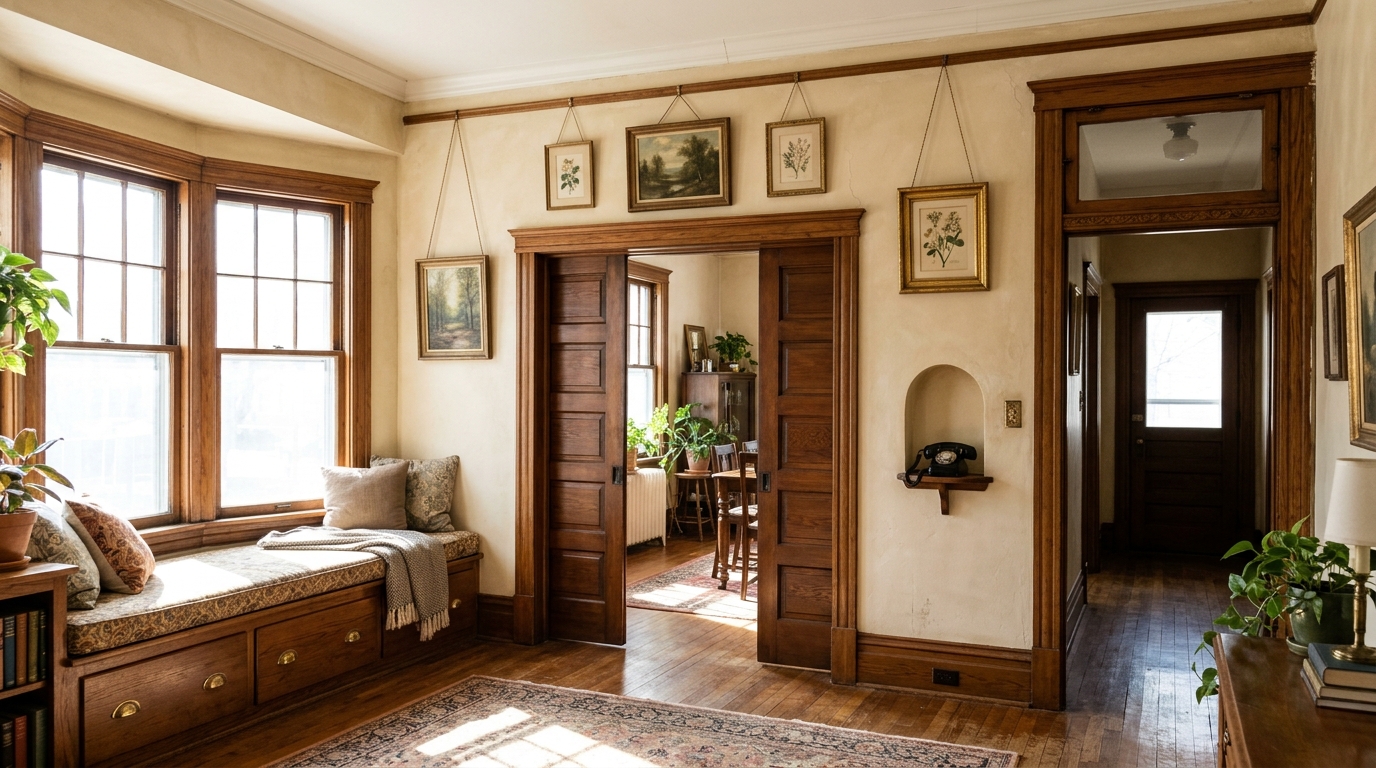
Step inside an older home and you will find clues to how people lived a hundred years ago. A window seat hides storage, pocket doors slide away to save space, a little arched nook once held the family phone, and a window above the door let breezes move through the house. These old house features were not just pretty. They solved real problems before modern gadgets did. Let us take a walk through the house and see what each one was for..
You will need: a curious eye, a notebook, and maybe a walk through an older neighborhood or historic home.
How to make it: 1. Look for these details in old homes near you. 2. Note which ones solve a problem in your house. 3. Pick one easy idea to copy this season.
The Milk Door for Deliveries
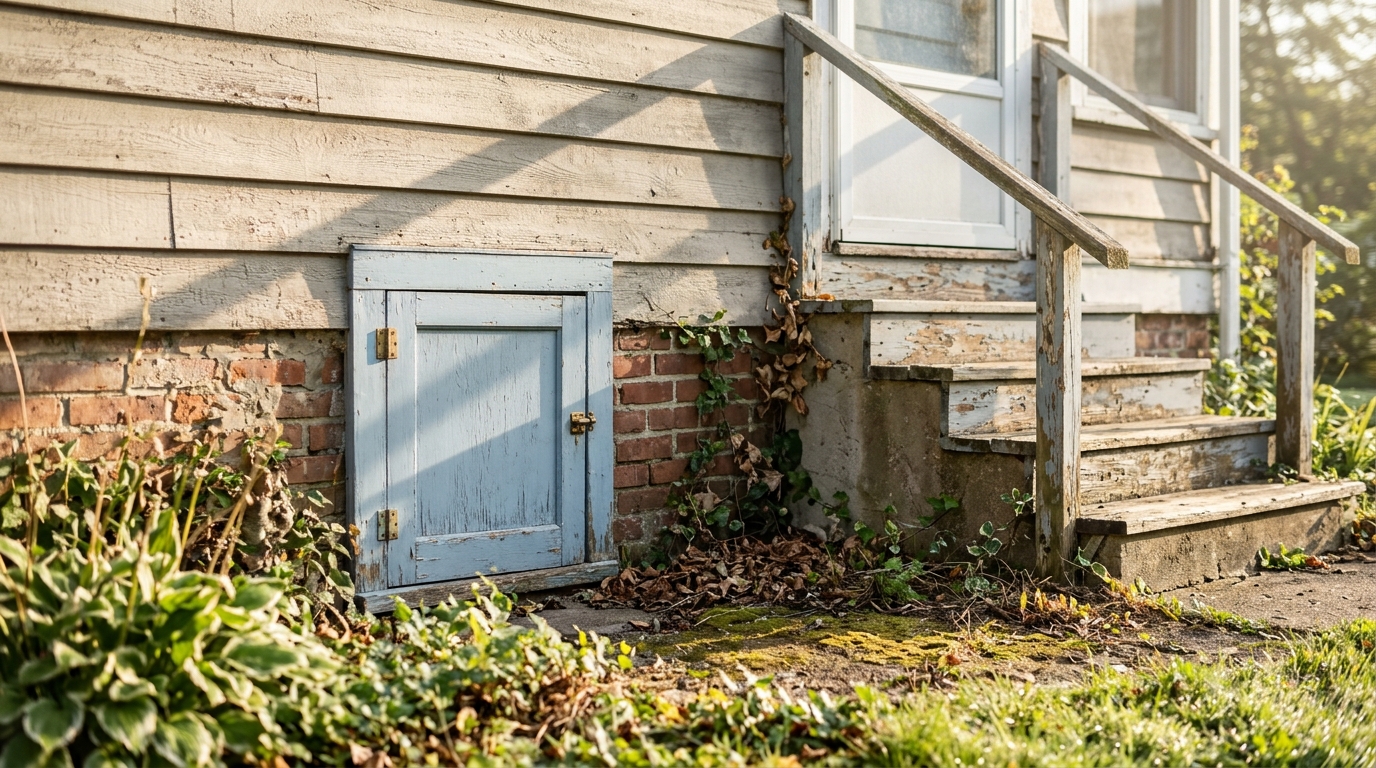
Before refrigerators and grocery stores, the milkman came to the house several times a week. Many homes had a small two way door in the outside wall so he could leave fresh bottles without anyone coming to the door. Today people paint them bright colors and use them for package drop offs or as a cute little cupboard. If you have one, show it off. If not, a small painted box by the back door gives the same charm. Have you ever seen a milk door?
You will need: paint in a fun color, a small brush, sandpaper, a new latch if needed.
How to make it: 1. Sand the little door lightly. 2. Paint it a cheerful color. 3. Add a new latch and use it as a parcel nook or display.
Old House Features Kids Loved: The Laundry Chute
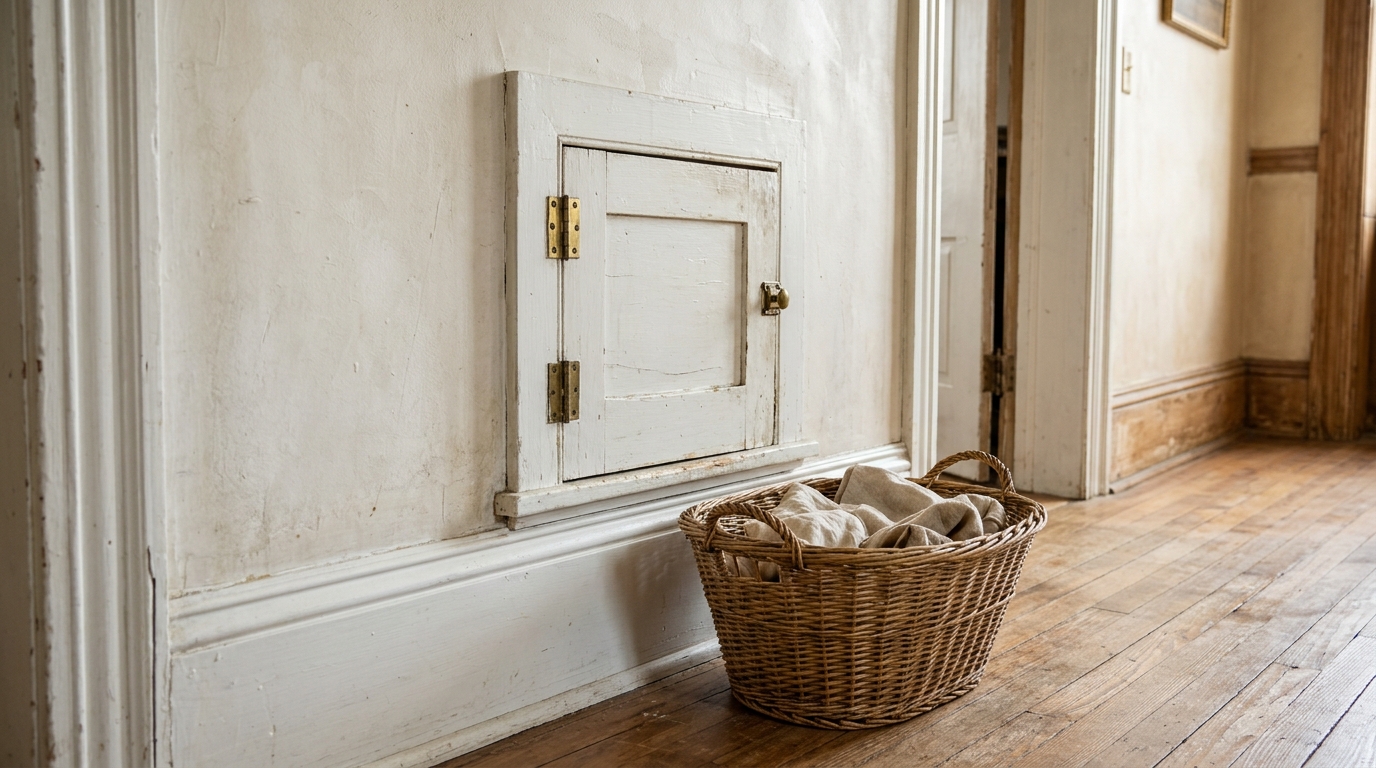
A laundry chute was a little door in an upstairs hallway or bathroom with a shaft that dropped dirty clothes straight down to the basement. No carrying heavy baskets down the stairs. Kids loved sending their socks flying. Many old house features like this were removed over the years, but some still work. If you do not have one, a tall hamper with a lid in each bathroom keeps clothes off the floor. Would your family use a laundry chute?
You will need: a tall lidded hamper or basket, a laundry bag that fits inside.
How to make it: 1. Pick a hamper with a lid that fits the space. 2. Line it with a laundry bag. 3. Carry the whole bag down on wash day.
Transom Windows for Airflow
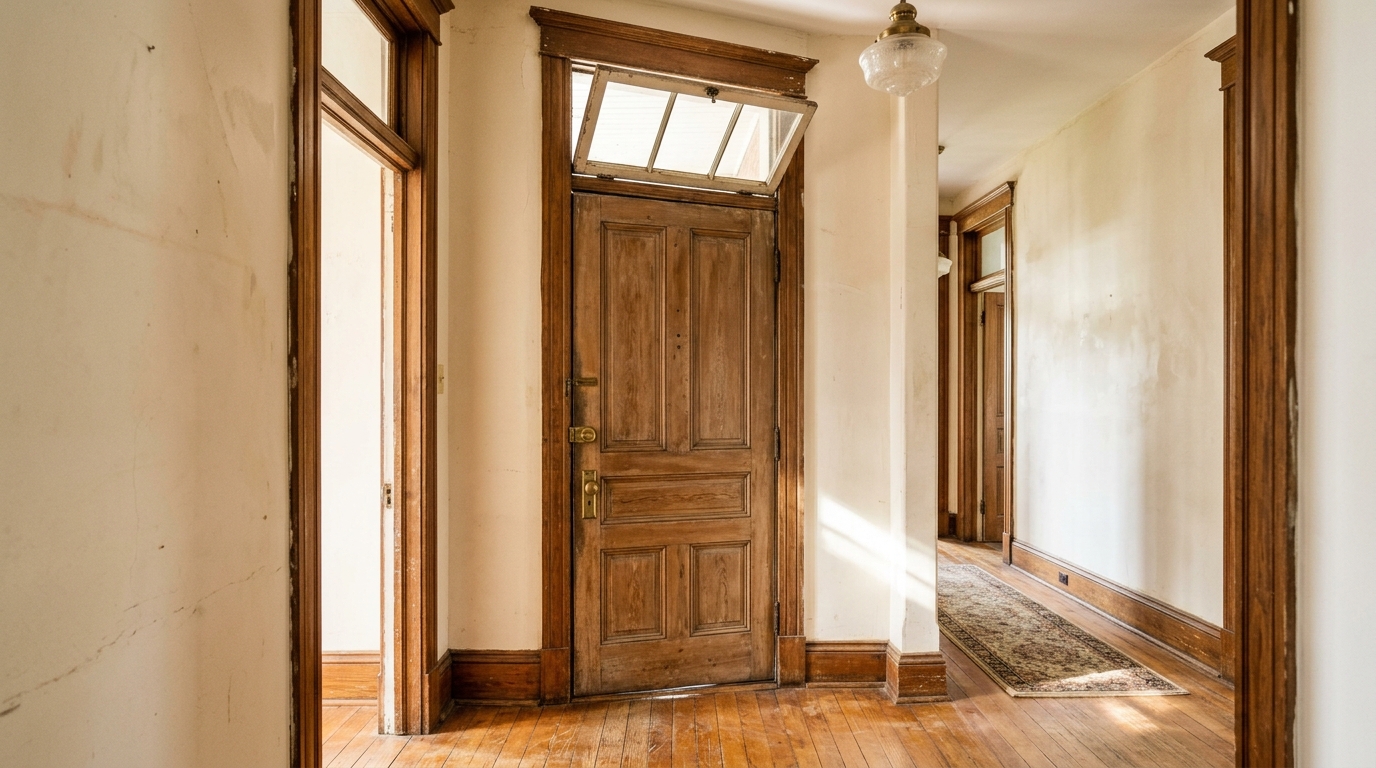
Before air conditioning, transom windows above doors were a clever way to cool a house. You could close the door for privacy but tilt the little window open so air kept moving from room to room. They also let daylight into dark hallways. Today you can add the same look with a fixed glass panel over an interior door or a decorative transom style frame. Old house features like this make even a new home feel full of character. Do you have a dark hallway that needs more light?
You will need: a pre framed glass transom panel or a decorative frame, trim, paint, a carpenter for wall openings.
How to make it: 1. Choose a door where more light would help. 2. Have a pro add a glass panel above it. 3. Finish with trim painted to match the door.
Old House Features: The Telephone Nook
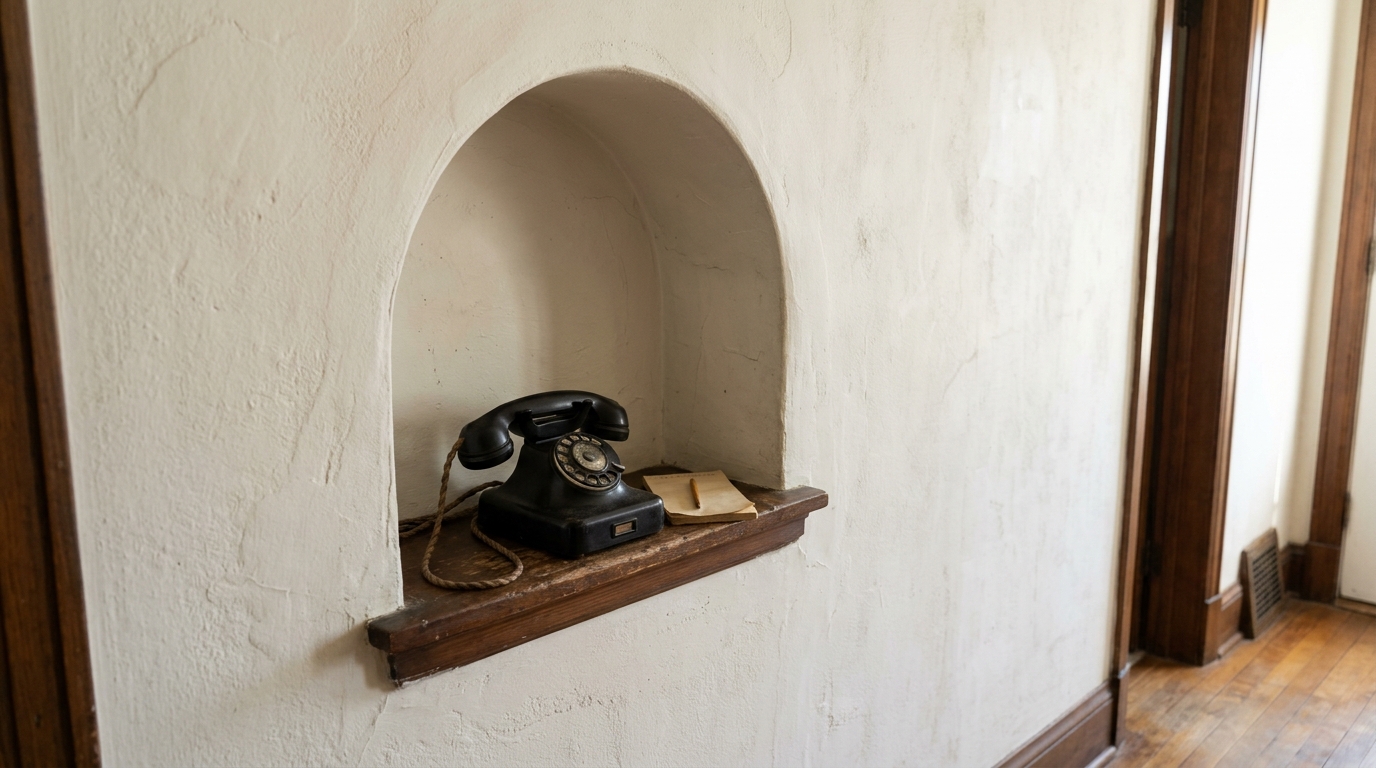
In the 1920s to 1950s, the house phone was attached to the wall, so many homes had a little arched nook built into the hallway to hold it. Some even had a tiny seat or a shelf for the phone book. Today these nooks are perfect for a small plant, a family photo or a charging spot for phones. If you love the look, a small arched shelf or a recessed niche gives the same feeling. What would you put in a phone nook?
You will need: a small arched wall shelf or niche, a little plant or framed photo.
How to make it: 1. Find a small empty stretch of hallway wall. 2. Hang an arched shelf at about waist height. 3. Style it with a plant, a photo or a charging dock.
The Built In Ironing Board
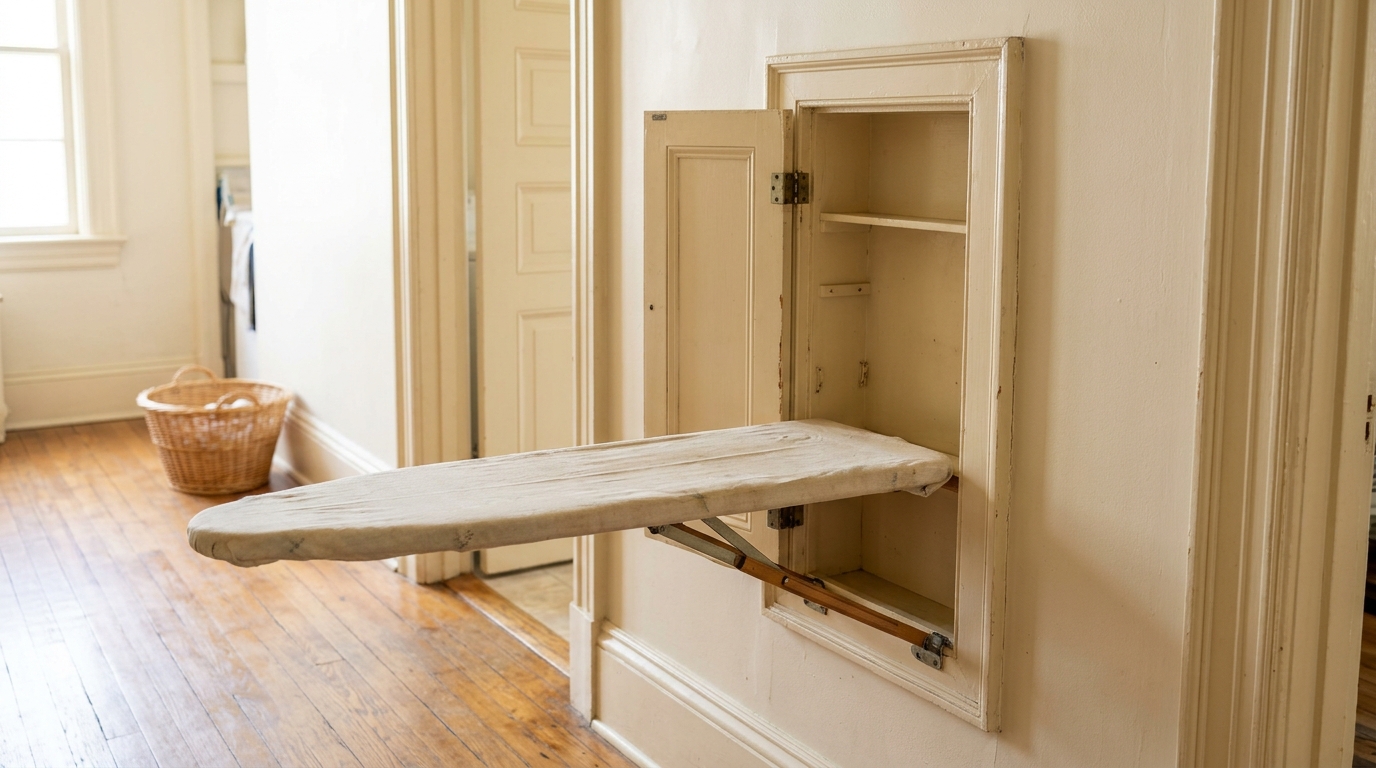
Ironing was a big weekly job, so many older homes had an ironing board that folded down from a narrow cabinet in the wall. When you were done, it folded back up out of sight. It is one of those old house features that people still wish for today. You can buy wall mounted fold down boards that fit between studs, or hang a board on hooks inside a closet door. How often do you pull out the ironing board?
You will need: a wall mounted fold down ironing board or over the door board holder, screws, a drill (adult help).
How to make it: 1. Find a spot near an outlet. 2. Mount the cabinet or holder into studs. 3. Fold it down when you need it and tuck it away after.
Old House Features Worth Copying: Window Seats
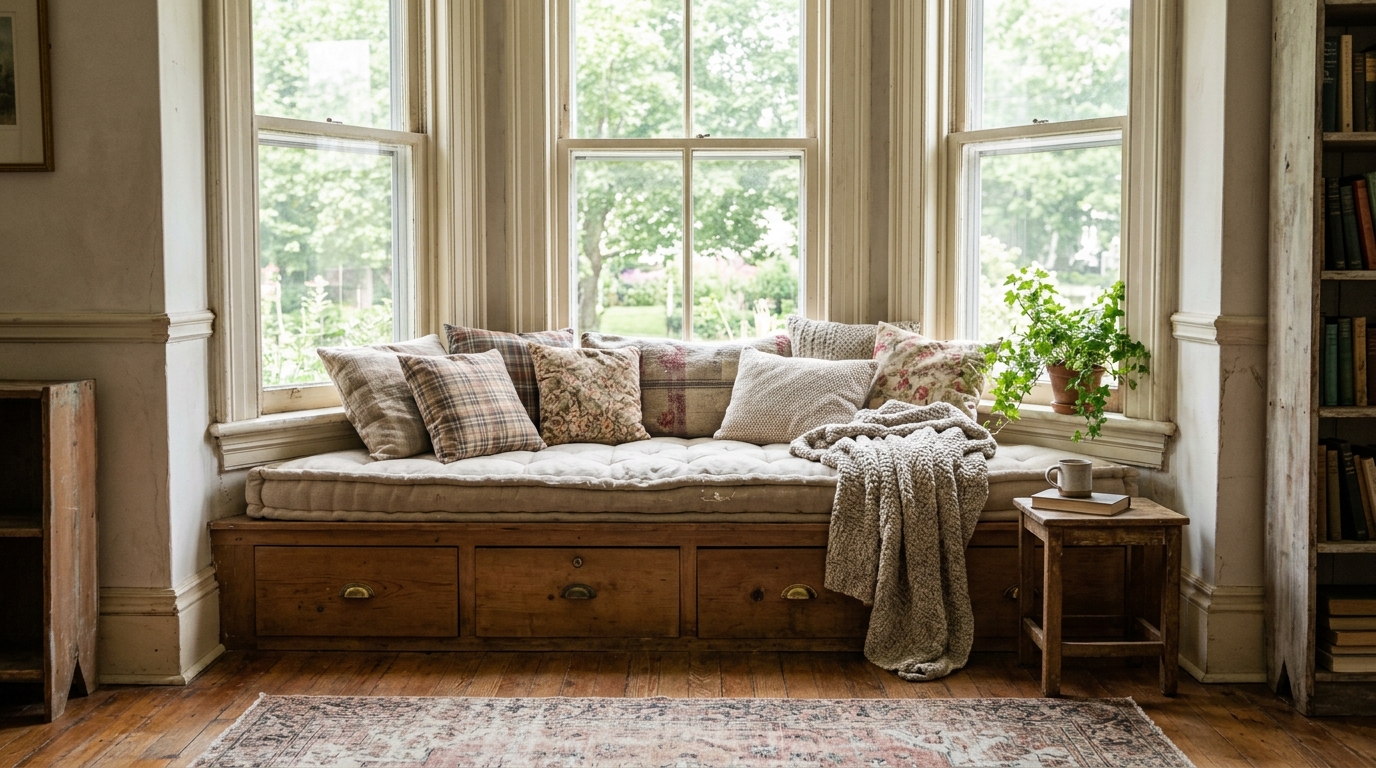
Window seats were a way to turn a deep bay window into a cozy spot to read, and the space underneath held blankets, toys or seasonal clothes. They are just as useful today. You can make your own with a pair of low cabinets or a sturdy bench topped with a thick cushion. Add a few pillows and it becomes the favorite seat in the house. Which window in your home could hold a window seat?
You will need: two low cabinets or a storage bench, a cut to fit cushion, throw pillows.
How to make it: 1. Measure the window width and depth. 2. Set the cabinets or bench in place and attach them to the wall. 3. Add a cushion and pillows.
Picture Rail for Hanging Art Without Nails
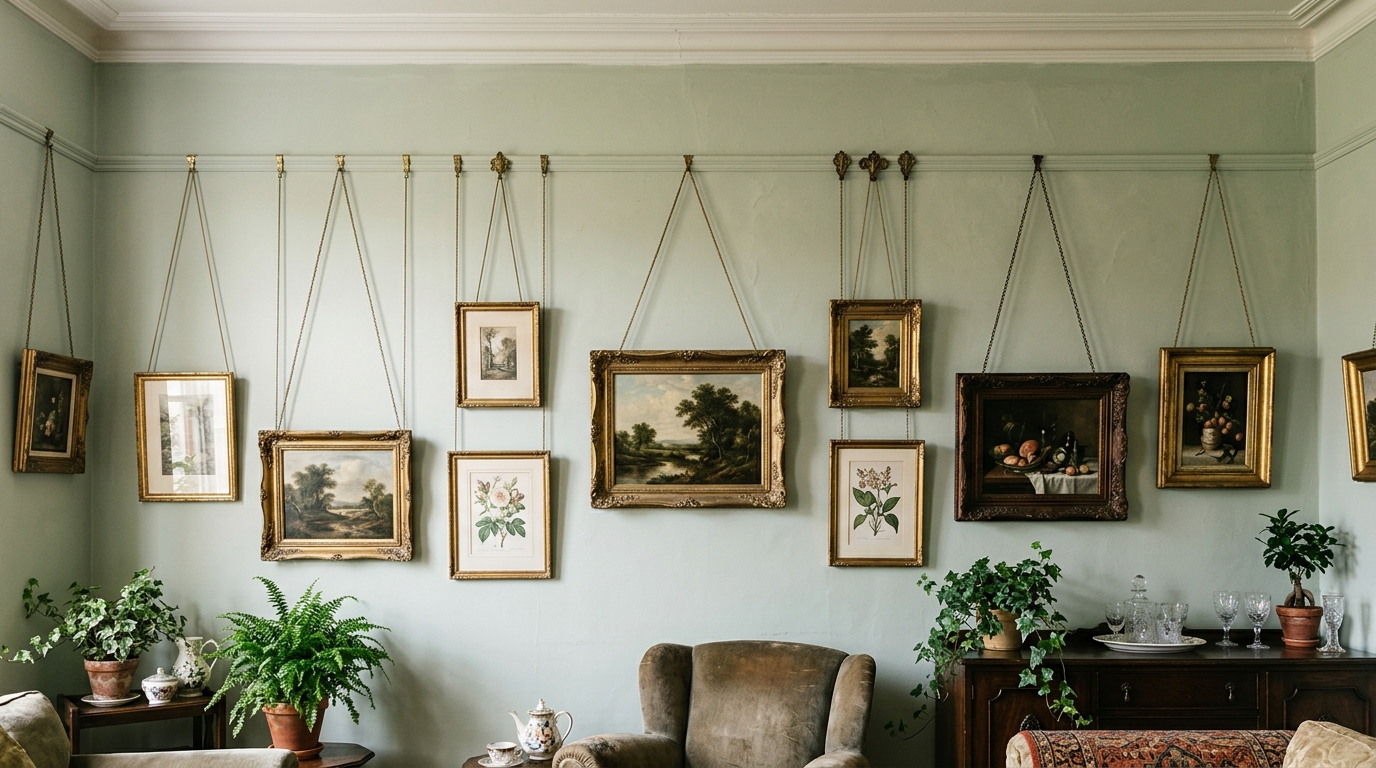
Plaster walls crack easily, so older homes had a picture rail molding near the ceiling. Hooks slid over the rail and paintings hung on long cords or chains. You could move art around without putting a single hole in the wall. Many renters love this idea today. You can add a simple picture rail molding to any room and use the same hooks. Old house features like this are both pretty and practical. Do you change your art around often?
You will need: picture rail molding, picture rail hooks, cord or chain, paint, small nails (adult help).
How to make it: 1. Attach the picture rail about a foot below the ceiling. 2. Slide hooks over the rail. 3. Hang art from cords and adjust the heights.
Pocket Doors That Slide Into the Wall
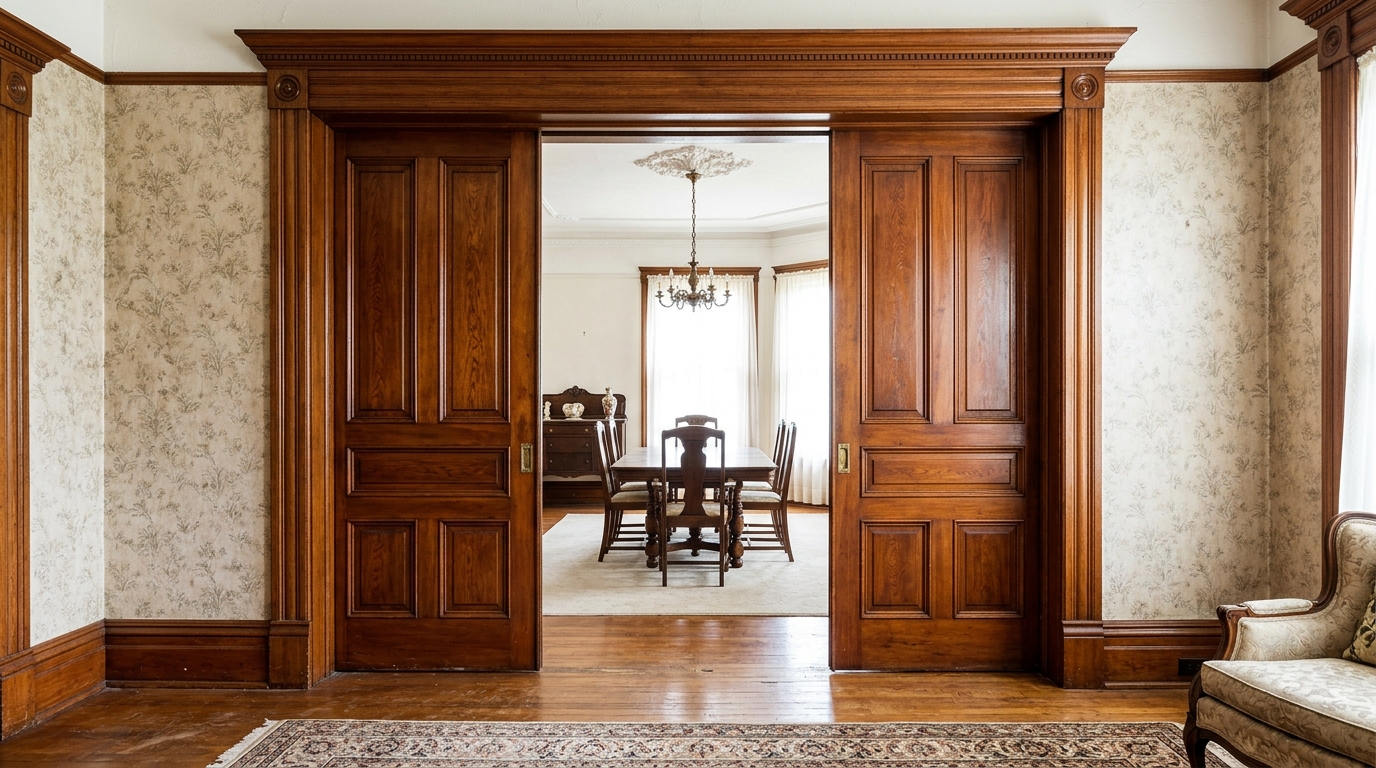
Pocket doors slide into the wall instead of swinging open, which saves a lot of floor space. In older homes, big pocket doors could close off the parlor to keep heat in one room during winter. Today they are great for small bathrooms, closets and laundry rooms. If you cannot open up a wall, a barn style sliding door on a track gives a similar space saving result. For more ideas with doors, see our old door ideas. Where would a sliding door help you most?
You will need: a pocket door kit or barn door track, a door, a carpenter for wall work.
How to make it: 1. Pick a doorway where a swinging door gets in the way. 2. Have a pro install a pocket frame or mount a sliding track. 3. Hang the door and add a flush pull.
Sleeping Porch for Hot Summer Nights
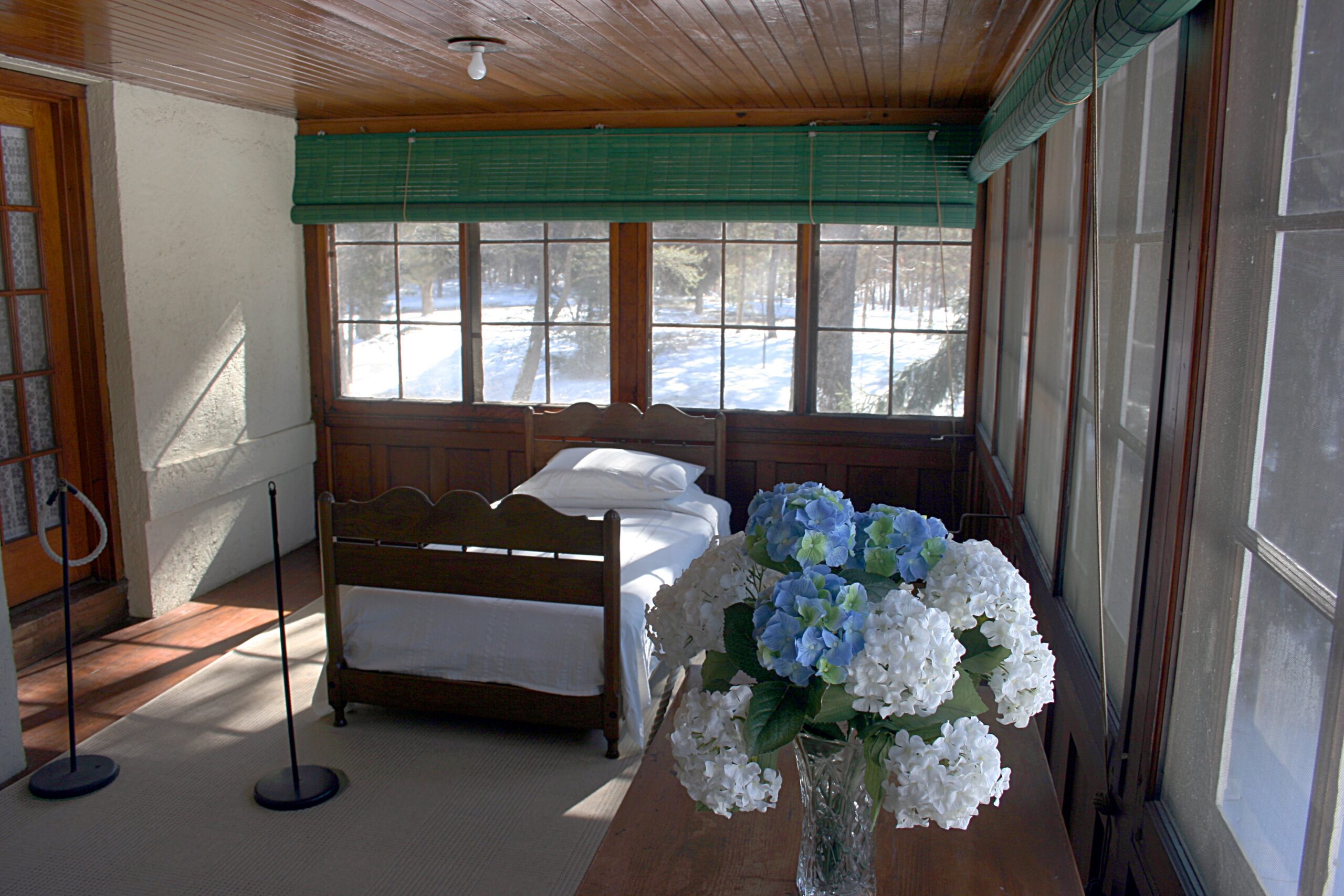
Before air conditioning, many families slept on a screened porch on hot summer nights to catch the cool breezes. This sleeping porch is in the house at Val-Kill, Eleanor Roosevelt’s home in Hyde Park, New York, which is now a national historic site. Today a screened porch with a daybed makes a dreamy nap spot. Would you sleep outside on a summer night?
You will need: a daybed or outdoor cot, outdoor cushions, a light quilt, screens in good repair.
How to make it: 1. Check that all screens are tight and clean. 2. Add a daybed or cot with weather safe cushions. 3. Bring out a quilt on cool nights.
Old House Features for Busy Families: Mudroom Bench
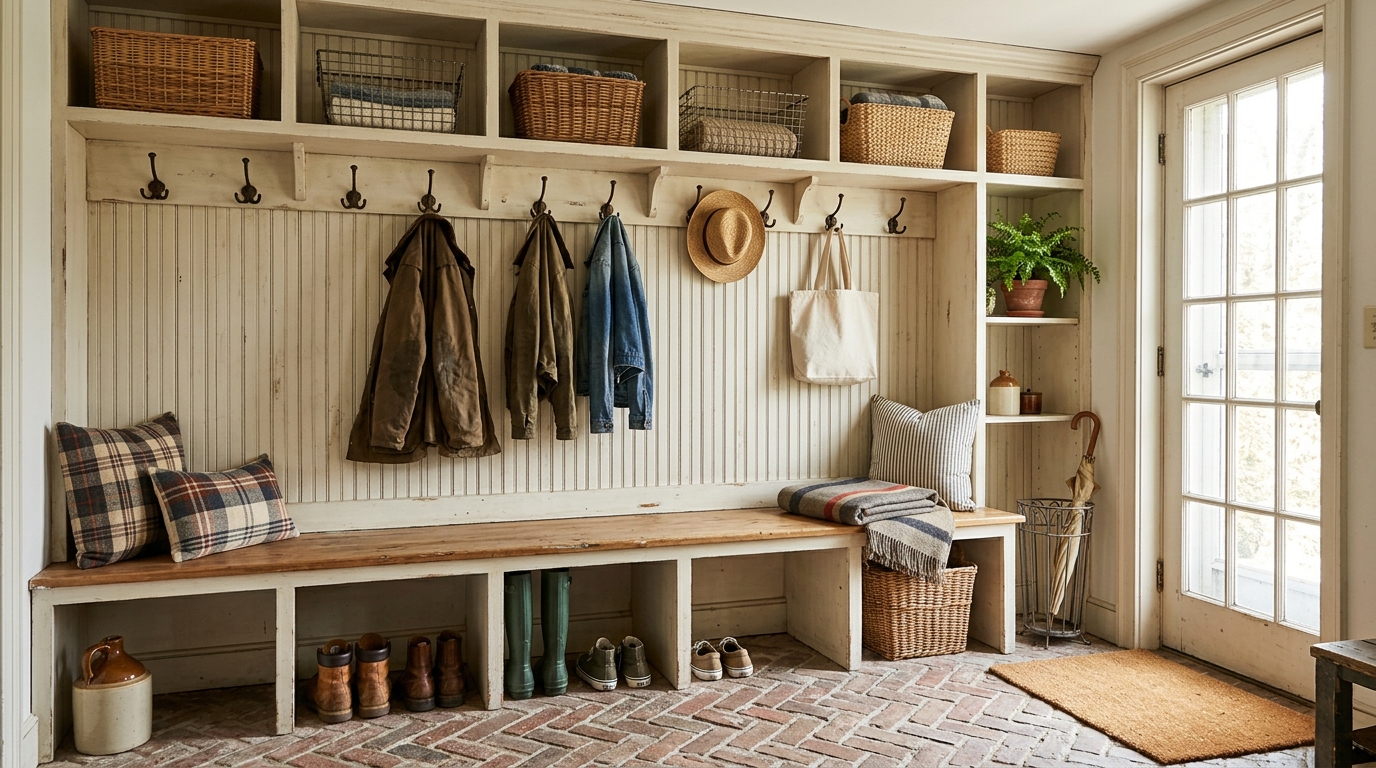
Farmhouses had a back entry where muddy boots and wet coats stayed before anyone stepped into the clean house. A bench with cubbies above and hooks for coats kept everything organized. These old house features are back in style because they work so well for busy families. You can make your own with a simple bench, a shelf with hooks and a few baskets. Where do the shoes end up in your house?
You will need: a sturdy bench, a wall shelf with hooks, baskets, a boot tray.
How to make it: 1. Place the bench by the door you use most. 2. Hang a hook shelf above it on studs. 3. Add baskets for hats and a boot tray below.
Clawfoot Tub With a Hand Shower
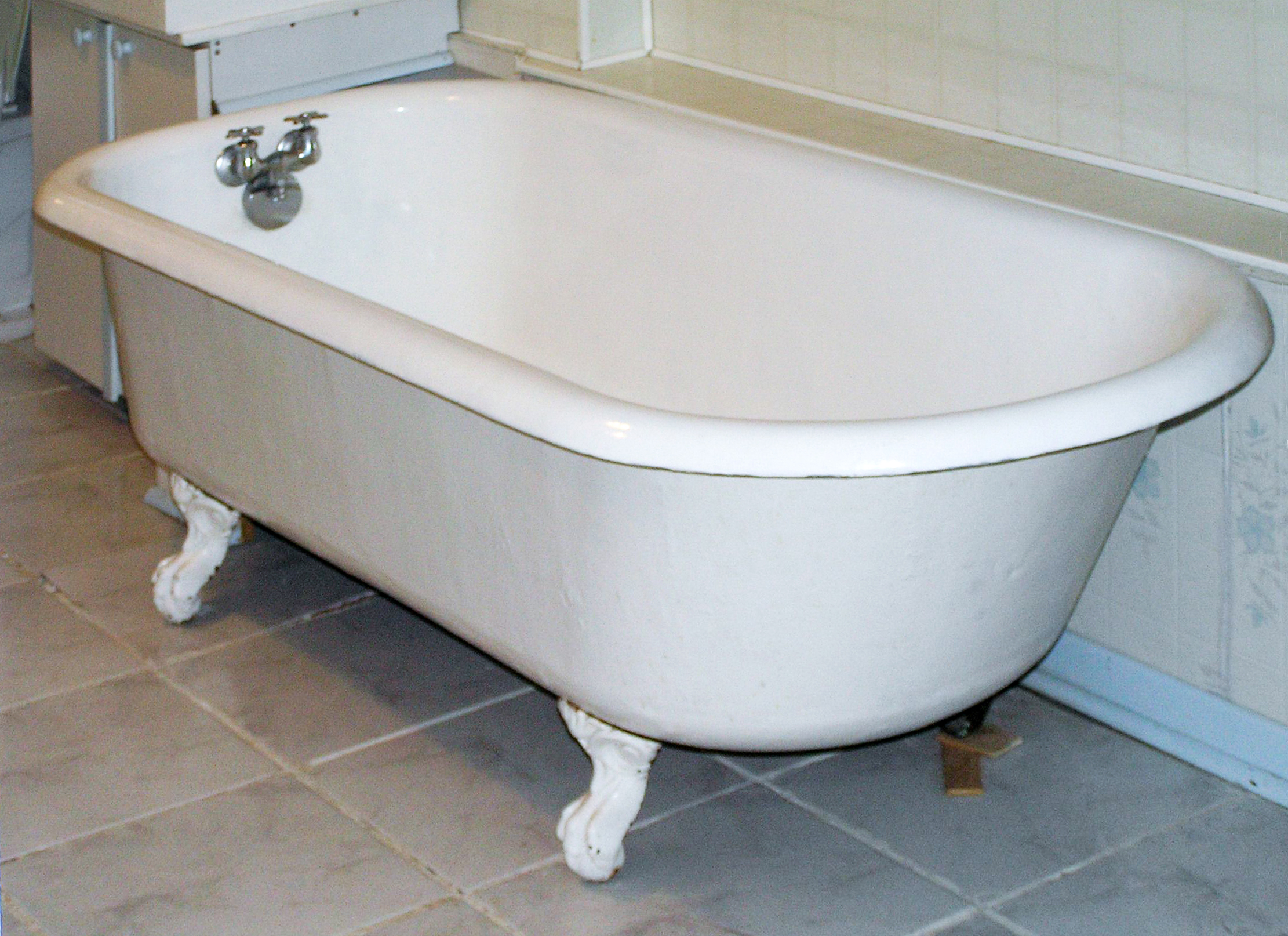
Clawfoot tubs were made of heavy cast iron and stood on four decorative feet. Deep and long, they were made for real soaking, and they hold heat well. Many were later ripped out, but now people search salvage yards for them. If a whole new tub is not in your plans, you can still get the feeling with a vintage style hand shower, a wooden bath tray and soft white towels. Is a long soak your favorite way to relax?
You will need: a wooden bath tray, a vintage style hand shower kit, white towels, a small plant.
How to make it: 1. Swap your shower head for a vintage style hand shower. 2. Set a wooden tray across the tub. 3. Add white towels and a plant for a spa feel.
Mail Slot in the Front Door
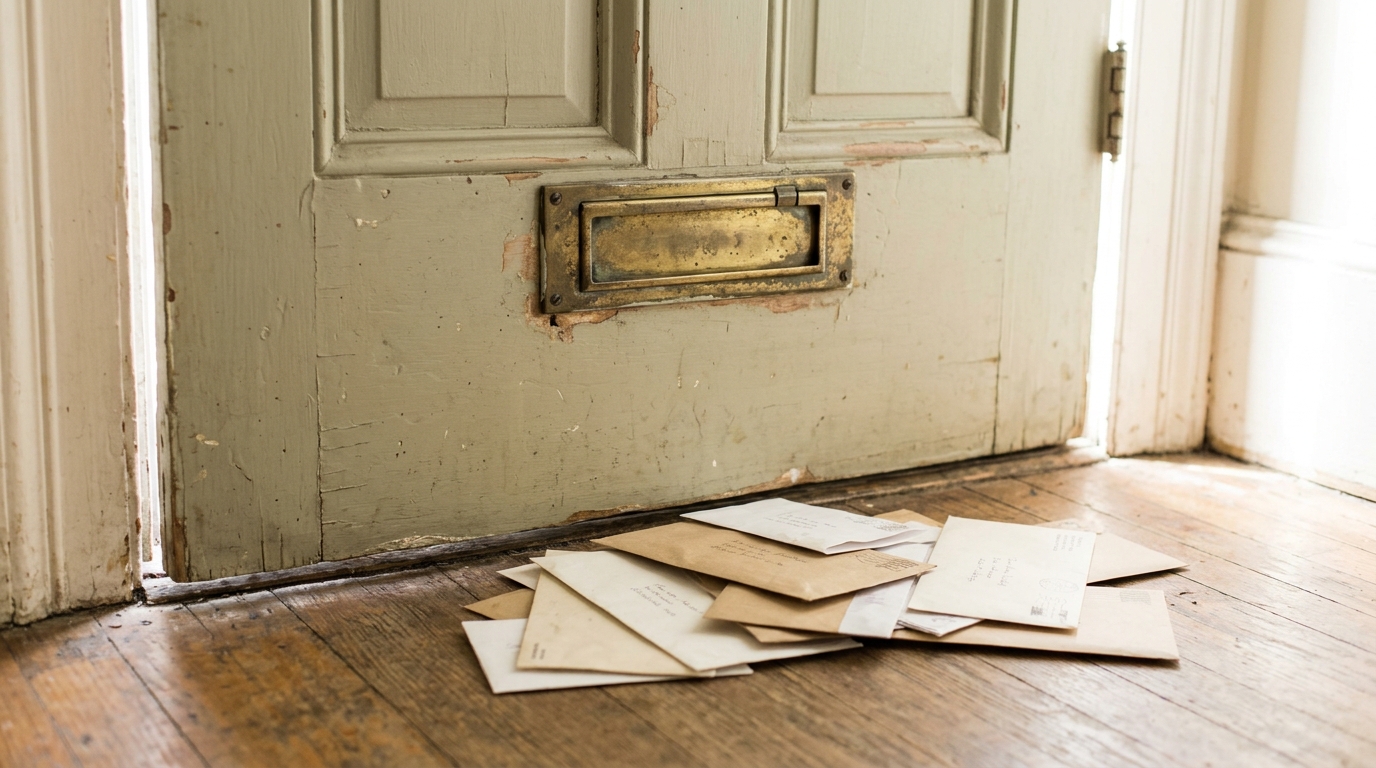
In many older homes the mail carrier pushed letters straight through a brass slot in the front door. No walking to the curb in the rain, and mail stayed dry inside. It is one of those old house features that still makes life a little easier. If you have one, polish the brass and add a basket on the inside to catch letters. A vintage style wall mailbox by the door gives a similar look. Do you still get much mail?
You will need: brass polish, a soft cloth, a basket or wall catch bag for inside the door.
How to make it: 1. Polish the brass flap until it shines. 2. Hang a catch basket below it inside. 3. Empty it each day so mail never piles up.
Built In Bookcases Beside the Fireplace
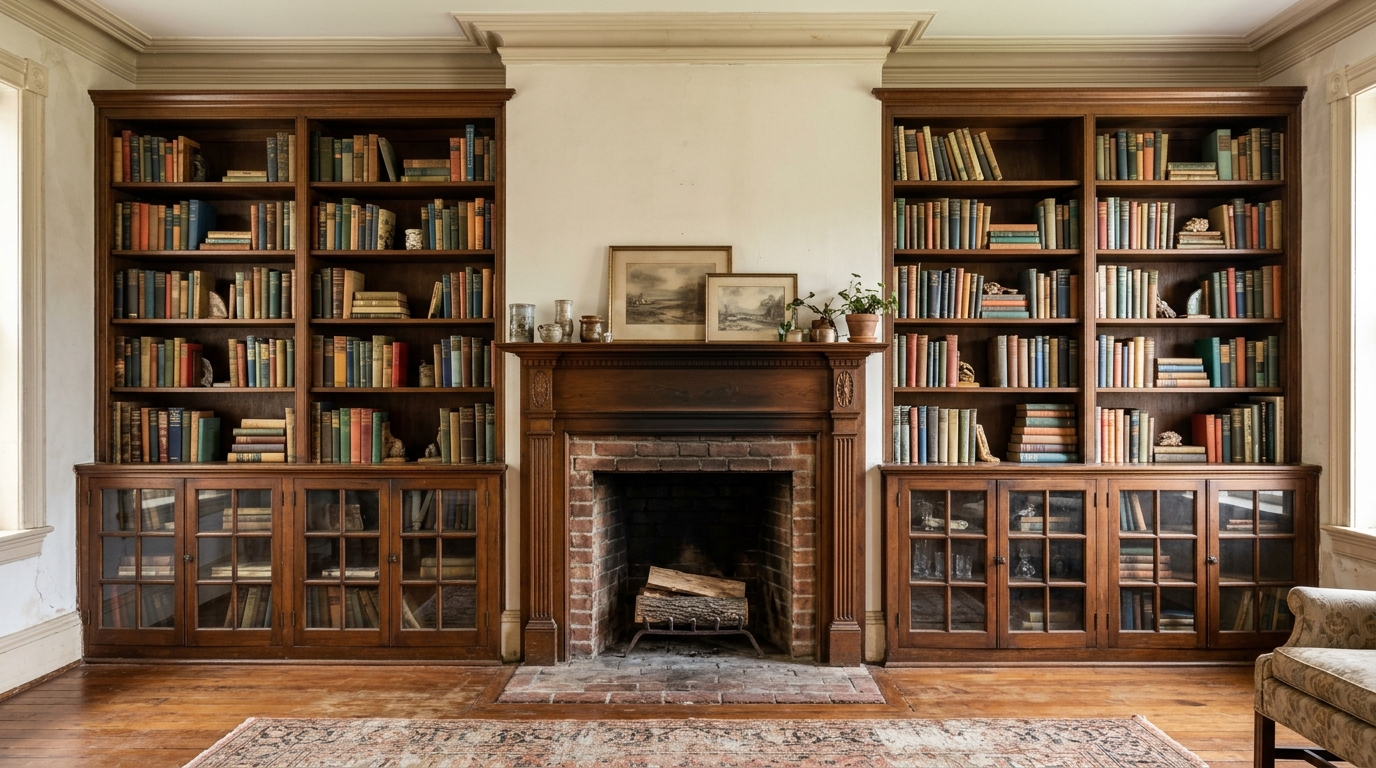
Built in bookcases on each side of the fireplace were a classic in older homes. They made the fireplace the center of the room and gave every book a home. Glass doors on the lower cabinets kept dust off treasures. You can get the look with two matching tall bookcases set on each side of a fireplace or TV, then add trim to make them feel built in. Would you fill yours with books or display pieces?
You will need: two matching tall bookcases, trim boards, wall anchors, paint, a drill (adult help).
How to make it: 1. Place a bookcase on each side and anchor them to the wall. 2. Add trim at the top and sides so they look built in. 3. Paint everything the same color.
Plate Rail Shelf Near the Ceiling
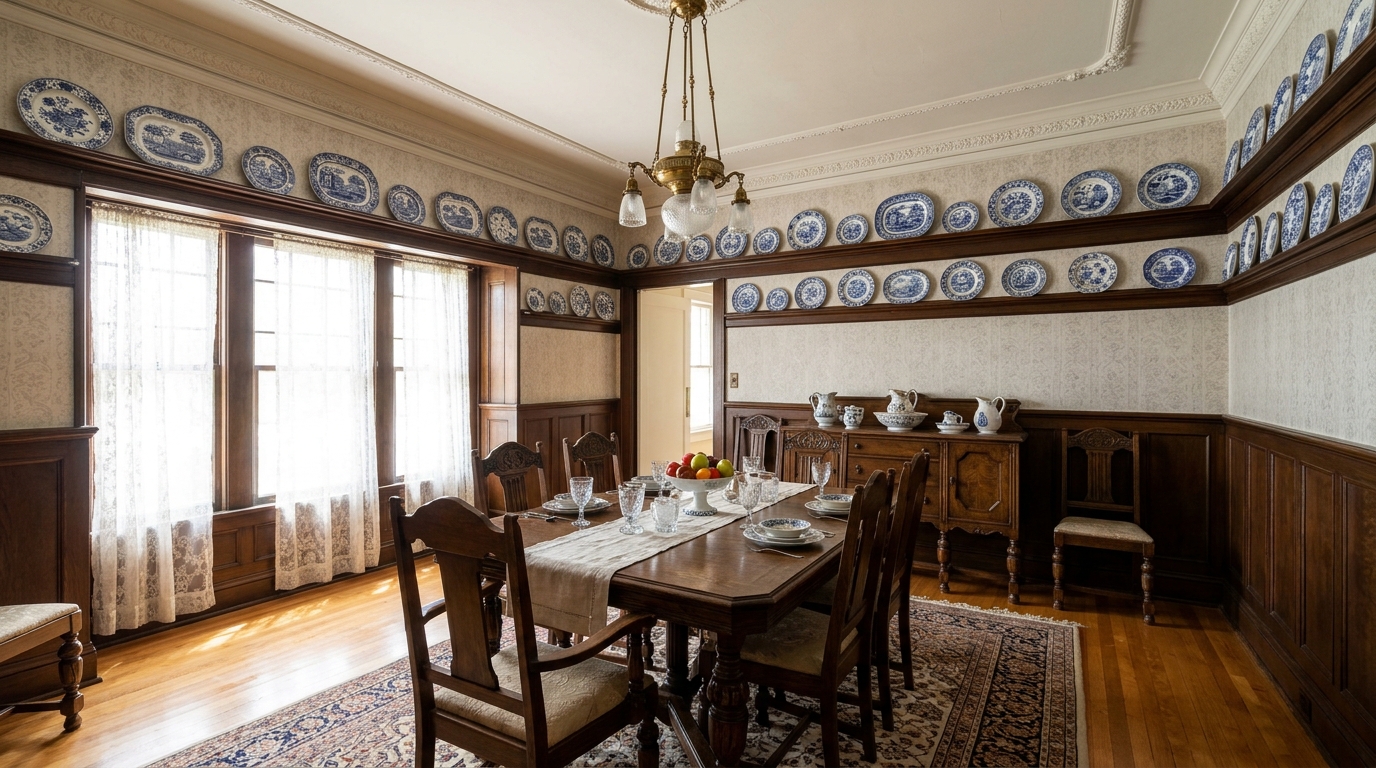
A plate rail is a narrow shelf with a groove that runs around a dining room near the top of the walls. Families displayed their best plates there, keeping them safe and showing them off at the same time. It is a beautiful way to use high wall space that usually sits empty. Blue and white plates look especially charming. A simple narrow shelf with a small lip gives the same look today. Do you have special plates tucked away in a cupboard?
You will need: a narrow shelf with a groove or front lip, brackets, plates, museum putty.
How to make it: 1. Mount the shelf about a foot below the ceiling. 2. Stand plates in the groove. 3. Use a little museum putty behind each one for safety.
Linen Closet With Deep Drawers
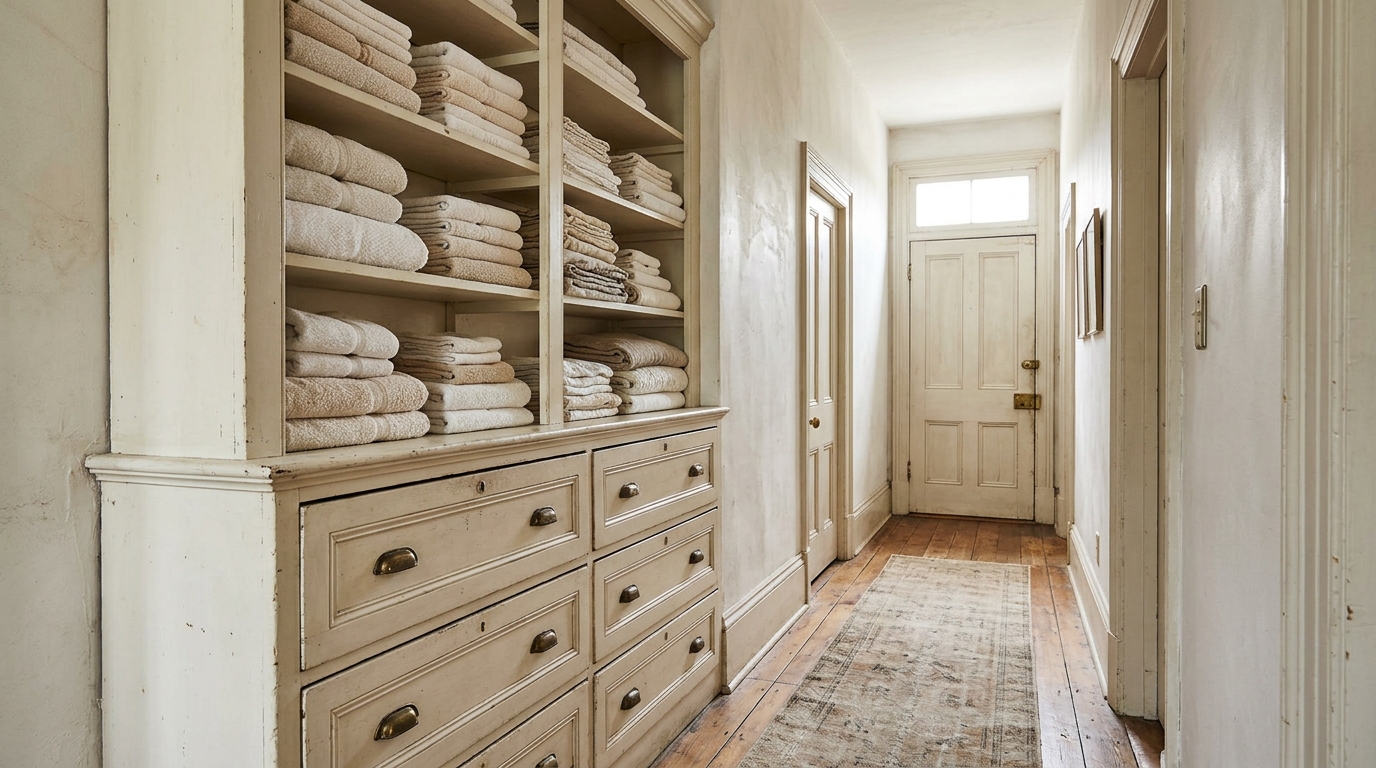
Older homes often had a tall linen closet built right into the hallway, with deep drawers below for blankets and open shelves above for towels and sheets. Everything had a place, and it was easy to see what you had. You can borrow the idea with a tall dresser and shelf combo, or add drawer units inside your current closet. It is a lovely last idea in our list of old house features. Which closet in your home needs this the most?
You will need: a tall cabinet or closet drawer units, shelf dividers, labels.
How to make it: 1. Empty the closet and sort linens by room. 2. Put bulky blankets in the bottom drawers. 3. Fold towels and sheets on the shelves above and label them.