
Uses for Fallen Leaves: 16 Smart Ideas That Turn Fall Leaves Into Garden Gold
Uses for fallen leaves are the hottest garden topic of the week, because so many of us are about to rake up a free treasure and set it on the curb. Big garden sites are urging everyone to stop bagging leaves, and on YouTube a video about turning leaves into rich soil passed 228,000 views in three weeks while another on smart leaf uses hit 169,000 views in 12 days. Leaves are full of goodness that took the trees all year to build. Used well, they become mulch, compost, soil and winter shelter, and they cost nothing at all. Here are 16 smart ways to put every leaf in your yard to work this fall..
Why Uses for Fallen Leaves Are Trending Right Now
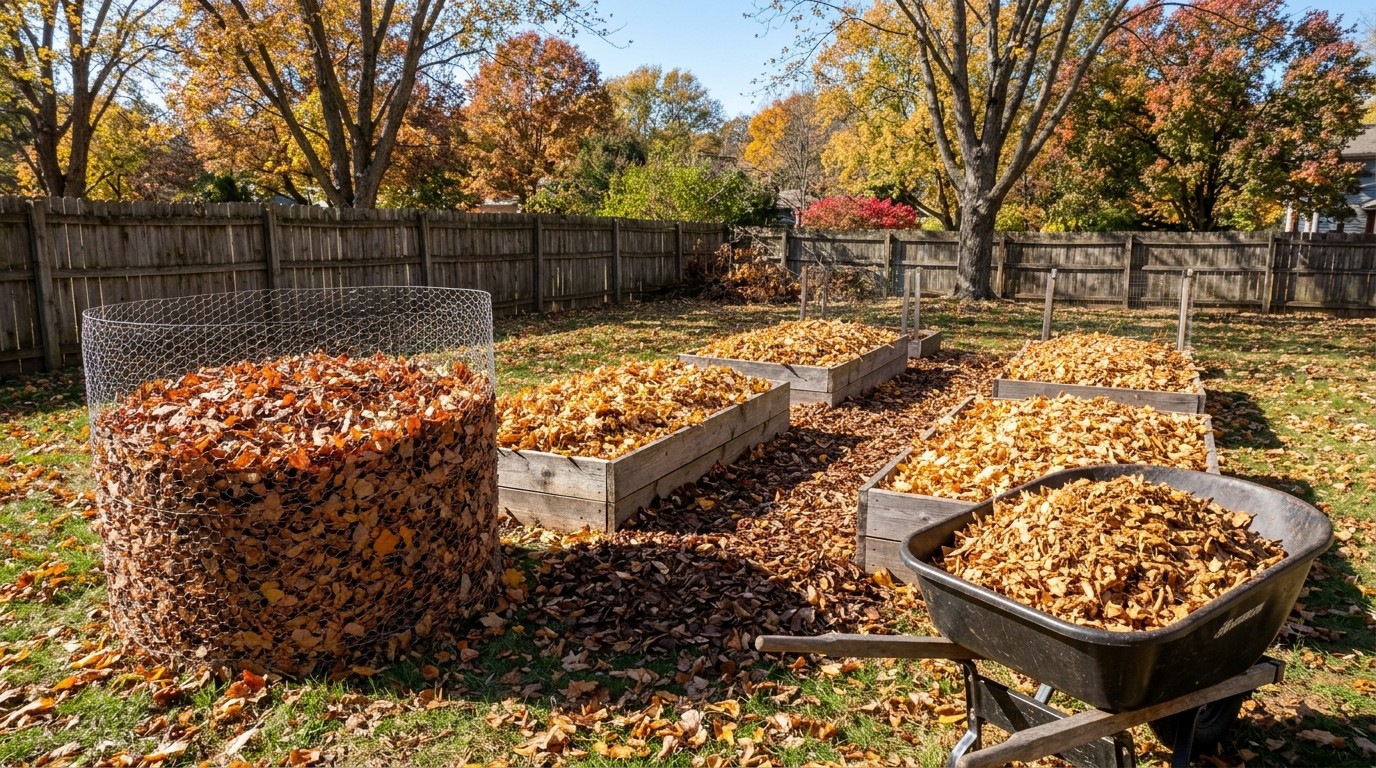
Look at a yard like this and you can see the whole idea at once: a bin turning leaves into soil, beds tucked in under a golden blanket, a soft leaf path and a wheelbarrow of shredded mulch. Smart uses for fallen leaves save money on mulch and compost and keep bags out of the landfill. They also give your garden a head start in spring. You can learn the basics in this GrowVeg video on making soil from leaves, which passed 228,000 views in three weeks. Never burn leaves, just put them to work. Where will your leaves go this year..
You will need: A rake, a lawn mower with a bag or a leaf shredder, a wheelbarrow and a corner of the yard.
How to make it: 1. Rake leaves into piles on dry days. 2. Shred them by mowing over the piles. 3. Split them between mulch, compost and a leaf bin.
Uses for Fallen Leaves: Make Leaf Mold in a Wire Bin
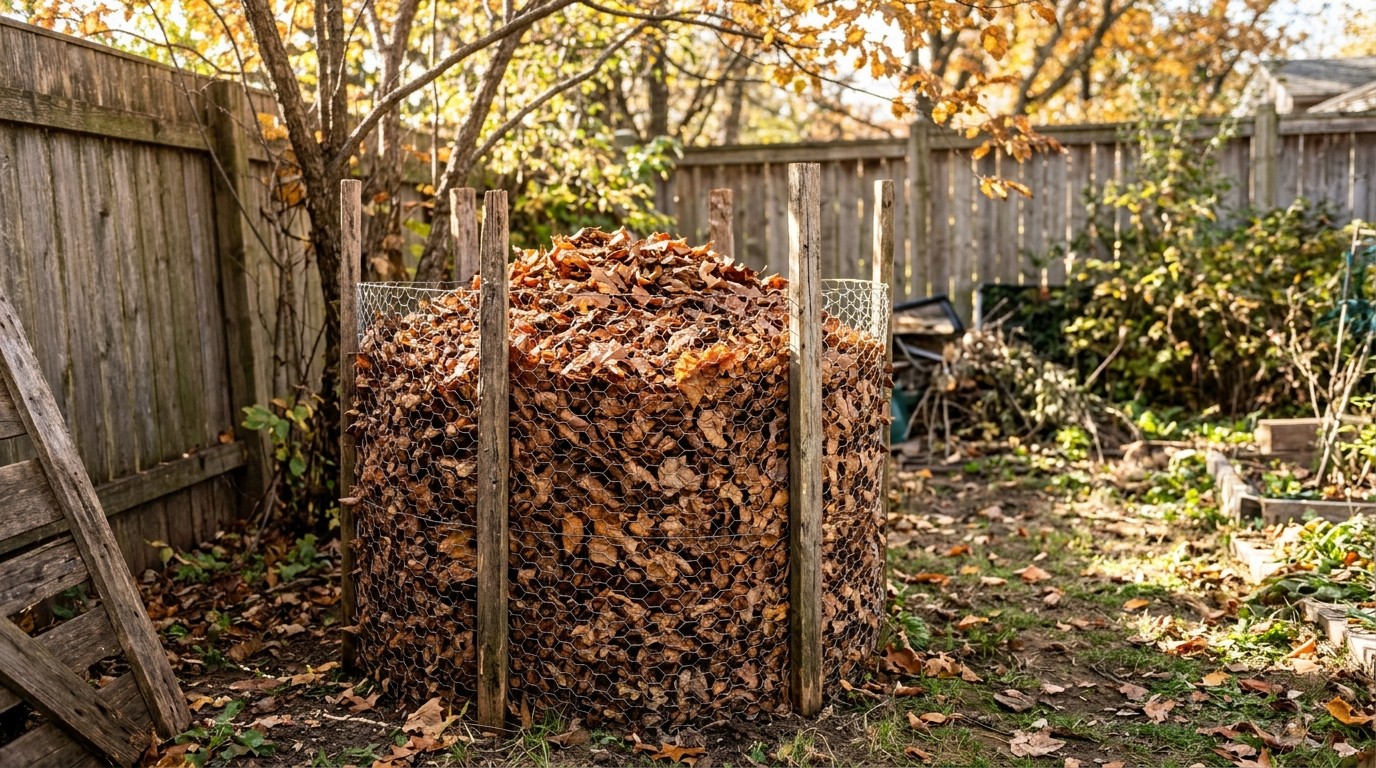
Leaf mold is what happens when leaves slowly break down on their own into dark, crumbly, sweet smelling soil. Gardeners call it black gold. All you need is a round bin made from chicken wire and four stakes. Fill it with leaves, wet them down and wait. In one to two years you get a soft, rich material that holds water like a sponge. It is one of the easiest uses for fallen leaves there is. Do you have a quiet corner for a bin?
You will need: A length of chicken wire, four wooden stakes, a mallet, zip ties and garden gloves.
How to make it: 1. Hammer four stakes into a circle about three feet wide. 2. Wrap chicken wire around them and fasten with zip ties. 3. Fill with leaves, water well and let time do the rest.
Easy Uses for Fallen Leaves: Free Mulch
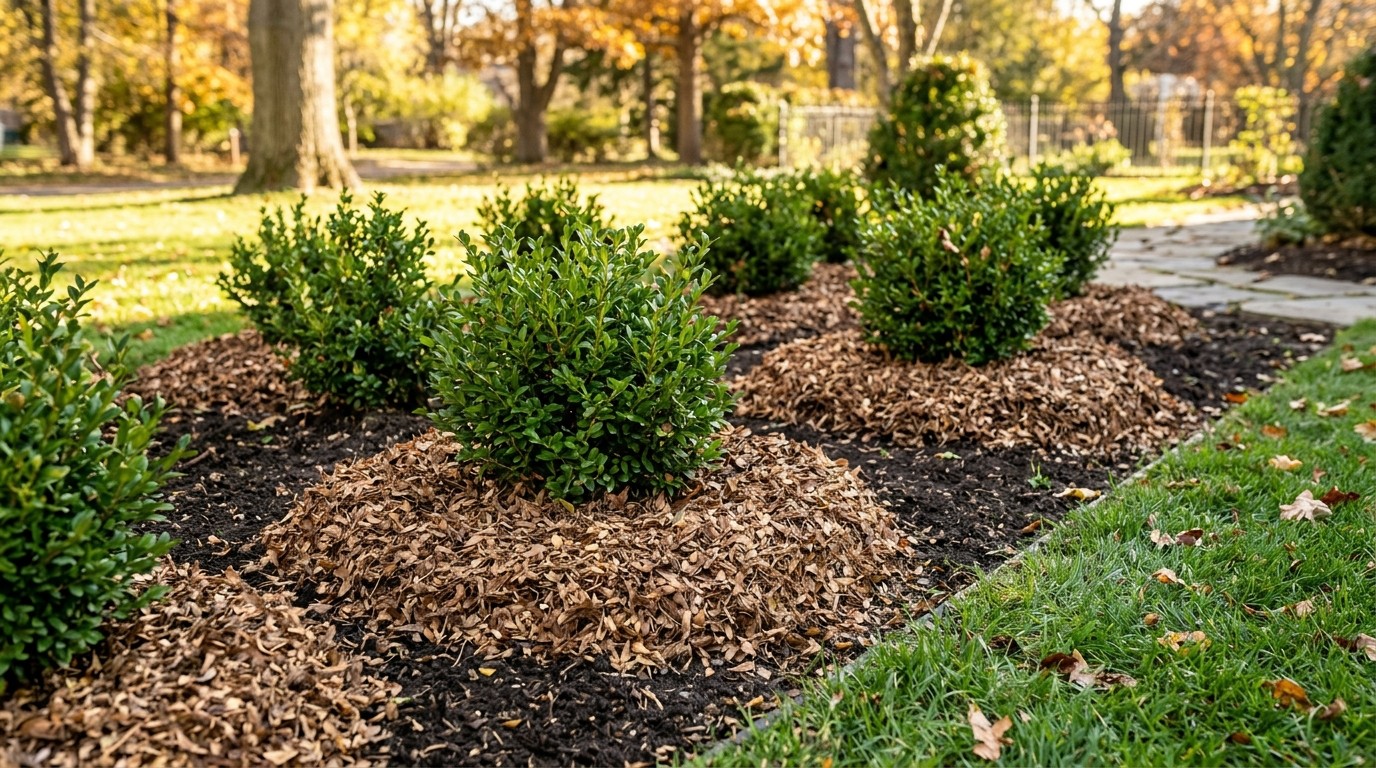
Store bought mulch can cost a lot, but shredded leaves do the same job for free. Spread a two to three inch layer around shrubs and perennials to hold in moisture, keep roots cozy and help block weeds. Keep the mulch a few inches away from stems and trunks so they can breathe. Shredding matters, because whole leaves can mat down into a soggy layer. Will you skip buying mulch this year?
You will need: Fallen leaves, a mower with a bag or a leaf shredder, a rake and gloves.
How to make it: 1. Mow over the leaves to shred them finely. 2. Spread a two to three inch layer around plants. 3. Pull it back a few inches from stems and trunks.
A Leaf Blanket for Empty Garden Beds
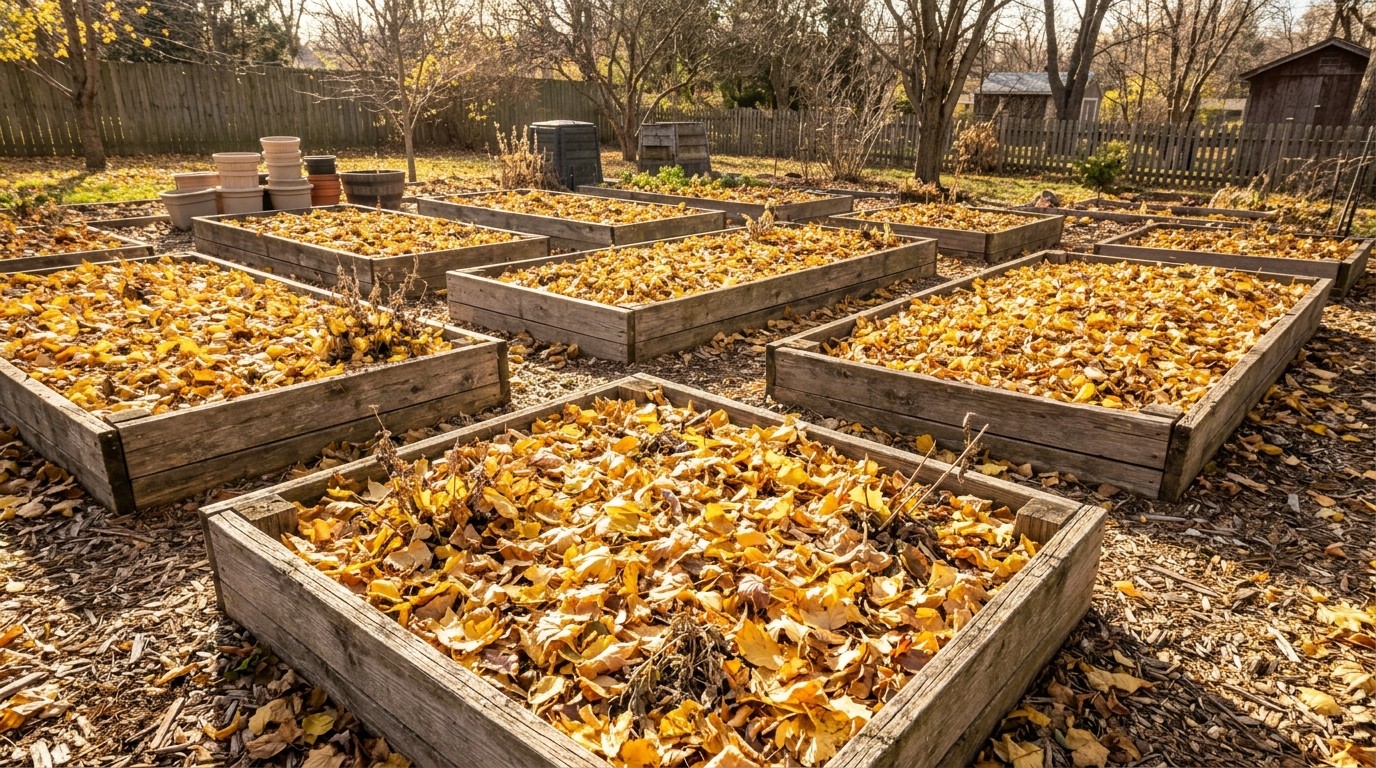
Bare soil over winter can wash away and grow weeds. A thick blanket of leaves on empty vegetable beds protects it. By spring, worms will have pulled much of it into the soil, and what is left can be raked aside or dug in. This is how a forest floor works, and your beds will love it. It is one of the simplest uses for fallen leaves, and it takes just a few wheelbarrow loads. Which bed will you tuck in first?
You will need: Shredded or whole leaves, a wheelbarrow, a rake and a little garden twine or netting on windy sites.
How to make it: 1. Clear out spent plants. 2. Spread four to six inches of leaves over each bed. 3. Lay netting on top if your garden gets strong winds.
Layer Leaves Into Your Compost
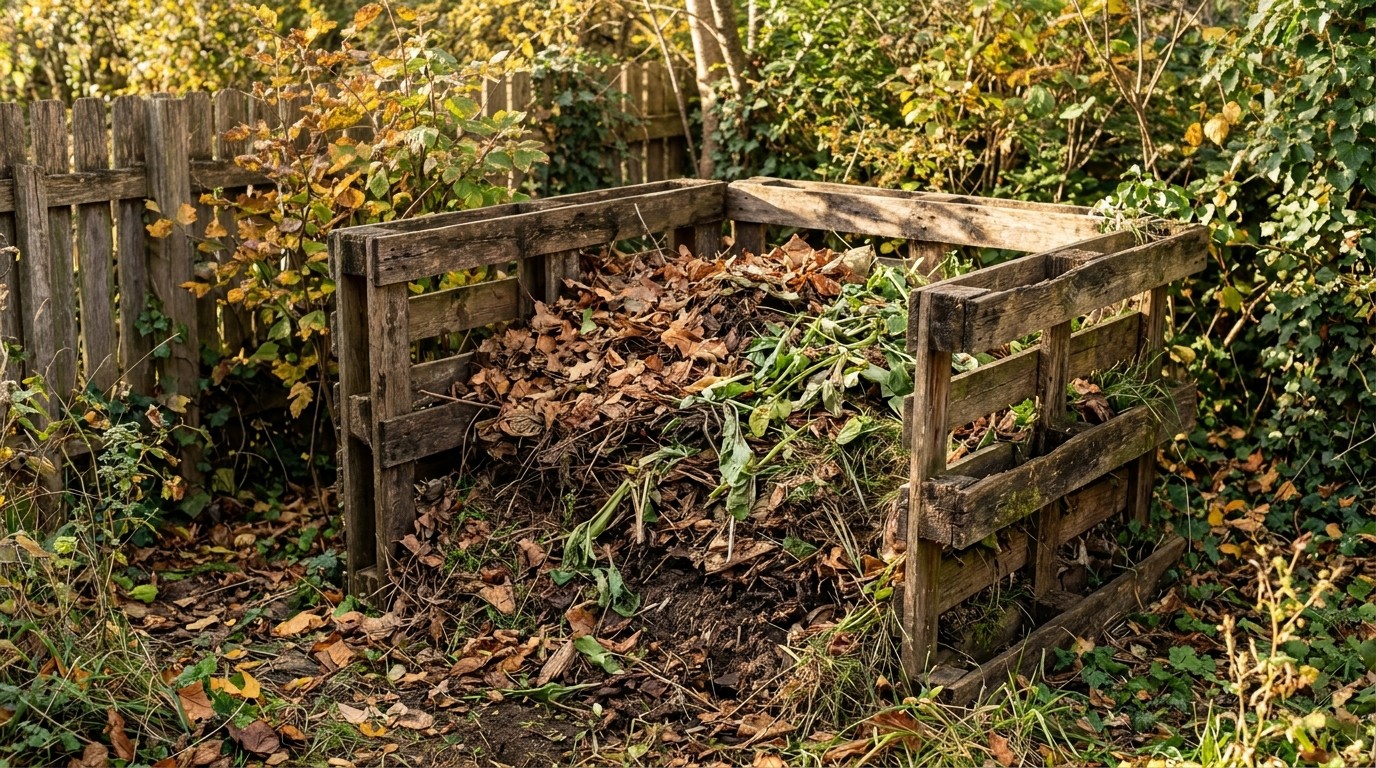
Compost is one of the classic uses for fallen leaves. It needs browns and greens. Leaves are the perfect brown, full of carbon, while kitchen scraps and grass clippings are the greens. Layer them in a simple pallet bin, about two parts leaves to one part greens, and turn it every few weeks. Keep a pile of bagged leaves nearby so you always have browns to add later. Your compost will smell better and break down faster. Do you compost already?
You will need: Fallen leaves, kitchen scraps or grass clippings, a pallet bin or compost bin, a garden fork and water.
How to make it: 1. Start with a layer of leaves at the bottom. 2. Add a thinner layer of greens, then more leaves. 3. Water lightly and turn the pile every few weeks.
Pile Leaves Around Tender Plants
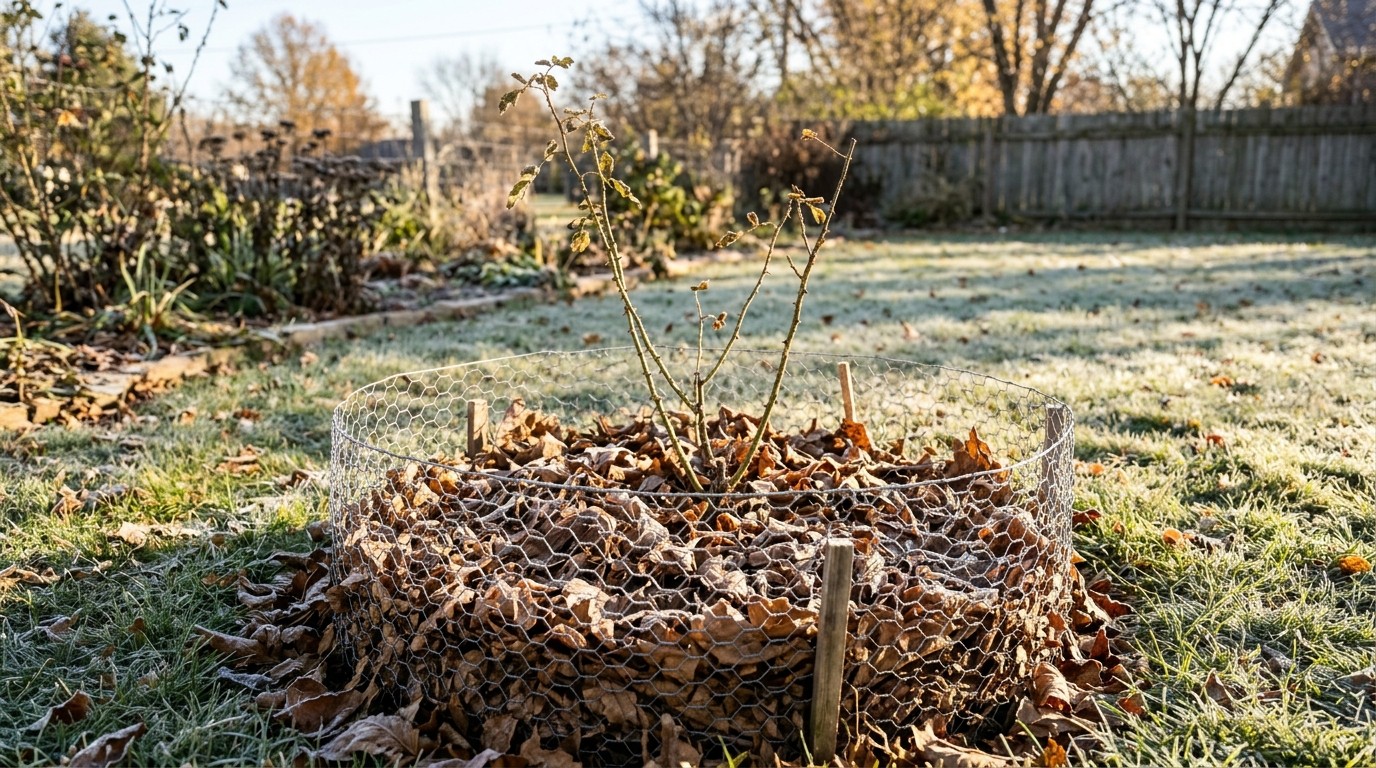
Some plants, like young roses and borderline hardy perennials, need extra help in a cold winter. A loose mound of dry leaves around the base, held in place with a small ring of chicken wire, works like a cozy sweater. Pile it after the ground gets cold, then pull it away in spring when new growth starts. It is gentle, free and very effective. Which plants in your garden need a winter coat?
You will need: Dry leaves, a short length of chicken wire, two small stakes and gloves.
How to make it: 1. Make a ring of chicken wire around the plant. 2. Fill it loosely with dry leaves up to the lower branches. 3. Remove the leaves gradually in early spring.
Uses for Fallen Leaves on the Patio
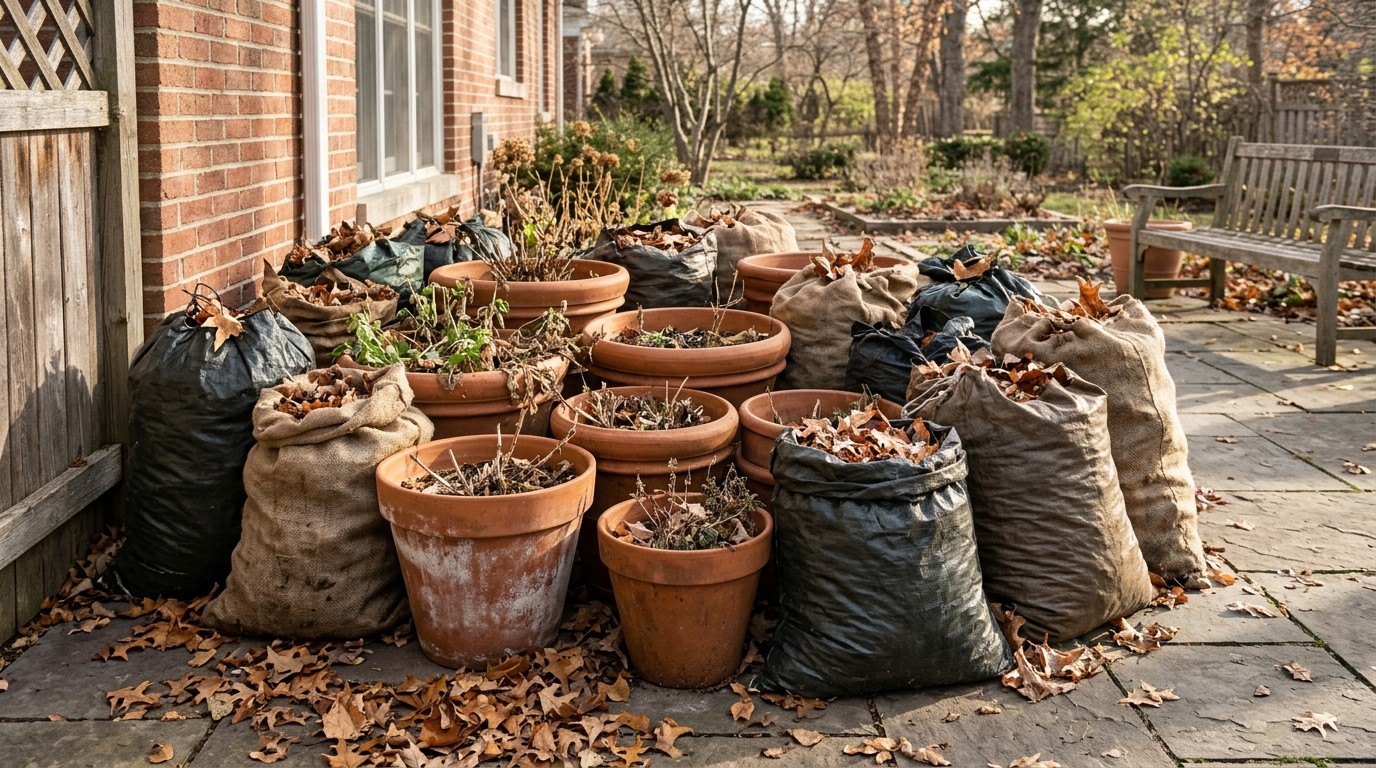
Potted plants feel the cold more than plants in the ground, because their roots sit above the soil. Group the pots together against a sheltered wall and pack bags of leaves around them. The bags act like insulation and protect the roots from hard freezes. In spring, empty the bags straight into your compost. It is one of the cleverest uses for fallen leaves on a patio. Which pots will you protect this winter?
You will need: Leaf filled bags, your potted plants, a sheltered wall and a hand truck for heavy pots.
How to make it: 1. Move the pots close together near a wall. 2. Pack bags of leaves tightly around and between them. 3. Water the pots only on mild days.
Mow Leaves Right Into the Lawn
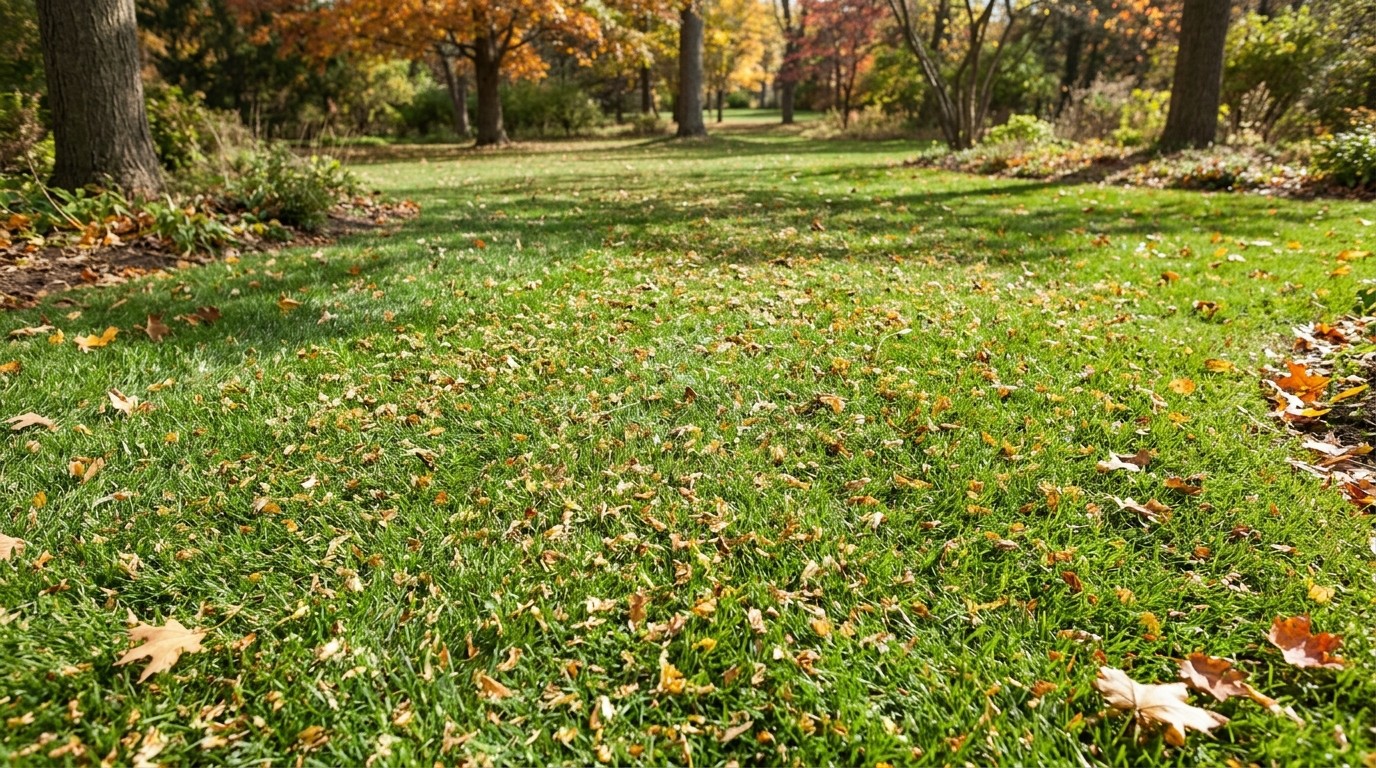
If you only have a light layer of leaves, you do not need to rake at all. Just mow over them a few times until they are dime sized pieces. The small bits settle between the grass blades and break down into food for your lawn over winter. Many lawn experts now recommend it. Save yourself hours of raking and feed your grass for free. Will you try mowing instead of raking this year?
You will need: A lawn mower with a mulching blade or just a sharp blade and a dry afternoon.
How to make it: 1. Wait for the leaves to be dry. 2. Mow over them two or three times. 3. Stop when you can see the grass through the bits.
Leaves as Filler in Big Planters
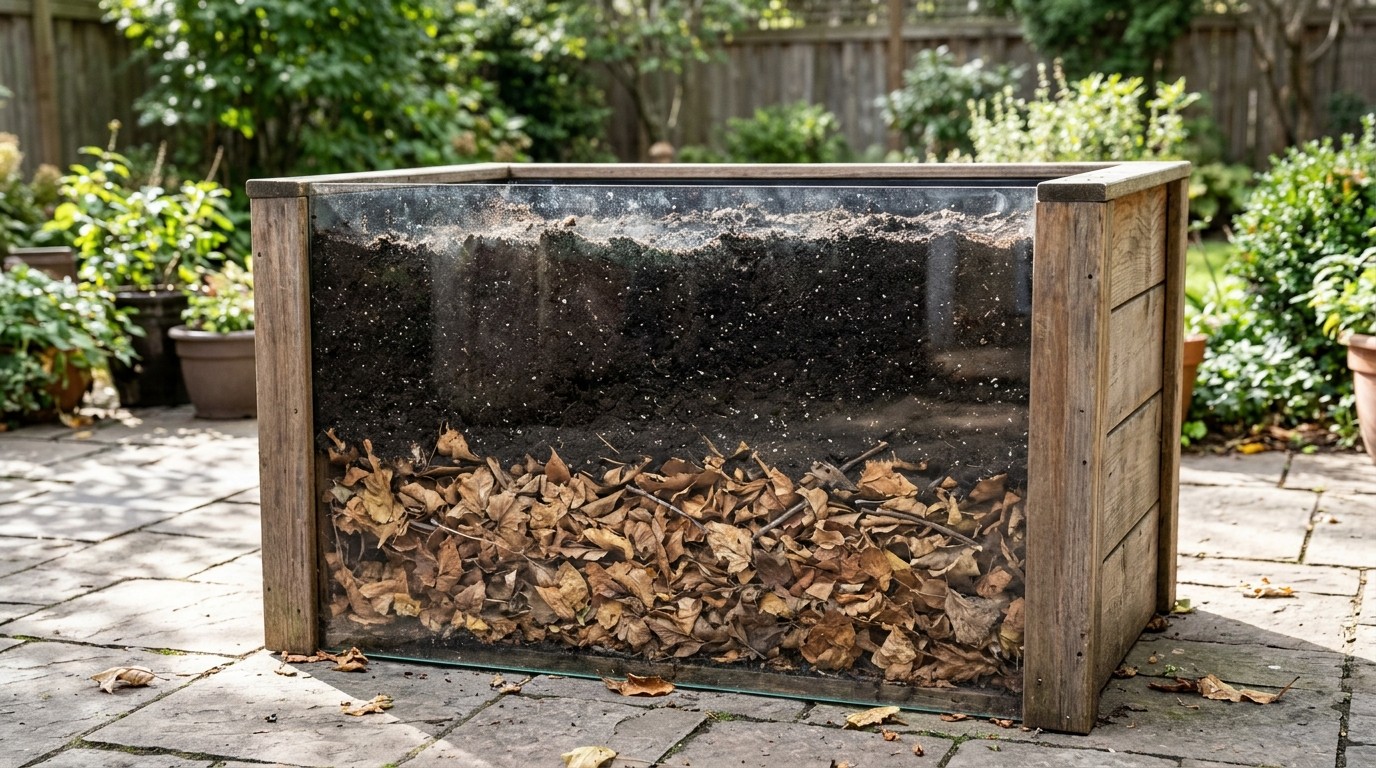
Large planters take a lot of potting mix to fill. Instead, put a layer of dry leaves in the bottom third, then top it with soil. The leaves are lighter than soil, cost nothing and slowly break down to feed the plant. Just top up the soil a little each season as the leaves settle. It is one of the most practical uses for fallen leaves for container gardeners. How many big planters do you have?
You will need: Dry leaves, a large planter, potting mix and your plants.
How to make it: 1. Fill the bottom third of the planter with dry leaves and press down. 2. Add potting mix on top. 3. Plant as usual and top up soil when it settles.
Uses for Fallen Leaves in a Lasagna Garden Bed
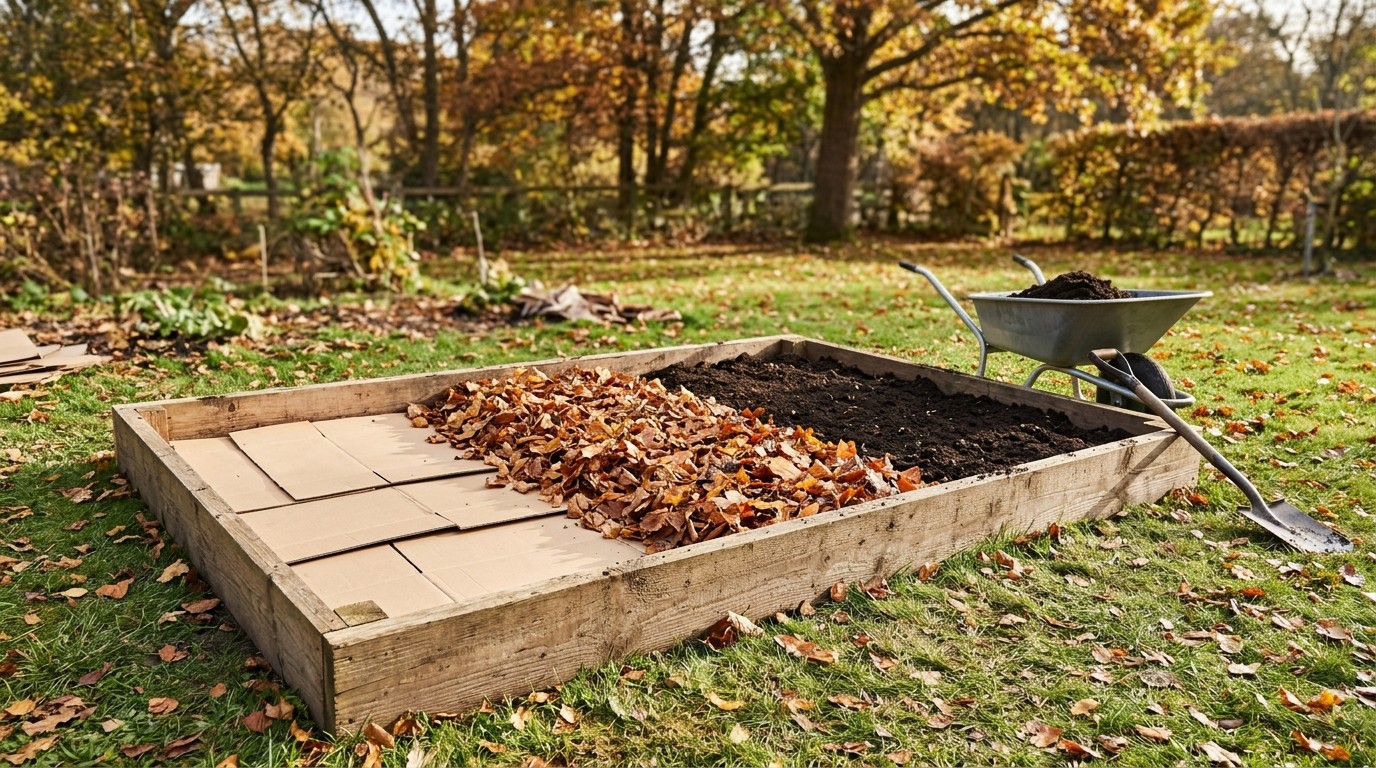
Want a new garden bed without digging? Build it like a lasagna. Lay cardboard over grass to smother it, then add layers of leaves and compost. Over winter, the layers break down into soft, rich soil, and by spring you can plant right into it. Fall is the perfect time to start, because leaves are everywhere. It is one of the most satisfying uses for fallen leaves. Where would your new bed go?
You will need: Plain brown cardboard with tape removed, fallen leaves, compost or manure, a wooden frame if you like and a hose.
How to make it: 1. Lay cardboard over the grass and soak it. 2. Add layers of leaves and compost, ending with compost on top. 3. Water well and let it sit until spring.
Leave a Pile for Garden Helpers
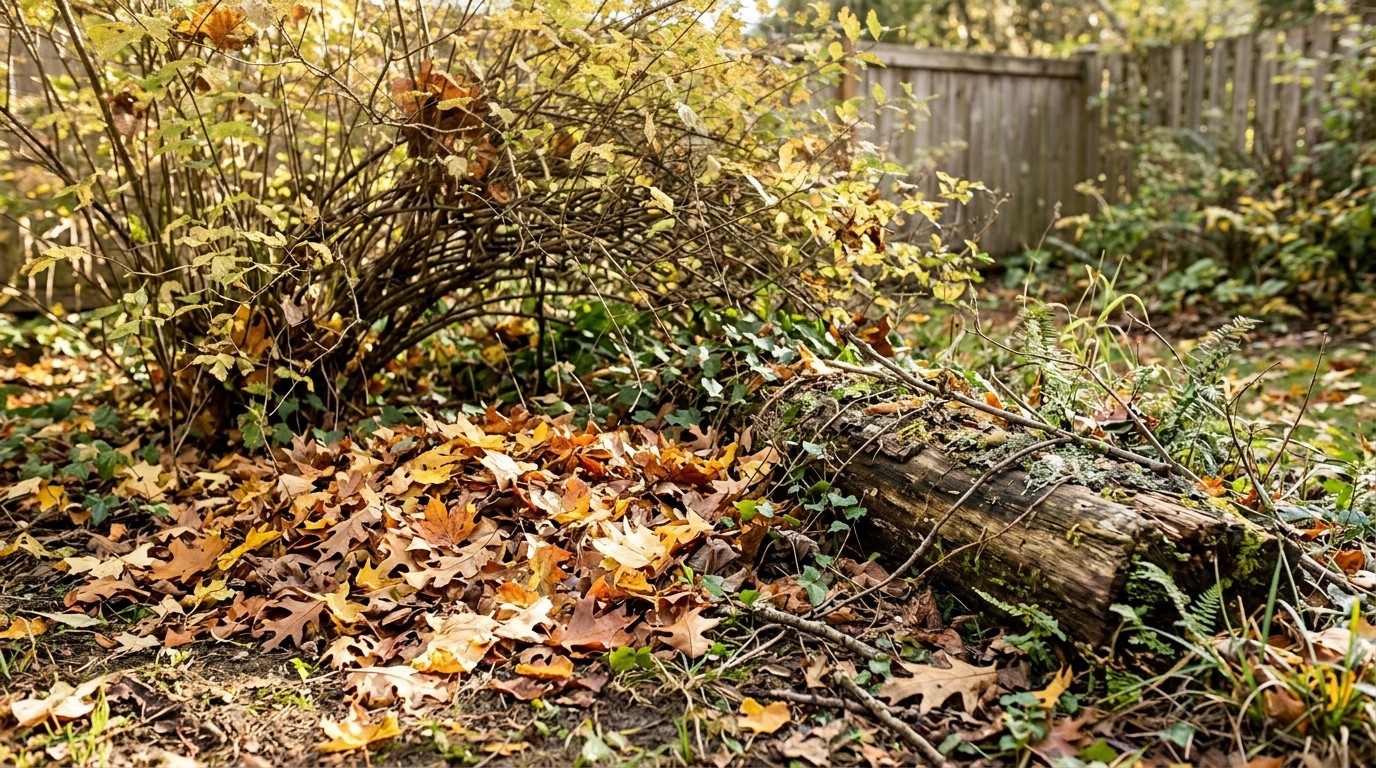
A loose pile of leaves under a bush is like a hotel for small garden helpers. Many caterpillars, beetles and other tiny creatures spend the winter hiding in leaves, and birds find food there too. Choose a quiet corner where you will not need to rake, and let nature take care of it. You will help the garden balance itself next spring. Can you spare one corner for wildlife?
You will need: Fallen leaves, a quiet garden corner and a small log or a few sticks.
How to make it: 1. Pick a sheltered spot under a shrub or tree. 2. Pile leaves loosely, about a foot deep. 3. Leave it alone until late spring.
Save Bags of Leaves for Spring Compost
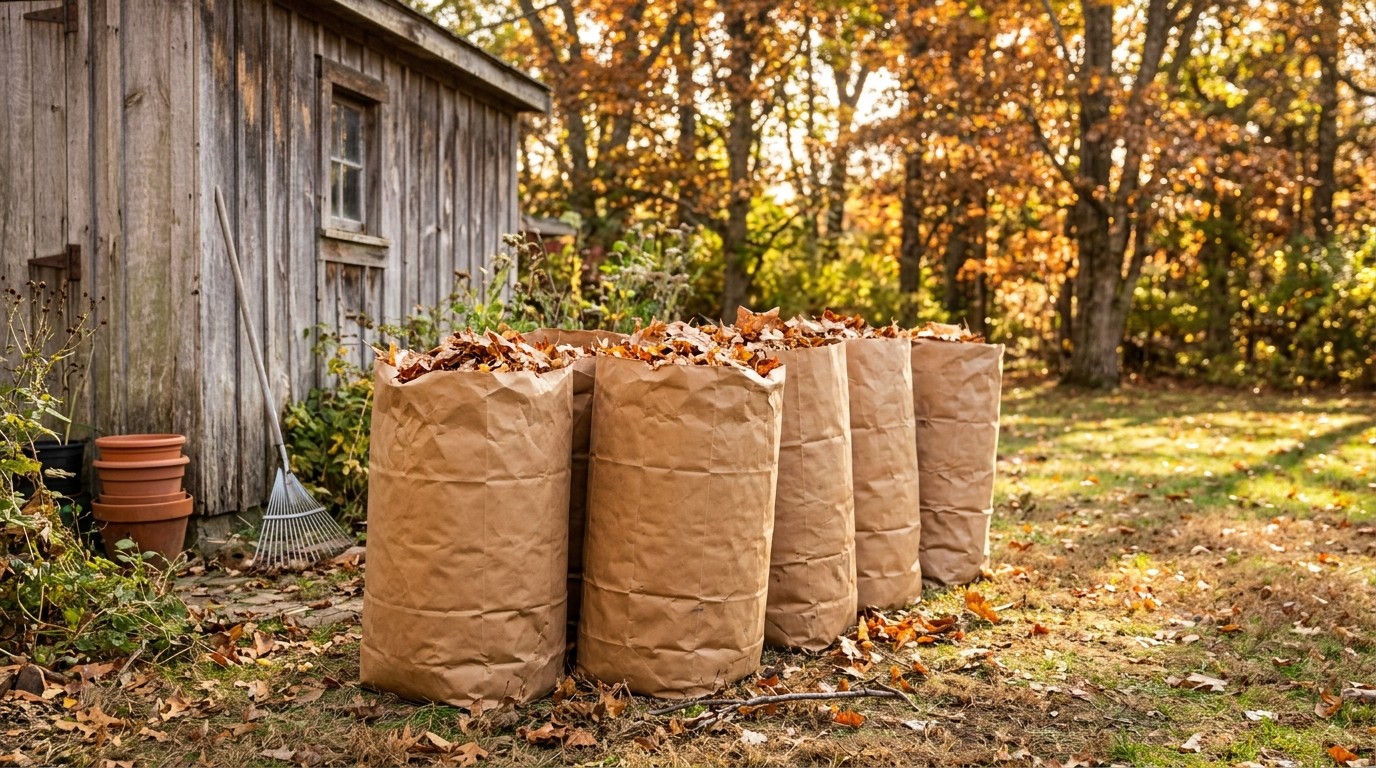
In spring and summer, compost piles fill up with green grass clippings and kitchen scraps, but brown leaves are hard to find. Bag up extra leaves now and store them beside the shed. When summer comes, you will have perfect browns to balance your pile. Paper yard bags break down on their own, so they can go in too. Smart uses for fallen leaves include planning ahead like this. How many bags will you save?
You will need: Paper yard bags or reused bags, a rake and a dry spot beside a shed or fence.
How to make it: 1. Fill bags with dry leaves. 2. Stand them in a dry, sheltered spot. 3. Add a few handfuls to your compost each time you add greens.
A Soft Leaf Mulch Path
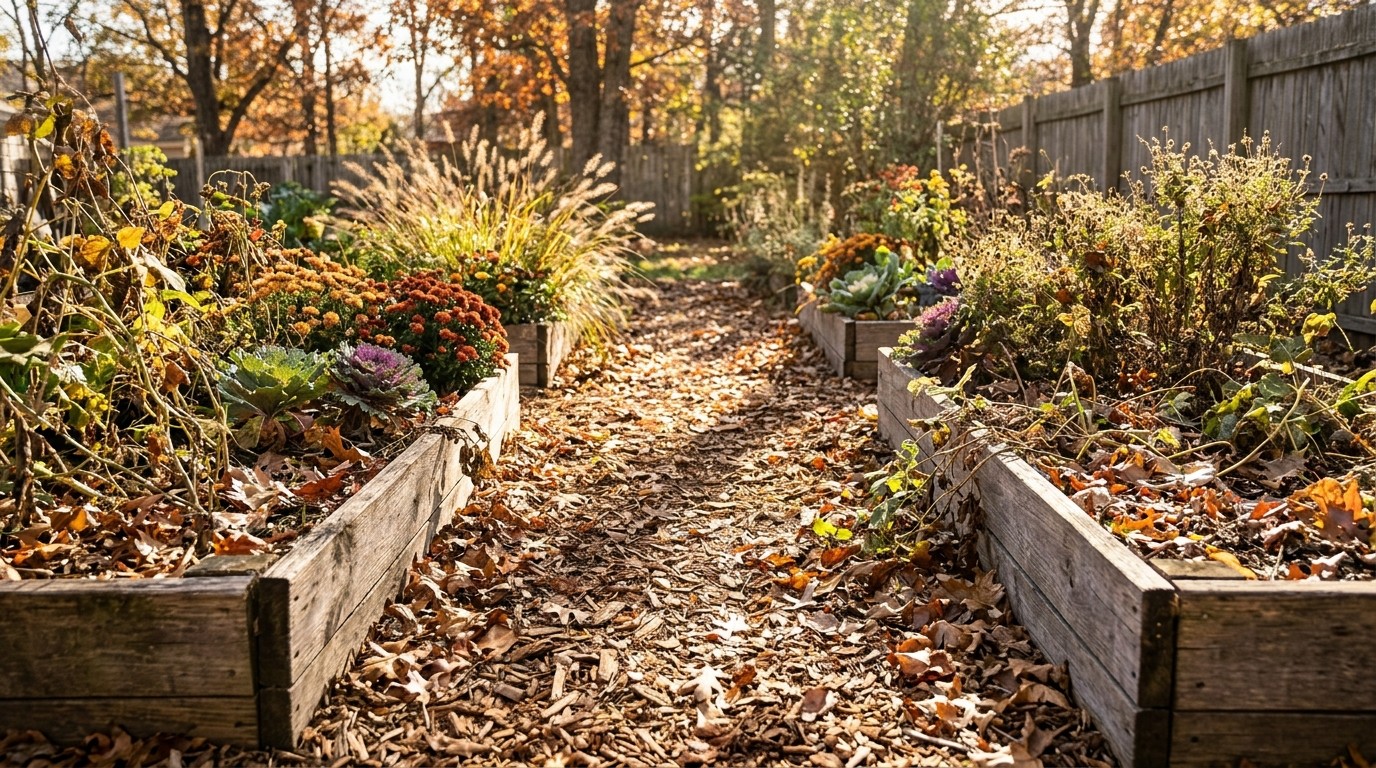
Muddy paths between garden beds are no fun in winter. Spread a thick layer of shredded leaves along them and they become soft, dry and tidy. The leaves also stop weeds from popping up in spring. As they break down, simply rake the old layer into the beds and add fresh leaves on top. It looks natural and smells like autumn every time you walk out. Would a leaf path work in your garden?
You will need: Shredded leaves, a wheelbarrow, a rake and cardboard underneath if weeds are a problem.
How to make it: 1. Lay cardboard on the path if you have lots of weeds. 2. Cover it with four inches of shredded leaves. 3. Top it up each fall.
Tuck Leaves Over Root Crops
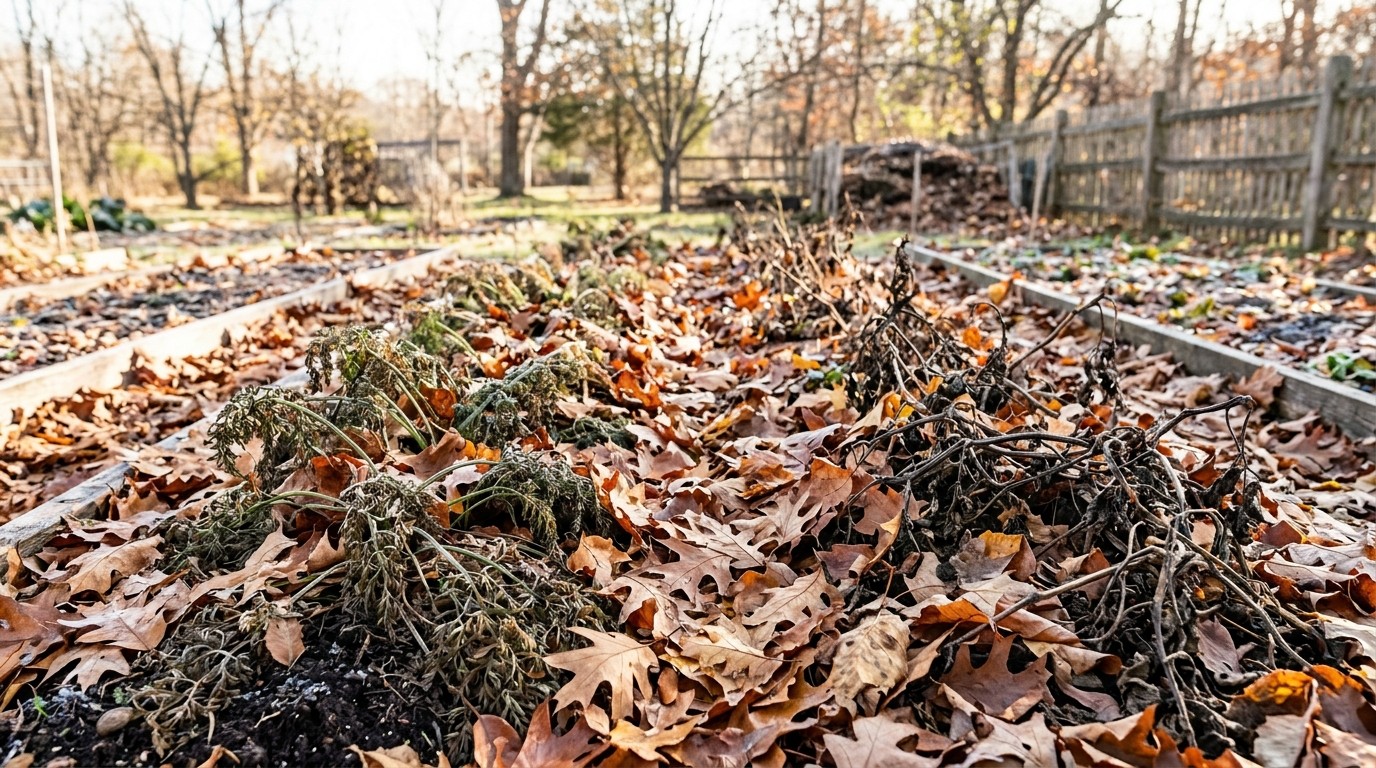
Carrots, beets and parsnips can stay in the ground well into winter in many areas if you tuck them under a thick layer of leaves. The leaves keep the soil from freezing hard, so you can dig fresh vegetables for weeks longer. Mark the rows so you can find them in the snow. Pull back the leaves, dig what you need and cover them again. Have you ever harvested carrots in December?
You will need: Dry leaves, row markers and a garden fork.
How to make it: 1. Water the bed well before the ground freezes. 2. Pile 8 to 12 inches of leaves over the rows. 3. Mark the rows and dig as needed.
Pressed Leaf Garden Markers With Kids
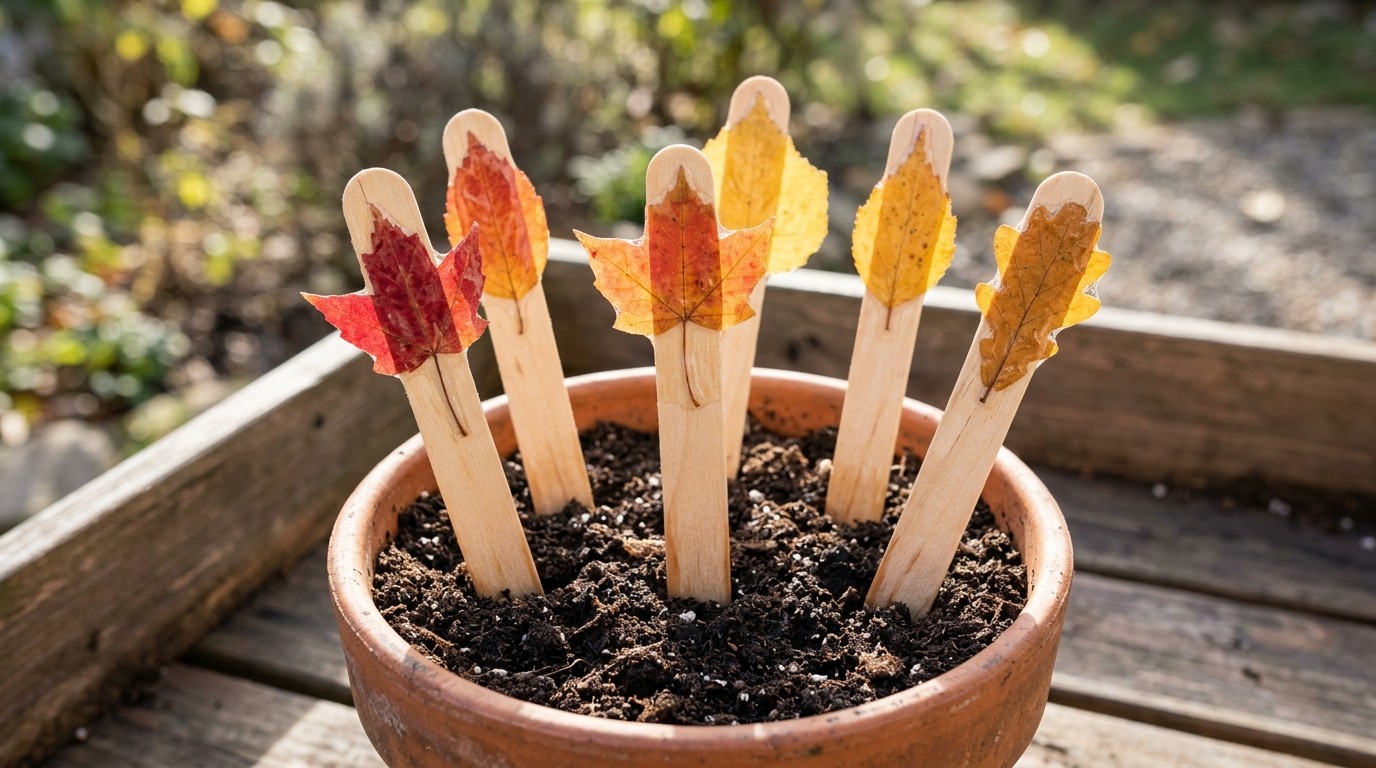
Here is the one craft in our list, and it is a sweet one for kids. Press colorful leaves in a heavy book for a week, then seal them onto craft sticks with clear packing tape or a coat of craft glue. Push them into pots and seed trays as bright garden markers. Kids love finding the reddest and yellowest leaves. If you want more ideas like this, see our fall leaf crafts. Which color leaf would your kids pick?
You will need: Colorful fallen leaves, a heavy book, wooden craft sticks, clear packing tape or craft glue and scissors.
How to make it: 1. Press leaves between paper in a heavy book for a week. 2. Lay each leaf on a craft stick and seal with tape or glue. 3. Trim the edges and push into pots.
One Last Use for Fallen Leaves: A Kneeling Pad
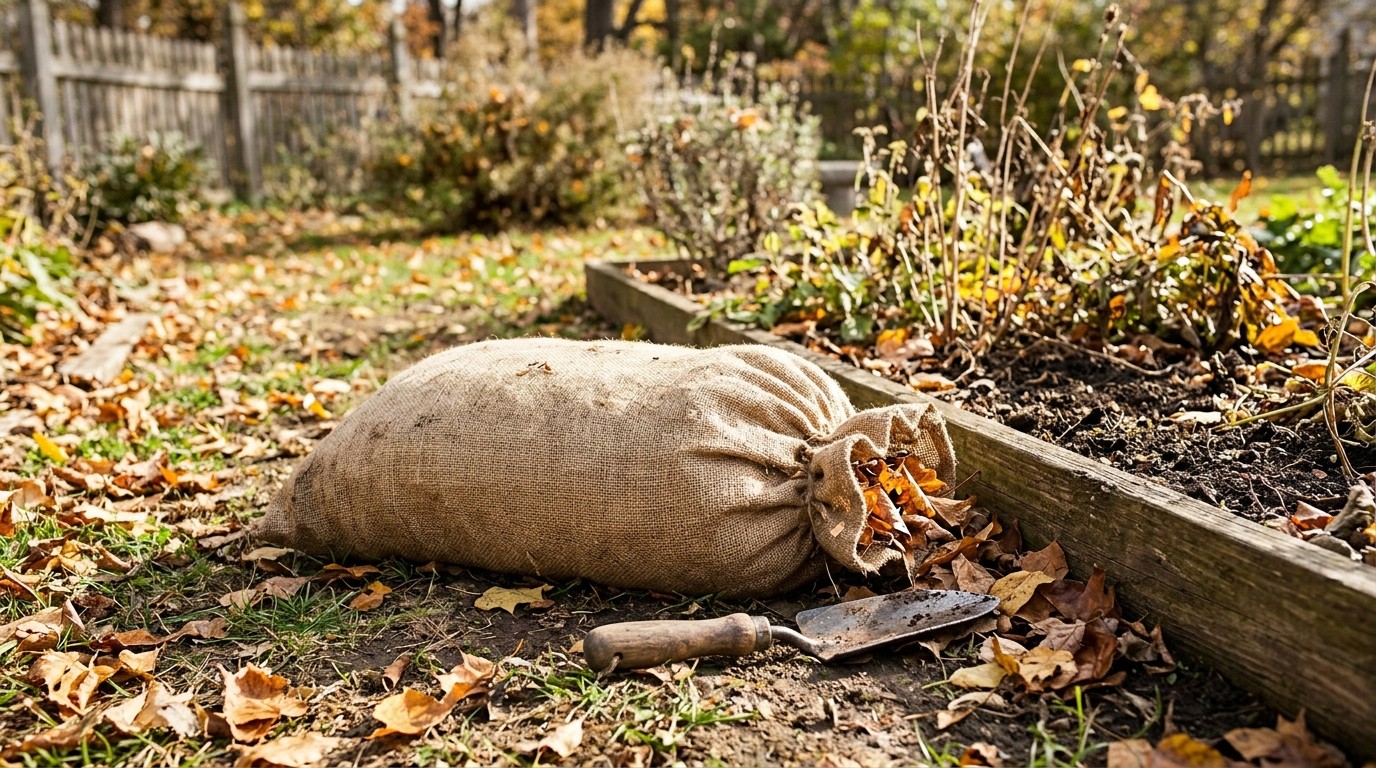
This last idea is simple and surprisingly comfortable. Stuff an old burlap sack or a feed bag with dry leaves and tie it shut. It makes a soft, free kneeling pad for weeding and planting, and it protects your knees from cold, damp ground. When it gets flat, empty it into the compost and refill it. It is the perfect ending to a list of uses for fallen leaves that cost nothing at all. Will you make one for your garden?
You will need: An old burlap sack or feed bag, dry leaves and a piece of twine.
How to make it: 1. Fill the sack about half full of dry leaves. 2. Flatten it into a cushion shape. 3. Tie the top tightly with twine.