
Coffee Creamer: 30,000 Americans Kept the Same Coffee Habit, but Their Cups Got 17 Calories Richer

Coffee creamer has quietly become the biggest source of extra calories in the American coffee cup, and most of us never noticed. A new study from Tufts University looked at what 30,000 adults reported drinking over 15 years. The amount of coffee stayed about the same. What changed was everything we stir into it. The calories from a day of coffee went from 43 to 60, and the top add-in by calories is no longer sugar or milk. If you love a creamy morning mug, this one is worth a few minutes of your time..
Before anyone panics, this is not a story about giving up your favorite drink. It is a story about the small splash that turns into a habit. Here is what the researchers found, why it matters, and some easy ways to keep your cup creamy without thinking twice about it.
What the Coffee Creamer Study Looked At
The study came from the Gerald J. and Dorothy R. Friedman School of Nutrition Science and Policy at Tufts University. It was published online on October 19 in the Journal of the Academy of Nutrition and Dietetics.
The team used data from eight rounds of the National Health and Nutrition Examination Survey, better known as NHANES, from 2003 to 2018. That gave them a nationally representative group of about 30,000 adults aged 20 and older. Each person described everything they ate and drank over two separate 24-hour periods.
The researchers then split coffee drinks into plain coffee and coffee with additions. The additions were sorted into groups such as dairy milk, half-and-half, cream, non-dairy milk, non-dairy coffee creamer, sugar or syrup, and sugar substitutes. For bottled and powdered coffee drinks, they used USDA food data to work out what was already mixed in.
If you already make your own flavored add-ins at home, you are a step ahead. Our homemade coffee syrup and creamer recipes let you choose exactly what goes into the jar.
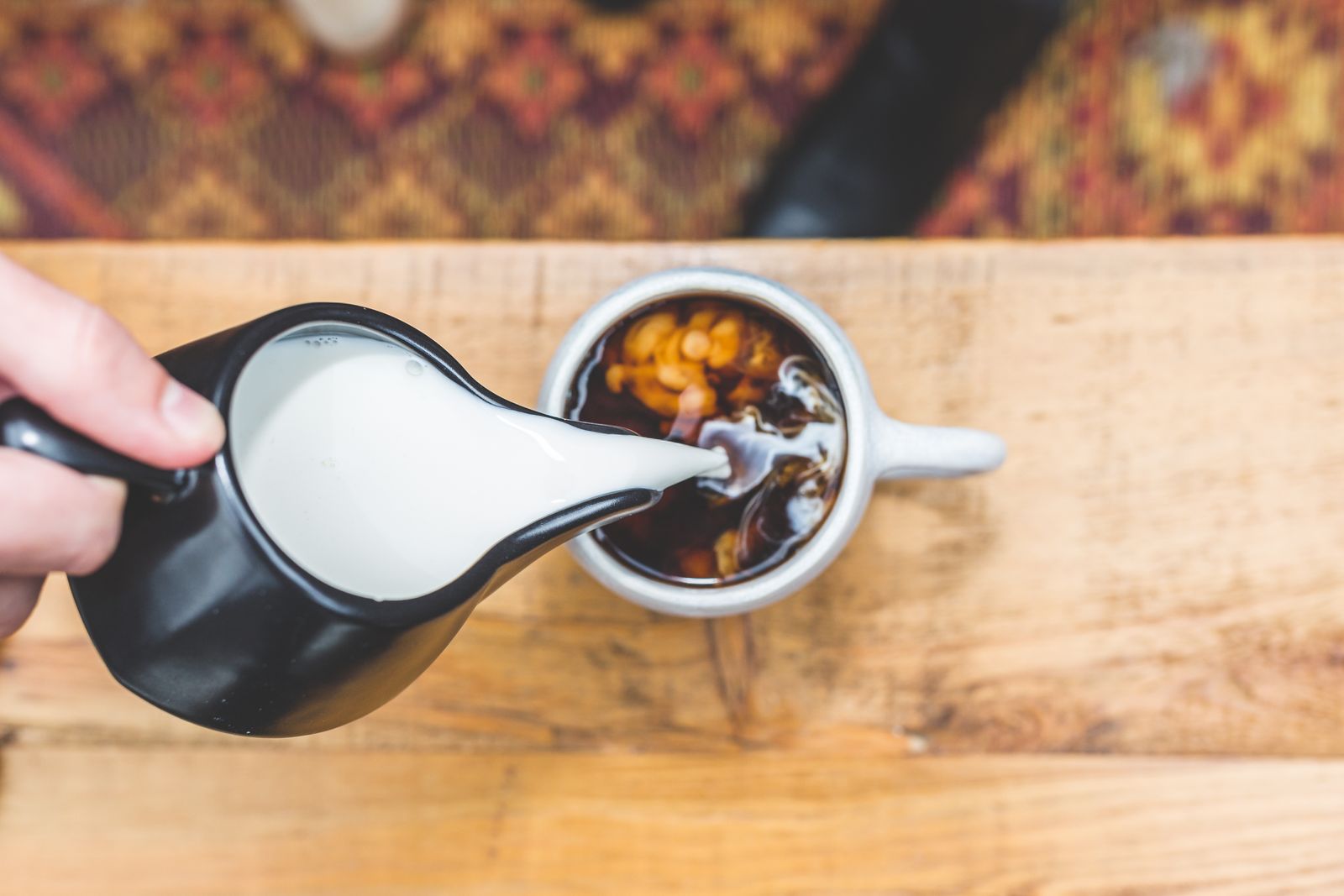
Same Coffee, More Calories: What Changed
The first surprise is what did not change. Across the whole 15 years, Americans drank roughly the same amount of coffee, about 13 ounces a day. Plain black coffee stayed steady too.
The calories told a different story. Calories from coffee drinks rose from 43 a day in 2003 to 60 a day in 2018. That is about 17 extra calories a day, or close to a 40 percent jump, with no extra coffee in the cup.
The biggest mover was non-dairy coffee creamer. The amount people added more than doubled, from about 3.4 grams a day to 8 grams a day. Non-dairy milk, like oat or almond milk, also grew, from about 0.3 grams to about 2.5 grams a day. Dairy milk and sugar did not change much over the same years.
By 2018, here is how the main add-ins stacked up in daily calories:
- Non-dairy coffee creamer: about 18.5 calories a day (up from about 7.7 in 2003)
- Sugar or syrup: about 16 calories a day
- Dairy milk: about 11 calories a day
By weight, people still poured more dairy milk (about 21.4 grams a day) than creamer (about 8.1 grams). But gram for gram, creamer brought more calories. As lead author Yongyi Pan, a Ph.D. candidate at the Friedman School, put it, non-dairy creamer “has now passed both sugar and dairy” for its share of the calories in coffee.
Why Coffee Creamer Adds Up
Pan explained that many non-dairy creamers can be high in saturated fat, which is calorie dense. That could be why a small pour now carries more calories than a spoon of sugar.
It is also a story about changing tastes. Non-dairy creamer has been sold since the 1950s, but it grew more popular in recent years as shoppers looked for plant-based or dairy-free options. Flavored versions line whole fridge doors at the grocery store now, from pumpkin spice to cookie flavors.
Senior author Fang Fang Zhang, a Tufts professor, noted that coffee has been linked to several health benefits in past research. The catch is that sugar and cream can bring added sugar and saturated fat along for the ride. Knowing what people actually put in their cups helps researchers understand the link between nutrition and overall health.

Who Drinks the Most Coffee, and What the Study Cannot Tell Us
The researchers found that adults who slept fewer hours, or worked longer hours, drank more coffee than people with more sleep or shorter workdays. That will not shock any parent or night shift worker. Coffee intake was about the same for people with higher and lower overall diet quality.
There are limits to keep in mind. This was an observational study, so it shows patterns, not cause and effect. It does not show that coffee creamer causes weight gain or any disease. People reported their own food and drink, which can be off from day to day, although the team took steps to improve the estimates. The data also ends in 2018, so today’s numbers could be different.
Easy Ways to Enjoy Your Coffee Creamer and Keep It Light
Seventeen calories a day is small on its own. Over a year, though, small habits add up, and many people pour a lot more than the average. You do not have to give up your favorite mug. A few simple swaps can help:
- Measure once. Pour your usual amount of coffee creamer into a tablespoon one morning. Many people are surprised by how much goes in.
- Try half and half. Mix half creamer and half milk in your cup. It stays creamy but lighter.
- Flavor with spice. A pinch of cinnamon, a drop of vanilla or a little cocoa powder brings flavor with very few calories.
- Make it at home. A homemade creamer with milk and a little maple syrup lets you control the sweetness.
- Keep the fancy flavors as a treat. Save the cookie and candy flavors for a weekend cup.
- Read the label. Check the serving size and saturated fat on the back of the bottle.

Which camp are you in: black coffee, a splash of milk, or a generous pour of your favorite coffee creamer? Most of us are not going to stop at one swap, and that is fine. Small changes that you actually enjoy tend to stick.
The Bottom Line
Americans did not start drinking more coffee between 2003 and 2018. Our cups just got richer, mostly because of coffee creamer. The researchers found it now brings more calories to the cup than sugar or milk. Coffee itself has been linked to health benefits in past studies, so the takeaway is not to quit. It is simply to know what goes into your mug. If you are thinking about bigger changes to your diet, talk with your doctor or a registered dietitian.
Source: Yongyi Pan, Fang Fang Zhang and colleagues, “Trends in the Consumption of Coffee and Coffee Additions Among U.S. Adults Aged 20+ Years”, Journal of the Academy of Nutrition and Dietetics, 2026, as reported by Tufts University and News-Medical.