Winston Churchill Painting: 16 Easy Landscape Projects He Proved Anyone Can Start at 40
Winston Churchill painting started on a quiet summer holiday in June 1915, when he was 40 years old and his career had hit a painful low. He watched his sister in law paint a watercolor at Hoe Farm, she handed him her brush, and he was hooked for life. He went on to paint more than 500 pictures, from his goldfish pond to sunny harbors, and he cheerfully called them his daubs. If you have ever thought you started too late, his story says otherwise. These easy landscape projects follow the subjects he loved, in a loose and joyful style any beginner can try at the kitchen table..
Winston Churchill Painting Began With a Pond
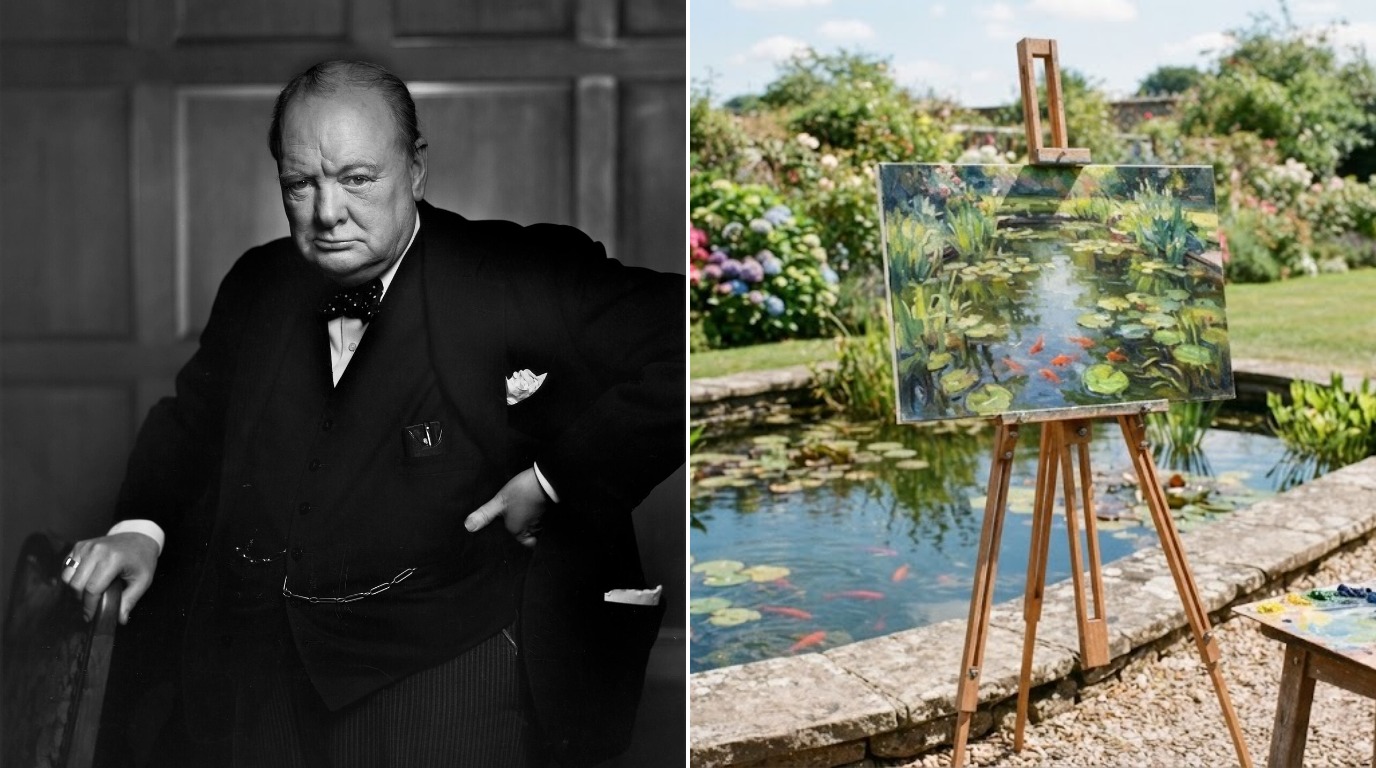
Water was one of his favorite subjects, especially the goldfish pond at Chartwell, his home in Kent. A pond is a kind first project because it forgives everything. Loose blobs of green become lily pads, and a few dabs of orange turn into fish. You do not need perfect drawing skills, just a brush and a little courage. As the history of his hobby shows, painting lifted his spirits when nothing else did, so why not start your own first little pond today..
You will need: A small canvas or canvas board, acrylic or oil paints in blue, green, orange and white, two brushes (one flat, one round), a palette or paper plate.
How to make it: 1. Paint the whole canvas in a dark blue green. 2. Add lily pads with round green dabs and a few lighter highlights. 3. Flick in small orange fish with the tip of a round brush.
Start With a Simple Pond Reflection
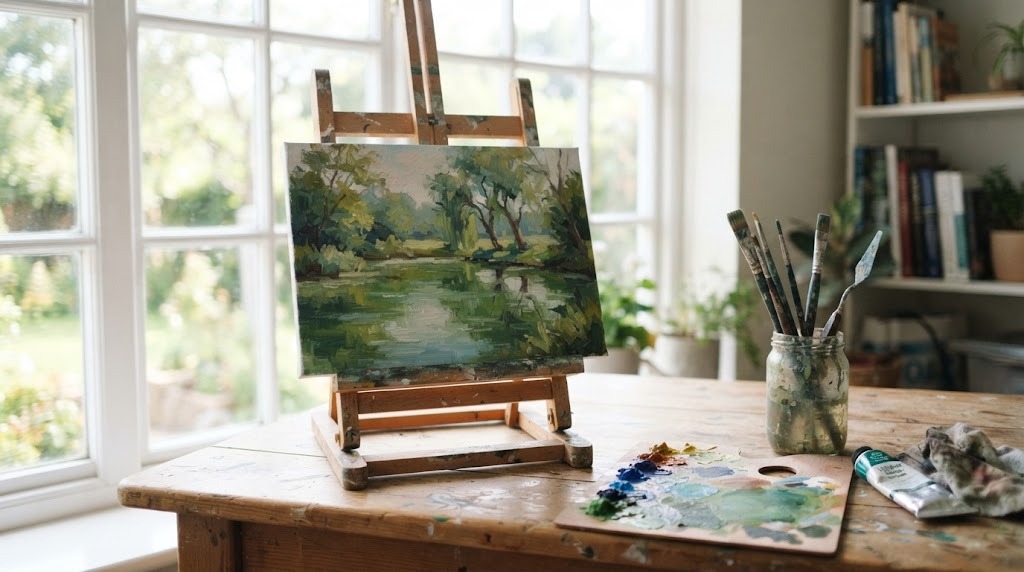
Reflections look tricky but are mostly a mirror trick. Paint the trees first, then repeat the same colors upside down in the water with sideways strokes. A thin white line between them makes the water shine. This is the kind of quiet scene you see again and again in Winston Churchill painting from his holidays. Will you paint a pond near you or one from memory?
You will need: A canvas board, paints in sap green, blue, yellow and white, a flat brush, a soft cloth.
How to make it: 1. Paint the sky and a band of trees across the middle. 2. Copy the tree colors below in short sideways strokes. 3. Pull a dry brush across the water lightly to blur the reflection.
Paint Warm Brick Walls and Autumn Ivy
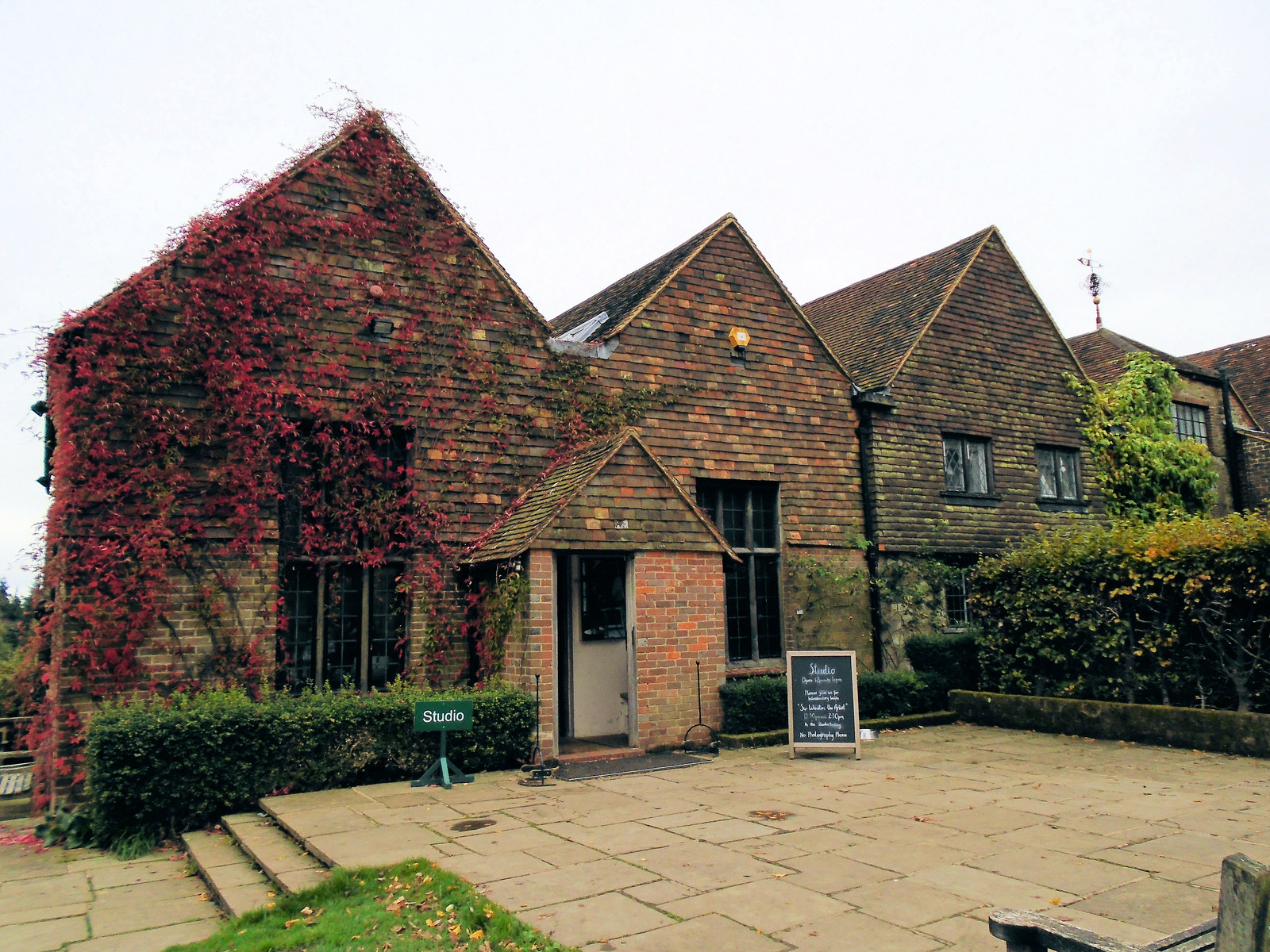
Here is a lovely fact: Churchill built his painting studio at Chartwell in the 1930s and laid the bricks himself. Old brick buildings with ivy turning red make a cozy subject full of warm color. Squint at the wall and paint blocks of color instead of every single brick. A few darker lines are enough to say brick. Does your street have a wall or barn with ivy climbing over it?
You will need: A canvas, paints in burnt sienna, red, orange, green and white, a flat brush, a small round brush.
How to make it: 1. Block in the building with warm red and orange. 2. Add a few darker lines for brick rows, not all of them. 3. Dab red and green ivy over one side with a round brush.
Winston Churchill Painting Holidays: A Sunny Harbor With Boats
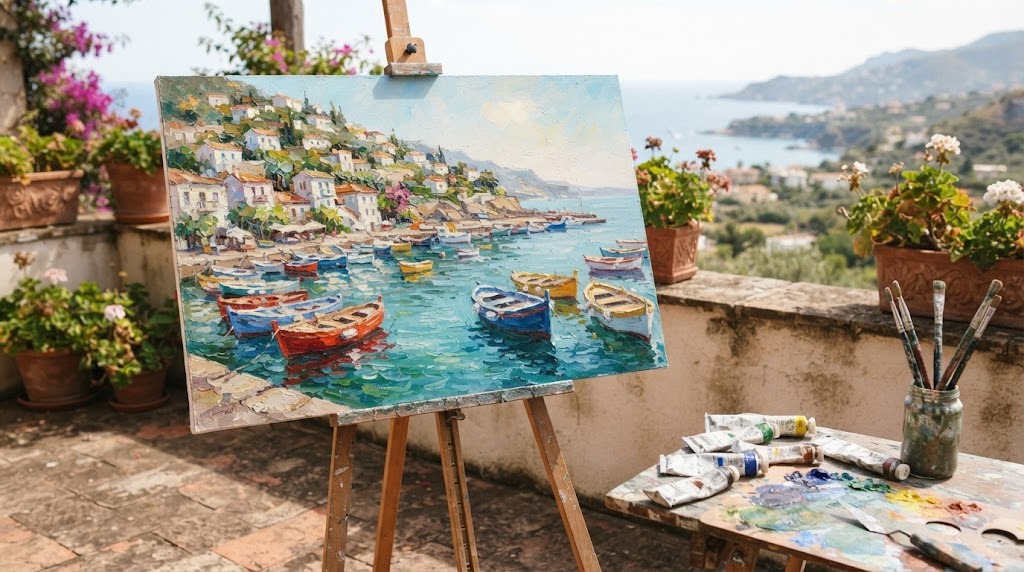
Churchill spent long holidays painting along the Mediterranean, and harbors full of little boats were a happy favorite. Bright boats are just colored shapes with a line underneath for the reflection. Use the boldest colors in your box. This project feels like a vacation on a gray winter day. Which colors will your boats be?
You will need: A canvas, paints in turquoise, white, red, yellow and blue, a flat brush, a liner brush.
How to make it: 1. Paint a turquoise sea and a pale sky. 2. Add simple white houses on a hill in the background. 3. Paint boat shapes in bright colors and add wobbly reflections below.
Desert Town in Pink and Orange
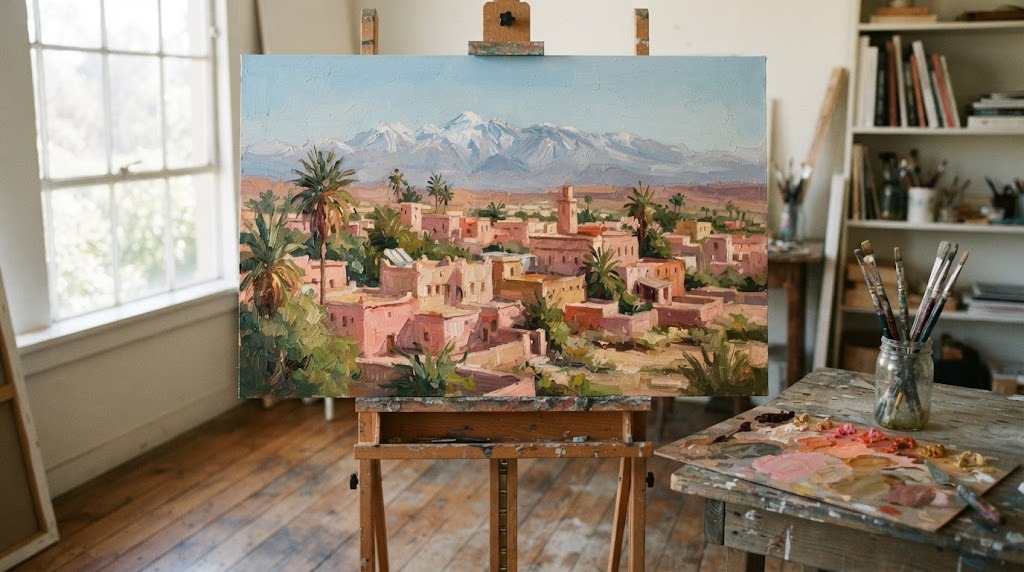
Marrakesh was one of the places he loved most, with its pink walls, palm trees and snowy mountains behind. Warm pinks and oranges against a clear sky make a painting that glows. It is a wonderful lesson in mixing warm and cool colors. Many fans say this style of Winston Churchill painting is the most cheerful of all. Ready to warm up your walls?
You will need: A canvas, paints in pink, orange, ochre, blue and white, a flat brush.
How to make it: 1. Paint a soft blue sky and white mountain tops. 2. Block in buildings with pink, orange and ochre. 3. Add palm trees with quick dark green strokes.
Goldfish in a Garden Pond
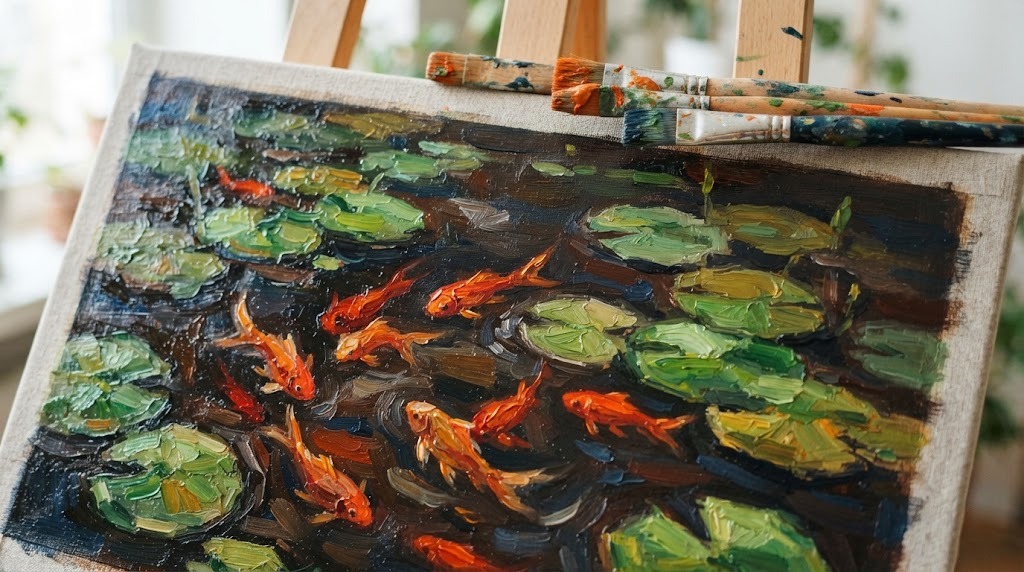
For a close up version, zoom in on the fish themselves. Paint a dark pond, add round lily pads, and let orange fish swim between them. The darker the water, the brighter the fish glow. Goldfish are a favorite theme in Winston Churchill painting at home, and he returned to them again and again. Could you paint a little series of four, one for each season?
You will need: A square canvas, paints in deep green, blue, orange, yellow and white, round brushes.
How to make it: 1. Cover the canvas in very dark green blue. 2. Paint lily pads as flat green ovals. 3. Add fish with orange and a touch of yellow on top.
Still Life of Fruit and a Jug
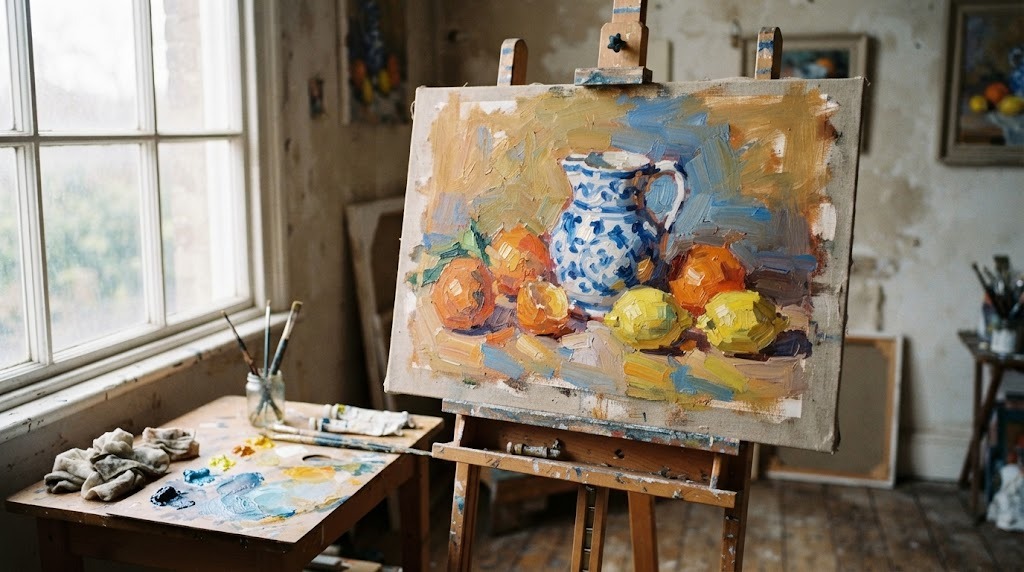
Still life is perfect for rainy days because your subject sits still on the table. Set out a few oranges, lemons and a favorite jug, and paint big simple shapes. Winston Churchill painting always favored strong color over tiny detail, and that is the secret to making it look lively. What would you put on your table?
You will need: A canvas, paints in orange, yellow, blue, white and brown, a flat brush, real fruit and a jug.
How to make it: 1. Paint the table and background in two simple colors. 2. Add circles for the fruit and an outline for the jug. 3. Add a light spot and a shadow to each shape.
Winter Tree Silhouettes
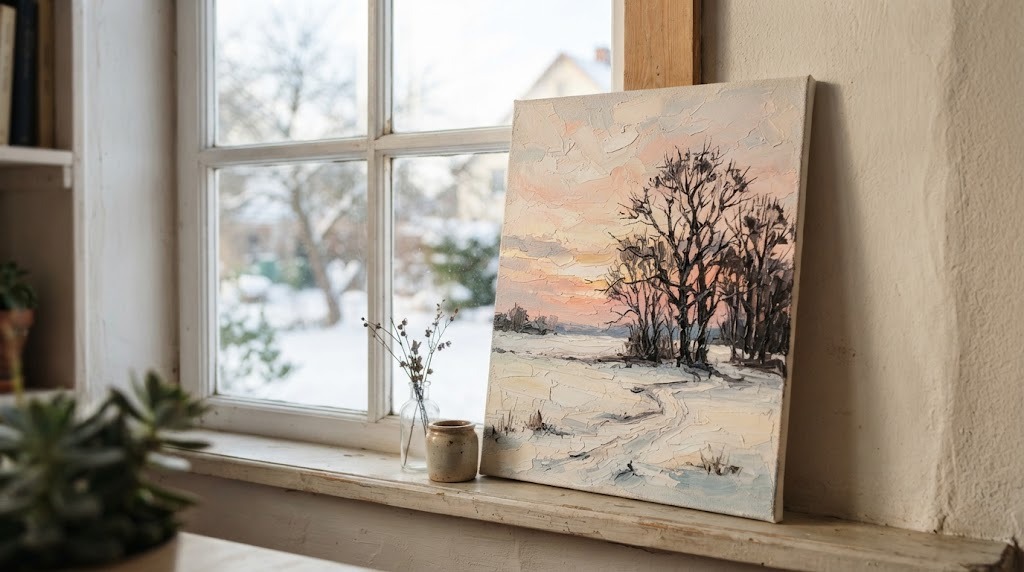
Bare winter trees against a glowing sky are one of the easiest beautiful paintings you can make. The sky does all the work. Blend pink, gold and pale blue, then paint dark trunks and branches on top with a thin brush or a palette knife. It looks dramatic in a frame. Will you hang yours for the whole winter?
You will need: A canvas, paints in pink, yellow, pale blue, white and dark brown, a palette knife or liner brush.
How to make it: 1. Blend sky colors from gold at the bottom to blue at the top. 2. Paint a white snowy ground. 3. Add dark trunks and branches that get thinner toward the tips.
Winston Churchill Painting Ideas: A Country House Under Big Clouds
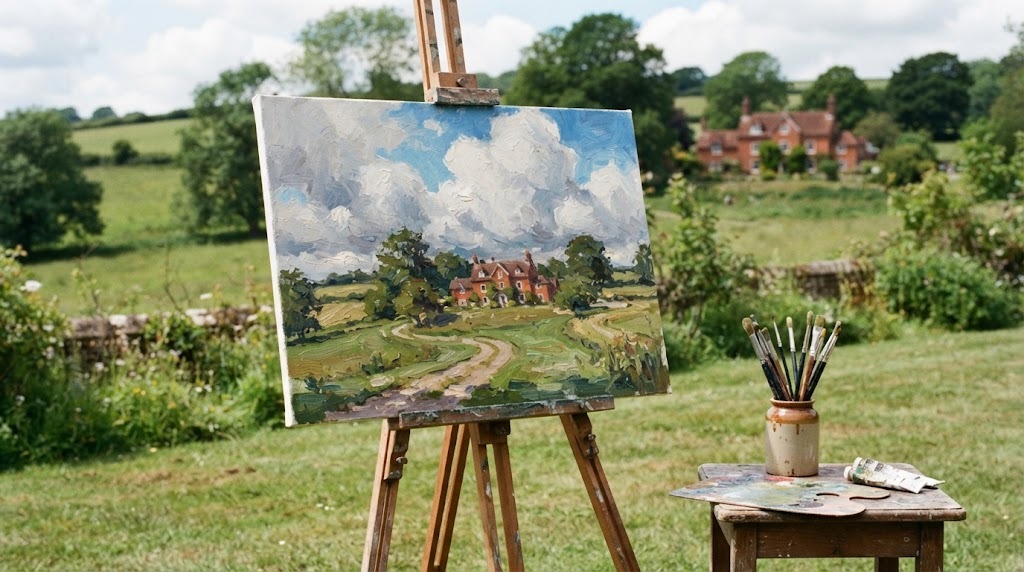
Chartwell itself appears in a lot of Winston Churchill painting, a red brick house sitting in green hills. Paint any house you love under a huge sky of puffy clouds. The clouds can take up most of the canvas, which makes the house feel cozy and small. A painting of your own home makes a wonderful keepsake. Whose house would you paint?
You will need: A canvas, paints in blue, white, gray, green and brick red, a large flat brush.
How to make it: 1. Paint a blue sky and add big white clouds with a dry brush. 2. Paint green rolling hills along the bottom. 3. Add a simple red house shape with dark windows.
Loose Palm Trees in Quick Strokes
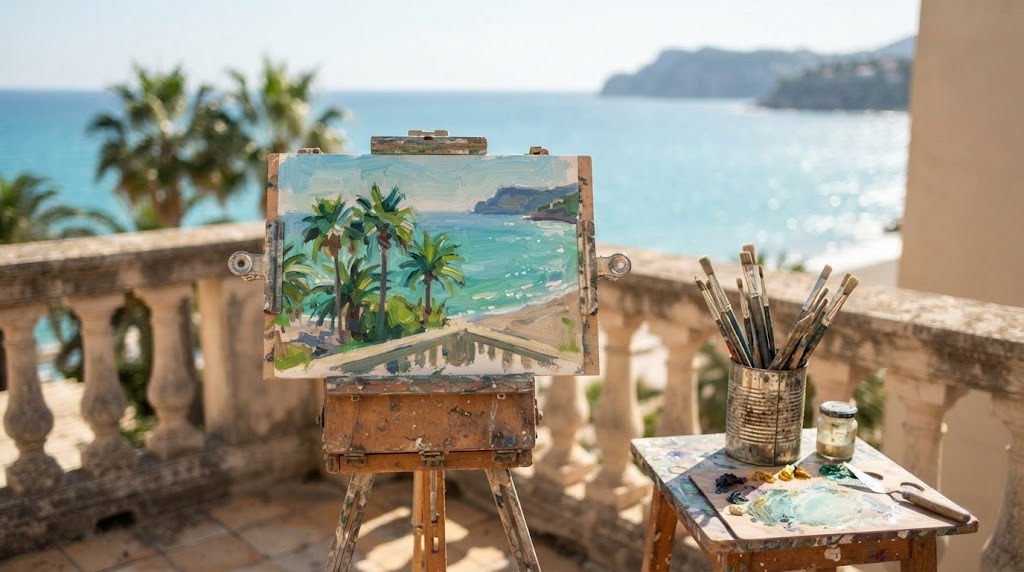
Speed is your friend here. Palm trees look best when painted fast, with long sweeping strokes for each leaf. Churchill painted on sunny balconies and terraces during his travels, and quick sketches like this capture that holiday mood. Give yourself ten minutes and do not fuss. How many palms can you paint before the timer goes off?
You will need: A canvas board, paints in turquoise, green, brown and white, a medium round brush.
How to make it: 1. Paint a turquoise sea and a pale sky. 2. Draw curved brown trunks. 3. Flick long green leaves out from the top of each trunk in one stroke each.
Mountain View With Layered Blues
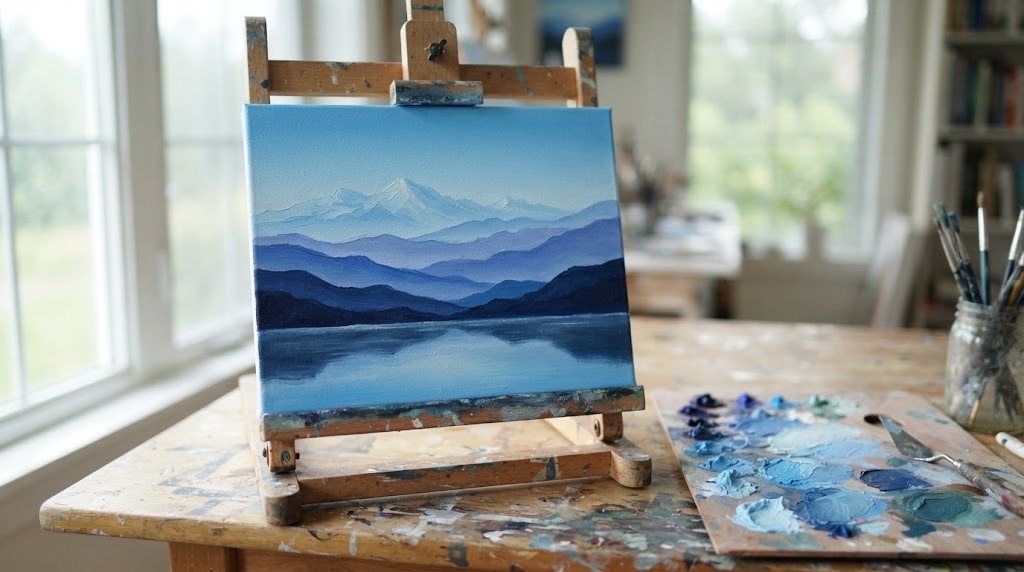
Mountains are just layers of color. The farthest peaks are pale blue, and each row gets darker as it comes closer. This simple trick makes any painting look deep and real. Fans of Winston Churchill painting will recognize the trick from his mountain views. It is a favorite exercise for beginners because it teaches color mixing without any drawing. Which mountains would you love to paint?
You will need: A canvas, paints in blue, white and a touch of purple, a flat brush.
How to make it: 1. Mix four shades of blue from pale to deep. 2. Paint the palest mountain row at the top. 3. Add each darker row below, finishing with a calm lake.
Coastal Cliffs and Blue Sea
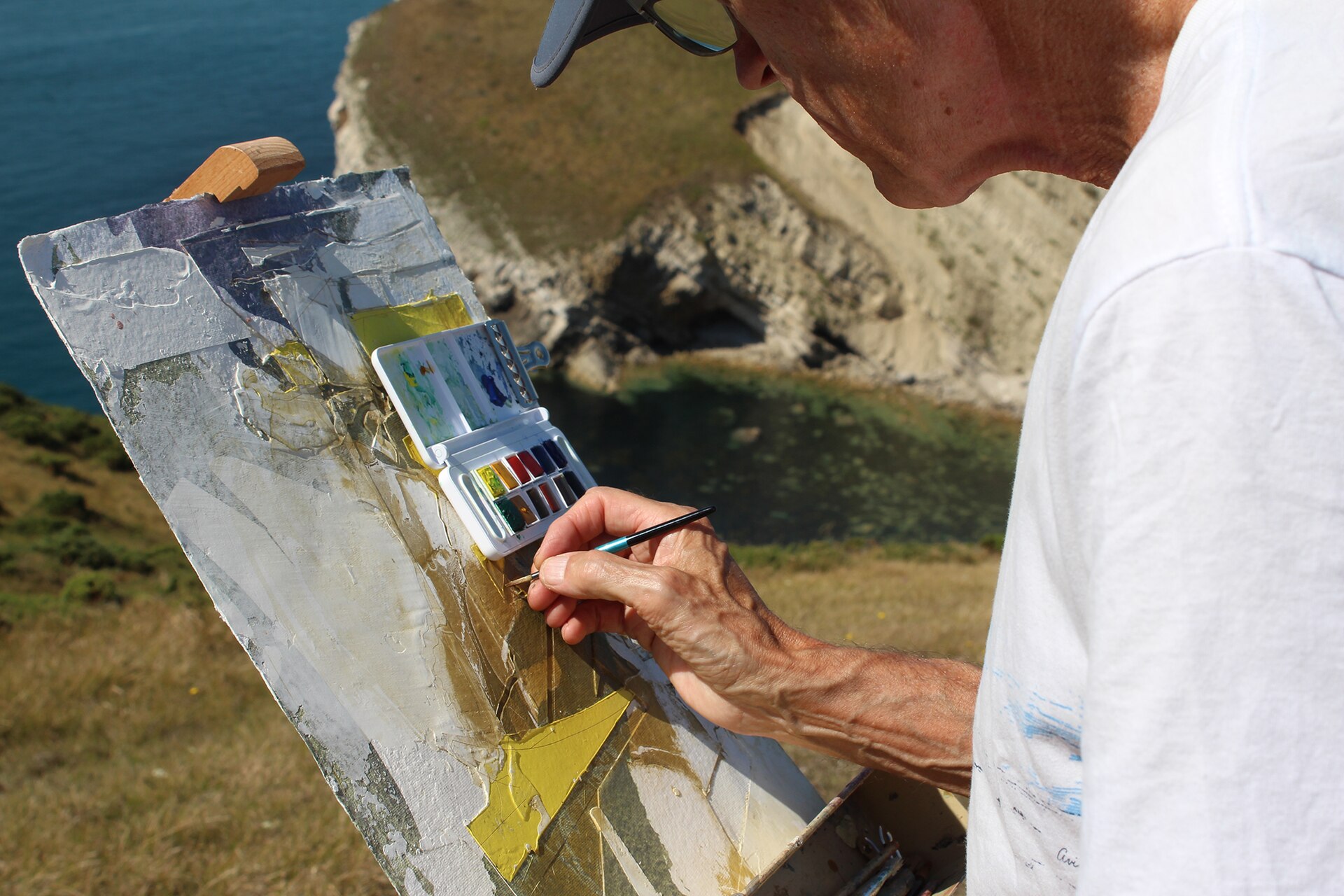
Painting outdoors by the sea is pure joy, and this painter on the Dorset coast shows how simple the setup can be: a board, a little paint box and a view. Cliffs are big angular shapes, and the deep blue sea makes them glow. Churchill often packed his paints for holidays on the coast. Would you take your brushes to the beach next summer?
You will need: A canvas board or watercolor block, paints in blue, ochre, brown, green and white, a flat brush, a small travel paint box.
How to make it: 1. Paint the sea in deep blue and the sky in pale blue. 2. Block in the cliffs with ochre and brown, with darker shadows on one side. 3. Add green grass on top and white lines where waves hit the rocks.
Take Your Easel Outside Like Winston Churchill Painting in the Open Air
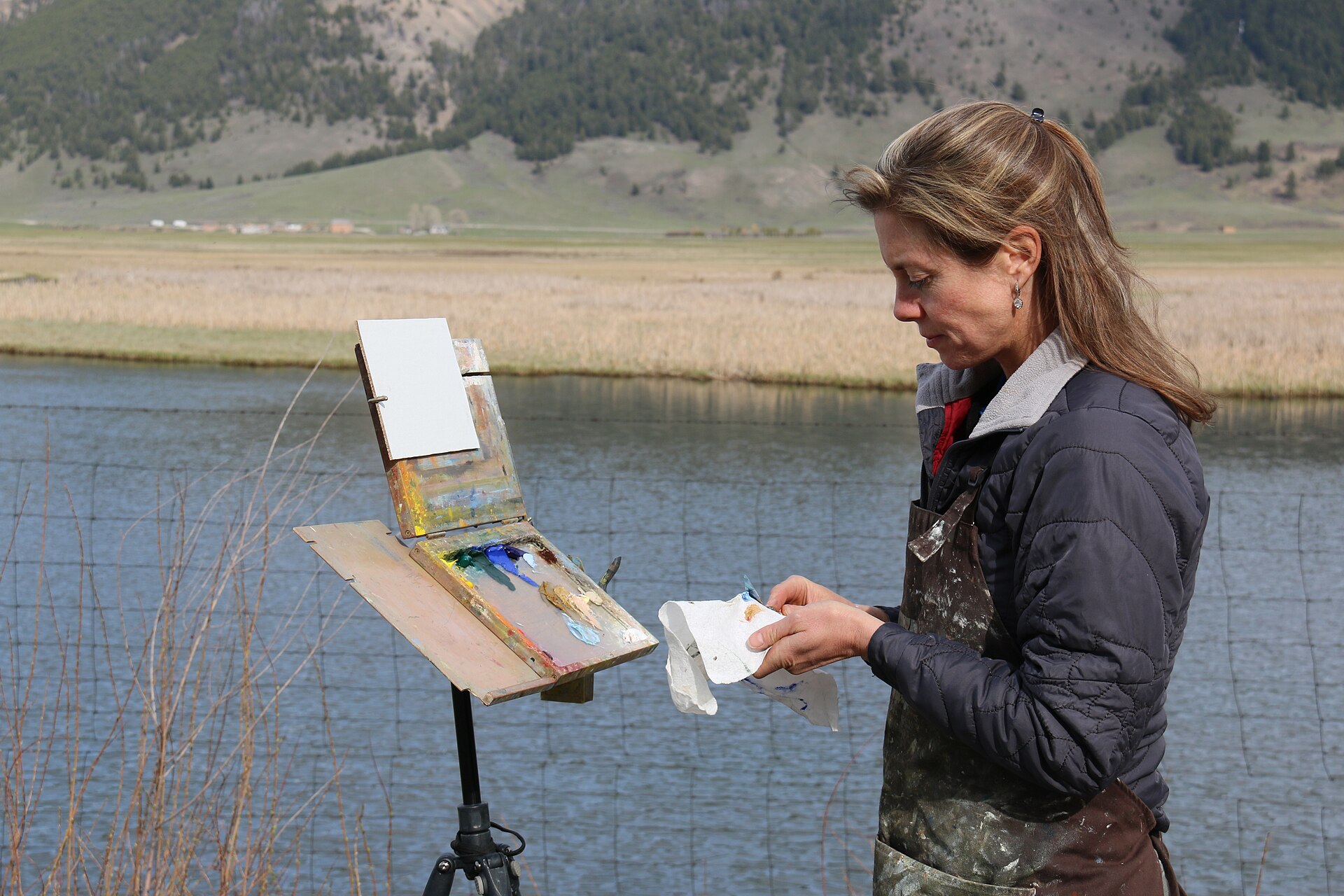
Churchill painted outdoors whenever he could, from gardens to riversides. Painting in the open air, called plein air painting, teaches you to look at real light. Pick a calm spot, bring a stool and a hat, and paint for an hour. You will be surprised at how relaxing it feels. Where is your favorite view nearby?
You will need: A light easel or a clipboard, a canvas board, a small set of paints, brushes, a water jar, a stool.
How to make it: 1. Choose a view with one clear subject, like a tree or a barn. 2. Paint the big shapes first. 3. Stop after an hour and finish details at home.
Paint a Flower Lined Garden Path
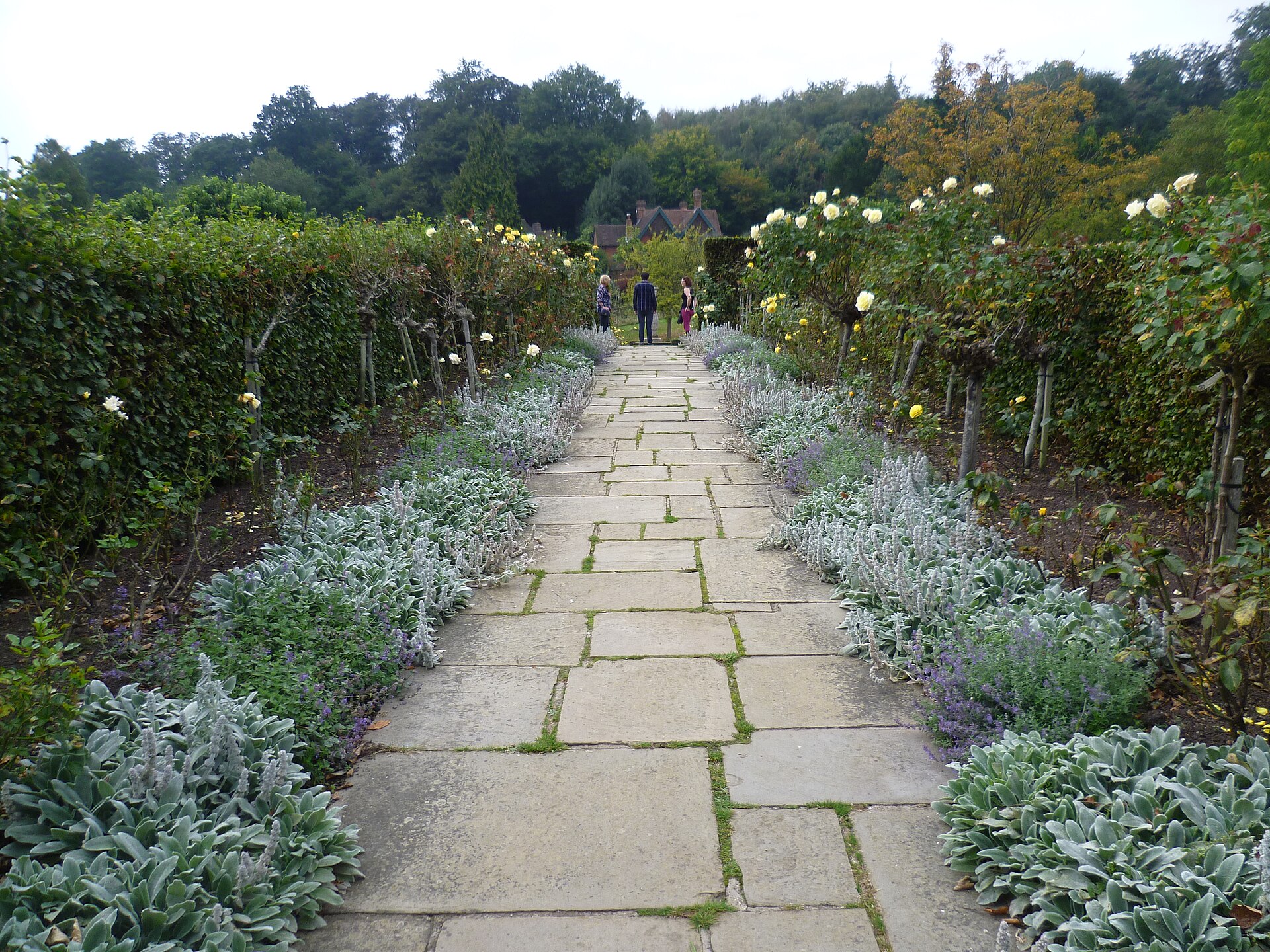
The walled garden at Chartwell is full of soft paths lined with flowers, the kind of quiet view that inspired Winston Churchill painting and rewards a slow afternoon of painting. A path is a great beginner lesson in perspective: it starts wide at the bottom and shrinks to a point. Add fluffy borders of silver, green and pink on each side. Is there a path in your garden or local park you love?
You will need: A canvas, paints in gray, green, silver blue, pink and white, a flat brush and a round brush.
How to make it: 1. Draw two lines that meet near the top to form the path. 2. Paint the path in light gray with a few darker stone lines. 3. Dab soft plant shapes along both sides, bigger at the front.
Winston Churchill Painting Tip: Bold Color Practice
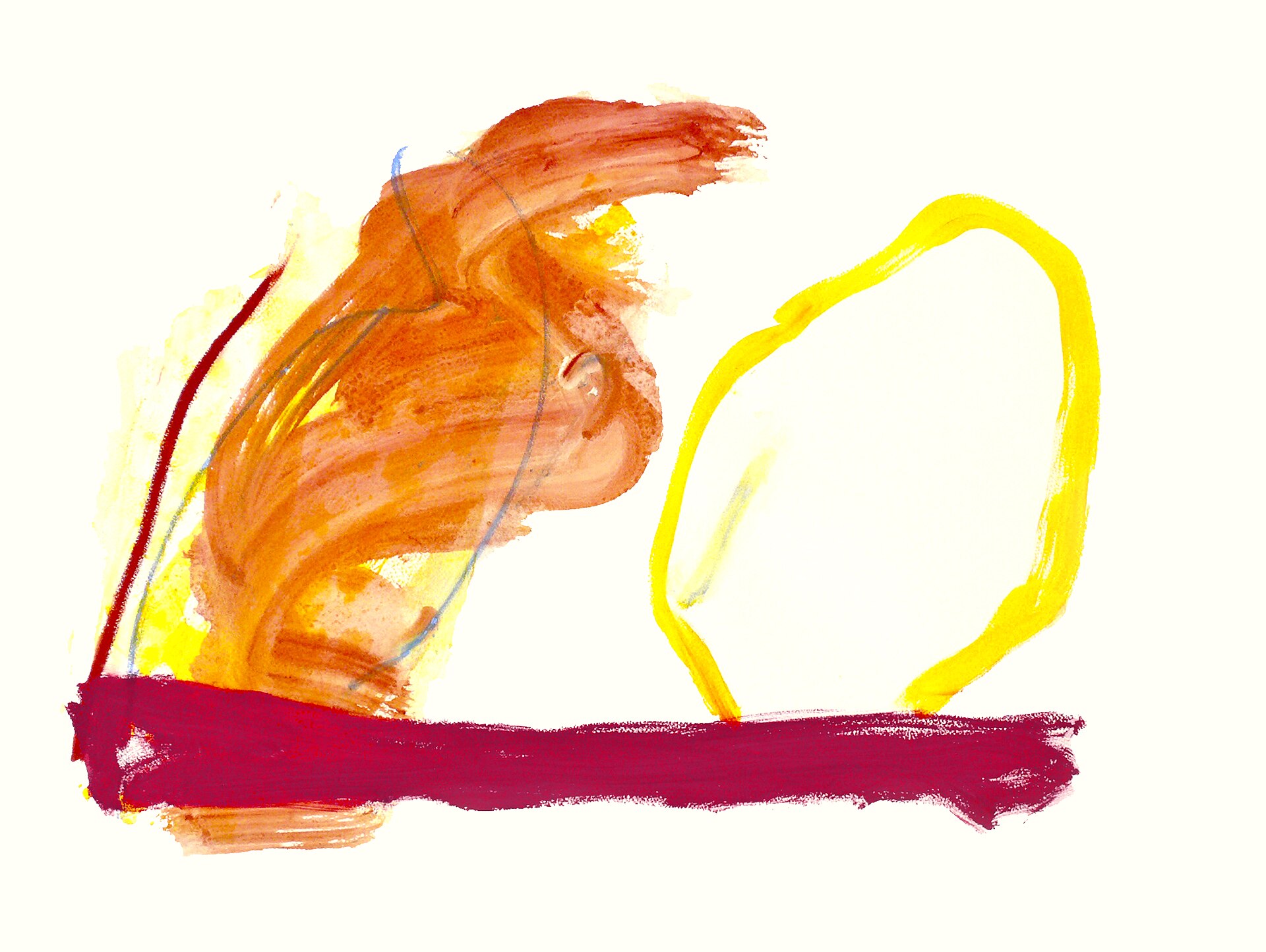
Churchill loved bright, happy color and was never shy with it. Before a big painting, make a practice board of loose color patches to see what works together. It is relaxing, it cannot go wrong, and it often turns into abstract art worth framing. Try warm colors on one side and cool on the other. Which mix will you like best?
You will need: Watercolor paper or a canvas board, watercolors or acrylics in bright colors, a big soft brush, water.
How to make it: 1. Wet the paper lightly. 2. Drop in patches of color and let them blend. 3. When dry, pick your favorite combination for your next landscape.
Paint the View of Your Own Home
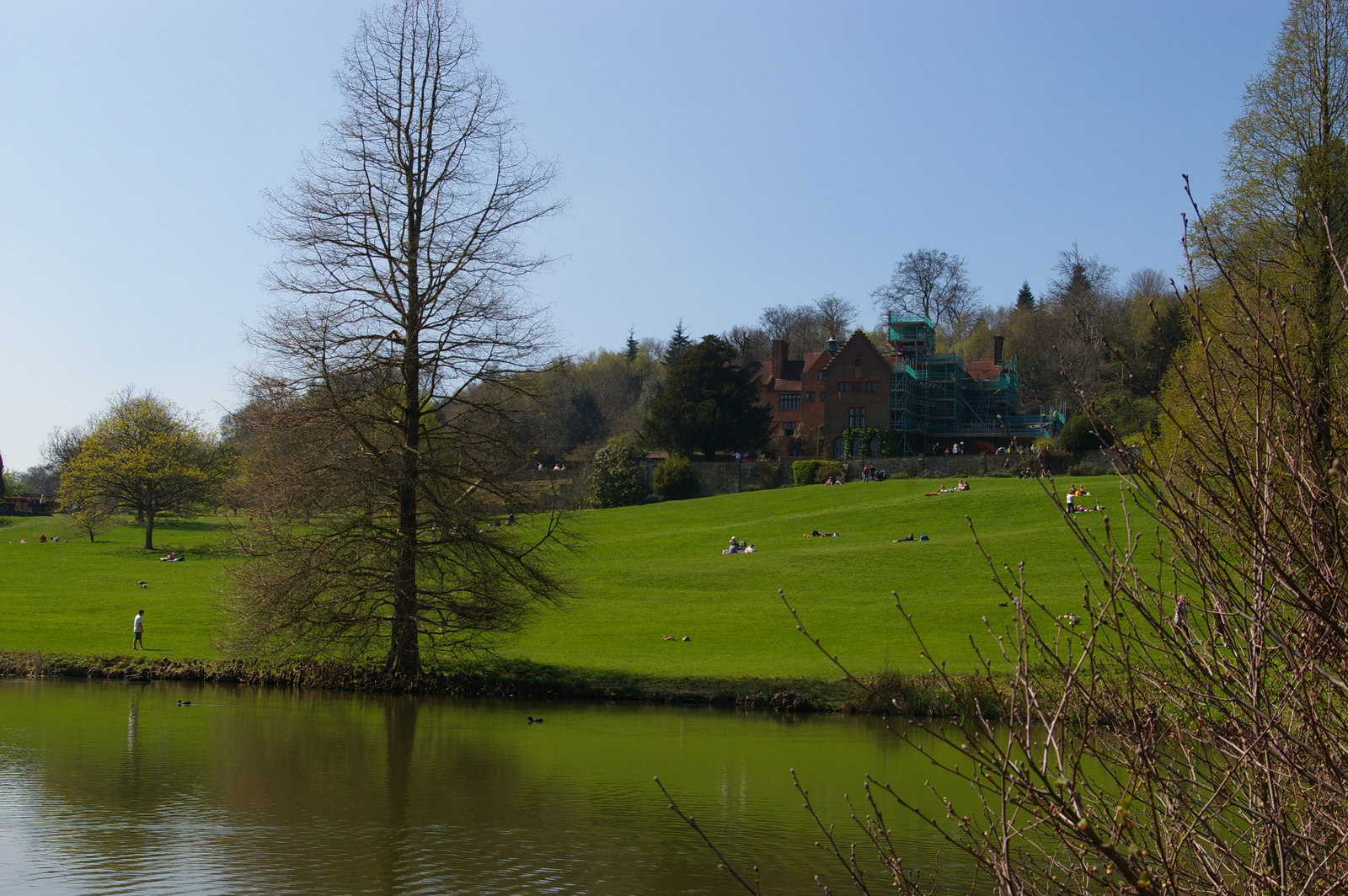
This view of Chartwell across the lake shows why he painted his own home again and again. Your own house, street or garden is the perfect subject because you know it by heart. He also gave many paintings away as gifts, just like the late blooming painters in our George W Bush painting story. A small framed painting of a family home makes a priceless present. Inspired by Winston Churchill painting at home, who could you paint a gift for this Christmas?
You will need: A canvas, paints in greens, blues and the colors of your house, brushes, a simple frame.
How to make it: 1. Take a photo of the view to work from. 2. Paint the sky, then the trees, then the house. 3. Sign the corner, let it dry, and frame it with a handwritten note on the back.