Cardboard Hamster Playgrounds: 16 Fun DIY Builds Your Little Pet Will Love
Cardboard hamster playgrounds are the cutest way to turn your recycling bin into a world of fun for your tiny pet. Hamsters love to dig, climb, sniff out treats and squeeze through tunnels, and plain cardboard lets them do all of it. Boxes, tubes and paper cups become mazes, hideouts and obstacle courses in an afternoon, and kids love helping to design them. The best part is that when a build gets chewed or messy, you just make a new one. Before you start, remember a few simple rules: use plain cardboard with no shiny coating, skip paint, tape and staples, and use only a flour and water paste if you need glue. Now grab some boxes and let the building begin..
Cardboard Hamster Playgrounds Begin With a Multi-Level Maze
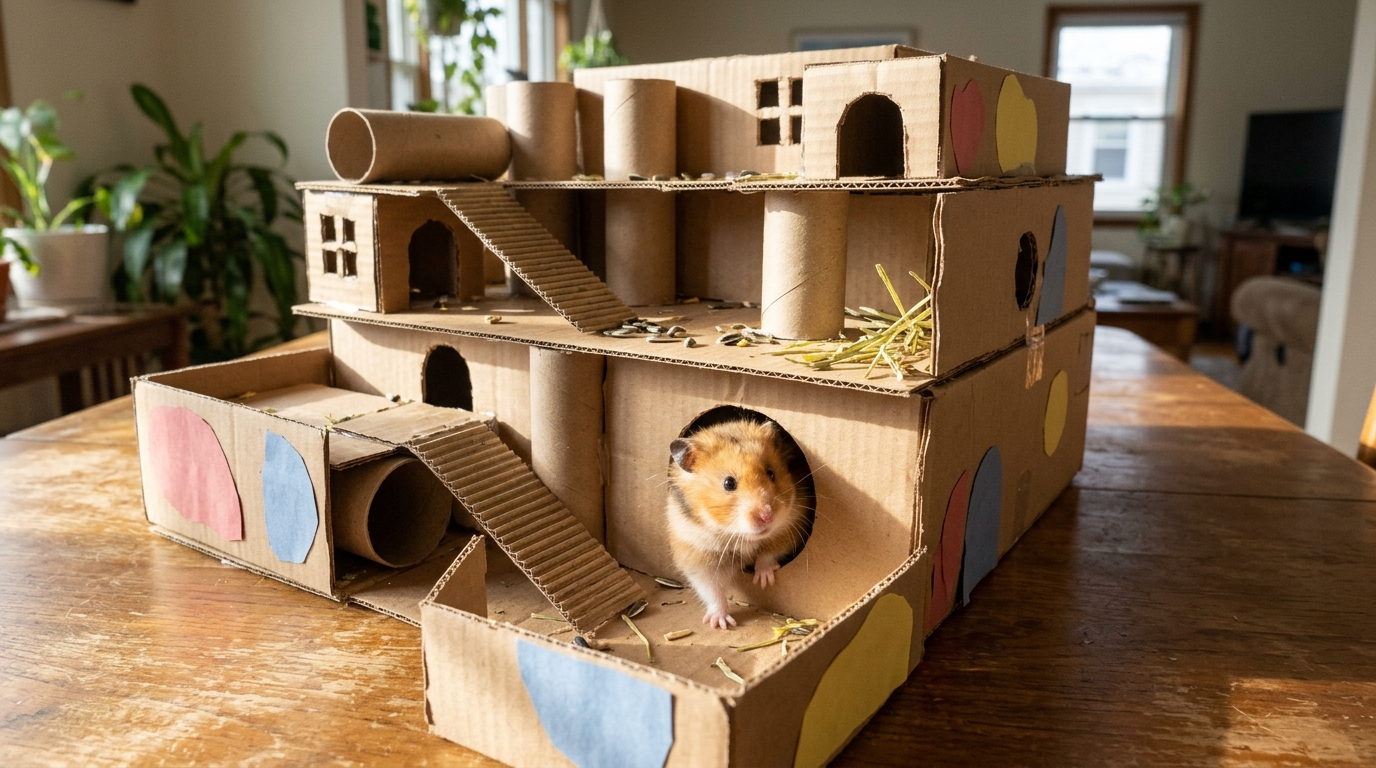
A stacked cardboard maze is the dream build for curious hamsters. Cut doorways into a few boxes, stack them in two or three levels and join them with gentle ramps and tubes. Scatter a few seeds along the paths so your hamster has a reason to explore every room. Keep each level low and the ramps wide, because hamsters are not great climbers. Watching them pop out of a window for the first time is pure joy. How many levels will your maze have..
You will need: 3 or 4 plain cardboard boxes, cardboard tubes, a craft knife (adults only), a pencil and a flour and water paste.
How to make it: 1. An adult cuts round doorways and windows. 2. Stack the boxes and mark where ramps go. 3. Make gentle ramps from flat cardboard strips. 4. Join pieces with flour paste and let it dry fully.
Toilet Roll Tunnel Town
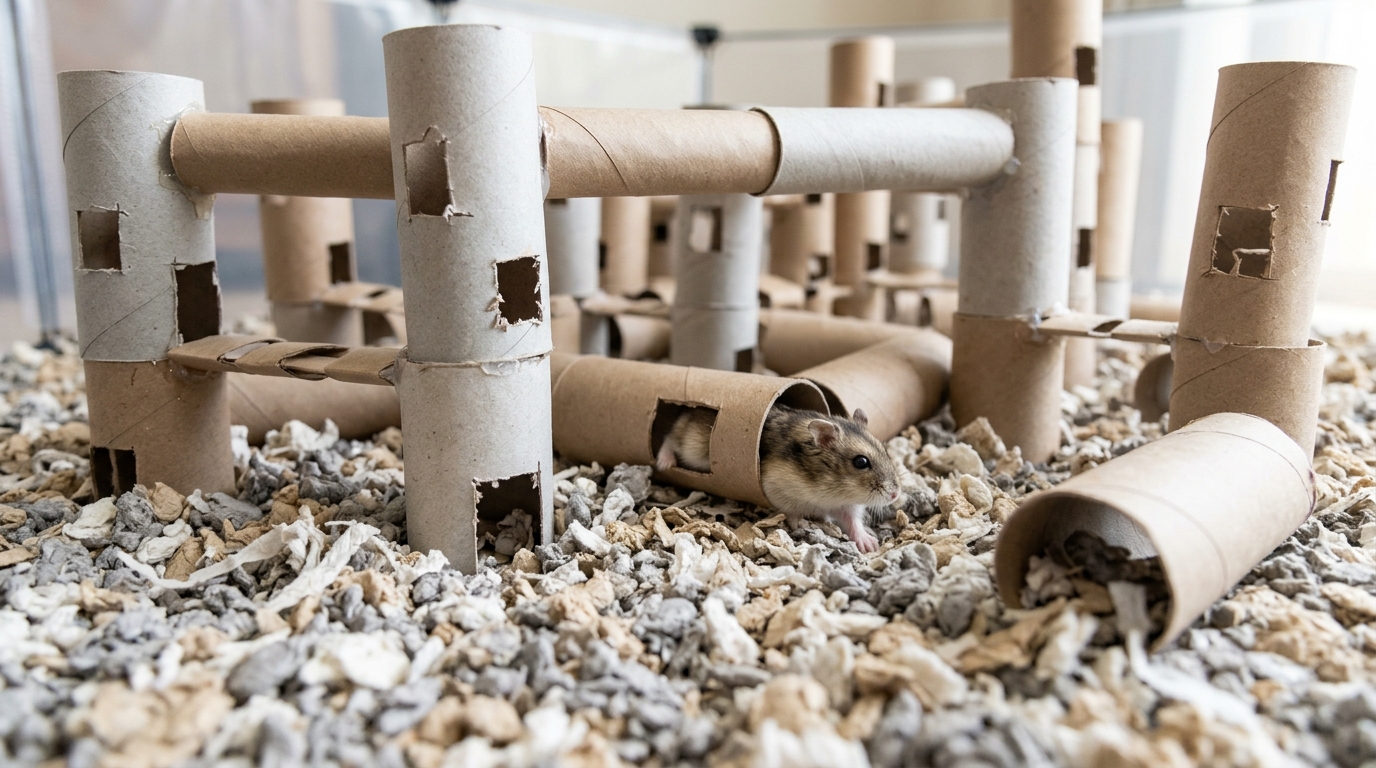
Toilet roll tubes are free hamster toys waiting to happen. Stand some up as towers, lay others down as tunnels and cut little doors so they connect into a town. Hamsters love to dash through and push bedding inside. When the tubes get chewed, just add new ones. It is a great project for kids because there is nothing sharp involved if the doors are torn by hand. How many tubes have you saved this month?
You will need: 8 to 12 plain cardboard tubes, safety scissors and a little flour paste.
How to make it: 1. Cut or tear door shapes in the tubes. 2. Arrange them as towers and tunnels. 3. Paste the joints with a dab of flour paste. 4. Let it dry before setting it in the enclosure.
Craft Stick Ladder Bridge
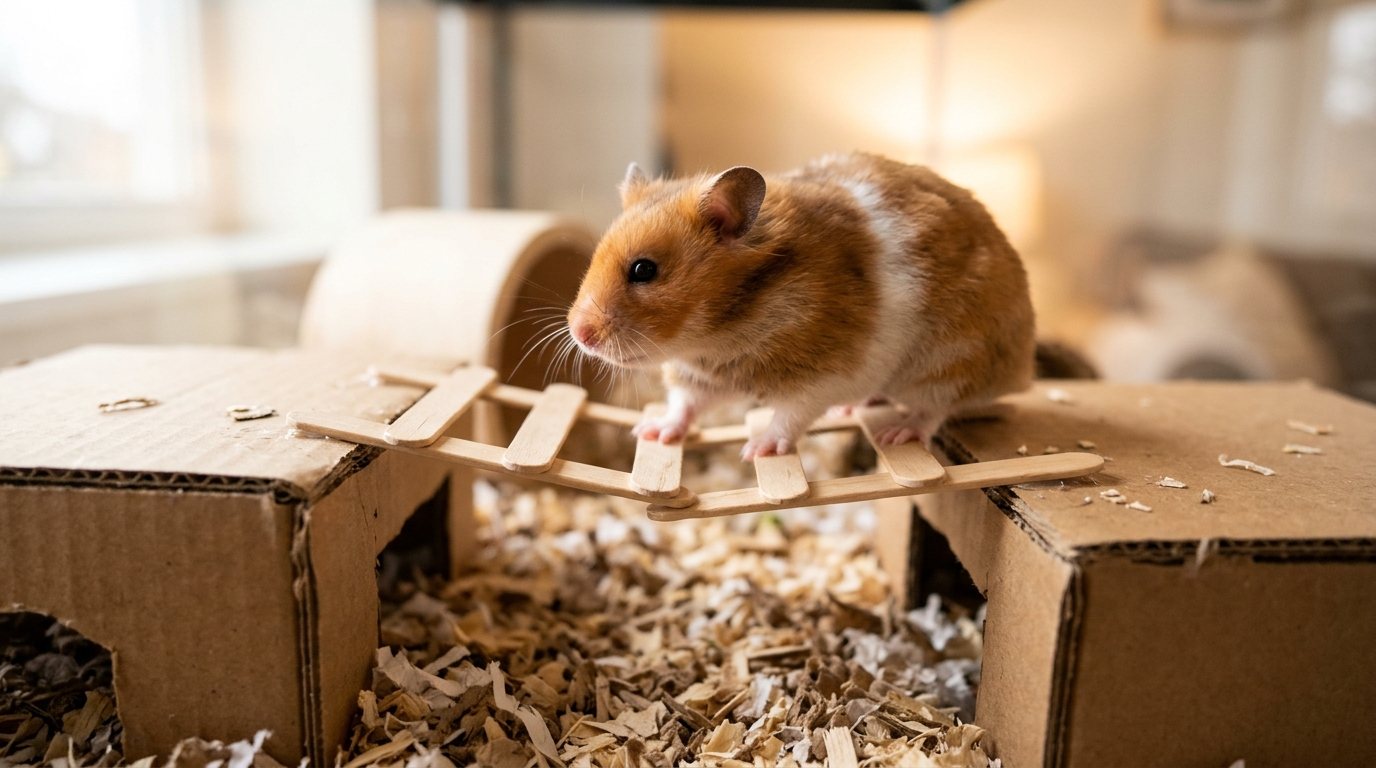
A low ladder bridge adds a fun little challenge between two platforms. Glue plain wooden craft sticks across two long sticks, leaving small gaps for paws to grip. Keep it close to the floor of the enclosure so a slip is no big deal. Hamsters will cross it again and again once they find a treat on the other side. Isn’t it sweet to watch those tiny feet work it out?
You will need: Plain untreated wooden craft sticks, 2 small cardboard boxes, flour paste and a ruler.
How to make it: 1. Lay two craft sticks side by side as rails. 2. Paste short sticks across them like ladder rungs. 3. Let it dry overnight. 4. Rest the bridge low between two boxes.
Cereal Box Cottage Hideout
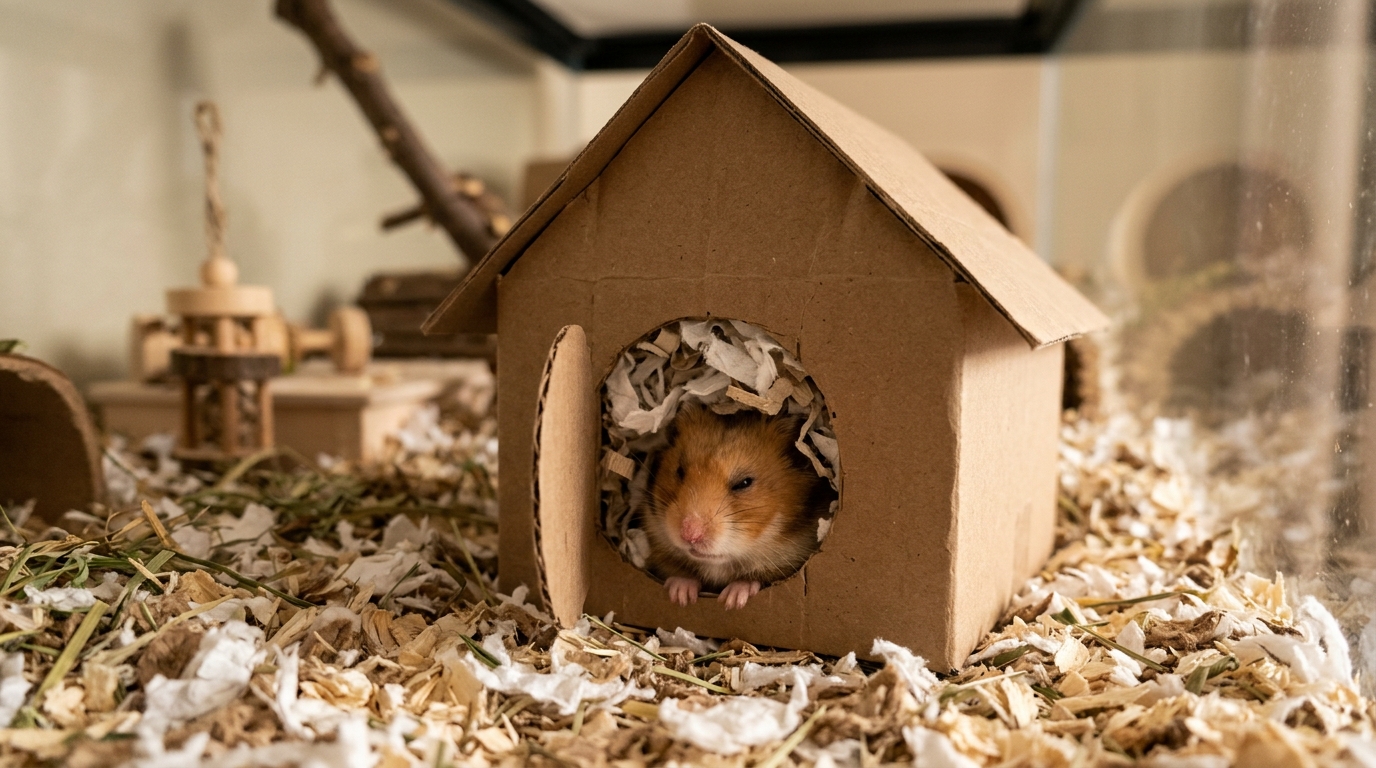
Hamsters love a cozy hiding spot, and a cereal box turned inside out makes a charming little cottage. Flip the box so the plain brown side faces out, cut a round door and fold the top into a peaked roof. Fill it with a handful of soft paper bedding and your pet has a quiet place to nap. Swap it out when it gets chewed. Would your hamster nap in a cottage or a castle?
You will need: 1 empty cereal box, scissors (adults), a pencil, flour paste and paper bedding.
How to make it: 1. Open the box seams and turn it inside out. 2. Paste it back together with the plain side out. 3. Cut a round doorway. 4. Fold the top into a roof and add bedding.
Seed Climbing Wall for Cardboard Hamster Playgrounds
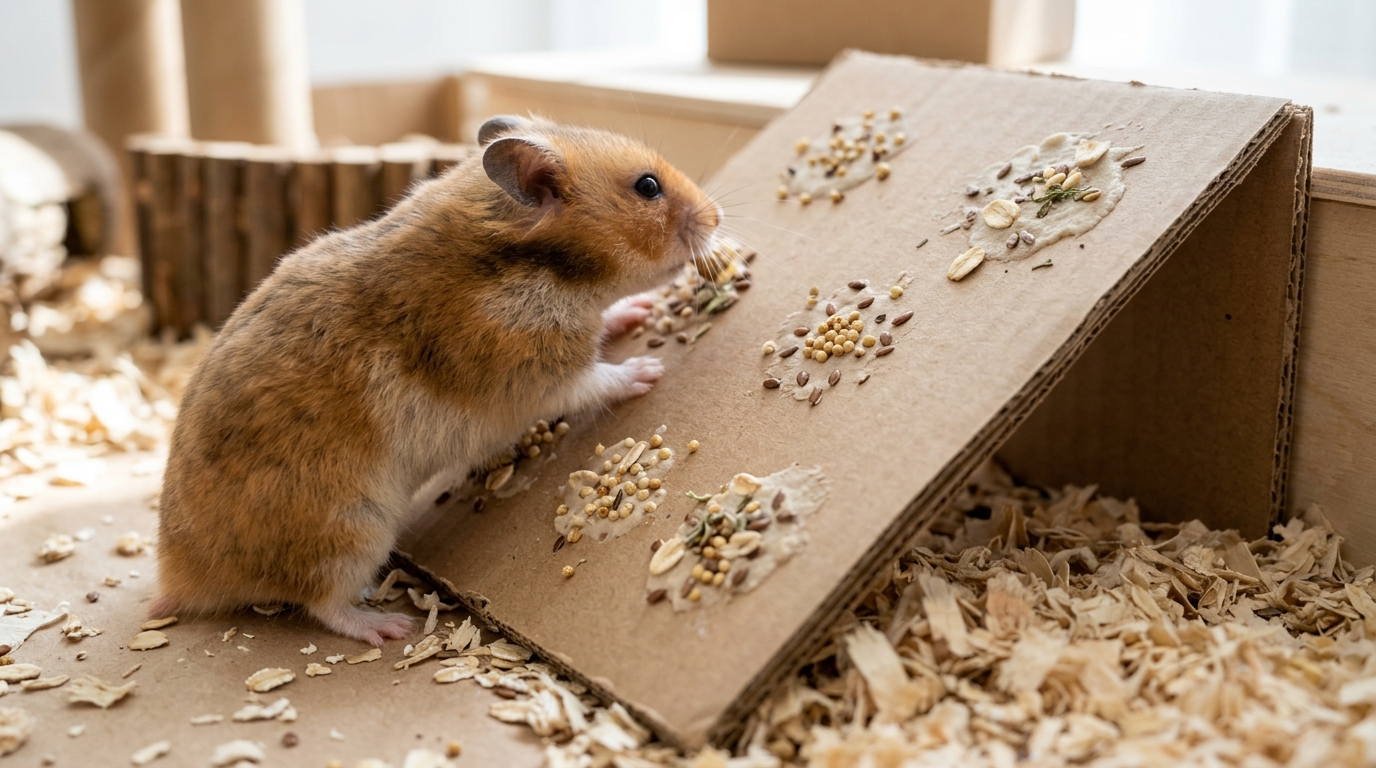
This seed wall turns snack time into a little workout. Brush a thin layer of flour and water paste onto a piece of plain cardboard, press in hamster-safe seeds and oats, and let it dry. Lean it at a gentle angle so your hamster can stretch up and nibble. It is one of the most loved cardboard hamster playgrounds pieces because it keeps them busy for a long time. Which seed mix does your hamster like best?
You will need: A piece of plain cardboard, flour, water, a small brush and hamster-safe seed mix.
How to make it: 1. Mix flour and water into a thin paste. 2. Brush it on the cardboard in dots. 3. Press seeds into the dots. 4. Let it dry completely, then lean it at a low angle.
Paper Bag Hay Nest
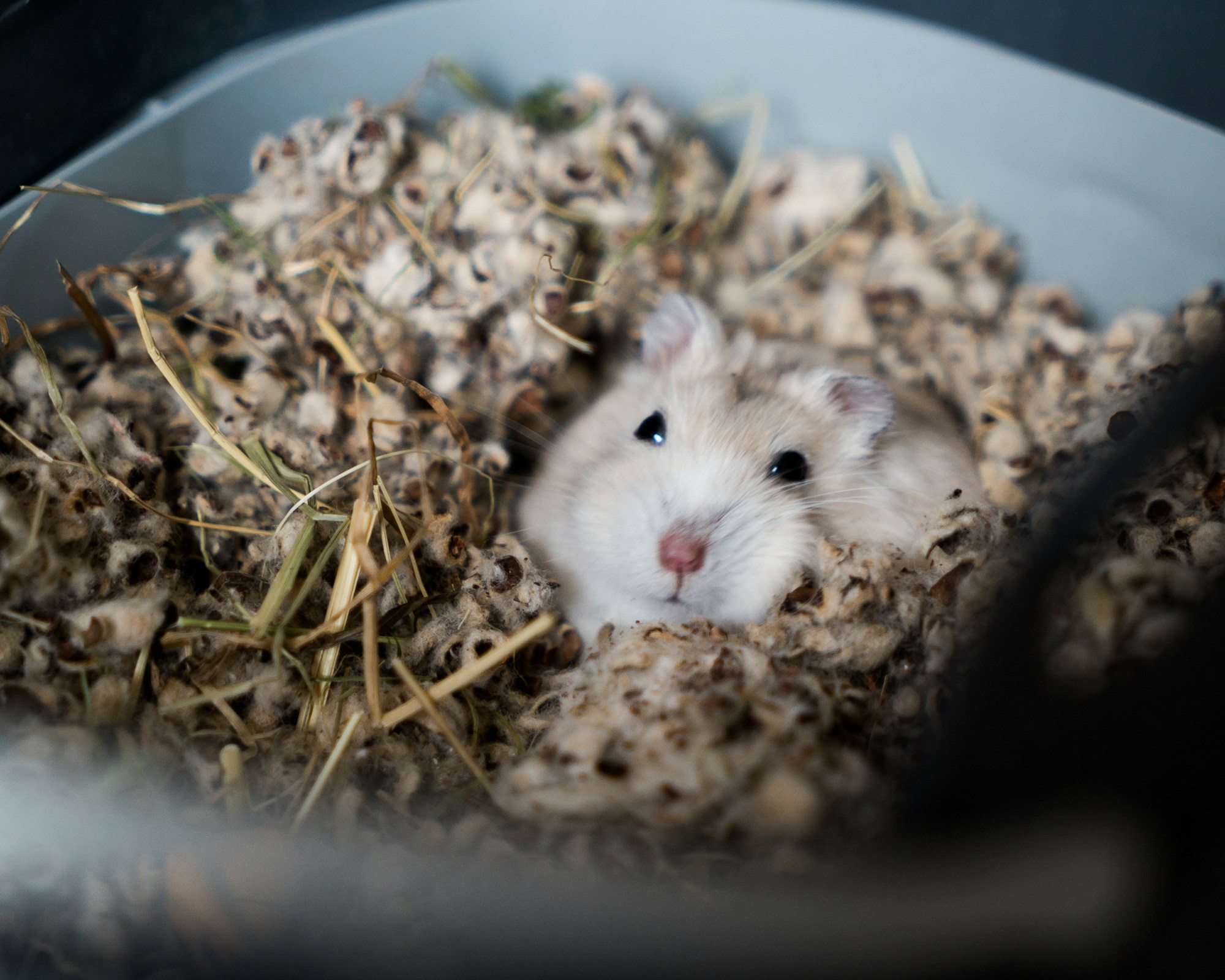
A plain paper bag stuffed with hay and torn paper becomes a crinkly nest that hamsters love to burrow into. Roll the top down so it stays open, then tuck it in a corner of the enclosure. Your pet will rearrange it to suit its own taste, which is half the fun. Use plain brown bags only, with no handles or printing. Have you ever seen a hamster carry bedding in its cheeks?
You will need: A plain brown paper bag, timothy hay or meadow hay and plain unscented paper bedding.
How to make it: 1. Roll the top of the bag down a few times. 2. Fill it loosely with hay and paper. 3. Lay it on its side. 4. Place it in a quiet corner.
Shoe Box Dig Den
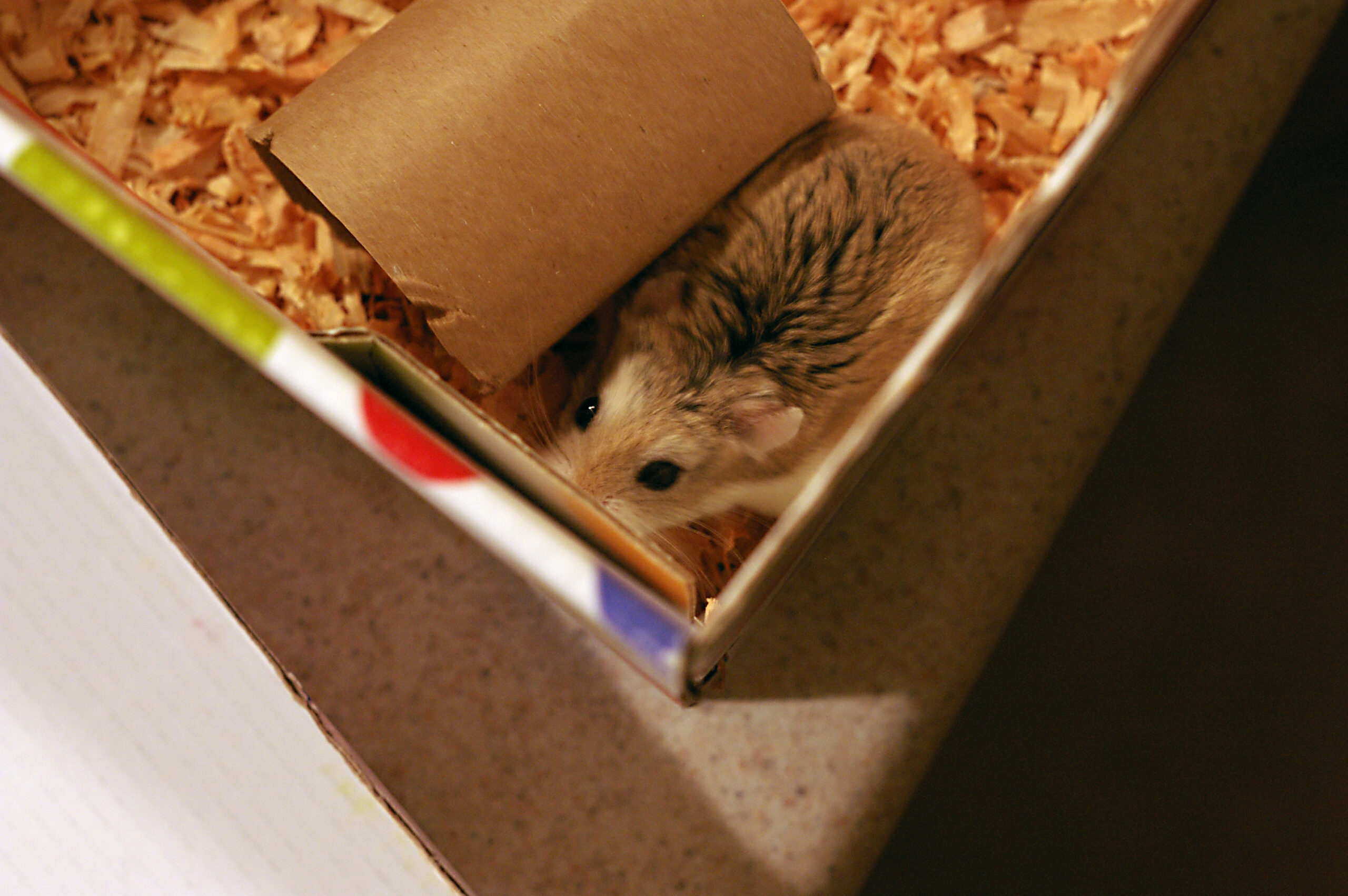
Hamsters are born diggers, and a shoe box makes a perfect dig den. Cut a door in one end, fill it deep with bedding and hide a few seeds near the bottom. Add a cardboard tube as a side tunnel for extra fun. When you want more ideas for boxes, our cardboard box crafts are full of clever builds for the whole family. Will your hamster find every hidden seed?
You will need: 1 plain shoe box without a lid, a cardboard tube, deep paper bedding and a few seeds.
How to make it: 1. Cut a round door in one end. 2. Fill the box with deep bedding. 3. Bury a few seeds. 4. Push a tube into the side as a tunnel.
Cardboard Seesaw
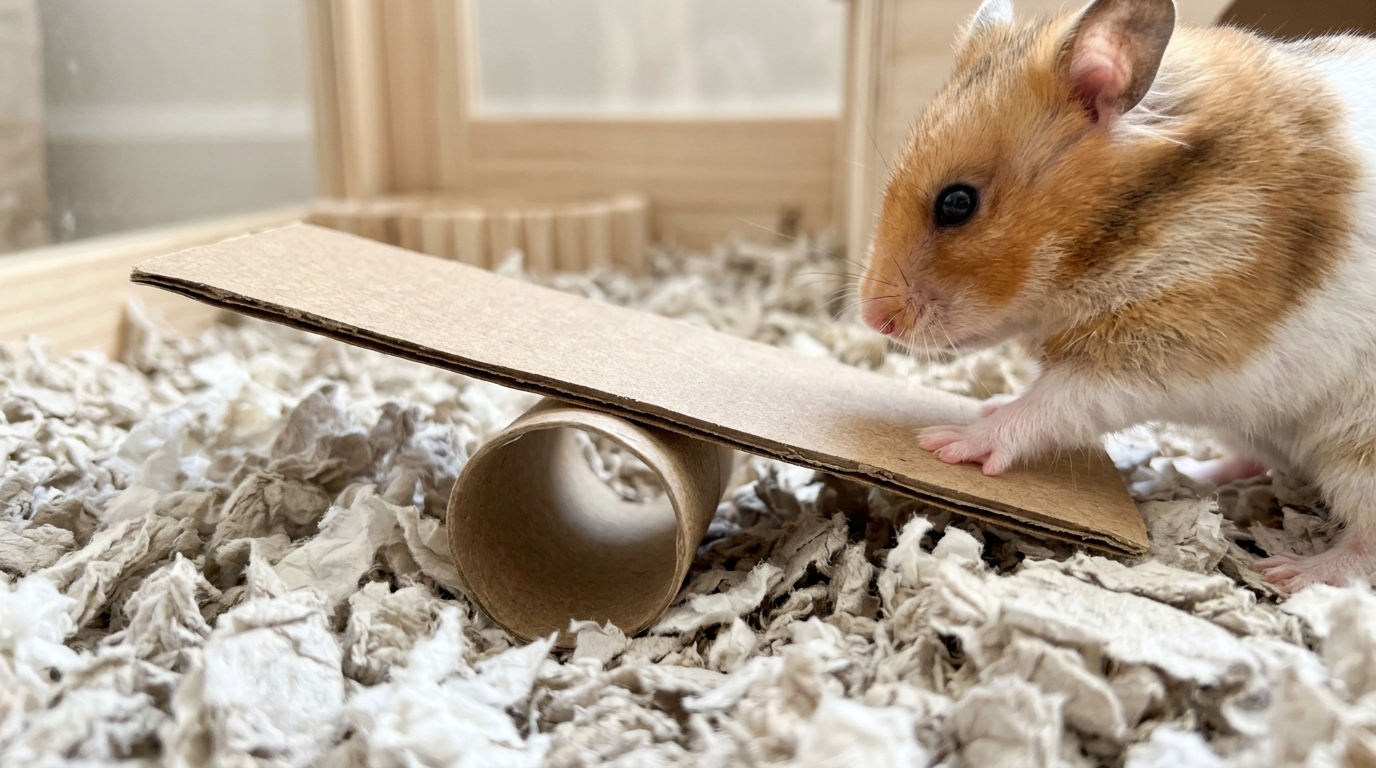
A tiny seesaw is a playful surprise in any setup. Balance a flat strip of sturdy cardboard on a short tube so it only rocks a little, staying just above the bedding. Hamsters often step on, feel it tip and then march across like a pro. Keep it very low so there is no drop at all. Isn’t it funny how brave they get after the first try?
You will need: A strip of thick plain cardboard, 1 short cardboard tube and flour paste.
How to make it: 1. Cut a strip about 3 inches wide and 10 inches long. 2. Flatten the tube slightly so it rests steady. 3. Paste the middle of the strip on top of the tube. 4. Test that it rocks only a little.
Scatter Feeding Trail for Cardboard Hamster Playgrounds
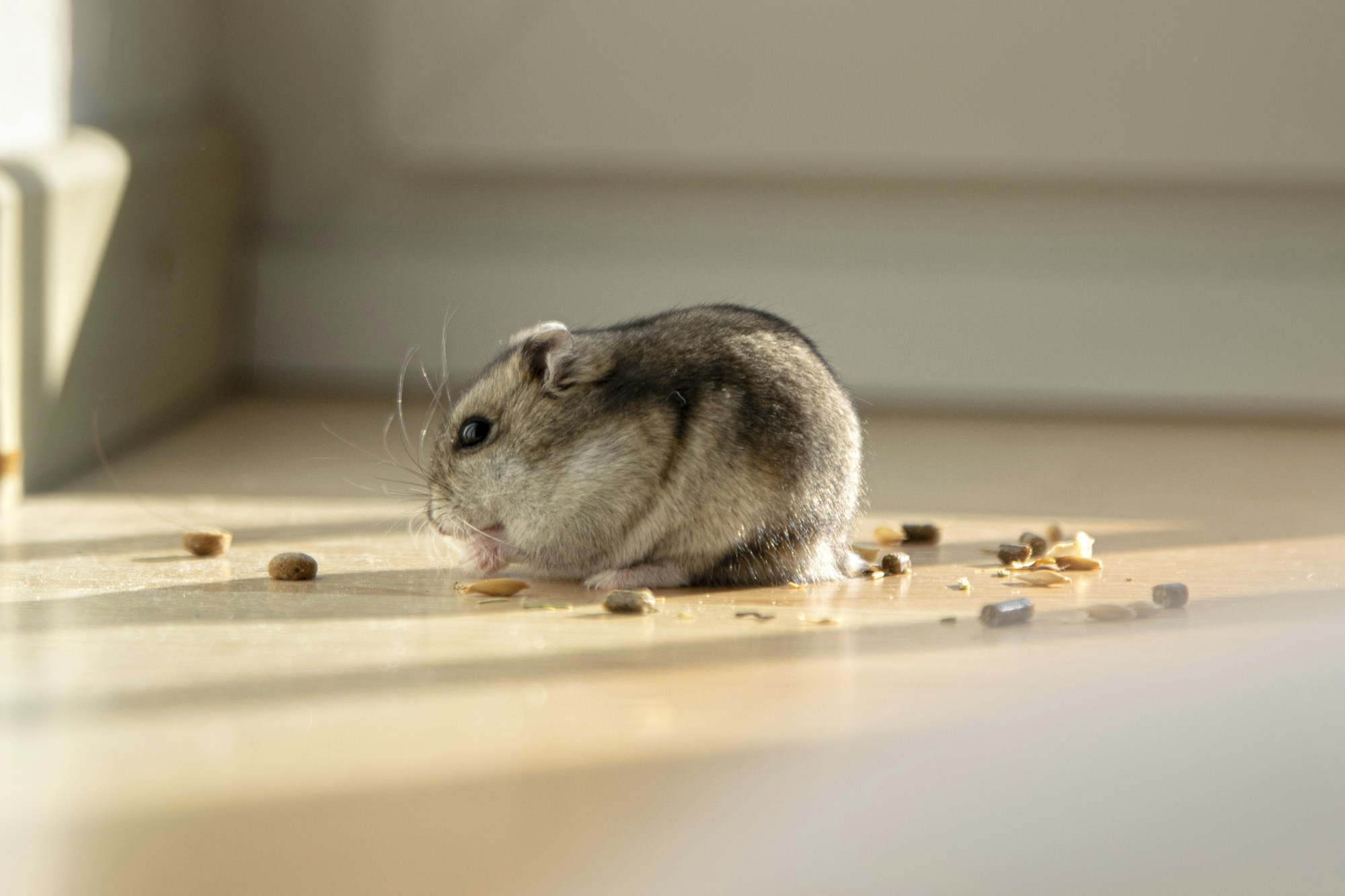
Instead of filling a bowl, try sprinkling part of the daily food along a cardboard path. Hamsters naturally forage, so finding food bit by bit keeps them curious and active. Lay a flat piece of cardboard as a trail through your cardboard hamster playgrounds setup and scatter seeds along it. It adds a treasure hunt to every evening. Where will you start the trail?
You will need: A long strip of plain cardboard and your hamster’s regular food mix.
How to make it: 1. Lay the cardboard strip through the play area. 2. Sprinkle part of the daily food along it. 3. Hide a few bits under tube ends. 4. Keep the rest in the usual bowl.
Cardboard Pyramid Hideout
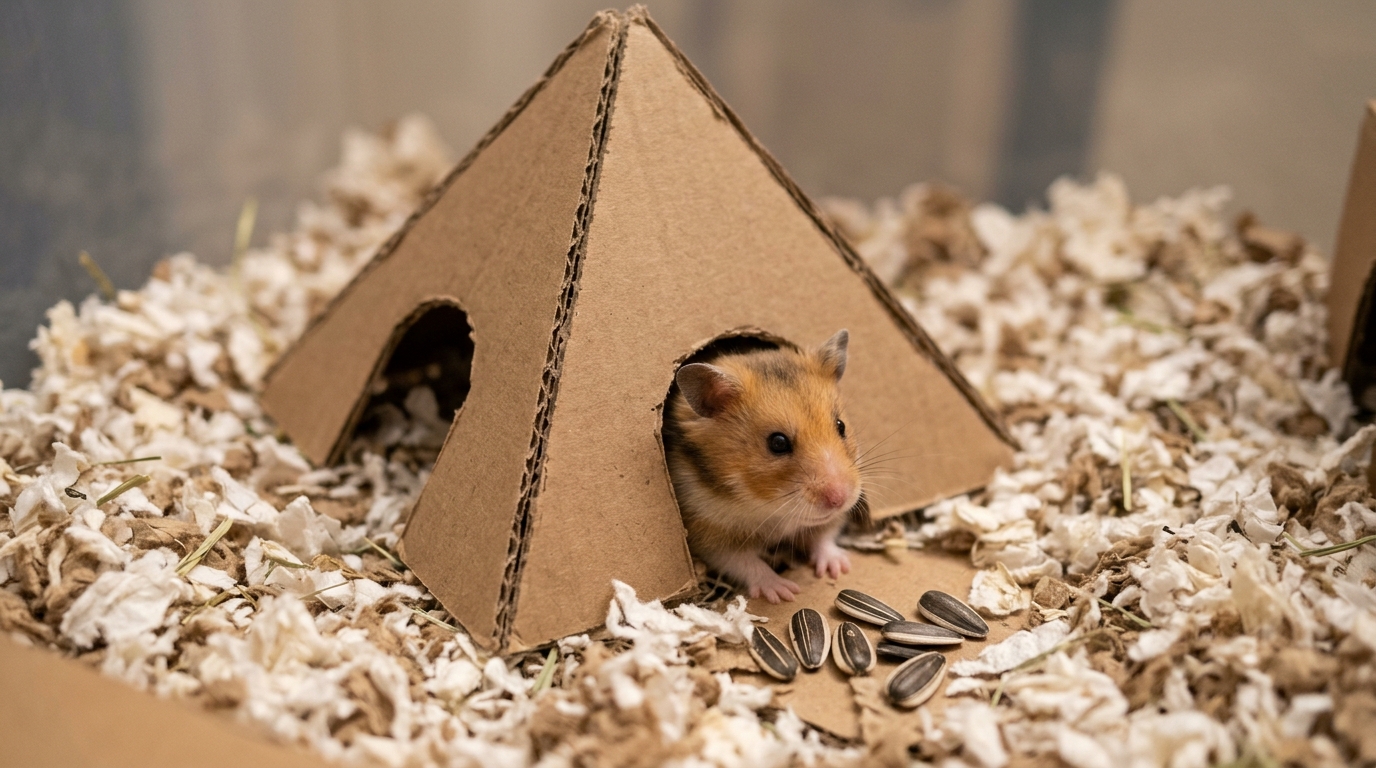
A pyramid is a fun shape that gives your hamster a dark, quiet spot to hide. Cut four cardboard triangles, add an arched door to each and paste the edges together. It looks adorable in any enclosure and takes about twenty minutes. Add a little bedding inside so it feels snug. Should the next one be a castle?
You will need: Thick plain cardboard, a ruler, a pencil, scissors or a craft knife (adults) and flour paste.
How to make it: 1. Draw and cut four equal triangles. 2. Cut an arched door in each. 3. Paste the edges together into a pyramid. 4. Let it dry and add bedding.
Tissue Box Foraging Station for Cardboard Hamster Playgrounds
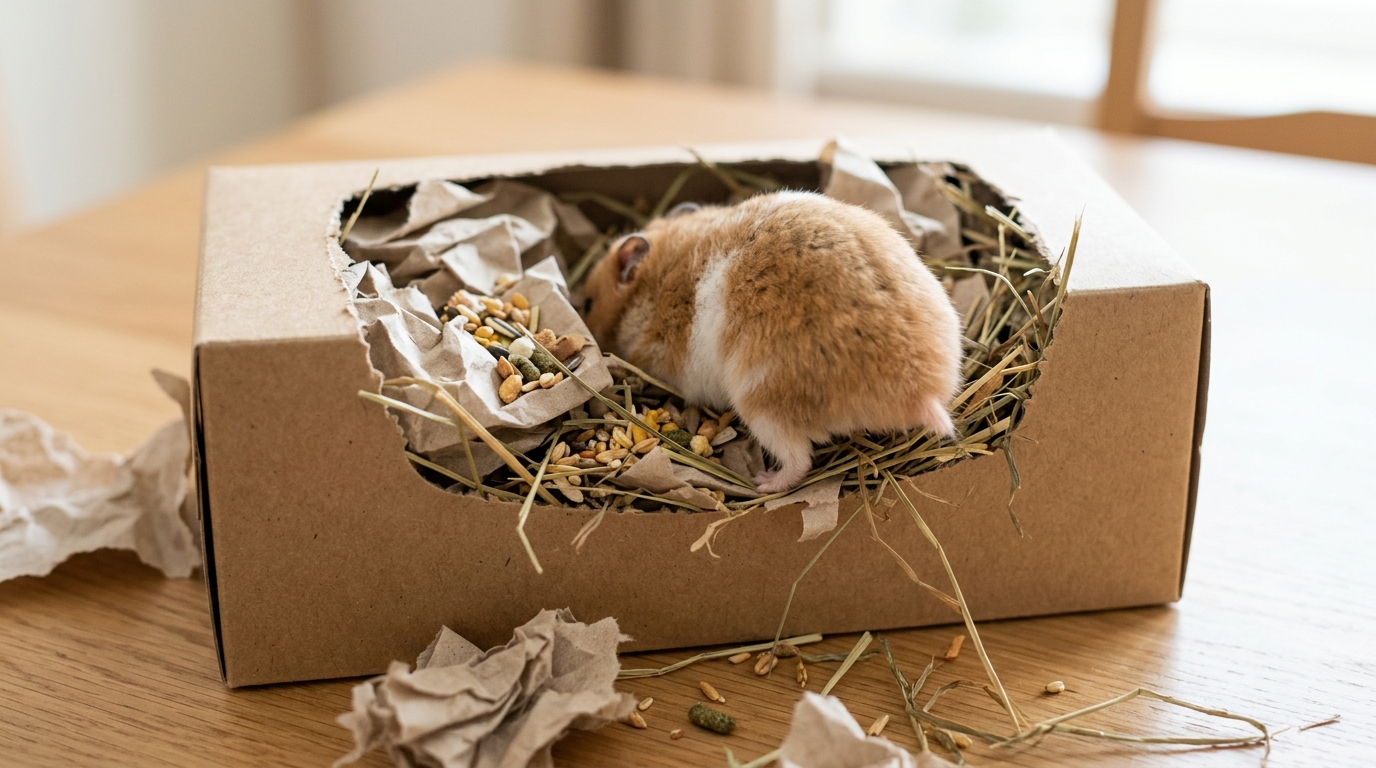
An empty tissue box becomes a treat station in seconds. Remove the plastic film, stuff the box with crumpled plain paper and hay, and tuck a few seeds deep inside. Your hamster will dive in head first to find them. It is a quick way to add fun on a busy day. Do you think your hamster will find them all in one go?
You will need: 1 empty tissue box with the plastic removed, plain paper, hay and a few seeds.
How to make it: 1. Pull out any plastic from the opening. 2. Crumple plain paper and stuff the box. 3. Tuck seeds and hay inside. 4. Set it on its side in the enclosure.
Mini Obstacle Course for Cardboard Hamster Playgrounds
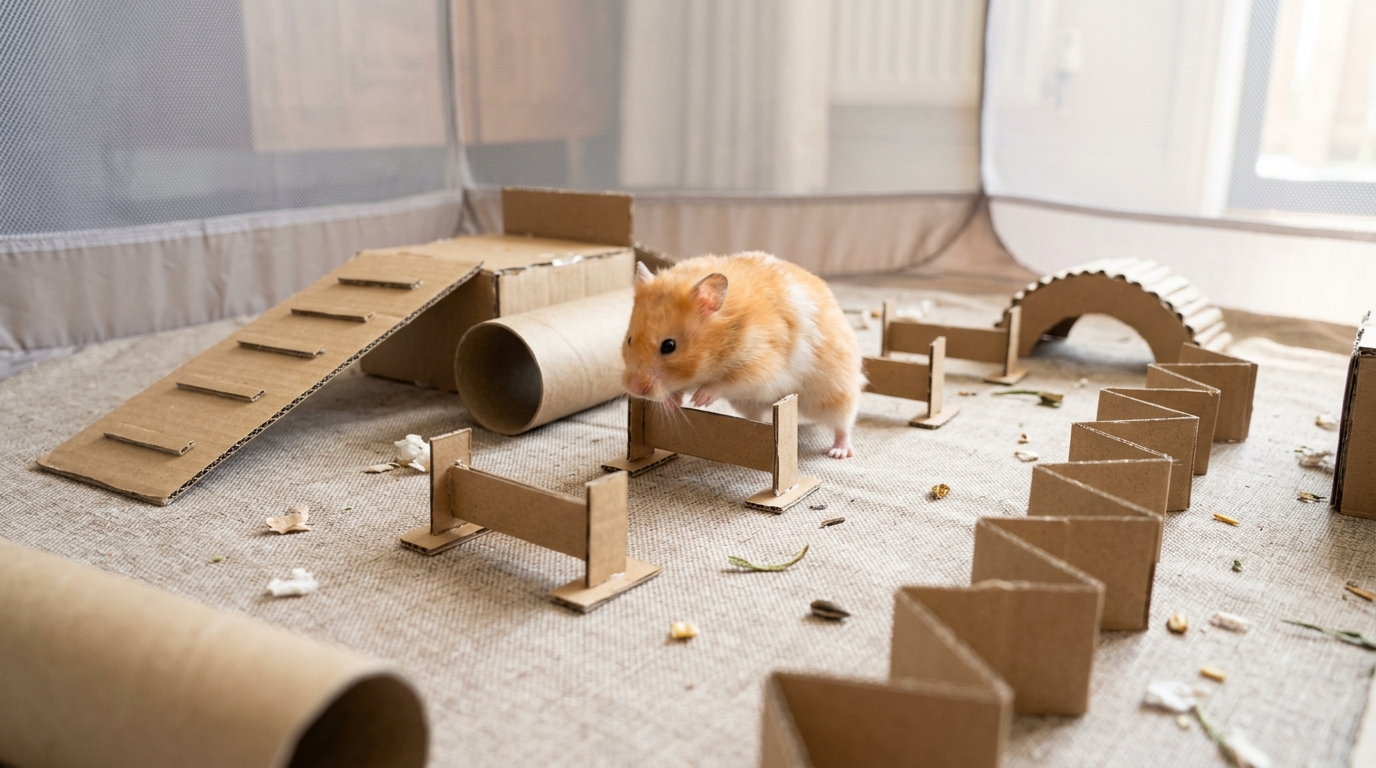
An obstacle course is the crowd favorite of hamster videos, including this popular DIY hamster obstacle course that millions have watched. Make yours gentle: tiny hurdles, a low ramp, a tunnel and a zigzag path, all made of cardboard. Let your hamster explore at its own pace and never force it through. Which station do you think will be the favorite?
You will need: Plain cardboard strips, cardboard tubes, a low box for a ramp and flour paste.
How to make it: 1. Fold small cardboard strips into tiny hurdles. 2. Add a tube as a tunnel. 3. Make a low ramp and a zigzag wall path. 4. Set it up in a safe playpen and supervise.
Paper Cup Tunnel Chain
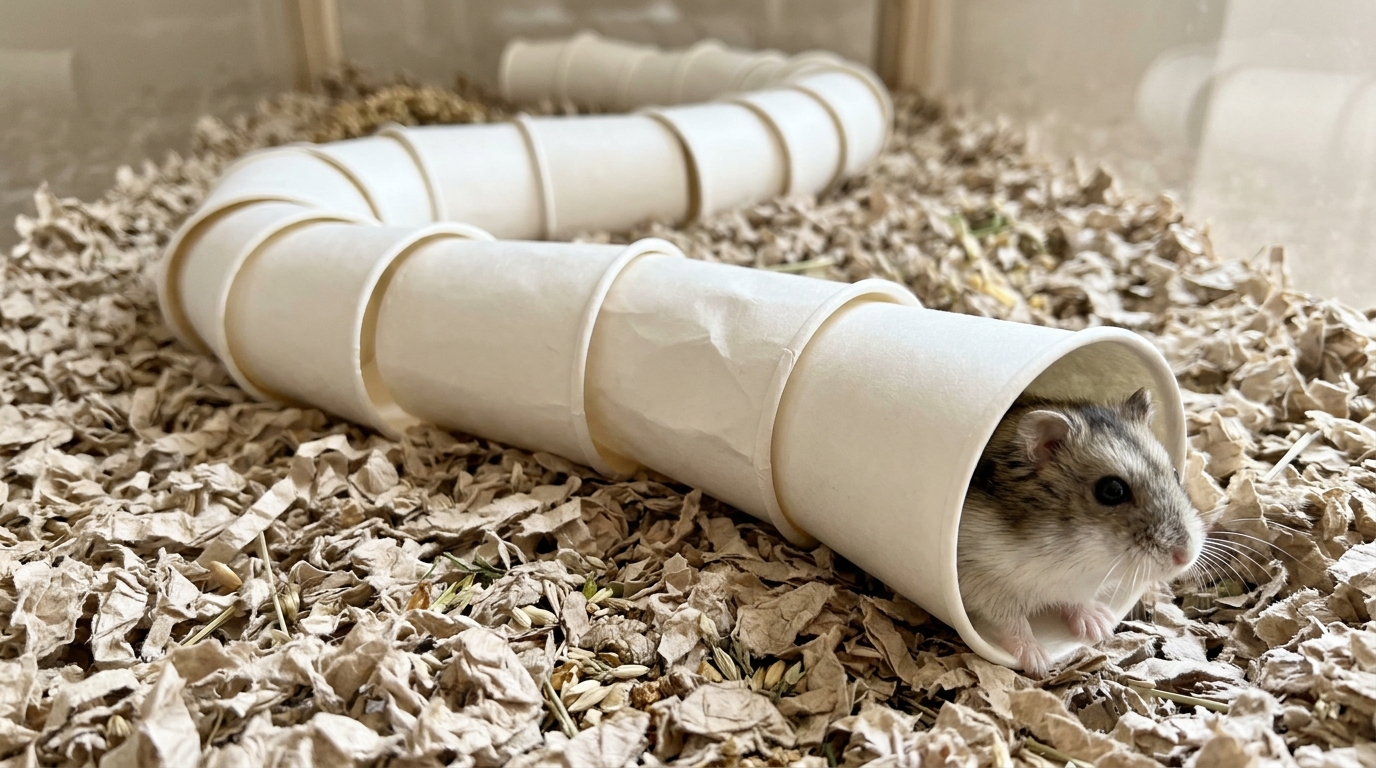
Plain paper cups with the bottoms cut out slide into each other to make a bendy tunnel. Curve the chain around the enclosure and your hamster will zoom through it again and again. Use plain, unwaxed cups with no print. Small dwarf hamsters fit best, so check that the cups are wide enough for your pet. How long will you make your tunnel?
You will need: 6 to 10 plain unwaxed paper cups and scissors.
How to make it: 1. Cut the bottom out of each cup. 2. Slide the cups into each other. 3. Curve the chain into a gentle bend. 4. Make sure the opening fits your hamster easily.
Add Natural Chews and Hideouts
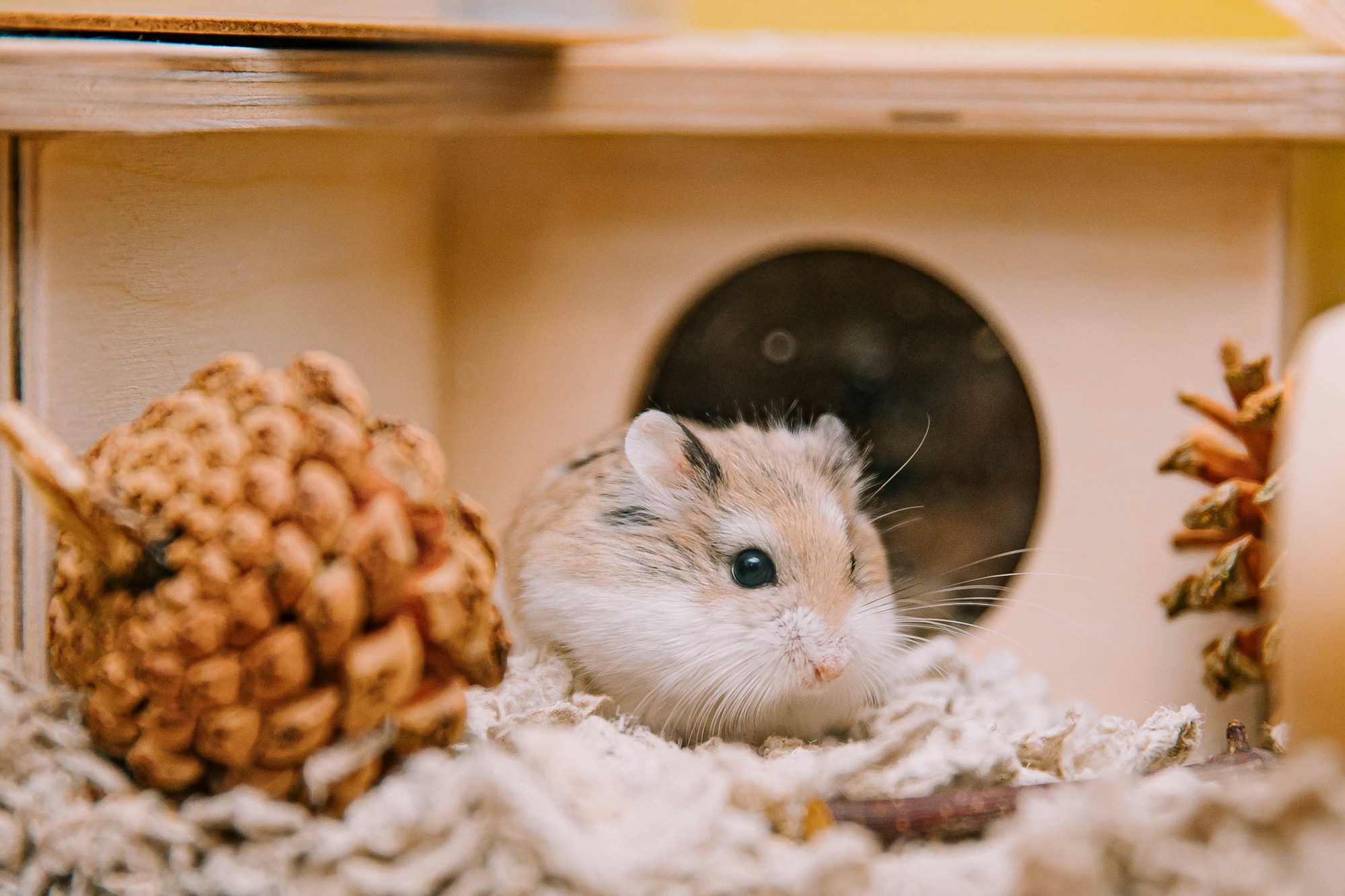
Cardboard is great, but mixing in a few pet-store chews and wooden hides makes the setup even better. Hamsters need things to gnaw, and a little wooden house next to your cardboard builds gives them variety. Look for chews made just for small pets. Rotate toys every week so things always feel new. What would you add first?
You will need: Pet-safe wooden chews, a small wooden hide and your cardboard builds.
How to make it: 1. Pick chews made for hamsters. 2. Place a wooden hide next to a cardboard tunnel. 3. Swap a few toys each week. 4. Remove anything that gets soiled.
Keep Treats Tiny
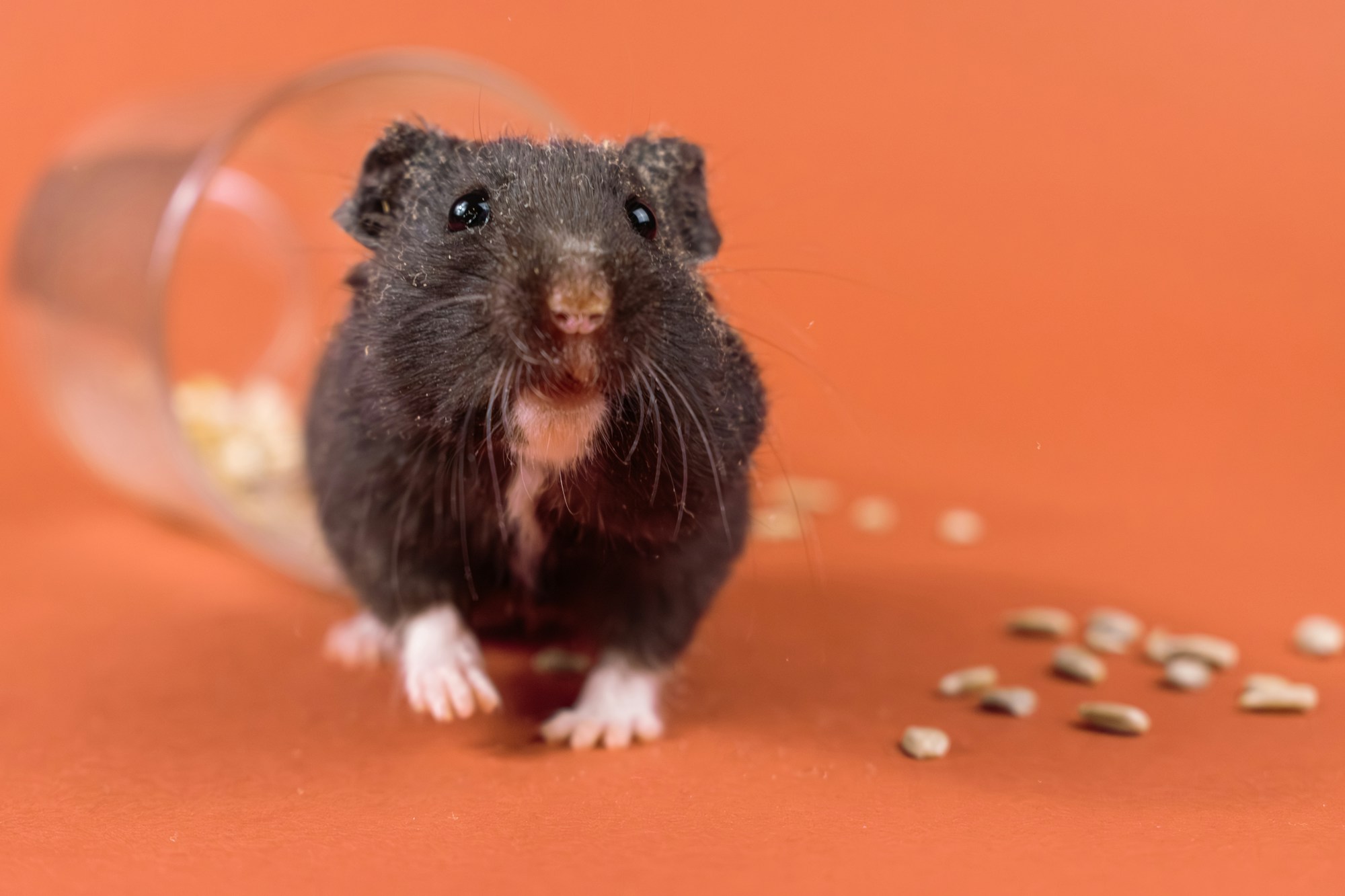
Treats are what make hamsters explore, but a little goes a long way. Use small bits of their regular food or a few seeds to reward exploring instead of big snacks. Hide them in tubes, under flaps and in the dig den. Your pet stays happy and your builds stay fun. Ask your vet which treats suit your hamster best. Which hiding spot will you try first?
You will need: Your hamster’s regular food mix and a few seeds.
How to make it: 1. Set aside a small pinch of food. 2. Hide bits in different builds. 3. Watch where your hamster goes first. 4. Change hiding spots each day.
Set Up Cardboard Hamster Playgrounds in a Roomy Home Base
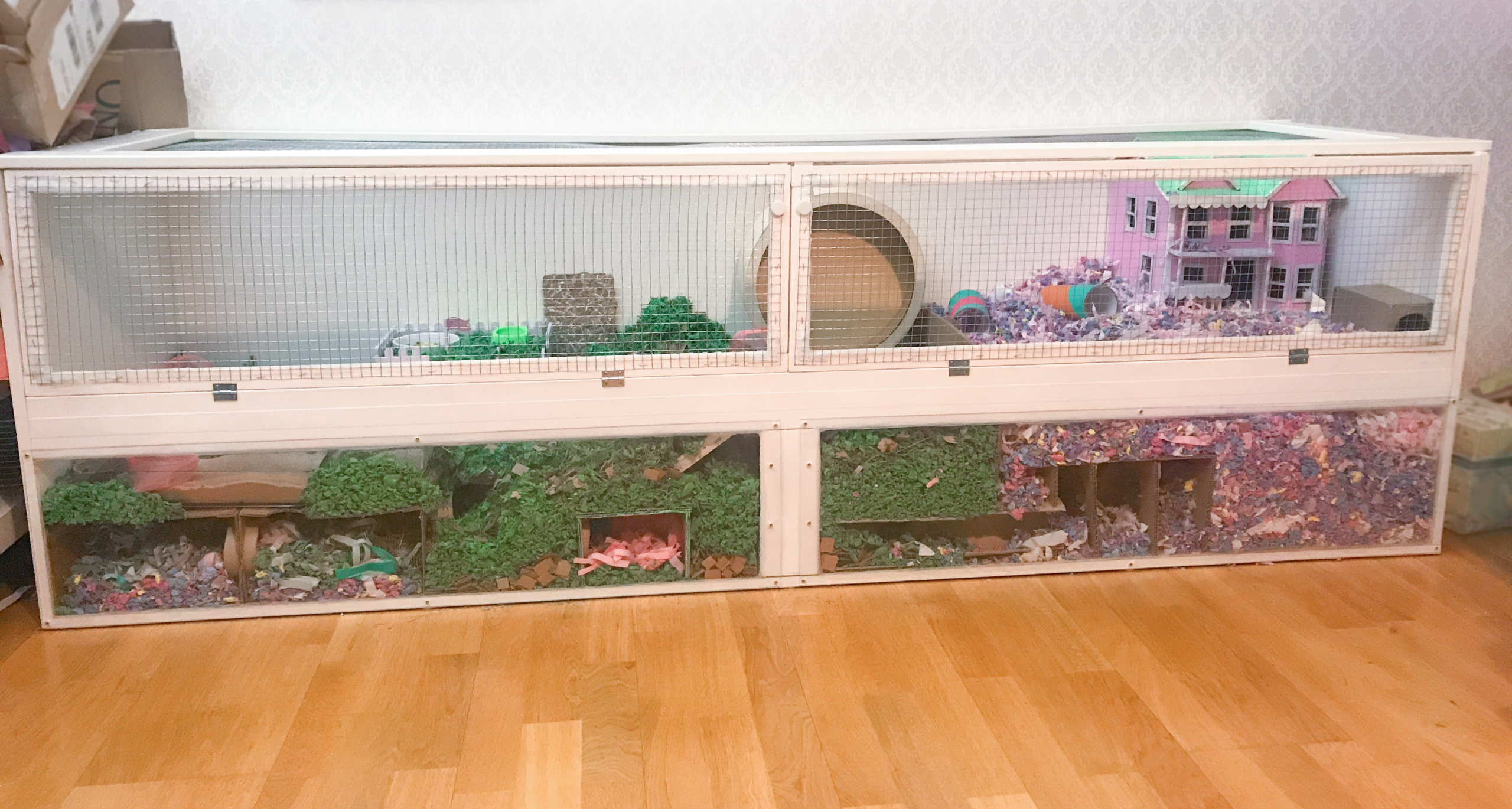
All these builds work best inside a roomy enclosure with deep bedding. A big base gives your cardboard hamster playgrounds space to spread out, so tunnels, hides and forage spots each get their own corner. Check builds every few days and replace anything soggy or very chewed. A happy hamster with lots to explore is a joy to watch. Which build will you start with tonight?
You will need: A roomy hamster enclosure, deep paper bedding and your favorite cardboard builds.
How to make it: 1. Add deep bedding to the enclosure. 2. Place the biggest build first. 3. Add tunnels, hides and forage spots around it. 4. Check and refresh builds every few days.