Mark Rober Squirrel Maze: 14 Backyard Builds Inspired by the NASA Engineer’s Viral Obstacle Course
The Mark Rober squirrel maze is proof that a backyard annoyance can turn into one of the most loved DIY projects on the internet. Rober, a former NASA engineer, got tired of squirrels stealing seed from his bird feeder, so instead of fighting them he built them a ninja warrior style course of ledges, tunnels and wobbly bridges. Millions of families watched, laughed and then headed to the garage to try it themselves. We broke the idea into simple builds you can make from scrap wood, rope and a short piece of pipe, plus a cardboard version for kids. Everything here is humane: no traps, nothing that launches, just a fun path to a snack. Grab your tape measure and let’s build..
The Mark Rober Squirrel Maze That Started It All
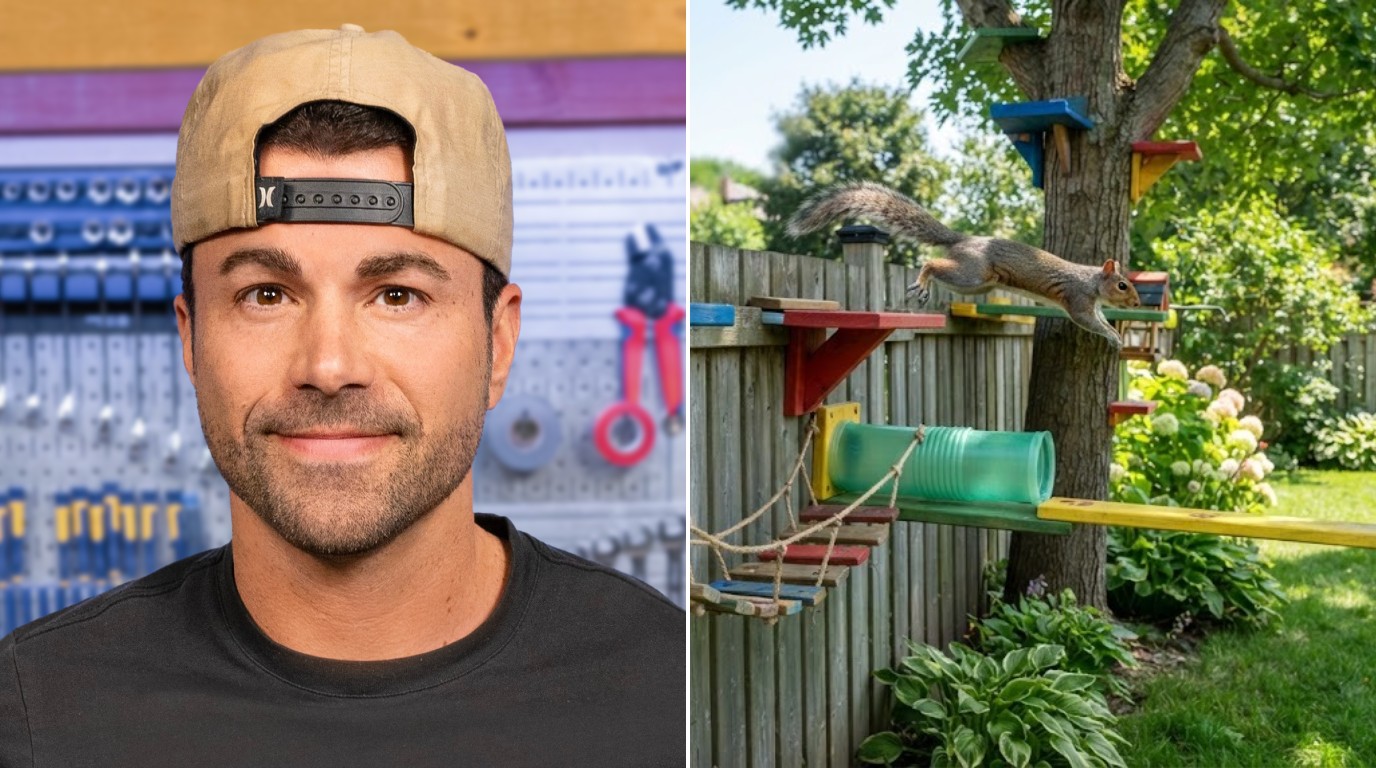
Mark Rober spent nine years as a NASA engineer, seven of them working on the Curiosity rover at the Jet Propulsion Laboratory, and later worked as a product designer at Apple before YouTube became his full time job. So when squirrels kept raiding the feeder in his yard, he did what an engineer would do and built them an obstacle course. His Backyard Squirrel Maze 1.0 video has been watched nearly 148 million times since May 2020, and the sequel pulled about 130 million more. The builds below are all inspired by it..
You will need: Scrap lumber, a sturdy fence or posts, outdoor screws, rope, a short plastic pipe, peanuts or walnuts in the shell, a drill (adult use).
How to make it: 1. Watch how squirrels move around your yard for a few days. 2. Pick a starting point near a tree or fence and an ending point near a treat. 3. Build one simple obstacle at a time and add more as the squirrels learn.
The Problem Every Bird Lover Knows
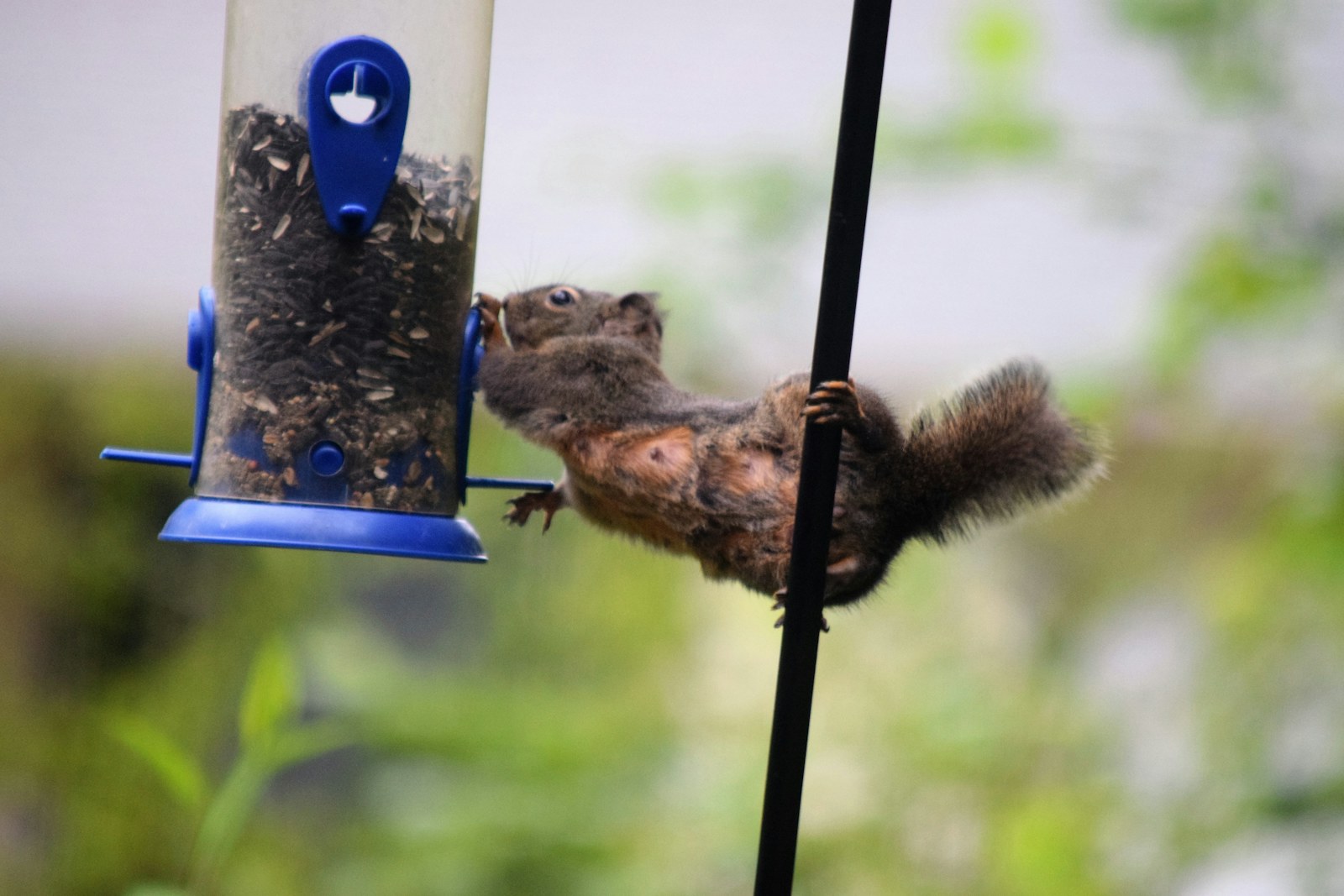
If you have ever hung a bird feeder, you have probably seen this. Squirrels will hang upside down, leap from branches and chew through plastic to reach the seed. Stolen bird seed was exactly the frustration behind the project. That is the heart of every Mark Rober squirrel maze: keep the birds fed and give the squirrels something more fun to do than steal. Spend a few mornings watching where they come from, because that tells you where your course should start. Have squirrels ever outsmarted your feeder?
You will need: A bird feeder, a window seat or binoculars, a notebook to log squirrel visits.
How to make it: 1. Note where squirrels approach the feeder from. 2. Mark their favorite jumping points on a simple map of the yard. 3. Use those spots to plan where your course will start and end.
Sketch Your Mark Rober Squirrel Maze on Paper First
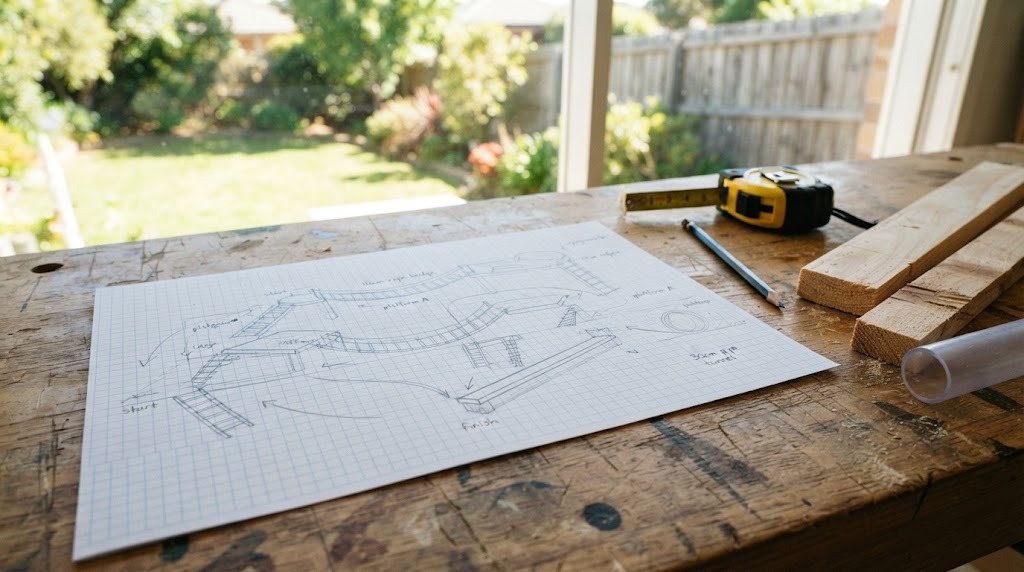
Every good engineer starts with a drawing, and this is the step that saves you money on wood. Sketch your fence or deck from the side, then draw each obstacle in order from start to finish. Keep gaps short at first, about the length of a squirrel jump you have already seen in your yard. Measure the fence and the posts before you cut anything. Kids love this part, so hand them a pencil and let them design an obstacle or two. What would your first obstacle be?
You will need: Graph paper, a pencil, a tape measure, a ruler, colored pencils.
How to make it: 1. Measure the fence or deck where the course will go. 2. Draw it to scale, one square for every few inches. 3. Mark each obstacle, the start, and the finish where the treat will sit.
Wooden Plank Ledge Wall
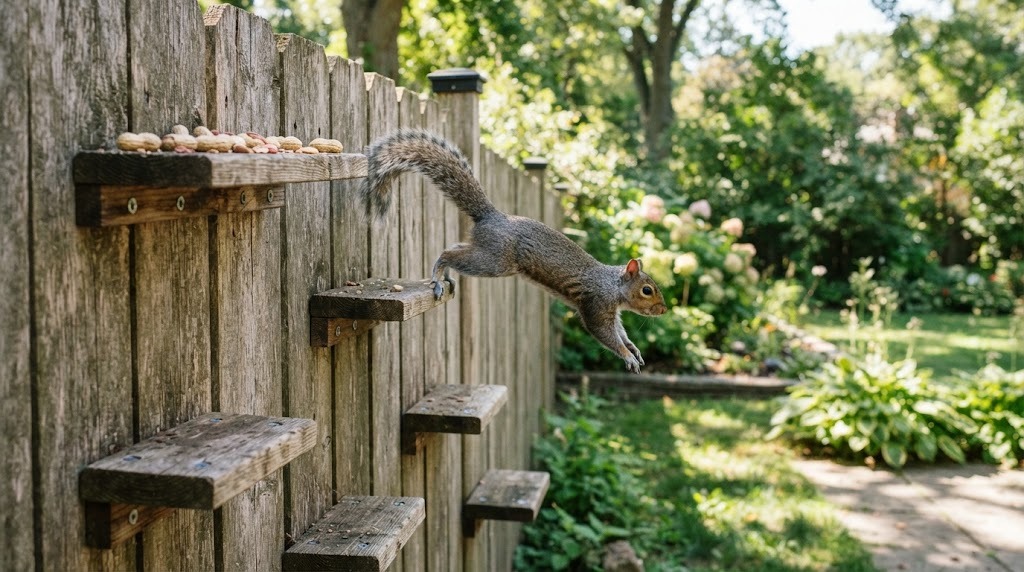
The easiest first obstacle in any Mark Rober squirrel maze is a ledge wall: short scrap boards screwed onto a fence in a zigzag, like a climbing wall for squirrels. Space them a little farther apart as you go so the course gets harder toward the top. Sand any rough edges and use outdoor screws so nothing pokes out. Put a few peanuts on the last ledge and watch them figure it out within a day or two. How far apart would you start?
You will need: Scrap boards about 6 inches long, outdoor screws, a drill (adult use), sandpaper, peanuts in the shell.
How to make it: 1. Sand the boards smooth. 2. Screw them to the fence in a zigzag, starting low near the ground. 3. Put peanuts on the top ledge as a reward.
Broomstick Balance Beam for a Mark Rober Squirrel Maze
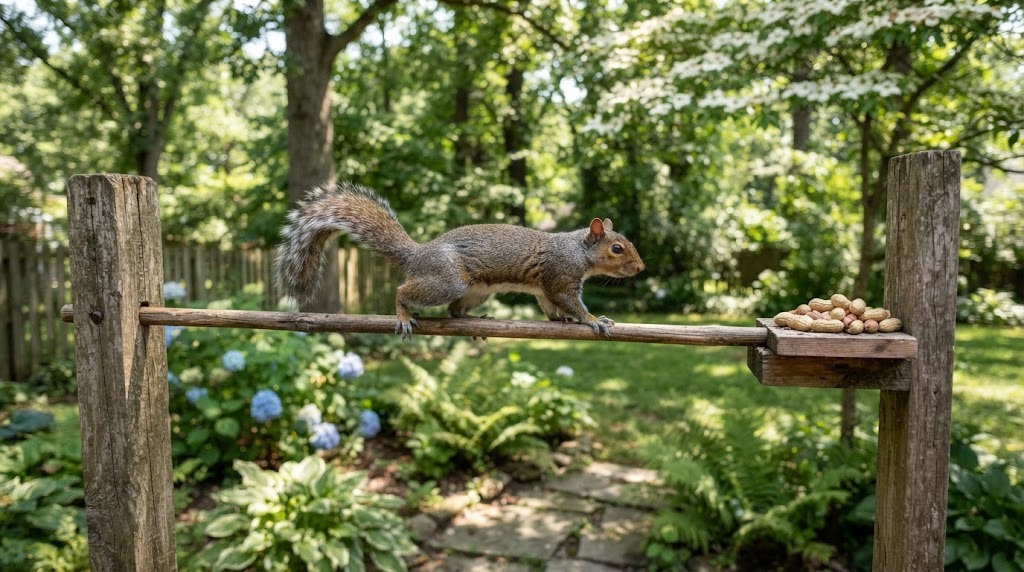
An old broomstick or wooden dowel makes a perfect balance beam. Mount it between two posts, or a post and a fence, so it is level and sturdy. Squirrels are surprisingly good at walking narrow rails, so this is a great confidence builder early in the course. Keep it low, about two or three feet off the ground, and set it over grass. Would you paint yours in bright stripes like a real ninja course?
You will need: An old broomstick or 1 inch wooden dowel, two wooden posts or brackets, outdoor screws, outdoor paint (optional).
How to make it: 1. Remove the brush and sand the handle. 2. Fix brackets to the posts at the same height. 3. Screw the stick into the brackets and check it does not wobble.
Plastic Pipe Tunnel
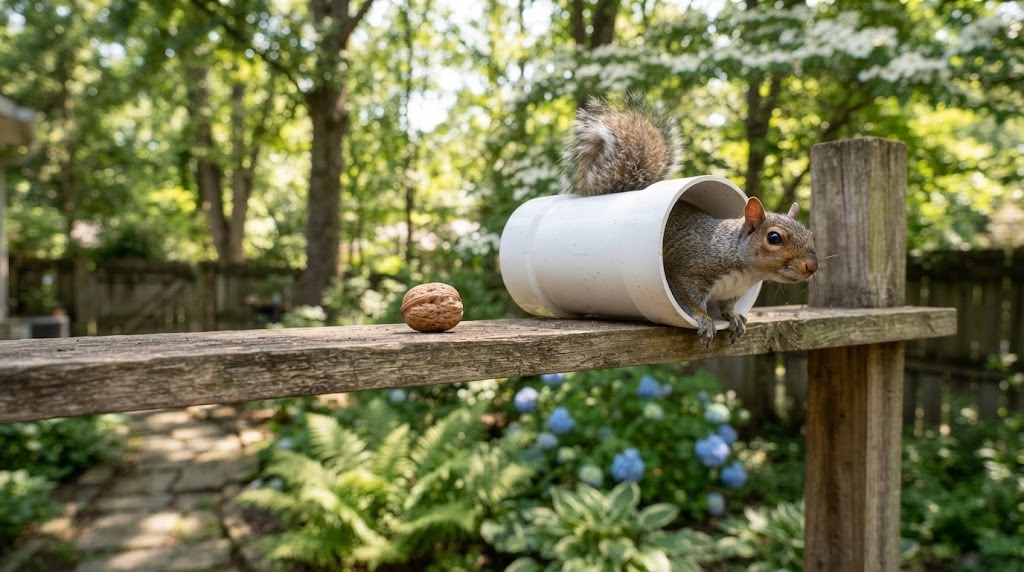
Squirrels love tight spaces, so a tunnel is a favorite part of any course. A short piece of wide plastic pipe screwed to a plank becomes a tunnel in minutes. Choose a pipe wide enough that a squirrel can turn its head inside, about four inches across, and keep it short so it never feels closed in. Leave both ends open at all times. Would you add a gentle bend to make it trickier?
You will need: A short piece of 4 inch plastic pipe, a wooden plank, two pipe straps, outdoor screws, a drill (adult use).
How to make it: 1. An adult cuts the pipe to about a foot long and smooths the edges. 2. Strap it to the plank with pipe straps. 3. Mount the plank level between two obstacles, with both ends open.
Rope Bridge From Scrap Wood Slats
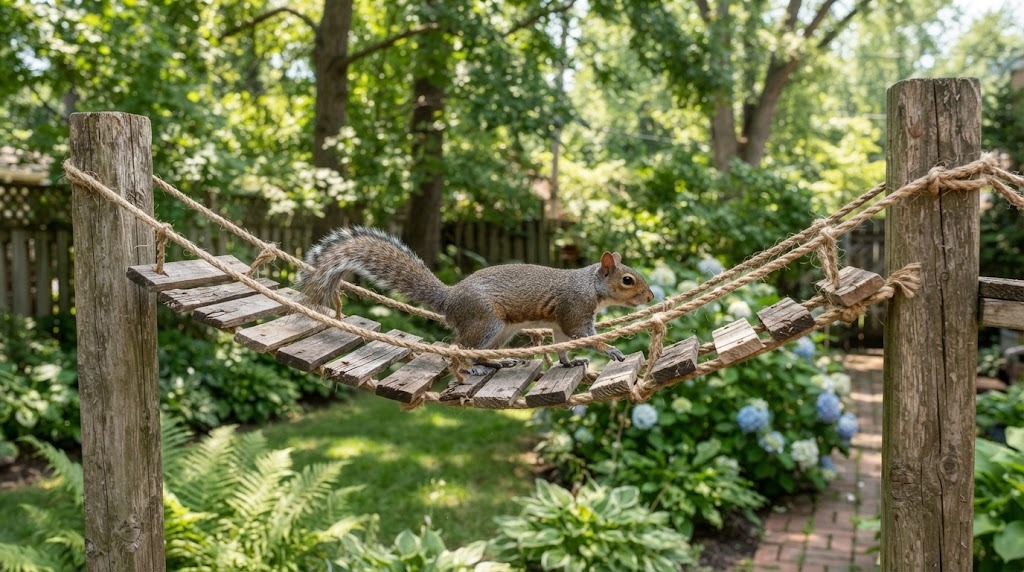
A tiny rope bridge looks adorable and gives squirrels a wobbly challenge. Drill two holes at each end of short wood slats, thread natural rope through, and tie knots under each slat to keep them spaced. Stretch the bridge between two posts so it sags just a little. Natural fiber rope is gentler on paws than wire. It is a fun project for a parent and child to make together on the porch. How long would you make your bridge?
You will need: Scrap wood slats, natural rope, a drill (adult use), two posts or hooks, outdoor screws.
How to make it: 1. Drill two holes near each end of every slat. 2. Thread rope through, knotting under each slat every inch or so. 3. Tie the ends tightly to two posts with a gentle sag.
Spinning Walnut Wheel Platform
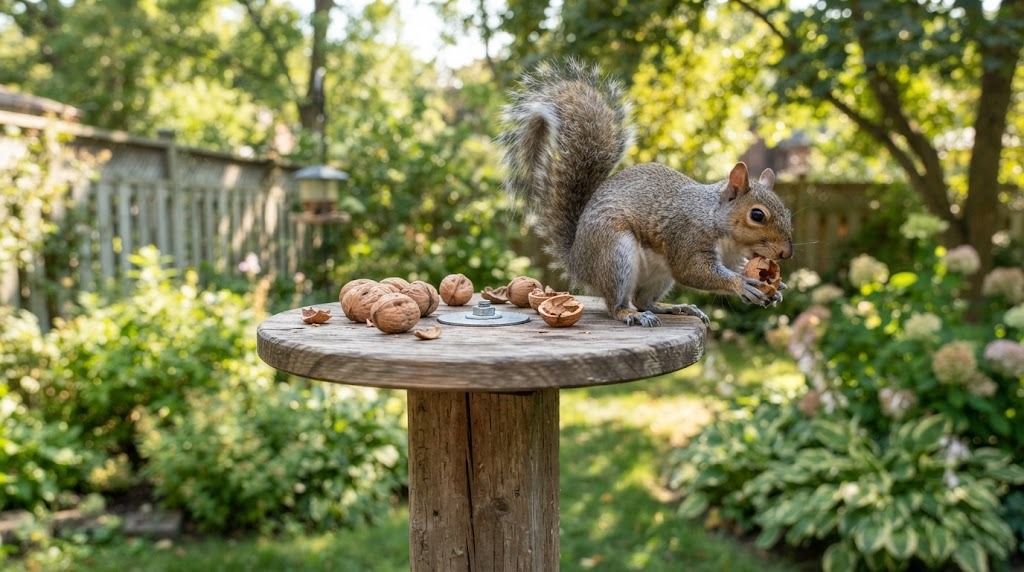
The sequel video, Backyard Squirrel Maze 2.0, was built around a walnut heist, and walnuts make a great prize for a spinning platform. Mount a round wooden disc on a single bolt with washers so it turns slowly when a squirrel steps on it. It should turn gently, never fast, so it feels like a game rather than a scare. Put a few walnuts in the center as the reward. Watching them figure out the wobble is pure entertainment. Would your squirrels get it on the first try?
You will need: A round wooden disc, a carriage bolt with two washers and a nut, a wooden post, walnuts in the shell, a drill (adult use).
How to make it: 1. Drill a hole through the center of the disc and the top of the post. 2. Bolt them together loosely with washers so the disc turns. 3. Test that it turns slowly, then add walnuts.
Hanging Log Stepping Stones
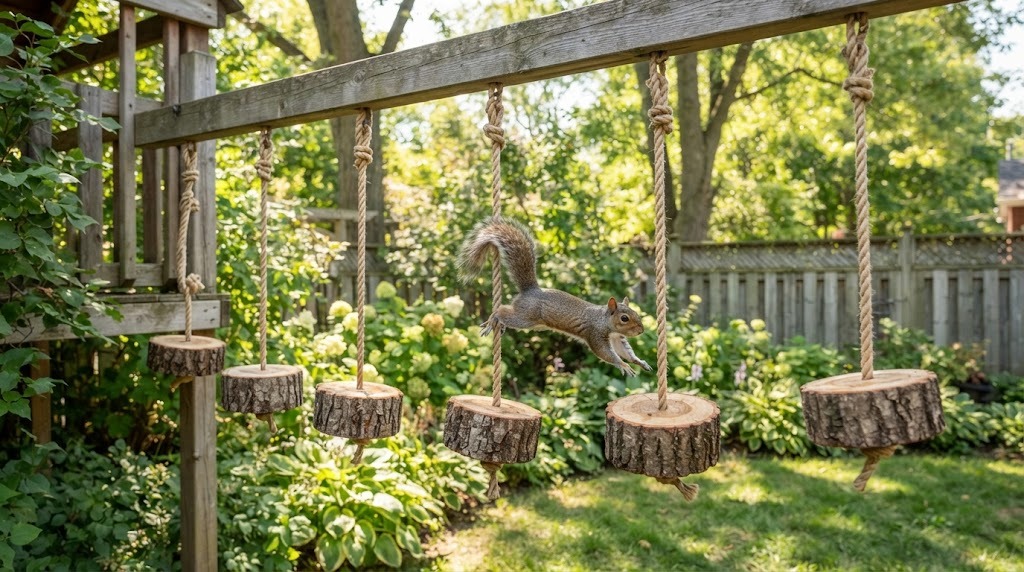
Hanging log slices are a classic ninja course idea scaled down for squirrels. Drill a hole in the center of each slice, hang them on short ropes from a beam, and space them so a squirrel can hop from one to the next. They swing just a little, which keeps things interesting. Use thick slices so they stay steady in the wind, and hang them over soft grass or mulch. How many stepping stones would you hang?
You will need: Four or five thick round log slices, natural rope, a wooden beam or sturdy branch, eye screws, a drill (adult use).
How to make it: 1. Drill a hole through the center of each slice. 2. Knot rope under each slice and tie the other end to an eye screw on the beam. 3. Space them a short hop apart, all at the same height.
A Snack Station Just for Squirrels
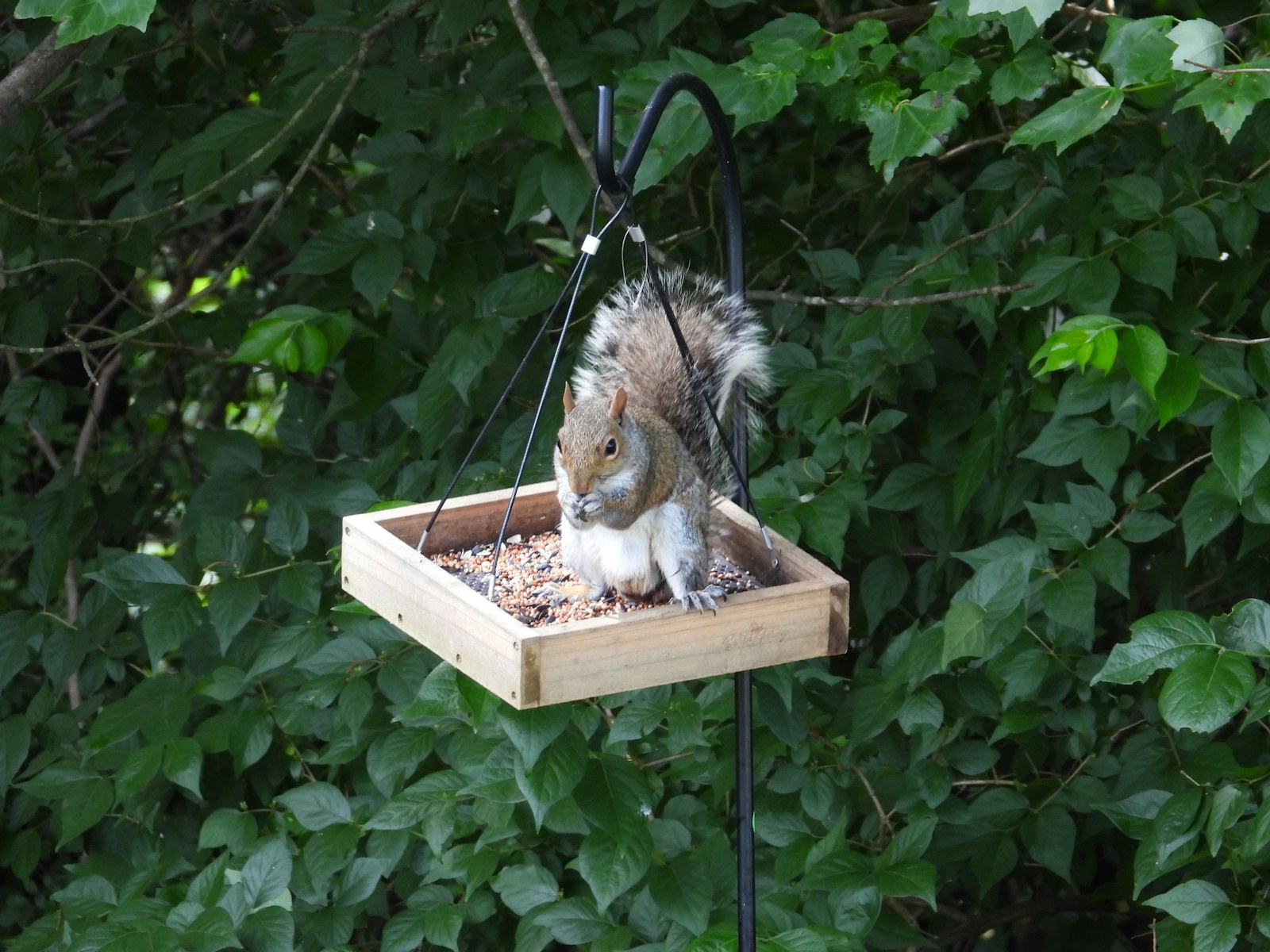
The smartest trick is giving squirrels their own snack bar away from the bird feeder. A simple hanging tray filled with peanuts, dried corn or sunflower seeds keeps them busy and happy. Place it at the end of your course so it becomes the finish line prize. Our DIY bird feeders gallery has more easy feeder builds you can adapt for squirrels. Clean the tray every week to keep it healthy. Would you put corn or peanuts in yours?
You will need: A small wooden tray or shallow crate, rope or chain, unsalted peanuts in the shell, dried corn, sunflower seeds.
How to make it: 1. Screw a small rim around a wooden board to make a tray. 2. Drill holes in the corners and hang it with rope. 3. Fill it with unsalted nuts and seeds and refill every few days.
Squirrel Proof Baffle for the Real Feeder
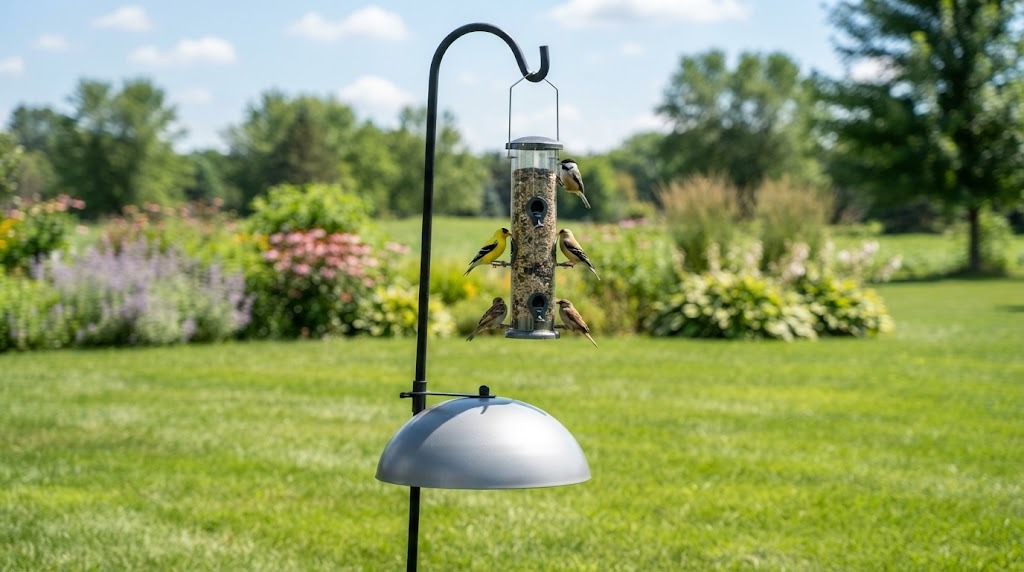
While the squirrels enjoy their course, protect the bird feeder with a simple baffle. A dome or cylinder shaped baffle on the pole stops climbers from reaching the seed. Place the feeder pole well away from fences and branches so nobody can jump across. This is the same idea behind the Mark Rober squirrel maze: give squirrels an easier, more fun option than stealing. Have you tried a baffle before?
You will need: A metal dome or cylinder baffle, a feeder pole, a pole clamp.
How to make it: 1. Set the feeder pole well away from fences and trees. 2. Clamp the baffle about four feet up the pole. 3. Hang the feeder above the baffle and watch the squirrels head to their own course.
Kids Mark Rober Squirrel Maze From Cardboard Tubes
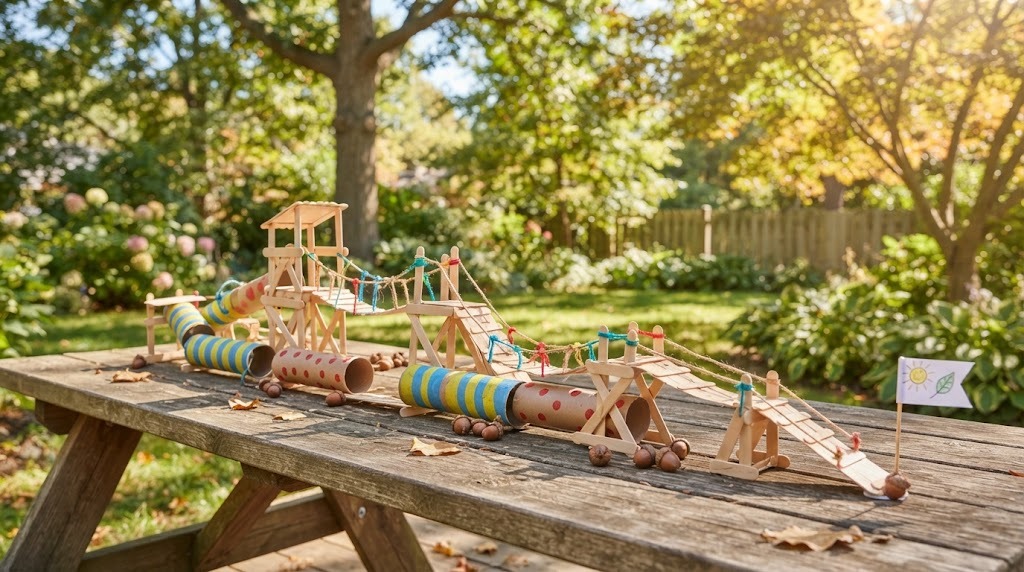
Mark Rober is famous for getting kids excited about engineering, so do not skip the junior version. Kids can build a tabletop model from cardboard tubes, craft sticks, string and paper flags, then test it with acorns or a small toy. It is a great rainy day project before you build the real thing outside. Ask them to explain why each obstacle works, just like an engineer would. Which obstacle would your kids invent?
You will need: Cardboard tubes, craft sticks, string, washi tape, paper, markers, a shoebox lid as the base, school glue.
How to make it: 1. Glue tubes and sticks to the box lid as tunnels and beams. 2. Add string bridges and paper flags. 3. Roll an acorn or move a toy through the course to test it.
Set Up a Trail Camera
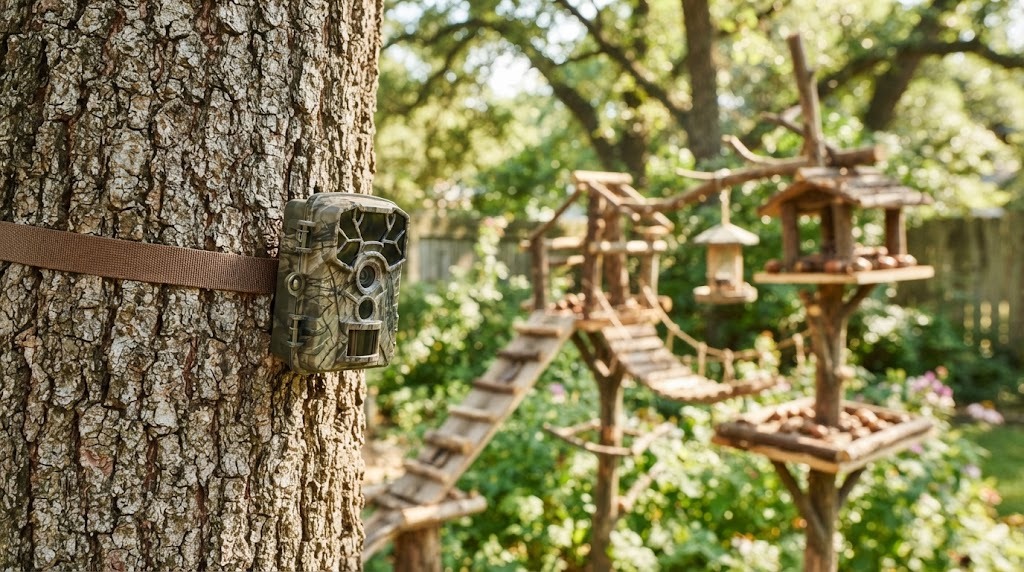
Half the fun of this project is watching it work, and that is where a trail camera helps. Strap a small motion camera to a tree or post facing the course, and it will record every attempt while you are at work or school. Part of what makes the original Mark Rober squirrel maze videos so fun is seeing every leap up close. Check the clips each evening with the family. What do you think the squirrels will try first?
You will need: A small motion trail camera, a strap, a memory card, batteries.
How to make it: 1. Strap the camera to a tree about three feet up. 2. Aim it at the busiest part of the course. 3. Check the memory card each evening and share the best clips.
The Mark Rober Squirrel Maze Payoff: Happy Squirrels and Safe Bird Seed
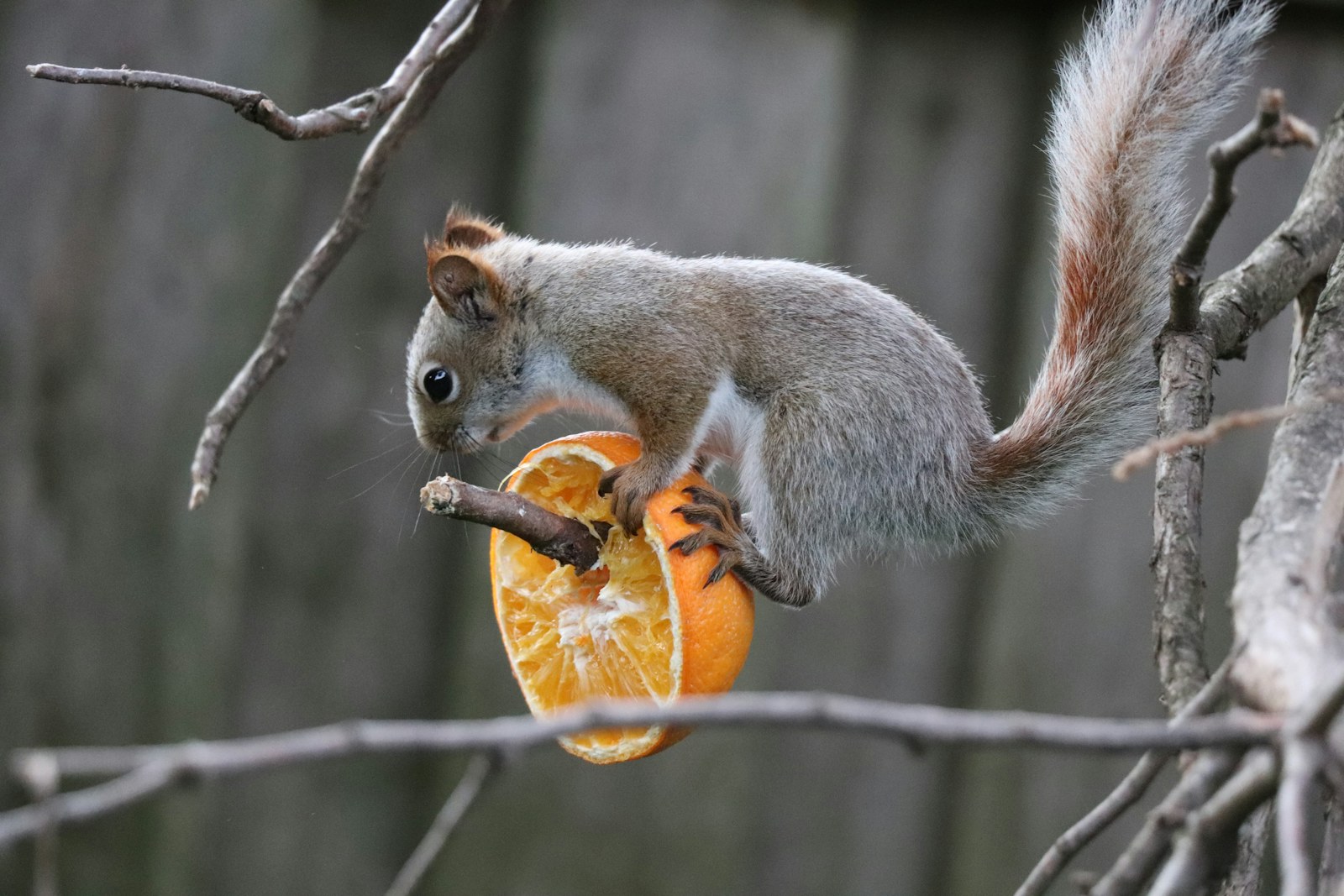
When it all comes together, the birds get their seed, the squirrels get a workout and a treat, and you get the best show in the neighborhood. Keep the course humane and simple, with no traps, nothing that launches or pinches, and a shallow dish of fresh water nearby. Change one obstacle every few weeks to keep things interesting. If you build a Mark Rober squirrel maze this weekend, start small and let it grow. Which obstacle are you building first?
You will need: Fresh water in a shallow dish, unsalted nuts, a little patience.
How to make it: 1. Refill the snack station regularly. 2. Check screws and ropes each month. 3. Add or swap one obstacle at a time.